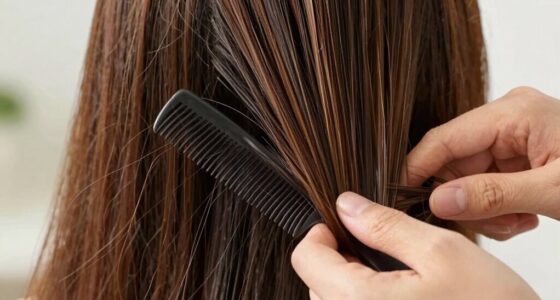

Scalp oil and hair oil serve different purposes: scalp oil targets scalp health, soothing irritation, reducing dandruff, and promoting healthy growth, while hair oil nourishes the strands, adds shine, controls frizz, and improves moisture. Applying the right type of oil correctly enhances your hair’s overall condition. Knowing the difference helps you focus your treatments effectively. If you keep exploring, you’ll discover how to choose and use each oil for your specific needs.

Turn your quiet moments into listening time
- Thousands of audiobooks, podcasts and originals
- Listen on your phone, tablet or Echo — also offline
- Cancel anytime
Key Takeaways
- Scalp oil nourishes and soothes the scalp, targeting issues like dryness and dandruff, while hair oil conditions and adds shine to hair strands.
- Application techniques differ: scalp oil is applied directly to the scalp, often with massaging; hair oil is warmed and spread along hair lengths and ends.
- Duration varies: scalp oil is typically left for 15-30 minutes or overnight, then washed out; hair oil can be used for at least 30 minutes or overnight as a treatment.
- Ingredient focus: scalp oils contain soothing, antimicrobial ingredients like tea tree or jojoba; hair oils include nourishing oils like argan or coconut for deep conditioning.
- Their overall goals differ: scalp oils promote scalp health and growth, while hair oils enhance shine, moisture, and manageability of hair strands.

When it comes to hair care, understanding the difference between scalp oil and hair oil is essential for achieving healthy, vibrant hair. Both oils play vital roles, but they serve distinct purposes, and using them correctly can make a noticeable difference in your hair’s health. Scalp oils are designed to nourish the scalp directly, targeting issues like dryness, flakiness, or dandruff. They often contain natural ingredients such as tea tree oil, peppermint, or jojoba, which help soothe irritation and promote scalp health. Hair oils, on the other hand, focus on conditioning the hair strands themselves, adding shine, reducing frizz, and protecting against damage. These typically include oils like argan, coconut, or castor, which penetrate the hair shaft to improve elasticity and moisture retention.
To use scalp oil effectively, start with clean, dry hair. Apply the oil directly onto your scalp using your fingertips or a dropper, focusing on areas that feel dry or flaky. Gentle massaging stimulates blood circulation and helps the natural ingredients penetrate deeper. When applying, keep in mind that the application technique is key—don’t just pour the oil onto your scalp; instead, distribute it evenly, ensuring coverage without overloading. Natural ingredients in scalp oils often have antimicrobial and anti-inflammatory properties, so they not only nourish but also help combat scalp conditions. You might want to leave the oil on for 15-30 minutes or even overnight for deeper absorption, then wash it out with a gentle shampoo. Additionally, choosing the right type of oil based on your scalp’s specific needs can enhance overall scalp health.
For hair oil application, take a small amount and warm it between your palms before applying it to the lengths and ends of your hair. This helps distribute the oil evenly and enhances absorption. Hair oils are best used as a finishing touch after washing or as a pre-shampoo treatment. When applying, focus on the tips of your hair, where damage is most common, and avoid heavy buildup near the roots unless you’re targeting scalp health. Using natural ingredients like argan or coconut oil provides deep conditioning, adds shine, and keeps your hair protected from environmental damage. To maximize benefits, leave the oil in for at least 30 minutes or overnight for intense hydration, then wash thoroughly. Proper application techniques and understanding the different purposes of these oils can help you achieve healthier, more resilient hair.
Products Worth Considering

Dyson Airwrap i.d. Multi-Styler with Bluetooth Connectivity

Sonos Roam (Gen 1) Portable Smart Speaker, White

Google Nest Smart Thermostat, Snow
As an affiliate, we earn on qualifying purchases.
Frequently Asked Questions
Can Scalp Oil Cause Acne or Scalp Breakouts?
Yes, scalp oil can cause acne or scalp breakouts if it clogs your pores or causes skin irritation. When you apply oil, it might trap dirt and excess oil, leading to clogged pores. If you have sensitive skin, certain ingredients can irritate the scalp, increasing breakouts. To prevent this, choose lightweight, non-comedogenic oils and avoid over-application. Regular cleansing helps maintain a healthy scalp and reduces breakout risk.
Is Hair Oil Suitable for All Hair Types?
Hair oil is generally suitable for all hair types, but you should consider hair compatibility and oil absorption. If you have fine or oily hair, choose lightweight oils that won’t weigh your hair down or cause greasiness. For thick or curly hair, richer oils can help moisturize and define curls. Always test a small amount first to see how your hair absorbs the oil and whether it suits your specific hair type.
How Often Should I Apply Scalp or Hair Oil?
You might notice that applying scalp or hair oil aligns with your hair’s needs; generally, once or twice a week works well. For scalp oil, focus on the ideal timing—preferably before washing or bed—while hair oil can be used as a leave-in treatment. Pay attention to how your hair responds, adjusting the application frequency to keep your strands healthy and moisturized without overdoing it.
Are Natural Oils Better Than Synthetic Options?
Natural oils with natural ingredients are generally better than synthetic options because they’re gentler on your scalp and hair. Chemical formulations can cause irritation or buildup over time. You benefit from the nourishing properties of oils like coconut, argan, or jojoba, which promote healthy hair without harsh additives. Always check labels to make sure you’re choosing products with natural ingredients for safer, more effective care.
Can Using Scalp or Hair Oil Prevent Hair Loss?
Think of scalp and hair oils as garden fertilizers; they nourish but don’t guarantee growth. Using scalp oil benefits include stimulating circulation and soothing irritation, which can help prevent hair loss. However, hair oil drawbacks, like clogging pores or weighing hair down, may counteract these benefits. While oils support healthy hair, they can’t fully prevent hair loss if underlying issues like genetics or health problems exist.
Conclusion
Just like the wise owl knows when to swoop and when to perch, understanding scalp oil from hair oil helps you care for your hair wisely. By choosing the right oil for the right purpose, you’re setting the stage for healthy, vibrant hair. Remember, it’s not just about the oil itself but how you use it—like a gentle touch from Mother Nature herself. Embrace the difference, and let your hair tell a story worth hearing.