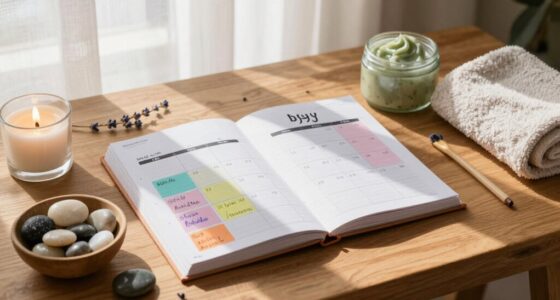
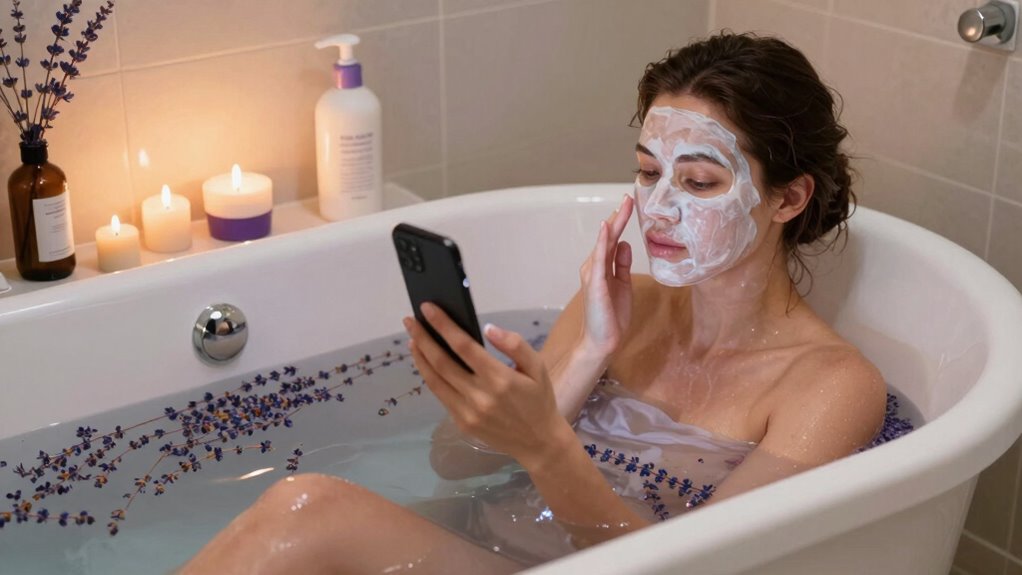
The biggest mistake in at-home spa routines is trying to do everything at once. Juggling multiple skincare steps, relaxation techniques, and distractions overwhelms your senses and prevents you from truly unwinding. Rushing through treatments or combining too many activities at the same time can reduce their effectiveness and increase stress instead of easing it. To get the most benefits, focus on one or two steps at a time—and there’s more to discover if you explore further.
Key Takeaways
- Overloading your senses with multiple skincare and relaxation steps causes stress instead of relaxation.
- Rushing through routines by skipping wait times reduces treatment effectiveness and undermines relaxation.
- Dividing attention between activities prevents full immersion and diminishes the calming experience.
- Combining too many steps simultaneously dilutes skincare benefits and hampers mindfulness.
- Focusing on one or two simple steps with proper pacing enhances both skin health and relaxation.
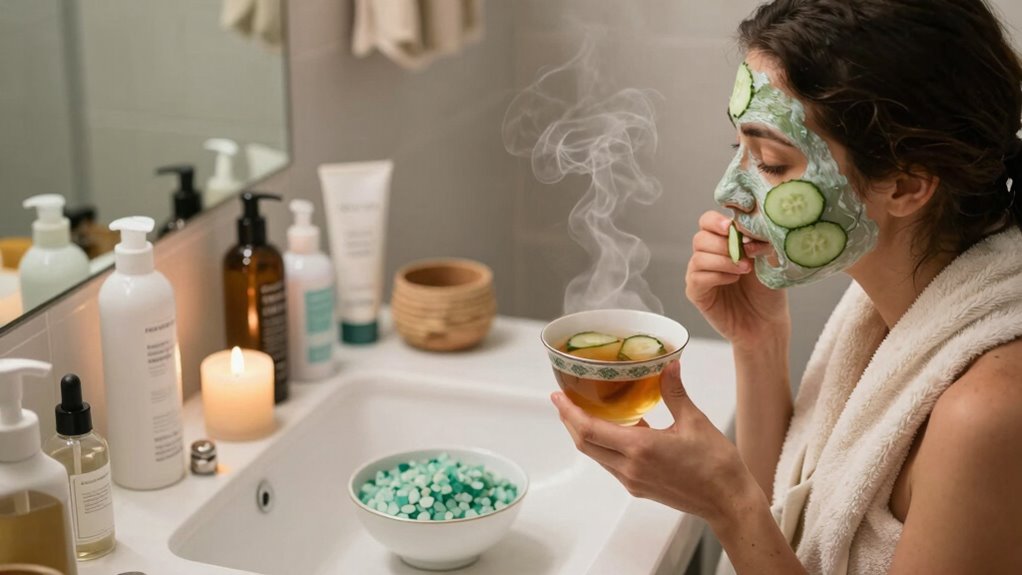
Have you ever wondered why your at-home spa routine doesn’t deliver the relaxing results you expect? It’s a common frustration, and the mistake often lies in trying to do too much at once. When you attempt to combine multiple DIY skincare steps with various relaxation techniques all in a single session, you risk overwhelming your senses and undermining the calming effects you’re seeking. Instead of feeling renewed, you may end up stressed or exhausted, defeating the purpose of your spa day.
Trying to do too much at once can overwhelm your senses and ruin your relaxation. Focus on quality over quantity.
One of the biggest pitfalls is rushing through your routine without giving each step enough time to work. When you’re eager to check everything off your list—applying masks, exfoliating, massaging, and using aromatherapy—you might skip *vital* waiting periods or not fully engage in relaxation techniques. This hurried approach prevents you from truly unwinding and diminishes the benefits of each skincare treatment. Remember, patience is key. Allow your skin to absorb masks or serums fully and take the time to focus on deep breathing, meditation, or other relaxation techniques that help calm your mind.
Trying to do everything simultaneously can also lead to confusion. For example, applying a mask while trying to meditate or listen to calming music can distract you from entering a genuinely relaxed state. Your mind needs space to settle, and your body needs time to process each step. Rushing through DIY skincare routines without fully relaxing can make the experience feel more like a chore than a self-care ritual. When you’re in a hurry, your body’s stress response stays active, which counters the calming effects you’re aiming for. Incorporating relaxation techniques like deep breathing or gentle stretching can significantly enhance your spa experience.
The key to avoiding this mistake is to simplify your routine. Focus on one or two skincare steps at a time, like cleansing followed by a nourishing mask, and pair each with a relaxation technique such as deep breathing or gentle stretching. Creating a calming environment, with soft music and dim lighting, can help you stay present and centered. Also, set aside ample time so you don’t feel rushed. This allows your mind and body to fully relax, making your DIY skincare efforts more effective and enjoyable.
Ultimately, it’s about quality over quantity. Doing everything at once not only dilutes the effectiveness of your skincare but also hampers your ability to relax. By slowing down, prioritizing a few well-chosen steps, and focusing on relaxation techniques, you’ll transform your at-home spa into a truly restorative experience—one that leaves you feeling refreshed, calm, and pampered.

LEVOIT Air Purifier for Home Allergens Pet Hair in Bedroom, Covers Up to 1073 ft² by 56W High Torque Motor, AHAM VERIFIDE, 3-in-1 Filter with HEPA Sleep Mode, Remove Dust Smoke Odor, Core300-P, White
WHY CHOOSE AHAM VERIFIDE AIR PURIFIERS: AHAM (Association of Home Appliance Manufacturers) is an ANSI-accredited organization that sets...
As an affiliate, we earn on qualifying purchases.
Frequently Asked Questions
How Can I Tell if I’m Overdoing It During a Spa Session?
You can tell you’re overdoing it if your skin becomes itchy, red, or sensitive, which signals irritation. Pay attention to any unusual product reactions, like burning or stinging, as these indicate you’re pushing your skin too far. If you notice increased sensitivity or discomfort, it’s a sign to slow down and give your skin time to recover. Always listen to your body and avoid overdoing treatments to keep your skin healthy.
What Are the Signs of Skin Irritation From Multiple Treatments?
If your skin shows redness or feels burning after multiple treatments, it’s a clear sign of irritation. You might notice swelling or increased sensitivity, making your skin more reactive to products. Discomfort or a stinging sensation also indicate overdoing it. Pay attention to these signals, and give your skin time to recover. Stopping treatments and soothing your skin with gentle, hydrating products can help prevent long-term damage.
Is It Safe to Combine Different Skincare Products at Once?
It’s generally not safe to combine different skincare products at once without considering product interactions and ingredient compatibility. Mixing products can cause irritation, reduce effectiveness, or trigger allergic reactions. Always check ingredient lists and follow recommended usage instructions. Test new combinations on a small skin patch first, and introduce products gradually. This approach helps you avoid adverse reactions and ensures each product works safely alongside others.
How Long Should I Wait Between Treatments for Best Results?
You should wait at least 24 to 48 hours between treatments for the best results. Rushing into product layering or increasing treatment frequency can overwhelm your skin, making it angry and irritated—like a volcano about to erupt! Giving your skin time to recover allows each treatment to work its magic without interference. Patience is key; treat your skin with care, and you’ll see glowing, healthy results that last.
Are There Any Treatments I Should Avoid Doing Together?
You should avoid doing treatments that have chemical interactions or aren’t treatment compatible together. For example, don’t combine strong chemical peels with exfoliating scrubs or acids, as this can cause irritation or damage. Always research each treatment’s ingredients and effects, and space out treatments accordingly. When in doubt, consult a skincare professional to guarantee your at-home spa routine stays safe and effective without risking adverse reactions.

LEVOIT Air Purifier for Home Large Room Up to 1073Ft² with Air Quality Monitor, AHAM VERIFIDE, Smart WiFi, Washable Pre-Filter, HEPA Sleep Mode for Pets, Allergies, Dust, Pollen, Vital 100S-P, White
𝐖𝐇𝐘 𝐂𝐇𝐎𝐎𝐒𝐄 𝐀𝐇𝐀𝐌 𝐕𝐄𝐑𝐈𝐅𝐈𝐃𝐄 𝐀𝐈𝐑 𝐏𝐔𝐑𝐈𝐅𝐈𝐄𝐑𝐒: AHAM (Association of Home Appliance Manufacturers) is an ANSI-accredited organization that sets...
As an affiliate, we earn on qualifying purchases.
Conclusion
So, next time you set up your at-home spa, remember to take it slow. Doing everything at once might seem efficient, but it often backfires—leaving you more stressed than relaxed. Coincidentally, I once tried a full day of back-to-back treatments and ended up exhausted. The secret? Spread your pampering over a few days. Trust me, your skin and sanity will thank you for the simple, mindful approach.

KNKA Air Purifier for Home Bedroom Large Room Up to 1,695 Ft² in 1 Hr, HEPA Air Cleaner with Washable Pre-Filter, AQI Display, ECO Mode, Sleep Mode, Pet Mode for Pets, Dust, Pollen, APH4000
𝐇𝐢𝐠𝐡 𝐂𝐀𝐃𝐑 𝐕𝐚𝐥𝐮𝐞: This air purifier provides reliable performance with a Smoke/Dust/PM2.5 CADR of 226 CFM (384 m³/h)...
As an affiliate, we earn on qualifying purchases.

PuroAir 240 HEPA Air Purifiers for Home Large Rooms - Covers Up To 1,000 Sq Ft - Filters Up To 99.9% of Pollutants, Smoke, Pollen, Dust - Quiet HEPA Air Filter - Air Purifiers for Bedroom
Cleaner Air in Minutes: PuroAir is proven to filter the pollutants lurking in your home’s air. This large...
As an affiliate, we earn on qualifying purchases.