
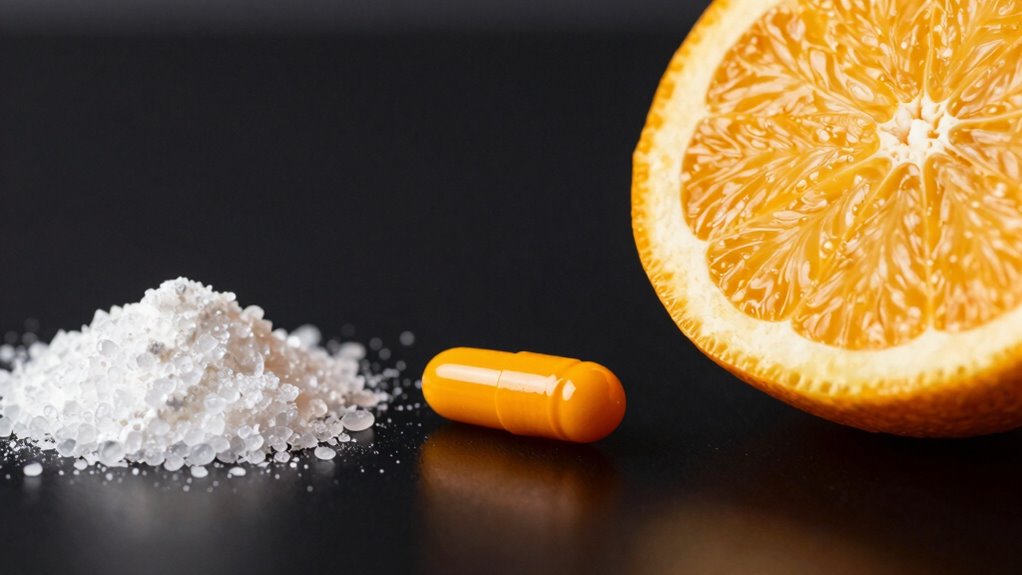

Vitamin C comes in various forms, like pure L-ascorbic acid and derivatives such as sodium ascorbyl phosphate and tetrahexyldecyl ascorbate. While L-ascorbic acid delivers quick results, it’s less stable and can degrade faster without proper packaging and storage. Derivatives are gentler, more stable, and penetrate the skin differently. Understanding these differences helps you choose the right product for your skin goals—learn more to optimize your skincare routine.
Key Takeaways
- L-ascorbic acid is potent but highly unstable, requiring proper packaging and storage to maintain efficacy.
- Derivatives like sodium ascorbyl phosphate are more stable, converting into active vitamin C within the skin.
- Formulation techniques, stabilizers, and opaque packaging help preserve vitamin C’s potency over time.
- Skin absorption varies: L-ascorbic acid penetrates quickly, while derivatives offer sustained release and targeted benefits.
- Stable, potent vitamin C formulations enhance skin brightening, anti-aging, and protection against environmental stressors.
Vitamin C serum with L-ascorbic acid
As an affiliate, we earn on qualifying purchases.
As an affiliate, we earn on qualifying purchases.
What Are the Main Types of Vitamin C Used in Skincare?

There are several main types of vitamin C used in skincare, each offering different benefits and formulations. L-ascorbic acid is the most common, praised for its potent antioxidant synergy that effectively neutralizes free radicals. However, it presents formulation challenges because it’s unstable and can degrade quickly when exposed to light or air. Derivatives like sodium ascorbyl phosphate and magnesium ascorbyl phosphate are more stable, making them easier to incorporate into products, but they often require conversion to active L-ascorbic acid on the skin. These variations allow formulations to balance potency with stability, helping you choose products that deliver effective antioxidant benefits without compromising product shelf life. Advanced manufacturing processes are also being used to develop more stable, energy-efficient formulations through advanced manufacturing processes. Understanding these main types helps you select the right vitamin C for your skincare routine, especially as stability and efficacy are key factors in product performance.
Stable vitamin C skincare products
As an affiliate, we earn on qualifying purchases.
As an affiliate, we earn on qualifying purchases.
How Stable Is Each Form of Vitamin C Over Time?
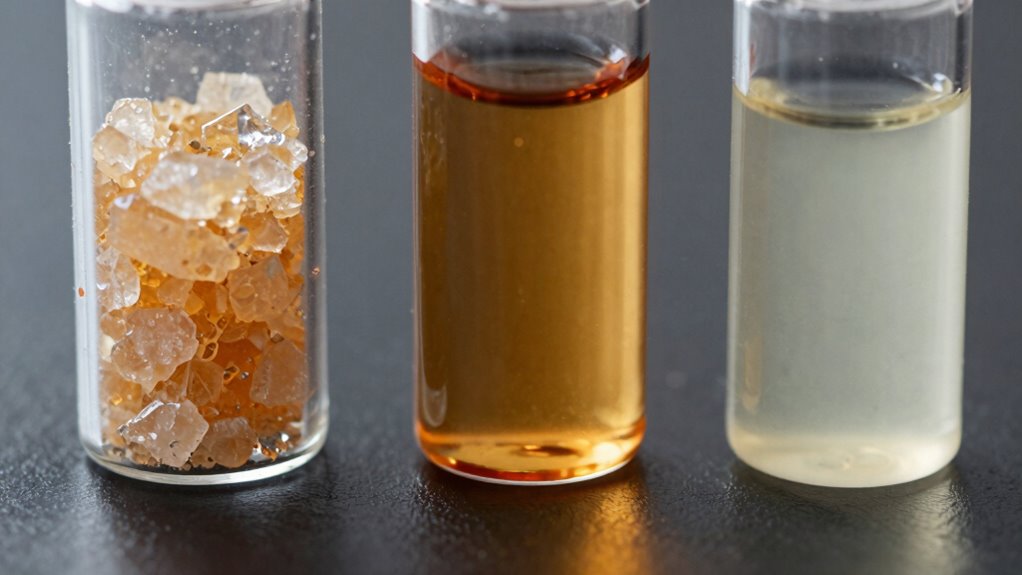
Different forms of vitamin C vary markedly in how well they maintain stability over time. Oxidation concerns are a primary factor, as vitamin C easily reacts with air and light, degrading its potency. Some derivatives, like sodium ascorbyl phosphate, offer better stability but still face formulation challenges to prevent oxidation. L-ascorbic acid, the most potent form, is highly unstable, especially when exposed to heat and light, leading to rapid deterioration. To guarantee effectiveness, manufacturers often include stabilizers or use airtight packaging. As a consumer, you should store vitamin C products in cool, dark places and pay attention to expiration dates. Additionally, understanding the role of technology in producing stable vitamin C formulations can help consumers make more informed choices. Advances in delivery systems also contribute to improving the shelf life and bioavailability of vitamin C supplements. Furthermore, ongoing research into formulation techniques aims to enhance stability and efficacy. Overall, stability depends on the specific form and how well it’s formulated and protected from environmental factors.
Vitamin C derivatives for skin absorption
As an affiliate, we earn on qualifying purchases.
As an affiliate, we earn on qualifying purchases.
Which Vitamin C Derivatives Penetrate the Skin Best?

When it comes to delivering vitamin C effectively into your skin, the type of derivative matters considerably. Some derivatives, like ascorbic acid, penetrate quickly, offering immediate benefits. Others, such as magnesium ascorbyl phosphate, penetrate more slowly but provide sustained release. Your choice depends on your skin’s needs and the delivery methods used. Here’s a quick comparison:
| Derivative | Skin Absorption Rate | Best For |
|---|---|---|
| Ascorbic Acid | Fast | Brightening, antioxidant boost |
| Magnesium Ascorbyl Phosphate | Moderate | Reducing hyperpigmentation |
| Ascorbyl Glucoside | Moderate | Anti-aging, stability |
| Sodium Ascorbyl Phosphate | Slow | Acne-prone skin |
| Tetrahexyldecyl Ascorbate | Deep, sustained | Anti-aging, skin firming |
Choosing the right derivative and delivery method guarantees maximum skin absorption. Additionally, derivative stability plays a crucial role in ensuring the vitamin C remains effective until it reaches your skin. Incorporating advanced formulation techniques can further improve delivery efficiency and product stability. Proper formulation also involves selecting suitable delivery systems that optimize absorption and protect the vitamin C from degradation. To enhance effectiveness, it’s also important to consider formulation techniques that optimize delivery and stability.
Vitamin C antioxidant face serum
As an affiliate, we earn on qualifying purchases.
As an affiliate, we earn on qualifying purchases.
How Do Stability and Potency Impact Your Skin Results?

Your skin benefits most when vitamin C stays stable and potent from application to absorption. If the ingredient degrades or loses strength, your results can be diminished. Using products with proper preservation strategies helps guarantee you get the maximum efficacy for brighter, healthier skin. Ensuring your skincare products are stored correctly and contain proper preservation strategies can help maintain the stability and potency of vitamin C over time. Additionally, understanding air quality and its impact on product stability can further enhance your skincare routine. Being mindful of cleaning appliances and environments can also reduce exposure to factors that may compromise your products’ integrity, as well as adopting proper storage techniques to further extend shelf life and effectiveness.
Ingredient Stability and Efficacy
The stability and potency of vitamin C ingredients directly influence how effectively they work on your skin. When vitamin C remains stable, it can deliver its antioxidant synergy, neutralizing free radicals and reducing signs of aging. However, formulation challenges, such as pH sensitivity and ingredient interactions, can compromise stability, diminishing efficacy. If the vitamin C degrades quickly, you won’t see the full benefits, like brighter tone or improved texture. Ensuring your skincare contains stable forms of vitamin C means better protection against environmental stressors and more noticeable results. Always look for products that address these formulation challenges, so the vitamin C remains potent from application to absorption. Formulation stability is key to *accessing* the true potential of vitamin C for your skin. Additionally, understanding media literacy can help you evaluate skincare claims and identify truly effective products. To maximize benefits, choosing products formulated with stabilized vitamin C can significantly influence your skin’s response. Recognizing ingredient stability in product formulations can help you select options that maintain their efficacy over time. Being aware of how different vitamin C forms can impact stability and strength ensures you make informed choices for healthier skin.
Potency Preservation Strategies
Maintaining the stability and potency of vitamin C directly impacts how well it works on your skin. To preserve its effectiveness, focus on formulation pH, as a lower pH (around 3.0) enhances stability and absorption. Proper packaging, like air-tight, opaque containers, prevents oxidation and degradation. Incorporating antioxidant synergy with ingredients like ferulic acid can further protect vitamin C from environmental damage. Vetted products are designed with these considerations in mind, helping to ensure maximum efficacy. Consistency in storage—keeping products in cool, dark places—also prolongs potency. When vitamin C remains stable and effective, it boosts collagen production and brightening effects. By paying attention to formulation pH, protective ingredients, and proper storage, you maximize skincare effectiveness and ensure your skin receives the full antioxidant benefits it needs to look healthier and more radiant. Additionally, understanding vitamin C stability factors can help you choose formulations that maintain their potency over time, as formulation pH and packaging play crucial roles in preserving active ingredients.
Comparing L-Ascorbic Acid and Its Derivatives: Pros and Cons
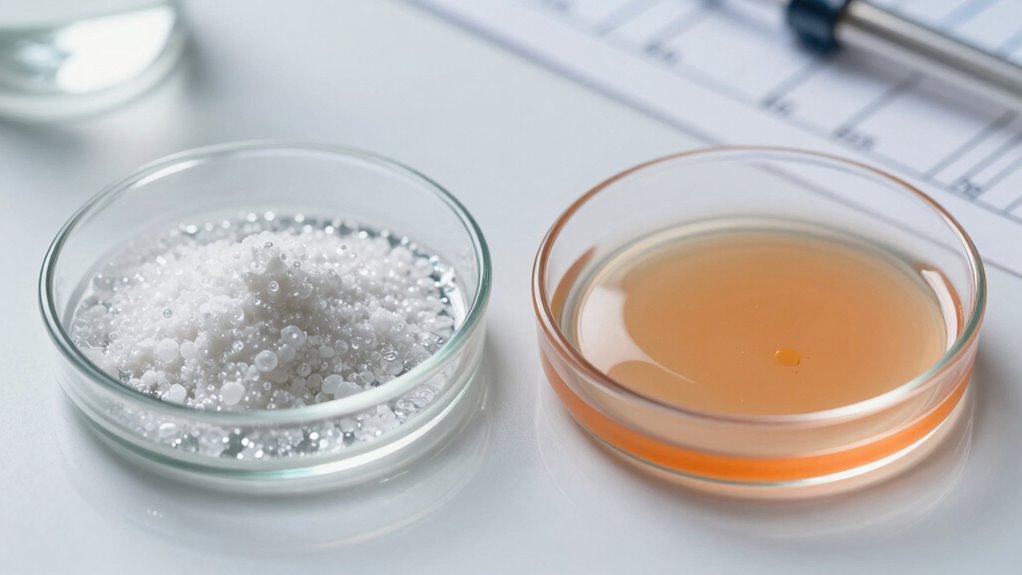
While L-ascorbic acid is the most well-known form of vitamin C, its derivatives offer alternative options that can enhance stability and absorption. These derivatives, like magnesium ascorbyl phosphate or sodium ascorbyl phosphate, often provide better formulation stability, reducing the risk of oxidation. Smart appliances can help optimize product storage conditions to preserve vitamin C integrity. However, they may require conversion within the skin to activate their antioxidant properties, impacting antioxidant synergy. Some users find these derivatives gentler on sensitive skin, but they may be less potent or slower to work compared to pure L-ascorbic acid. Formulation challenges include ensuring effective delivery and maintaining product stability. You should weigh the pros of increased stability and gentleness against potential compromises in potency and speed, depending on your skincare goals.
What Factors Affect the Effectiveness of Vitamin C in Skincare Products?
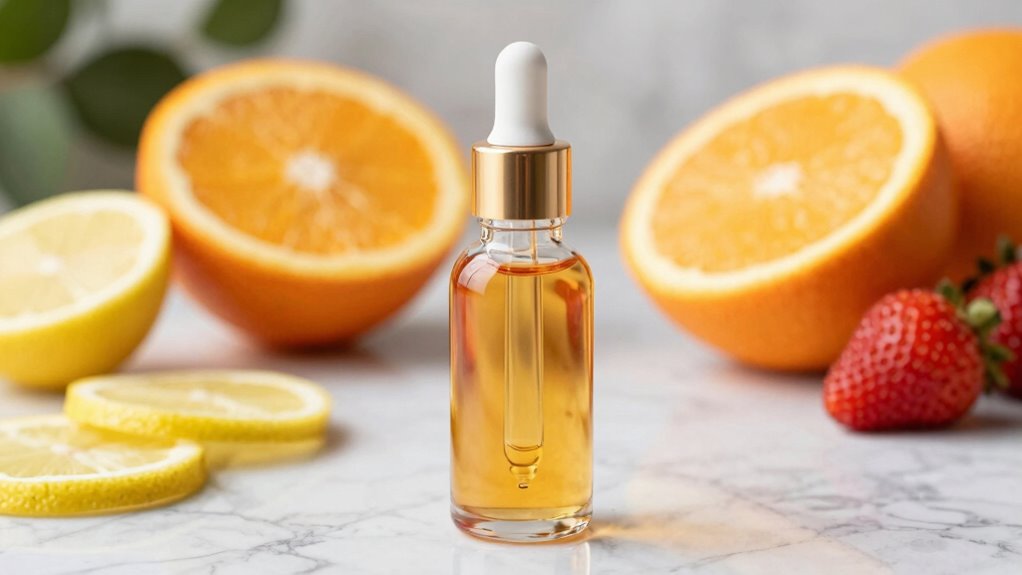
The effectiveness of vitamin C in skincare depends on several key factors, including its form, concentration, and how well it penetrates the skin. Oxidation concerns are a major challenge, as vitamin C easily degrades when exposed to air, light, or heat, reducing its potency. Proper formulation is critical to minimize these oxidation issues and guarantee stability. formulation challenges also involve selecting the right carrier and pH level, as vitamin C’s effectiveness varies with formulation techniques. If not formulated correctly, the product may not deliver the desired benefits, regardless of the concentration. Hence, understanding these factors helps you choose products that maintain vitamin C’s strength and maximize its skin benefits, making sure you get the most out of your skincare routine.
What Results Can You Expect From Different Vitamin C Products?

Different vitamin C products can deliver a range of visible and skin-healthy results depending on their formulation, concentration, and stability. When formulated well, vitamin C can brighten your skin, reduce signs of aging, and boost antioxidant synergy to protect against environmental damage. However, formulation challenges, like maintaining stability and preventing oxidation, influence how effective these products are over time. Higher concentrations often yield more noticeable improvements but may cause irritation if not balanced properly. You might see a reduction in dark spots, increased firmness, and improved overall texture. Still, the real results depend on the product’s ability to stay stable and active on your skin. Choosing a well-formulated product maximizes these benefits and helps you achieve your skincare goals.
How Do You Pick the Right Vitamin C Based on Your Skin Type and Goals?
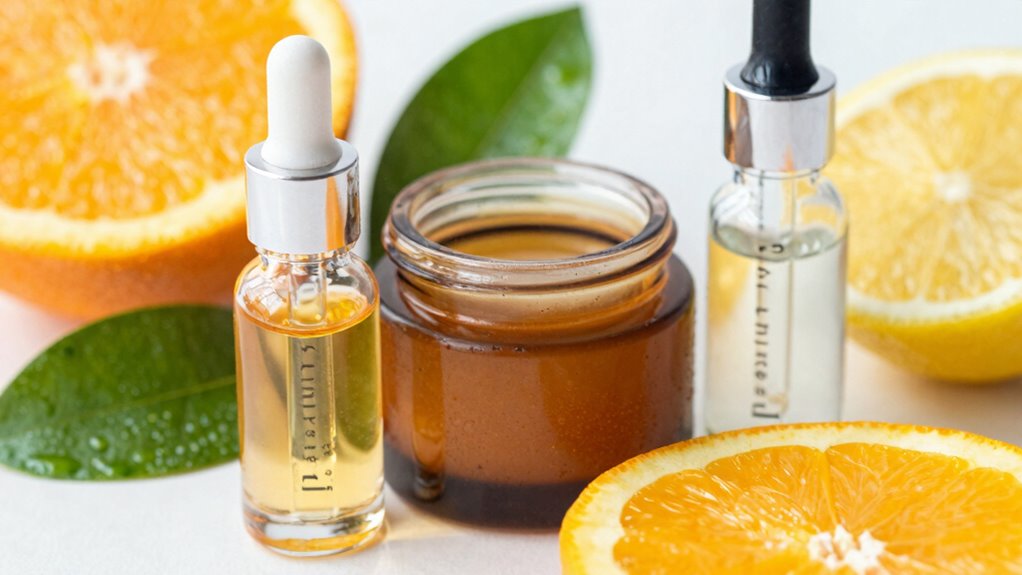
Choosing the right vitamin C product depends on understanding your skin type and your specific skincare goals. If you want better vitamin C absorption, opt for formulas with low molecular weight or stabilized forms like sodium ascorbyl phosphate. For sensitive skin, look for gentle options that minimize skin barrier effects, reducing irritation. Those with oily or acne-prone skin benefit from lightweight, non-comedogenic formulas. If anti-aging is your goal, consider higher concentrations of stable vitamin C to boost collagen production.
- Sensitive skin? Choose gentle, buffered formulas
- Need maximum absorption? Look for L-ascorbic acid or derivatives
- Concerned about skin barrier effects? Pick products with soothing ingredients
- Targeting anti-aging? Opt for higher stability and concentration
Common Mistakes When Using Vitamin C and How to Avoid Them
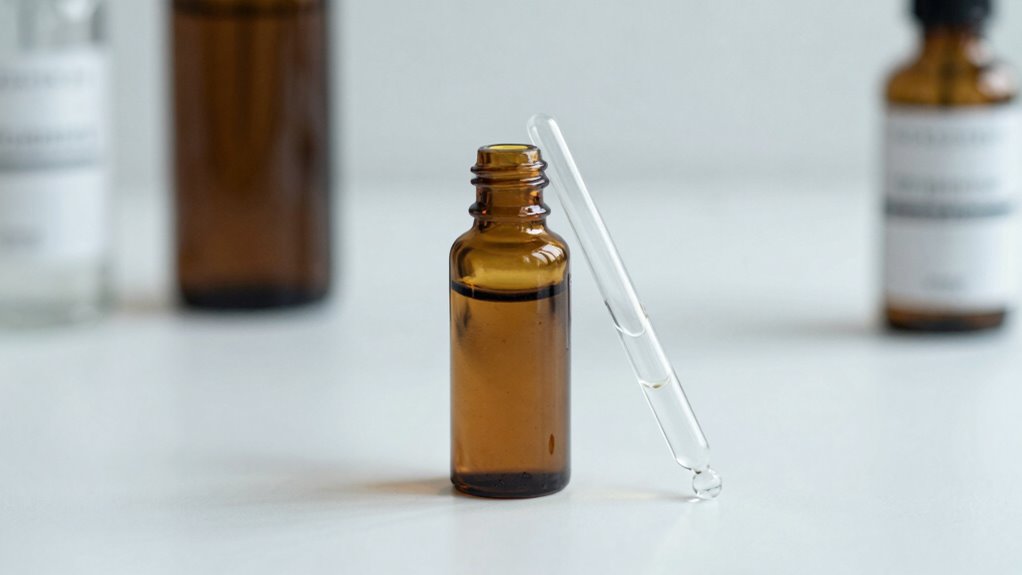
One common mistake is not storing your vitamin C products properly, which can cause them to lose potency. Using expired products is another error that can reduce effectiveness and potentially irritate your skin. To get the best results, make sure to keep your vitamin C in a cool, dark place and check expiration dates regularly.
Improper Storage Methods
Storing vitamin C improperly can critically reduce its effectiveness, so paying attention to storage methods is essential. Common storage mishaps include exposure to light, heat, air, and humidity, which degrade the vitamin’s potency. To avoid these issues, consider these packaging considerations:
- Keep your vitamin C in airtight, opaque containers to block light and air.
- Store in a cool, dark place away from heat sources.
- Avoid storing near sinks or humid areas to prevent moisture exposure.
- Don’t leave bottles open or exposed to air for extended periods.
Using Expired Products
Using expired vitamin C products can be risky because their potency diminishes over time, making them less effective or potentially causing skin irritation. Expiration concerns arise when a product no longer provides the intended benefits, and its safety may be compromised. When a vitamin C serum or cream expires, oxidation can occur, leading to a change in color, smell, or texture. Applying expired products may result in skin irritation or breakouts. To guarantee product safety, always check the expiration date before use, and discard products past their date. Proper storage can extend shelf life, but once expired, using the product isn’t worth the risk. Staying aware of expiration concerns helps maintain skincare effectiveness and keeps your skin healthy.
Future Trends in Vitamin C Skincare: What Innovations Are Coming?
As research advances, new innovations in vitamin C skincare are on the horizon, promising more effective and stable formulations. Future trends focus on enhancing antioxidant synergy and improving topical absorption to maximize benefits. Expect breakthroughs like stabilized vitamin C derivatives that resist oxidation, extending shelf life and potency. Researchers are also exploring nanotechnology to deliver deeper skin penetration, boosting efficacy. Additionally, combining vitamin C with other antioxidants could create powerful synergy, elevating anti-aging and brightening effects. Look out for delivery systems that increase skin retention, ensuring longer-lasting results. These innovations aim to make vitamin C products more reliable, potent, and easier for you to incorporate into your routine, ultimately leading to more noticeable improvements in skin health and radiance.
Frequently Asked Questions
How Does the Concentration of Vitamin C Affect Its Effectiveness?
You’ll notice that higher vitamin C concentrations can boost potency, but it doesn’t always mean better absorption. Too high a concentration might cause irritation or reduce absorption efficiency, depending on the formulation. Lower concentrations are gentler and absorb more effectively, making them ideal for daily use. Ultimately, choosing the right concentration depends on balancing potency and absorption to suit your skin’s needs.
Can Vitamin C Cause Skin Irritation or Allergies?
Yes, vitamin C can cause skin irritation or allergies, especially if you have skin sensitivity. You might notice redness, itching, or a burning sensation after applying it. In rare cases, allergy symptoms like swelling or rash could occur. To minimize this, do a patch test first and start with a lower concentration. If irritation persists, discontinue use and consult a dermatologist.
Does Packaging Influence Vitamin C Stability?
Packaging impact is vital for maintaining vitamin C stability, much like protecting a delicate treasure. Preservation techniques such as opaque, airtight containers shield vitamin C from light and air, preventing oxidation and degradation. When you choose products with proper packaging, you guarantee the potency stays intact longer. So, don’t overlook packaging—it’s your first line of defense in preserving vitamin C’s effectiveness and ensuring your skincare or supplement benefits last.
Are There Natural Sources of Stable Vitamin C for Skincare?
Yes, some natural sources offer stable vitamin C for skincare, like Kakadu plum, rose hips, and acerola cherries. These ingredients provide potent antioxidants and boost collagen production, enhancing your skin’s health and radiance. Including products with these natural sources can maximize your skincare benefits, offering protection against environmental damage and supporting a youthful appearance. Look for serums, creams, or oils that feature these ingredients for ideal results.
How Long Does It Take to See Results From Vitamin C Skincare?
Most people see visible improvements from vitamin C skincare within 4 to 6 weeks. Studies show significant changes in skin brightness and texture often appear around this time. The timing of results depends on your skin type and product concentration. Consistent use is key. If you stay dedicated, you’ll likely notice brighter, more even skin in just a month or so, making your efforts well worth it.
Conclusion
With the right Vitamin C form in your skincare arsenal, you’ll illuminate your skin like dawn breaking over a calm sea. Understanding stability, penetration, and your skin’s unique needs guarantees your glow isn’t fleeting but a lasting sunrise. As innovation continues to shimmer on the horizon, embrace these potent antioxidants and craft a radiant canvas that reflects your inner brilliance—bright, resilient, and forever luminous.