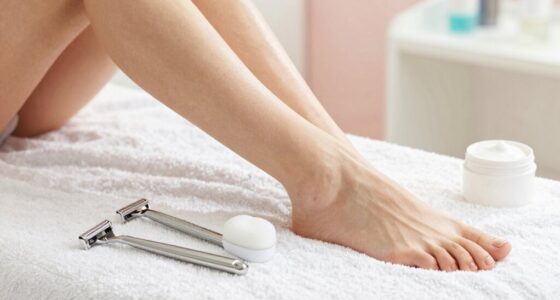
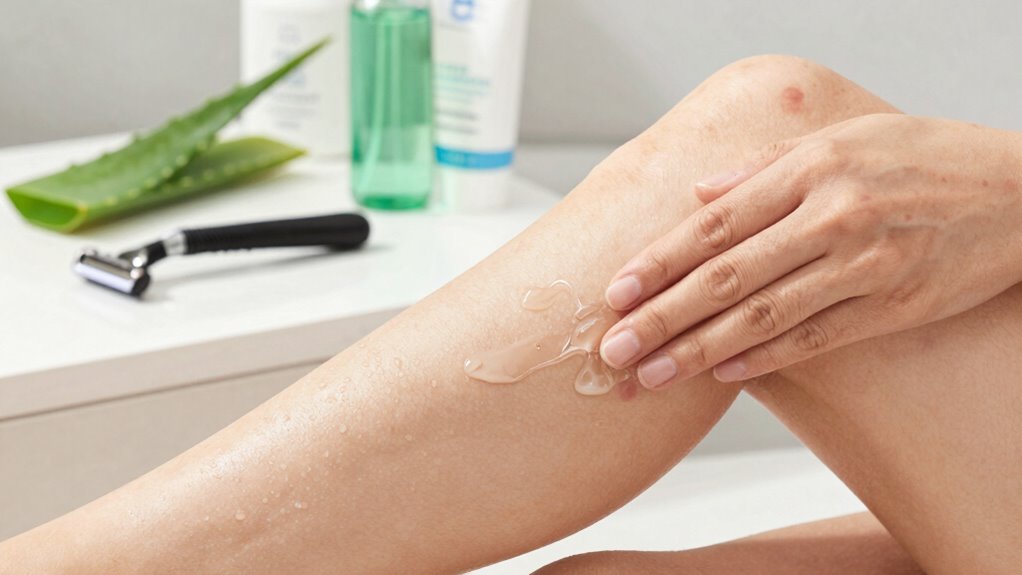

To reduce the risk of ingrown hairs during at-home hair removal, start by preparing your skin with gentle cleansing and exfoliation to clear dead skin and unclog pores. Use proper techniques—shave with sharp razors, wax smoothly, and thread carefully—while maintaining tool hygiene. Post-removal, soothe your skin with gentle products and avoid over-exfoliating. Following these steps will help you achieve smoother results and prevent bumps, and you’ll discover more ways to care for your skin if you keep exploring.
Key Takeaways
- Prepare skin with gentle cleansing and exfoliation before hair removal to prevent clogged follicles and ingrown hairs.
- Use sharp, sanitized tools and proper techniques, shaving in the direction of hair growth to minimize skin trauma.
- Moisturize skin post-removal with soothing products containing ingredients like witch hazel or salicylic acid.
- Regularly exfoliate after hair removal to remove dead skin cells and reduce trapped hairs.
- Avoid tight clothing and friction to decrease irritation and support healthy skin healing.
What Are Ingrown Hairs and Why Do They Happen?

Ingrown hairs occur when hair grows back into the skin instead of outward, often causing bumps, redness, and irritation. This happens because of follicle blockage, which traps the hair beneath the skin’s surface. When hair follicles become clogged with dead skin cells, oil, or debris, the hair can’t break through properly, leading it to curl or grow sideways into the skin. The result is skin irritation and inflammation, making the area tender or sore. Poor hair removal techniques, such as shaving too closely or using dull razors, can increase the risk of follicle blockage. Additionally, Free Floating can contribute to uneven hair growth patterns, increasing the likelihood of ingrown hairs. Understanding why ingrown hairs happen helps you recognize the importance of proper hair removal habits to prevent skin irritation and reduce their occurrence. Using gentle exfoliation can also help prevent follicle blockage and keep hair growth smooth, especially when combined with proper hair removal techniques. Incorporating skin care routines designed for sensitive skin can further minimize the risk of ingrowns and irritation.
How to Prepare Your Skin to Prevent Ingrown Hairs
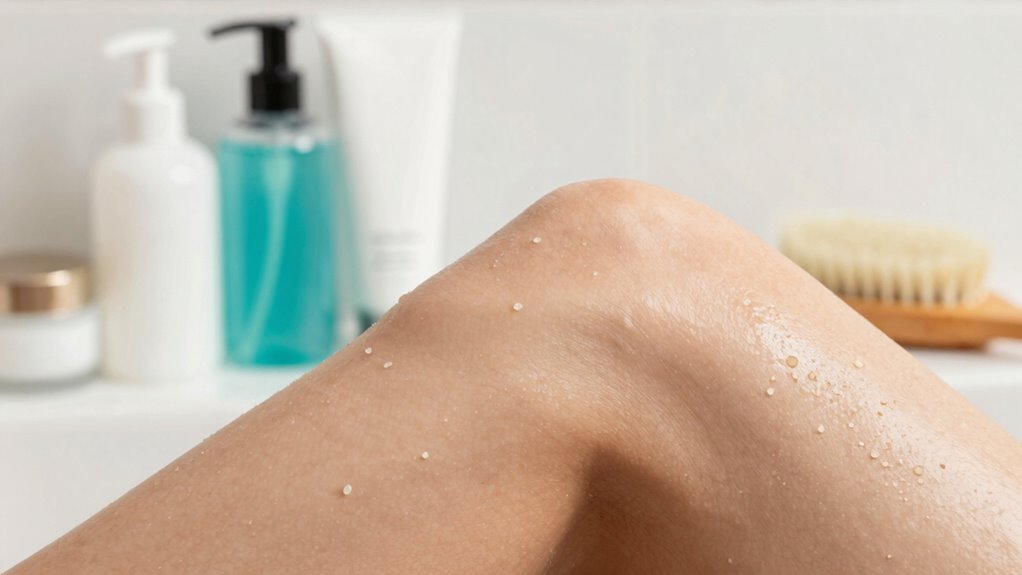
Preparing your skin before hair removal is essential to minimize the risk of ingrown hairs. Begin with gentle skin exfoliation to remove dead skin cells that can clog hair follicles and trap hairs beneath the surface. Use a soft scrub or chemical exfoliant a day or two before your session to keep pores clear. After exfoliating, follow a consistent moisturizing routine to keep your skin soft and supple, which helps hairs grow straight and reduces irritation. Hydrated skin is less likely to develop bumps or ingrowns. Incorporate proper skincare techniques such as avoiding harsh soaps or overly hot water, which can dry out your skin. Additionally, using products with hydrating ingredients can further enhance skin moisture and elasticity. Maintaining skin hydration is crucial, as it supports the skin’s natural barrier and promotes healthy hair growth, further reducing the likelihood of ingrowns. Regularly applying moisturizers with soothing properties can also help calm irritated skin and prevent bumps. For optimal results, consider incorporating pre-hair removal routines that prepare your skin more effectively. By preparing your skin with exfoliation and proper moisturizing routines, you create a smooth, healthy surface that’s less prone to ingrown hairs during hair removal.
Which Hair Removal Method Is Best for Avoiding Ingrowns?
When choosing a hair removal method to minimize the risk of ingrowns, opt for options that remove hair from the root and leave a smooth finish. Laser hair removal is often the best choice because it targets hair follicles directly, reducing the chances of hair growing back improperly. Unlike shaving or waxing, laser treatments weaken hair follicles over time, leading to finer, sparser hair and fewer ingrowns. If you prefer at-home options, guarantee you use a high-quality laser hair removal device and follow the instructions carefully. This method minimizes skin irritation and helps prevent hairs from growing inward, which is a common cause of ingrowns. Proper skin care techniques can further reduce the risk of ingrowns and irritation. Incorporating pre- and post-treatment routines can optimize results and skin health. Additionally, understanding how hair growth cycles influence removal effectiveness can help tailor your approach. For example, timing treatments during the appropriate hair growth phase can enhance results. Overall, laser hair removal offers a more permanent and less irritating solution for those concerned about ingrowns.
How to Use Waxing, Shaving, and Threading Properly at Home
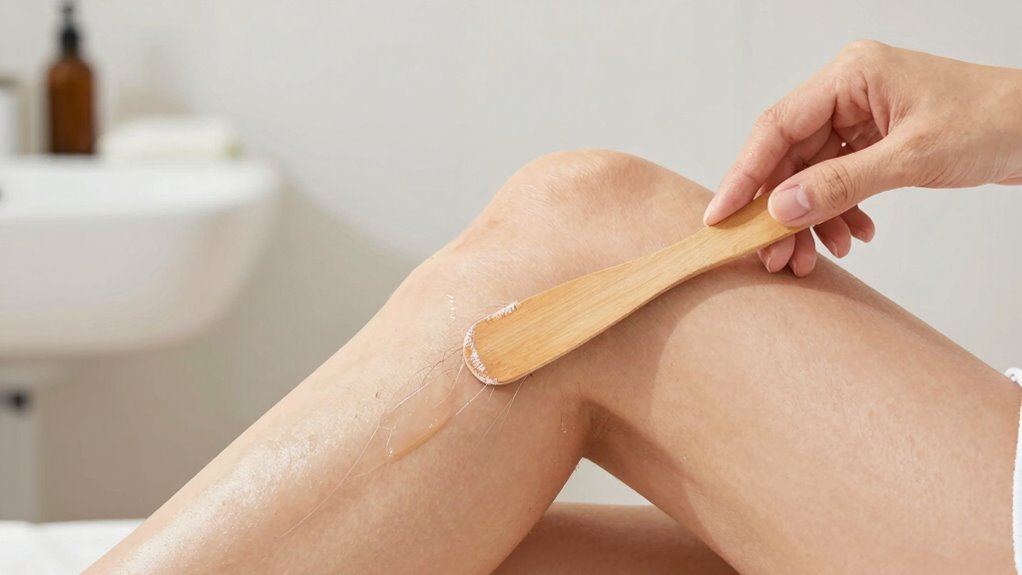
Using waxing, shaving, and threading correctly is key to avoiding irritation and ingrowns. Make sure you sanitize your tools and prep your skin beforehand for the best results. Proper technique and cleanliness can make a big difference in your at-home hair removal routine. Additionally, understanding skin preparation can help minimize the risk of complications. Incorporating consistent maintenance can also reduce the likelihood of ingrowns and promote healthier skin over time. Being aware of hair growth cycles can further improve your hair removal outcomes by timing treatments appropriately. For example, aligning your hair removal sessions with the rhythm of hair growth can enhance effectiveness and reduce irritation. Paying attention to your body’s natural healing process can support recovery and prevent skin issues after hair removal.
Proper Technique Matters
To achieve smooth, ingrown-free results at home, mastering proper technique when waxing, shaving, or threading is vital. Consistency in your technique ensures even hair removal and reduces irritation. Always use tools with precision—sharp razors, clean waxing strips, and fine-threaded tools—to minimize skin trauma. When shaving, shave in the direction of hair growth and avoid pressing too hard. For waxing, apply the strip smoothly and pull quickly against hair growth. Threading requires careful, controlled movements close to the skin. Staying consistent with your technique helps prevent uneven removal and irritation that can lead to ingrowns. Additionally, tool maintenance is essential for safe and effective hair removal, ensuring your tools stay sharp and clean. Proper hygiene practices also play a crucial role in preventing infections and skin issues. Regularly cleaning your tools reduces bacteria transfer and keeps them in optimal condition. Using exfoliation techniques regularly can also help prevent ingrowns by removing dead skin cells that block hair growth. Incorporating knowledge of skin anatomy can help you better understand how to avoid damaging the skin and promote healthy hair growth. Remember, precision and uniformity are key to achieving the best results and keeping your skin healthy.
Sanitize and Prep Skin
Before you start waxing, shaving, or threading at home, make sure to sanitize and prepare your skin to prevent infections and guarantee effective hair removal. Begin with gentle skin exfoliation a day or two beforehand to remove dead skin cells, reducing the risk of ingrowns. Cleanse your skin thoroughly with a mild antiseptic or alcohol-based wipe to eliminate bacteria and oils that can cause breakouts. Follow good hygiene practices by washing your hands and tools before starting. Properly prepping your skin not only minimizes the chance of infection but also helps the hair removal process go smoothly. Remember, a clean, exfoliated surface allows for better hair removal and less irritation, making your at-home routine safer and more effective. Incorporating proper skin sanitation techniques can significantly improve your results and reduce complications.
Post-Hair Removal Tips to Prevent Ingrown Hairs
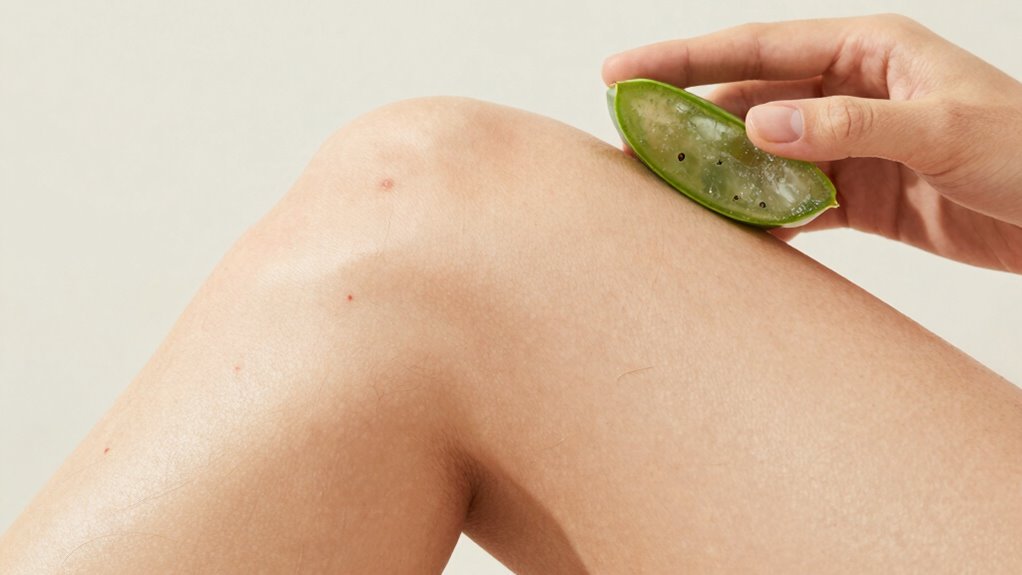
To prevent ingrown hairs after hair removal, you need to focus on proper skin preparation, technique, and tool care. Using the right methods helps minimize irritation, while caring for your skin afterward reduces the risk of ingrowns. Staying consistent with these tips keeps your skin smooth and healthy.
Proper Skin Preparation
Have you ever wondered why proper skin preparation matters after hair removal? It’s essential because clean, prepped skin minimizes the risk of ingrown hairs. Start by gently cleansing your skin to remove dirt and oils, which can clog pores and lead to irritation. To open pores, consider a warm compress or steam, making hair removal easier and less damaging to your skin. Proper preparation ensures smoother results and reduces inflammation. Here’s a quick guide:
| Step | Purpose | Tips |
|---|---|---|
| Skin cleansing | Remove impurities | Use a gentle, fragrance-free cleanser |
| Pore opening | Prepare skin for hair removal | Use warm water or steam |
| Drying | Prevent bacteria growth | Pat skin dry with a clean towel |
| Application of products | Calm and soothe skin | Use a soothing toner or moisturizer |
Technique and Tool Care
After hair removal, taking proper care of your tools and technique is essential in preventing ingrown hairs. Regular tool maintenance ensures your tools stay sharp and effective, reducing skin irritation and uneven hair removal. Clean your razors, epilators, or waxing tools after each use with alcohol or disinfectant to prevent bacteria buildup. Technique precision matters too; use steady, deliberate motions to avoid skipped spots or skin trauma. Avoid pressing too hard, which can cause irritation and ingrowns, and always follow manufacturer instructions for your devices. Properly maintained tools and careful technique help achieve smooth, even results, reducing the likelihood of hairs growing back into the skin. Staying consistent with tool care and precision will improve your at-home hair removal routine and minimize ingrown hairs.
Post-Removal Skin Care
Proper skin care following hair removal helps keep your skin calm and less prone to ingrown hairs. First, avoid common hair removal myths that suggest skipping post-care. Instead, gently cleanse the area with a mild, non-comedogenic cleanser. To prevent ingrowns, incorporate skin exfoliation—using gentle scrubs or chemical exfoliants—to remove dead skin cells that can clog hair follicles. Remember, over-exfoliating can irritate your skin, so do it sparingly. Afterward, apply a soothing, hydrating moisturizer to reduce inflammation. Consider products with ingredients like salicylic acid or witch hazel, which help calm the skin. Consistent post-removal care minimizes irritation and prevents ingrowns, keeping your skin smooth and healthy.
Top Products and Remedies for Treating Ingrown Hairs
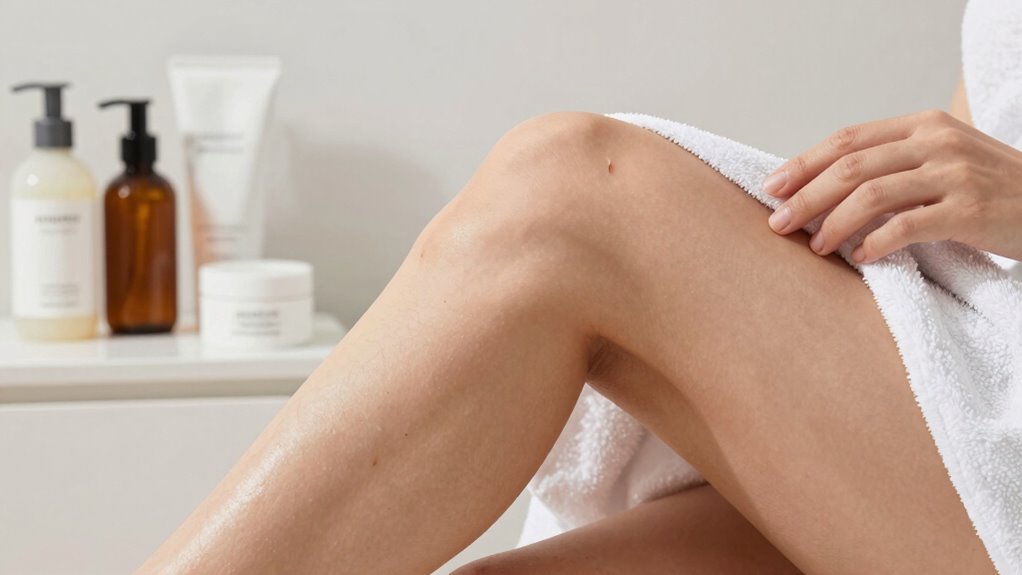
When it comes to treating ingrown hairs, choosing the right products and remedies can make a significant difference. Topical exfoliants containing ingredients like salicylic acid or glycolic acid help loosen dead skin and free trapped hairs. They’re effective for reducing inflammation and preventing future ingrowns. For stubborn cases, laser treatments can be considered, as they target hair follicles directly, decreasing hair growth over time. Additionally, over-the-counter creams with hydrocortisone can soothe irritated skin. Using these products consistently can help clear existing ingrowns and improve your skin’s texture. Remember, gentle exfoliation and avoiding picking at ingrown hairs are essential. Combining these remedies with proper hair removal techniques will give you the best chance at smoother, ingrown-free skin.
Lifestyle Habits That Help Keep Skin Smooth and Ingrown-Free
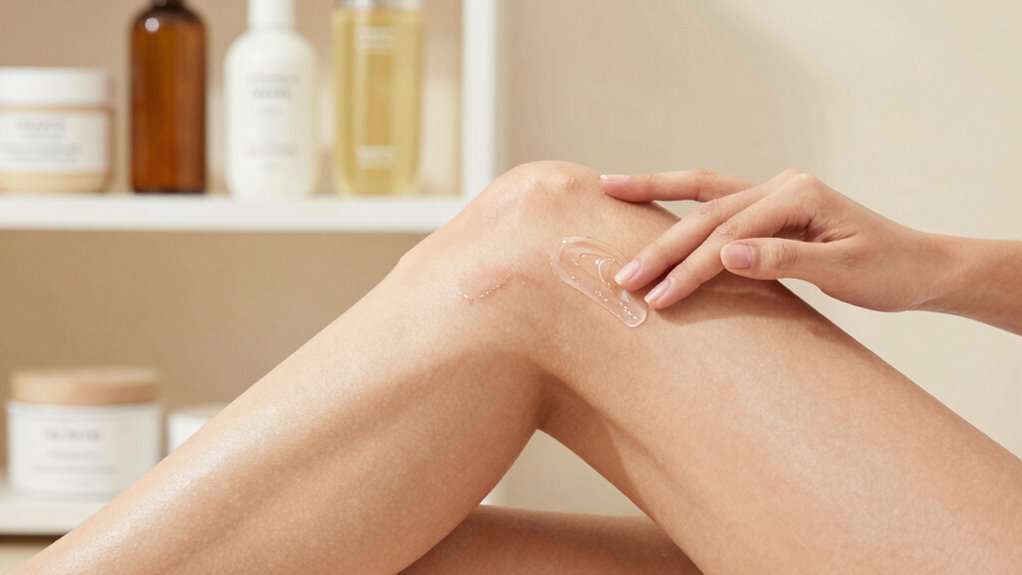
Maintaining healthy skin and preventing ingrowns often starts with simple lifestyle habits. Prioritize skin hydration by drinking plenty of water daily and using moisturizers suited to your skin type. Your dietary habits also play a vital role; eat a balanced diet rich in vitamins A, C, and E to support skin health and healing. Additionally, consider these habits:
- Exfoliate regularly to remove dead skin cells and prevent hair from becoming trapped.
- Wear loose, breathable clothing to reduce irritation and friction.
- Avoid long, hot showers that can dry out your skin.
- Keep your skin clean and dry, especially after hair removal sessions.
These habits help maintain skin elasticity and smoothness, reducing the likelihood of ingrowns and promoting overall skin health.
When Should You See a Doctor for Persistent Ingrowns?
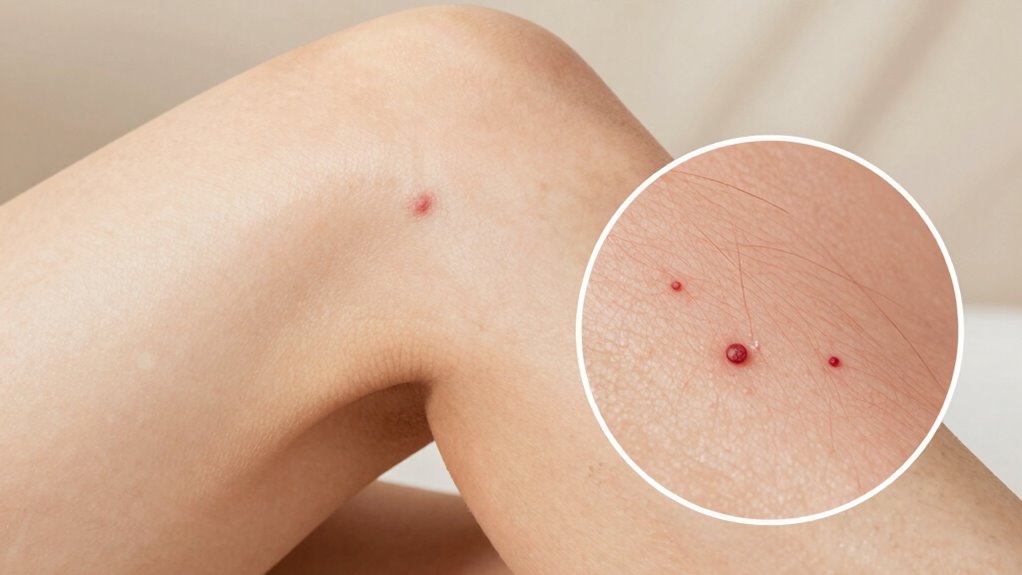
While adopting healthy skin habits can substantially reduce ingrowns, sometimes they persist despite your efforts. If you notice that ingrown hairs become painful, swollen, or infected, it’s time to seek a dermatologist consultation. Persistent ingrowns may be caused by underlying issues like infected hair follicles or abnormal skin reactions. Ignoring these signs can lead to scarring or more serious infections. You should see a doctor if ingrowns don’t improve after several weeks, recur frequently, or cause significant discomfort. A dermatologist can identify the ingrown hair causes and recommend targeted treatments, such as medicated creams or minor procedures. Don’t delay seeking professional advice if your skin shows signs of worsening or if home remedies aren’t effective.
Common Mistakes to Avoid During At-Home Hair Removal
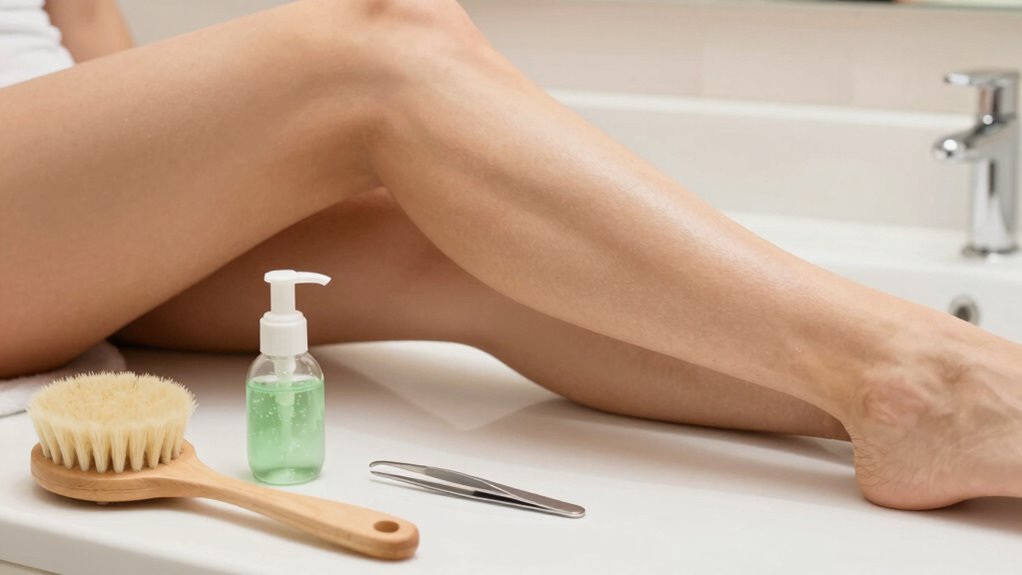
Avoiding common mistakes can make at-home hair removal safer and more effective. One mistake is using razor dull blades, which can cause irritation and increase the risk of ingrowns. Always replace blades regularly to guarantee a clean, close shave. Another mistake is improper exfoliation; skipping this step can lead to clogged pores and ingrown hairs. Be gentle and use proper techniques to prepare your skin. Additionally, rushing through the process can result in uneven removal or cuts. Avoid shaving over the same area multiple times in one session. Finally, neglecting to disinfect tools or using unclean equipment can introduce bacteria, leading to infections.
- Using dull blades instead of sharp ones
- Skipping or improper exfoliation
- Rushing through the process
- Neglecting tool sanitation
Frequently Asked Questions
Can Certain Skin Types or Tones Increase Ingrown Hair Risk?
Yes, certain skin types and tones can increase your risk of ingrown hairs. If you have sensitive skin or darker skin tones, you’re more prone to irritation and ingrowns from hair removal. Additionally, hair color plays a role—darker hair is easier to target, but if your skin is sensitive, you might experience more irritation. Always choose gentle methods and test a small area first to reduce your risk.
Are There Specific Ingredients to Look for in Ingrown Hair Products?
Look for products with gentle yet effective ingrown hair ingredients, like salicylic acid or glycolic acid, which help exfoliate and clear pores. Effective ingredient combinations, such as tea tree oil blended with chamomile, can also soothe skin and reduce inflammation. These ingredients work together to loosen trapped hairs and prevent new ingrowns, giving you smoother skin. Always choose products suited for your skin type to maximize benefits.
How Often Should I Exfoliate to Prevent Ingrown Hairs?
You should exfoliate 2 to 3 times a week to prevent ingrown hairs. Incorporate gentle exfoliation into your skincare routine, using products with salicylic acid or gentle scrubs. Over-exfoliating can irritate your skin, so stick to this frequency. Consistent exfoliation helps remove dead skin cells, keeping hair follicles clear and reducing the chance of hairs growing inward. Adjust based on your skin’s sensitivity for the best results.
Are There Natural Remedies Effective for Treating Ingrown Hairs?
Coincidentally, herbal remedies and essential oils can be quite effective for treating ingrown hairs naturally. You might find that tea tree oil, known for its anti-inflammatory properties, helps reduce redness and swelling. Similarly, aloe vera soothes irritated skin, while witch hazel tightens pores. Applying these remedies gently can promote healing and prevent further ingrowns, making your skincare routine more natural and gentle.
Does Shaving With a Different Blade or Technique Reduce Ingrown Hairs?
Using a different blade variation or adjusting your shaving technique can indeed help reduce ingrown hairs. Switch to a sharp, clean blade to prevent irritation, and opt for gentle, short strokes rather than pressing hard. Shaving in the direction of hair growth and avoiding multiple passes over the same area minimizes irritation. These changes lessen the chances of hairs growing back into your skin, reducing ingrown hairs effectively.
Conclusion
By taking these simple steps, you can keep your skin smooth and free from pesky ingrowns. Remember, patience and gentle care are your best allies, just like a wise old sage in a fairy tale. Avoid rushing or skipping prep, and don’t hesitate to seek help if ingrowns persist. With consistent effort, you’ll enjoy hair-free skin that’s as radiant as a midsummer’s day—no magic needed, just your own careful touch.