
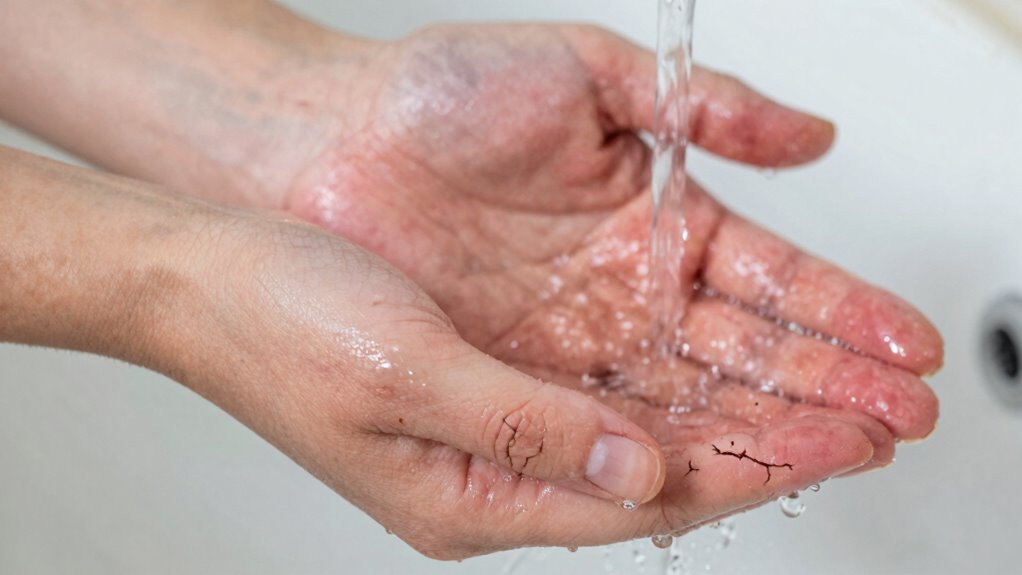

To protect your skin without overdoing it, use gentle, hydrating soaps and lukewarm water, and avoid harsh chemicals like sulfates and artificial fragrances. Limit frequent washing when possible, and always follow up with a good moisturizer that contains glycerin or ceramides to lock in moisture and restore your skin’s barrier. Be mindful of your routine and skin’s response, and discover more ways to balance hygiene with skin health as you keep exploring.
Key Takeaways
- Use gentle, moisturizing soaps with ingredients like glycerin or ceramides to minimize skin damage during hand washing.
- Wash with lukewarm water and pat dry gently to preserve skin barrier function.
- Apply a rich moisturizer immediately after washing to lock in hydration and repair the skin.
- Limit hand washing frequency when skin is dry or irritated to prevent further damage.
- Incorporate skin barrier repair products and avoid harsh chemicals to maintain healthy, resilient hands.
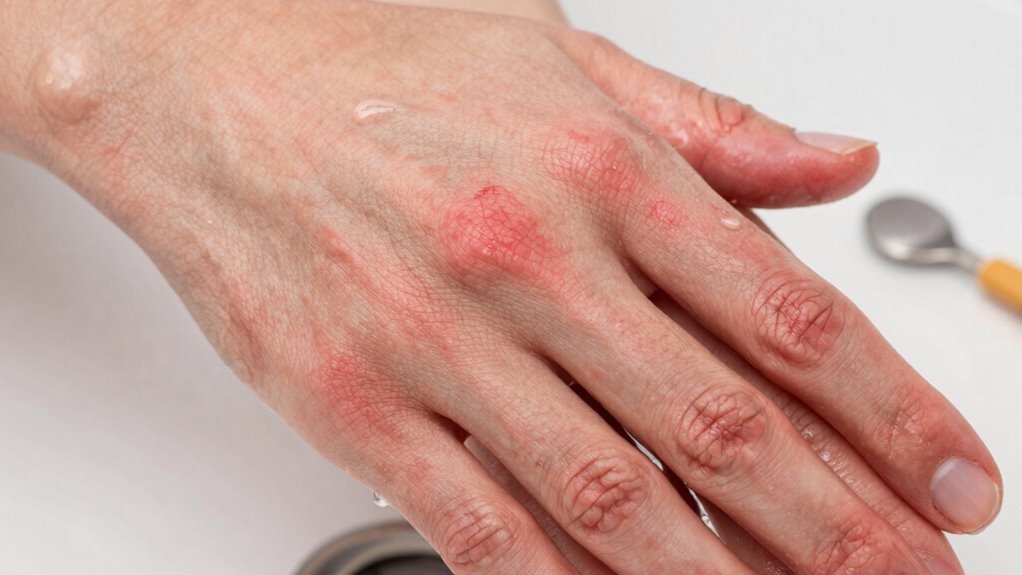
While hand washing is vital for preventing illness, excessive or harsh washing can cause damage to your skin. The constant scrubbing strips away natural oils, leaving your hands dry, cracked, and more vulnerable to infections. To protect your skin while staying clean, understanding the benefits of moisturizer and the effects of soap ingredients is essential. Moisturizer benefits go beyond just comfort; they help restore the skin’s barrier, locking in moisture and preventing irritation. After washing, applying a good moisturizer can make a significant difference, especially if you opt for products containing ingredients like glycerin, hyaluronic acid, or ceramides, which attract and retain moisture. Regular use of moisturizer creates a protective layer that shields your skin from harsh elements and reduces the likelihood of cracking and peeling. Incorporating skin barrier repair into your skincare routine can further enhance your skin’s resilience against frequent washing. Being mindful of soap ingredient effects is equally important. Not all soaps are created equal — some contain harsh chemicals or fragrances that can strip away your skin’s natural oils more aggressively. Look for gentle, hydrating soaps with mild surfactants and avoid those with alcohol, sulfates, or artificial fragrances. These ingredients tend to be especially drying and can exacerbate skin damage over time. Switching to a soap that emphasizes skin-friendly ingredients can help maintain your skin’s integrity and prevent unnecessary irritation. If you have sensitive skin, consider using fragrance-free or soap-free cleansers that are designed to be milder yet effective. To strike the right balance, limit washing frequency when possible, especially if your skin is already dry or irritated. When you do wash, use lukewarm water instead of hot, which can further dry out your skin. Pat your hands dry gently rather than rubbing them vigorously, as this can also cause damage. Immediately after washing, apply a moisturizer to trap the moisture in and form a barrier against irritants. Incorporating these practices into your routine ensures you stay hygienic without sacrificing your skin’s health. Ultimately, protecting your skin from damage doesn’t mean you have to compromise on cleanliness. By choosing the right soap ingredients and regularly using a moisturizer with proven benefits, you can keep your hands clean and healthy. It’s about being strategic—using gentle products, adjusting washing habits, and prioritizing skin hydration. With these small but effective adjustments, you’ll reduce the risk of damage and maintain soft, resilient hands even with frequent hand washing.
Frequently Asked Questions
Can Using Hand Sanitizer Replace Proper Hand Washing?
Using hand sanitizer can’t fully replace proper hand washing, especially when hands are visibly dirty or greasy. Hand sanitizer effectiveness is high against many germs, but it doesn’t remove dirt or chemicals. Frequent use can weaken your skin barrier, so it’s best to wash with soap and water when possible. This helps maintain skin health while effectively reducing germs, ensuring your hands stay clean without damaging your skin.
How Often Should I Moisturize After Washing My Hands?
You should moisturize your hands immediately after washing, ideally within a few minutes, to lock in skin hydration. For best results, aim for moisturizer frequency throughout the day—especially after hand washing—to prevent dryness and irritation. Consistent moisturizing helps maintain skin’s barrier, keeping it healthy and resilient. Don’t wait until your skin feels tight; regular application guarantees your hands stay soft, protected, and comfortable all day long.
Are There Specific Soaps That Are Gentler on Skin?
Yes, you should look for gentle soaps and skin-friendly cleansers that are designed to be mild and moisturizing. These products typically have fewer harsh chemicals, making them less likely to strip your skin’s natural oils. When choosing a soap, check for labels that mention “gentle,” “moisturizing,” or “suitable for sensitive skin.” Using these soaps helps protect your skin without causing irritation or damage.
Does Wearing Gloves Reduce or Increase Hand Skin Damage?
Wearing gloves can reduce hand skin damage if you choose the right material, like nitrile or latex, which provide effective hand protection. They act as a barrier, preventing frequent washing and harsh chemicals from directly contacting your skin. However, prolonged glove use can cause sweating and irritation. To prevent damage, change gloves regularly, ensure proper fit, and opt for breathable materials when possible, balancing protection with skin health.
What Are Signs My Skin Is Too Damaged From Hand Washing?
They say “a sign of trouble is trouble itself,” and if your skin starts peeling, turns red, or feels sore after frequent hand washing, those are clear signs your skin is too damaged. You might notice increased redness, soreness, or peeling skin, indicating irritation. Pay attention to these symptoms and give your skin a break, using gentle moisturizers to help repair and protect your hands from further damage.
Conclusion
Think of your skin as a finely tuned garden. With each hand wash, you’re watering delicate blossoms, risking overwatering and damage. But with mindful care—using gentle soaps, moisturizing, and proper techniques—you become the diligent gardener who nurtures without drowning. Protect your skin from the harsh elements, and it’ll flourish instead of wither. In this dance of care, balance is your secret weapon—allowing your skin to stay resilient and radiant, just like a well-tended garden thriving in every season.