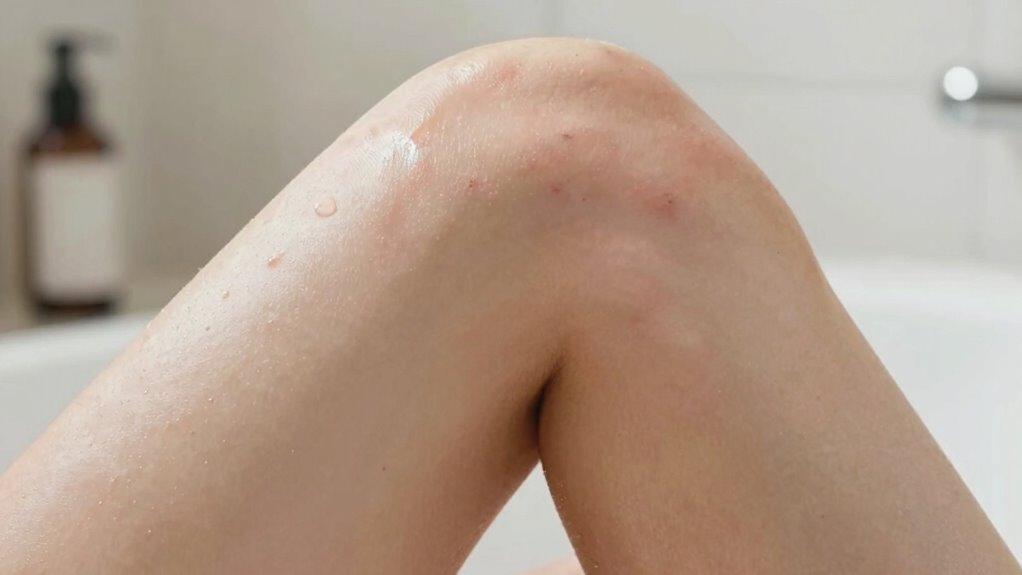

Your legs might get itchy after showering because hot water and harsh soaps strip away natural oils, drying out your skin and weakening your moisture barrier. Using lukewarm water, gentle, fragrance-free cleansers, and applying moisturizer while your skin is damp can help prevent this. If your itching persists or worsens, skin conditions like eczema or psoriasis might be involved. Continue exploring ways to soothe your skin and keep it healthy.
Key Takeaways
- Hot water and harsh soaps strip natural oils, leading to skin dryness and post-shower itchiness on legs.
- Fluctuating indoor humidity and rough towels can dry out skin, increasing irritation after showering.
- Skin conditions like eczema or psoriasis cause dry, inflamed patches that itch more after washing.
- Using lukewarm water, gentle cleansers, and moisturizing immediately helps restore skin barrier and reduce itchiness.
- Avoiding prolonged hot showers and incorporating soothing ingredients like aloe vera can minimize leg itching.
Why Does Your Skin Itch After Showering?
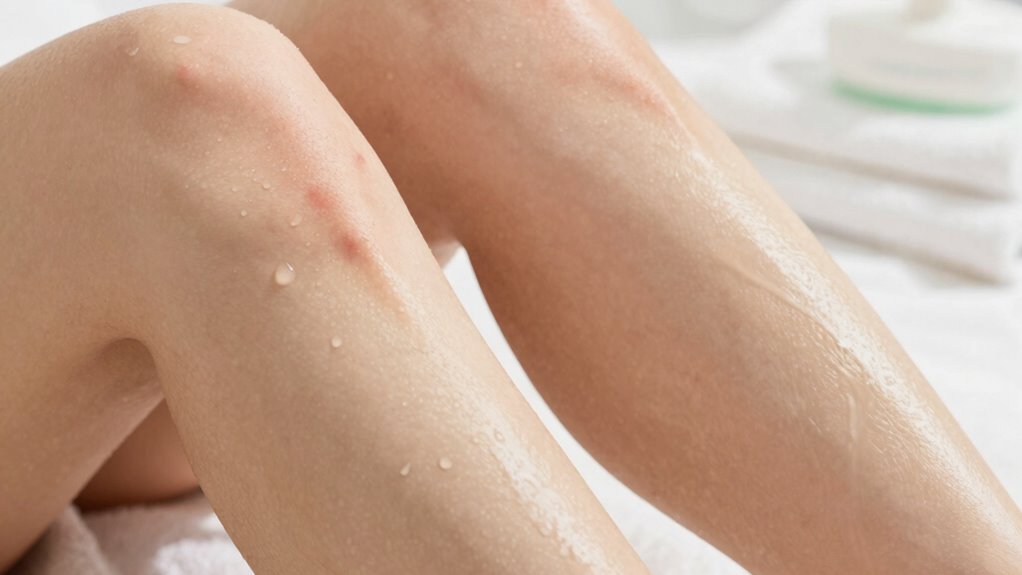
After you shower, your skin may start to itch for several reasons. One common factor is fluctuating humidity levels, which can dry out your skin and make it more prone to irritation. If the air around you is too dry, your skin loses moisture quickly, leading to itchiness. Additionally, towel dryness plays a role—using a towel that’s too rough or not thoroughly dried can strip away natural oils, leaving your skin feeling rough and itchy. Poor humidity control in your bathroom or home can exacerbate this. When your skin’s moisture barrier is compromised, it becomes more sensitive and prone to irritation after showering. Research suggests that maintaining proper skin barrier health is essential for preventing irritation and dryness. Incorporating natural elements into your environment, such as houseplants, can help stabilize indoor humidity levels and support skin health. Paying attention to humidity levels and ensuring your towel is soft and adequately dry can help reduce post-shower itching. Additionally, choosing appropriate skincare products that nourish and hydrate your skin can further support your skin’s recovery and health. To further support your skin, consider using moisturizers that help restore and protect your skin’s natural barrier. Using an air purifier to maintain cleaner indoor air can also prevent additional skin irritation caused by airborne pollutants.
Does Water Temperature Make Your Skin More Itchy?

Water temperature can considerably influence whether your skin feels itchy after a shower. Hot water strips away natural oils, increasing skin sensitivity and dryness, which leads to itchiness. Conversely, cooler water helps retain moisture and maintains your skin’s barrier. If you notice more itching after hot showers, try lowering the temperature to see if it improves your comfort. Here’s a quick comparison:
| Water Temperature | Effect on Skin Sensitivity | Resulting Itchiness |
|---|---|---|
| Hot (above 104°F) | Increases sensitivity, dries out skin | More itchy |
| Warm (98-104°F) | Mild impact, balances cleansing | Less itchy |
| Lukewarm (90-98°F) | Gentle, preserves oils | Minimal itchiness |
| Cool (below 90°F) | Soothes skin, reduces sensitivity | Least itchy |
| Cold (below 70°F) | Rejuvenating, minimal irritation | Rarely itchy |
Adjusting your water temperature can remarkably reduce post-shower itchiness. Additionally, proper skin hydration after bathing can help maintain your skin’s moisture barrier and prevent dryness, especially considering the impact of halal-certified skincare products that are gentle and nourishing. Incorporating skin barrier repair techniques can further enhance your skin’s resilience. Maintaining a healthy skin barrier is essential for reducing post-shower discomfort and protecting against environmental irritants. Using appropriate skincare products can further support your skin’s health and reduce itchiness.
Are Soaps and Body Washes Triggering Your Itching?
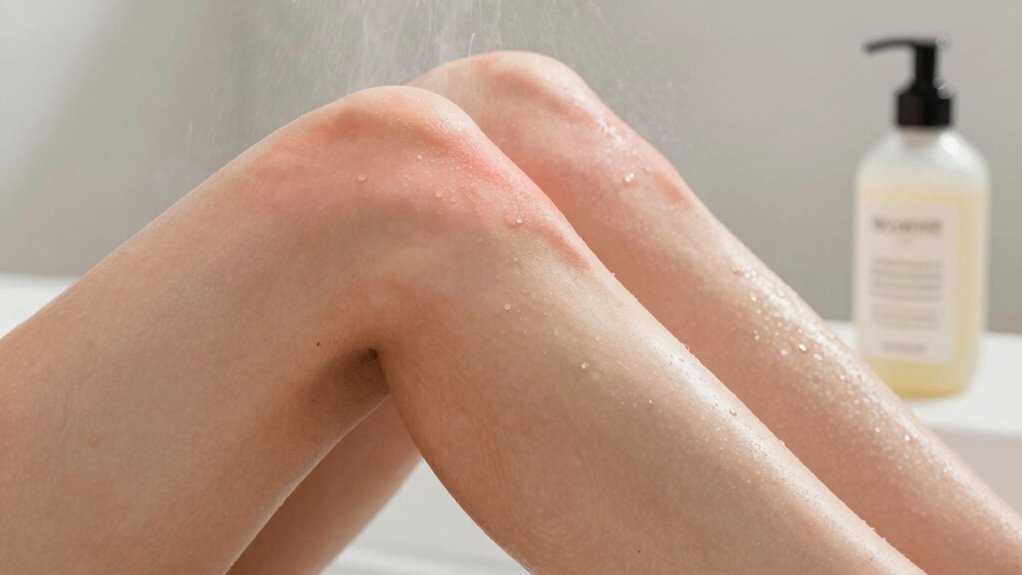
Could your soap or body wash be the culprit behind your itchy skin? Many people experience soap sensitivity, which can cause irritation and itching after showering. Some products contain harsh chemicals or artificial fragrances that trigger fragrance allergies, leading to skin reactions. If your soap or body wash has strong scents or dyes, it might be irritating your skin more than you realize. Switching to fragrance-free, gentle cleansers designed for sensitive skin can help reduce these reactions. Look for products labeled as hypoallergenic or free from common irritants. By choosing milder options, you lower the risk of triggering your skin’s sensitivity, helping you enjoy your showers without the uncomfortable itchiness afterward. Additionally, understanding how proper sizing and load-planning tools can help you select the right products and routines for your skin health. Using appropriate cleansing techniques that avoid harsh scrubbing can further minimize skin irritation and promote healthier skin barrier function, especially when using low-irritant skincare products.
Skin Conditions That Cause Post-Shower Itching (Eczema, Psoriasis)
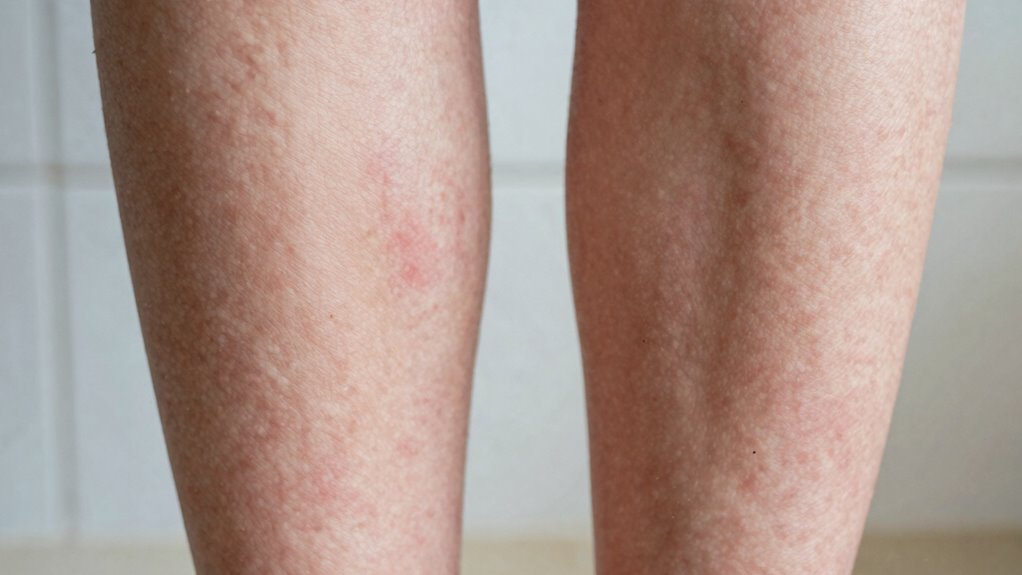
If you notice persistent itching after showers, underlying skin conditions like eczema or psoriasis might be the cause. These conditions often lead to skin irritation and allergic reactions, intensifying post-shower discomfort. Eczema causes dry, inflamed patches that itch intensely, while psoriasis results in thick, scaly plaques that can become irritated. Recognizing these signs helps differentiate them from other causes of itchiness. Here’s a quick comparison:
| Condition | Symptoms | Skin Reaction | Common Triggers | Typical Location |
|---|---|---|---|---|
| Eczema | Itching, redness, dryness | Skin irritation, moisture loss | Allergic reactions, irritants | Legs, arms, face |
| Psoriasis | Scaly plaques, itching | Skin irritation, inflammation | Stress, infections | Knees, elbows, scalp |
Understanding these skin conditions helps you identify and manage post-shower itching effectively. It’s also helpful to keep the skin properly moisturized and avoid known irritants, which can worsen these conditions. Additionally, paying attention to natural materials and sustainability in skincare products may support overall skin health and reduce irritation. Incorporating gentle, hypoallergenic skincare routines and choosing products that are free from harsh chemicals can further promote healthier skin. Regular use of moisturizers can help restore the skin’s barrier and lessen dryness that contributes to itching. Being aware of skin barrier function can further guide effective skincare practices to prevent irritation.
How to Keep Your Skin Moisturized and Prevent Itching
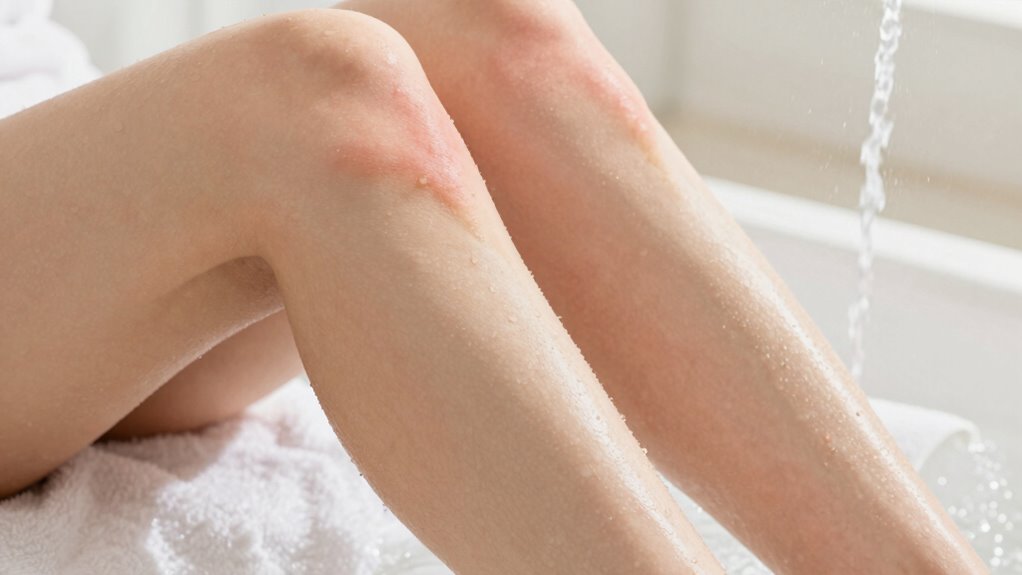
To keep your skin from itching after a shower, you should use a good moisturizer. Apply it while your skin is still damp to lock in moisture. This simple step can make a big difference in preventing dryness and irritation. Additionally, choosing products with proper moisturizing ingredients can enhance skin hydration and reduce itching. Incorporating skin barrier protection can further help maintain healthy, hydrated skin and prevent moisture loss. Using products designed for dry or sensitive skin can also provide extra relief and support skin health. Being aware of moisture retention techniques can improve your skin’s ability to stay hydrated and reduce post-shower discomfort.
Use Moisturizing Products
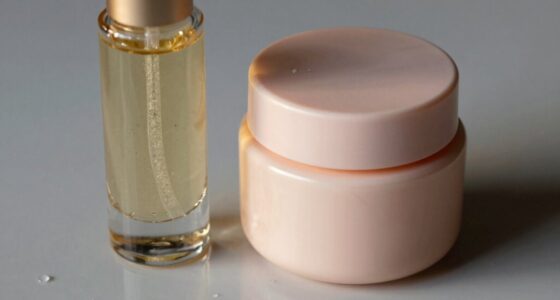
Applying the right moisturizing products immediately after showering helps lock in moisture and prevent dry, itchy skin. Establishing effective moisturizing routines ensures your skin stays hydrated and resilient. Choose products that suit your skin type—hydrating lotions, creams, or oils work well for most people. Look for ingredients like glycerin, ceramides, or hyaluronic acid, which attract and lock in moisture. Avoid products with alcohol or fragrances, as they can cause irritation. Regularly applying moisturizer after every shower reinforces your skin’s barrier and reduces the likelihood of itchiness. Product recommendations include thick creams for very dry skin or lighter lotions for normal skin. Consistency in your moisturizing routine is key to keeping your legs smooth, soft, and itch-free.
Apply After Shower
After stepping out of the shower, gently pat your skin dry to remove excess water, but leave it slightly damp. This helps lock in moisture and promotes effective post shower hydration. Once your skin is damp, apply a soothing lotion or moisturizer immediately. Look for products with calming ingredients like aloe vera or colloidal oatmeal to help soothe irritation and prevent dryness that can lead to itching. Using soothing lotions promptly locks in hydration and creates a protective barrier on your skin. Avoid rough towels or aggressive rubbing, which can strip moisture and worsen itchiness. Moisturizing right after your shower guarantees your skin stays hydrated longer, reducing the likelihood of itchy, dry legs. Incorporating proper skin care techniques can further enhance your skin’s health and comfort. Consistent post shower care keeps your skin smooth, comfortable, and itch-free.
Choosing Gentle Shower Products for Sensitive Skin
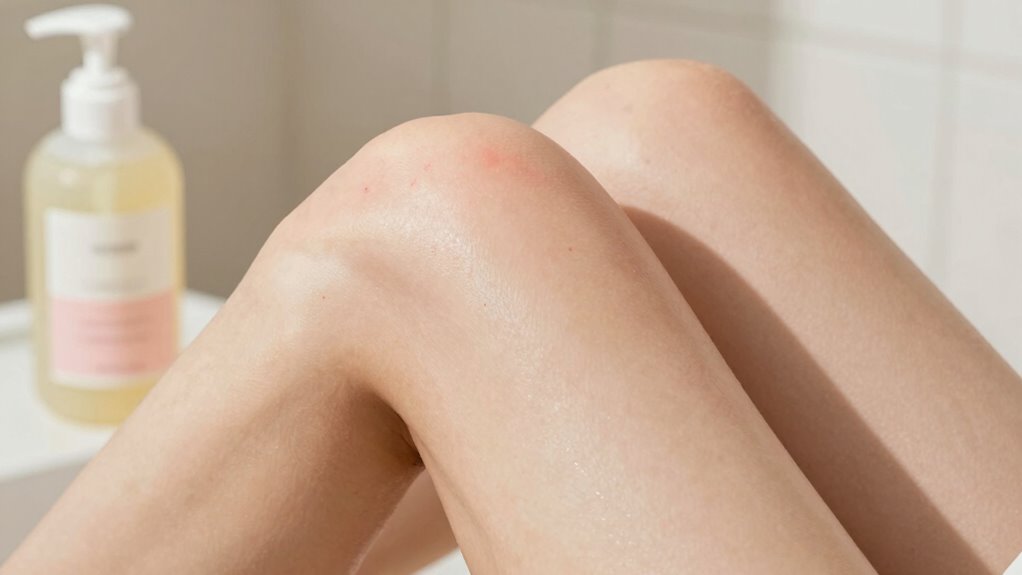
When choosing shower products, look for gentle formulations designed for sensitive skin. These often avoid harsh ingredients that can strip your skin’s natural oils and cause irritation. By selecting mild cleansers, you can help prevent itchy, uncomfortable skin after your shower.
Gentle Formulations for Skin
Choosing gentle shower products is essential if you have sensitive skin that reacts easily to harsh ingredients. Look for formulations that prioritize your skin’s health, such as those with:
- Fragrance free options, reducing the risk of irritation caused by added scents.
- Hypoallergenic ingredients, designed to minimize allergic reactions and soothe delicate skin.
- Mild cleansers, like ceramides or glycerin, that cleanse without stripping natural oils or causing dryness.
Avoid Harsh Ingredients
Even with gentle formulations, selecting products free from harsh ingredients makes a significant difference in preventing itchy legs after showering. Harsh ingredients like sulfates, fragrances, and alcohol can strip your skin’s natural oils, leading to increased skin irritation and dryness. When you choose shower products labeled as hypoallergenic or suitable for sensitive skin, you reduce the risk of triggering irritation. Always read ingredient lists carefully and opt for those free from potential irritants. By avoiding harsh ingredients, you help maintain your skin’s barrier, keeping it hydrated and less prone to itchiness. Remember, the goal is to cleanse without compromising your skin’s health, so prioritizing gentle, soothing formulas is key to preventing post-shower discomfort.
Easy Changes to Your Shower Routine to Reduce Itching
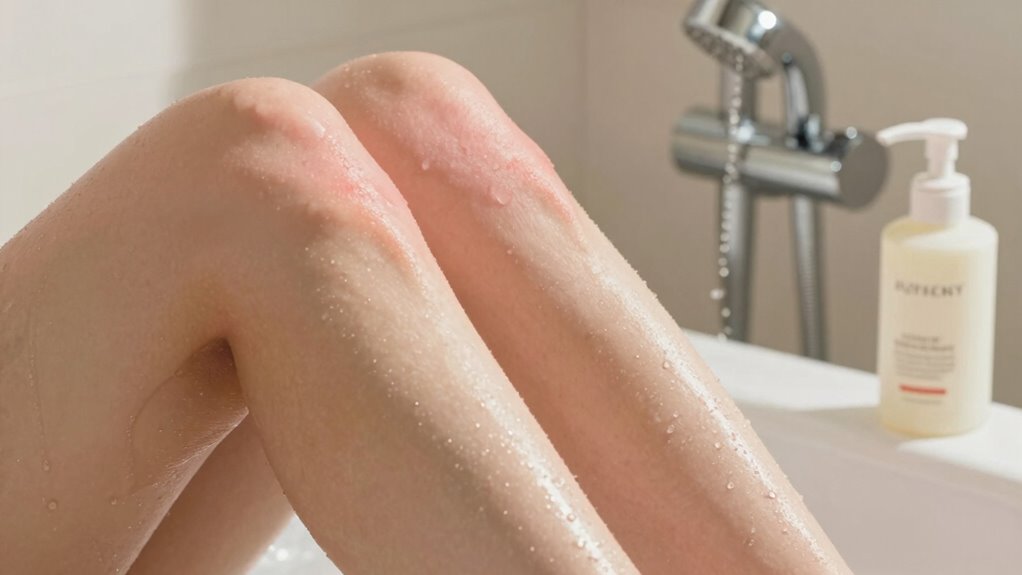
Making simple adjustments to your shower routine can considerably reduce itchy legs afterward. First, consider your shower head types; switching to a gentle rain or low-pressure head can minimize skin dryness. Second, check your water pH balance—aim for slightly acidic water around 5.5, which helps maintain your skin’s natural oils. Third, limit your shower time to 5-10 minutes to prevent stripping moisture from your skin. Also, avoid very hot water, which can worsen dryness and irritation. Using lukewarm water preserves your skin barrier. By choosing the right shower head, maintaining proper water pH, and adjusting your shower duration, you can markedly reduce post-shower itchiness and keep your legs smooth and comfortable.
When Should You See a Dermatologist?
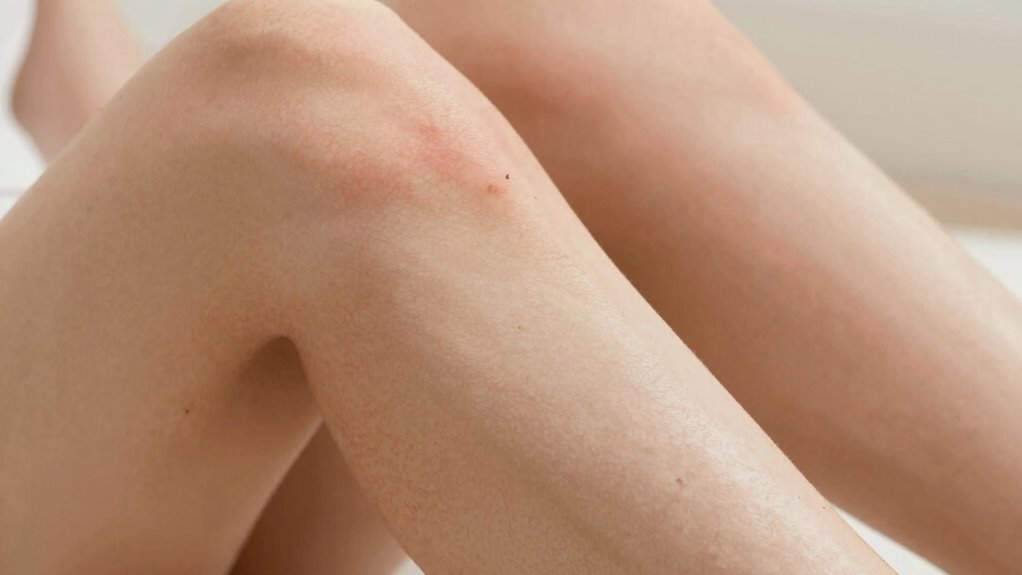
You should see a dermatologist if your itchy legs persist despite making adjustments to your shower routine or over-the-counter treatments. Persistent itching may signal allergic reactions or heightened skin sensitivity that require professional evaluation. Seek help if you notice worsening symptoms, new rashes, swelling, or blistering. A dermatologist can determine if underlying conditions like eczema, dermatitis, or allergies are causing your discomfort. Consider professional advice if your symptoms do not improve within a few days or worsen over time.
| Symptom | When to Seek Help | Possible Causes |
|---|---|---|
| Persistent itching | After trying home remedies for days | Allergic reactions, dermatitis |
| Severe swelling or rashes | Immediately, if severe symptoms occur | Allergic reactions, infections |
| Blistering or pain | When paired with persistent itching | Skin sensitivity, infections |
Quick Tips to Soothe Itchy Legs After Showering
After ruling out underlying medical conditions, trying simple, effective remedies can help calm itchy legs quickly. Start by incorporating natural remedies and lifestyle adjustments into your routine. Here are three tips:
- Moisturize immediately with fragrance-free lotion to lock in moisture and reduce dryness that causes itchiness.
- Use cool water instead of hot during showers to lower skin irritation and soothe inflammation.
- Apply gentle, natural remedies like aloe vera or coconut oil to calm irritated skin and promote healing.
These small changes can make a big difference in easing your discomfort. By focusing on natural remedies and adjusting your lifestyle, you can better manage post-shower itchiness and keep your legs comfortable.
Frequently Asked Questions
Can Diet Affect Post-Shower Skin Itchiness?
Yes, your diet can affect post-shower skin itchiness. Diet triggers like spicy foods or allergens may cause skin reactions, while nutritional deficiencies, especially in vitamins A, D, and E, can weaken your skin’s barrier and lead to dryness and itchiness. Eating a balanced diet rich in essential nutrients helps support healthy skin, reducing post-shower irritation. Staying hydrated and avoiding known triggers also makes a difference.
Does Dry Air Increase Post-Shower Itching?
Dry air can dramatically increase your post-shower itching, making your skin feel like it’s crawling with tiny bugs. Low humidity levels strip away moisture, leaving your skin painfully dehydrated and irritated. To combat this, you should boost skin hydration by using moisturizers immediately after your shower and consider a humidifier at home. Keeping humidity levels balanced helps your skin stay supple, reducing that relentless, maddening itchiness.
Are Laundry Detergents Causing My Itchy Legs?
Laundry detergents can cause your itchy legs if you have skin sensitivity. Harsh chemicals or fragrances in laundry soap may irritate your skin, especially if you don’t rinse clothes thoroughly. To reduce itching, switch to a gentle, fragrance-free detergent designed for sensitive skin, and consider using an extra rinse cycle. Wearing loose, breathable clothing can also help prevent irritation caused by residual detergent.
Can Stress Worsen Skin Itching After Showers?
You might find it ironic, but stress triggers can definitely worsen your skin itching after showers. When you’re stressed, hormonal impacts cause your skin to become more sensitive and reactive, making itching feel even more intense. So, instead of just blaming your soap or water, consider managing your stress levels. Relaxation techniques help reduce hormone fluctuations, easing the itch and making post-shower discomfort less of a nightmare.
Do Certain Fabrics Irritate Sensitive Skin After Bathing?
Yes, certain fabrics can irritate sensitive skin after bathing. If you have fabric sensitivity, wearing rough or synthetic materials might cause skin irritation or itching post-shower. Opt for soft, natural fabrics like cotton or silk, which are gentler on your skin. Avoid tight-fitting clothes and harsh fabrics, especially when your skin is already sensitive. Choosing the right clothing helps reduce irritation and keeps your skin comfortable after bathing.
Conclusion
Remember, taking good care of your skin is key to avoiding post-shower itchiness. Stick to gentle products, keep your skin moisturized, and pay attention to how your skin reacts. Making small changes can make a big difference—after all, an ounce of prevention is worth a pound of cure. So, listen to your body, tweak your routine, and enjoy those invigorating showers without the unwanted itch!