
To prevent tight skin after baths and showers, keep water lukewarm instead of hot, and limit your time in the bath or shower. Pat your skin dry gently and immediately apply a moisturizer with hyaluronic acid, glycerin, or ceramides to lock in moisture. Consider sealing particularly dry areas with petroleum jelly for extra protection. Want to learn more tips to keep your skin soft and comfortable? Keep exploring for simple habits that make a big difference.
Key Takeaways
- Keep water temperature moderate (98-104°F) to prevent stripping natural oils and causing tightness.
- Apply moisturizer immediately after bathing while skin is still damp to lock in hydration.
- Use gentle, sulfate-free cleansers that maintain the skin’s pH balance and avoid dryness.
- Pat skin dry gently with a soft towel, avoiding vigorous rubbing that can worsen tightness.
- Seal in moisture with occlusive products like petroleum jelly on dry areas after moisturizing.
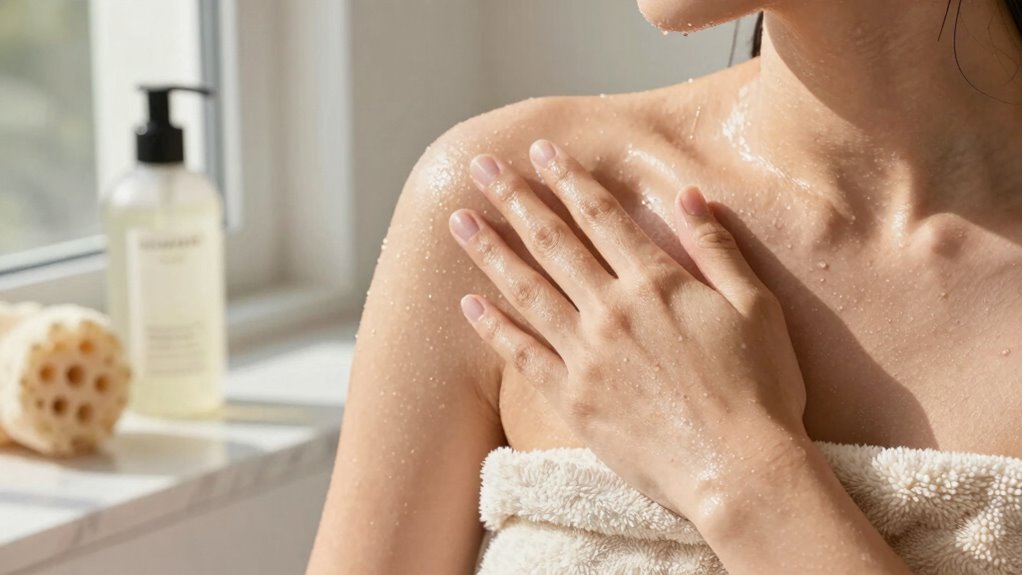
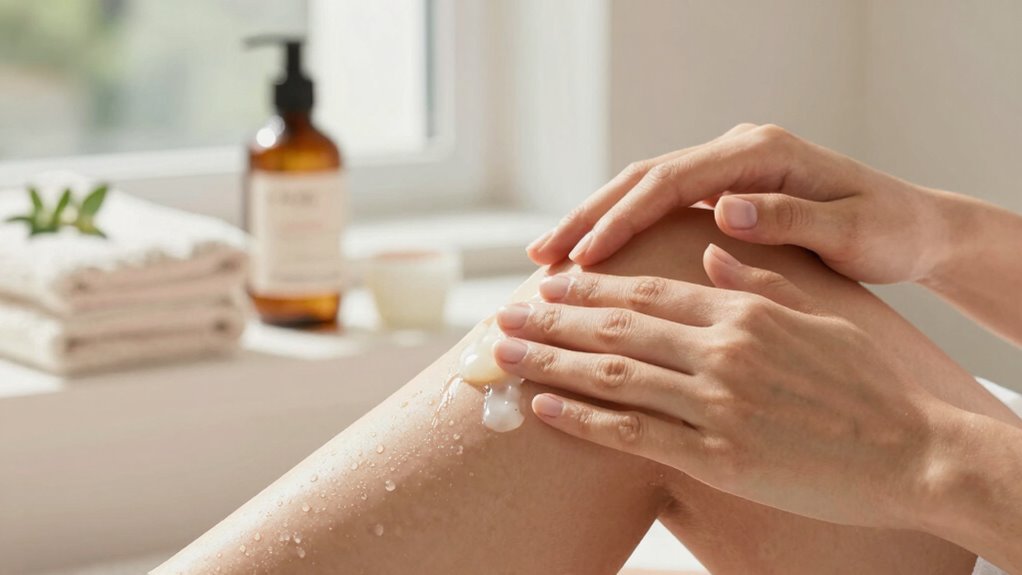
After taking a bath or shower, your skin can often feel tight and dry, but you don’t have to accept this discomfort. The key is to adopt simple yet effective moisture and temperature strategies that protect your skin’s natural barrier. One of the most important steps is understanding moisturizer techniques. Applying moisturizer immediately after bathing is essential because your skin is still slightly damp, which helps lock in hydration. Look for products with ingredients like hyaluronic acid, glycerin, or ceramides, which draw water into your skin and reinforce its barrier. Use gentle, upward strokes to evenly distribute the moisturizer, ensuring you cover all areas that tend to dry out quickly.
In addition to moisturizer techniques, paying attention to bath temperature tips can make a significant difference. Hot water strips away your skin’s natural oils faster, leaving it dry and tight. Instead, keep the water warm—around 98 to 104 degrees Fahrenheit (37-40°C)—to prevent excessive oil loss. If you prefer longer baths, consider setting a timer to avoid prolonged exposure, which can further dehydrate your skin. Also, limit your shower time to about 10 minutes, and avoid harsh soaps or cleansers that can upset your skin’s pH balance. Opt for gentle, sulfate-free cleansers that cleanse without stripping away moisture. Using the right temperature can help maintain your skin’s hydration levels and prevent tightness.
Another helpful tip is to use lukewarm water instead of hot when rinsing off. After washing, pat your skin dry with a soft towel rather than rubbing vigorously, which can cause irritation and moisture loss. Immediately follow up with a moisturizer to trap in the hydration. If you’re prone to very dry skin, consider applying an occlusive layer, such as petroleum jelly, on particularly dry areas to provide an extra barrier against moisture loss.
Lastly, adjusting your bathing habits can reduce tightness over time. Keep the water temperature moderate, limit the duration of your baths or showers, and always moisturize right after drying off. Incorporating these moisturizer techniques and bath temperature tips into your routine will help maintain your skin’s suppleness and prevent that uncomfortable, tight feeling. By making these small but consistent changes, you’ll support your skin’s health and enjoy softer, more comfortable skin after every bath or shower.
Frequently Asked Questions
Can Certain Soaps Worsen Skin Tightness After Bathing?
Yes, certain soaps can worsen skin tightness after bathing. Harsh soaps often cause soap irritation and disrupt your skin pH balance, making your skin feel even tighter and drier. Look for gentle, pH-balanced cleansers that suit your skin type. Avoid those with strong fragrances or harsh chemicals, as they can strip natural oils and lead to increased tightness and discomfort after your showers or baths.
Does Water Temperature Impact Skin Tightness Post-Shower?
Yes, water temperature impacts skin tightness after a shower. Hot water strips your skin of natural oils, making it feel tight and dry afterward. To prevent this, you should opt for lukewarm water instead of hot. Cooler water helps close pores, retain moisture, and keeps your skin feeling soft and supple. Always finish with a gentle rinse of cool water to minimize skin tightness and maintain healthy, hydrated skin post-shower.
Are There Specific Ingredients to Avoid in Skin Moisturizers?
Did you know that nearly 30% of moisturizer ingredients can cause irritation? To protect your skin barrier, avoid moisturizers with alcohol, fragrances, and harsh preservatives. These ingredients can dry out your skin and hinder repair. Instead, look for products with ceramides, hyaluronic acid, and glycerin, which support skin barrier repair. Staying mindful of ingredients helps you maintain soft, flexible skin after baths and showers.
How Long Should I Wait Before Applying Moisturizer?
You should wait about 3 to 5 minutes after your bath or shower before applying moisturizer. This allows your skin to cool slightly, maximizing skin absorption and locking in moisture. Applying moisturizer too soon can trap water on the surface, making your skin feel tight. By giving your skin a brief pause, you ensure better moisturizer effectiveness and help prevent that uncomfortable tight feeling.
Can Diet Influence Skin Elasticity After Baths?
Yes, diet impact your skin elasticity after baths. When you eat nutrient-rich foods like fruits, vegetables, and healthy fats, you’re giving your skin the building blocks it needs to stay firm and supple. Conversely, a poor diet can weaken collagen and elastin, making your skin more prone to tightness and sagging. Keep your diet balanced, and you’ll notice improved skin resilience, even after those invigorating baths.
Conclusion
So, next time you hop out of a warm bath or shower, remember that a little moisturizer can go a long way. Ironically, what’s meant to relax you might leave your skin feeling tight and uncomfortable if you skip proper care. But don’t worry—staying hydrated and applying lotion regularly is such a small effort for skin that feels soft, smooth, and happy. After all, who wants tight skin when it’s so easy to prevent?