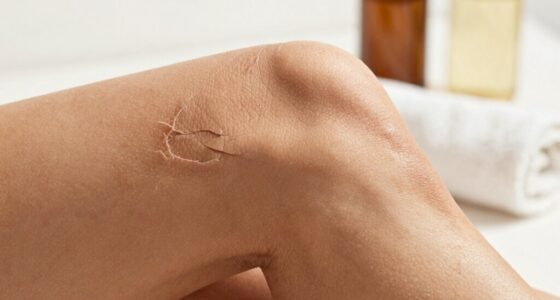
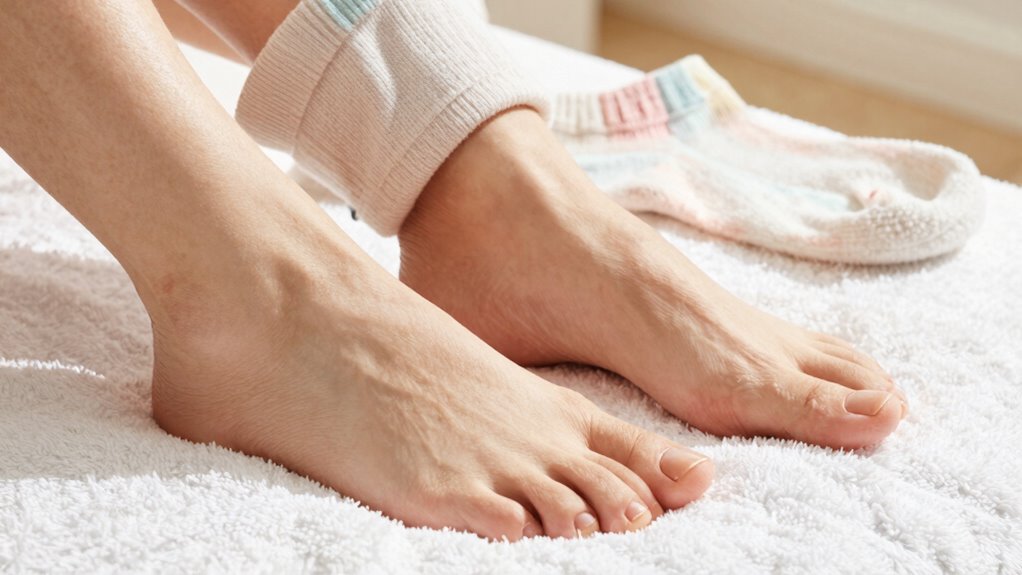

To do the “Socks After Cream” trick safely, apply a moisturizer to dry, rough areas like your heels and soles, then slip on lightweight, breathable socks made from natural fibers like cotton or bamboo. This creates a barrier that locks in moisture and helps it absorb better, especially during winter. Make sure your socks are clean and dry, and avoid tight socks. Keep going for more tips on soft, healthy feet.
Key Takeaways
- Apply moisturizer to dry areas like heels and soles before wearing lightweight, breathable cotton or bamboo socks.
- Ensure socks are clean, dry, and loose-fitting to prevent circulation issues and maximize absorption.
- Use the trick as part of a daily winter foot care routine to lock in moisture and improve skin softness.
- The warmth generated inside socks accelerates moisturizer absorption and helps repair dry, cracked skin safely.
- Always follow safety precautions, such as avoiding tight socks and maintaining hygiene, to prevent discomfort or infections.
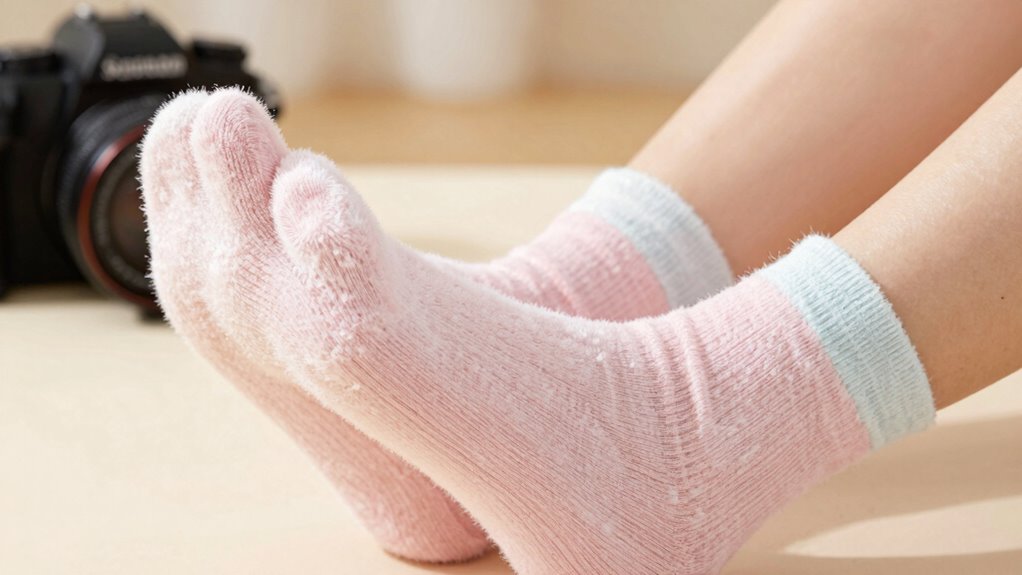
If you’ve ever struggled with stained socks after applying cream, the “Socks After Cream Trick” can save you time and frustration. It’s a simple method that helps you get soft, well-moisturized feet without the mess or the need for constant sock changes. This trick works especially well during winter foot care, when your skin tends to become dry, cracked, and in need of extra attention. Proper moisturizer absorption is key to achieving smooth, healthy feet, and wearing socks after applying cream enhances this process without making a mess. Additionally, this method encourages proper absorption techniques, ensuring your skin benefits fully from the treatment. When you apply moisturizer, it often takes some time to absorb fully into your skin. If you don’t give it enough time, your socks can soak up the excess, leaving stains and reducing the effectiveness of the treatment. The “Socks After Cream” trick involves applying a generous layer of moisturizer, then slipping on a pair of clean, lightweight socks immediately afterward. This creates a barrier that traps the moisturizer against your skin, allowing it to penetrate deeply while preventing excess from transferring to your socks. This method is especially beneficial during winter foot care routines, as it helps lock in moisture and combat the harsh effects of cold weather. You want to choose socks made from breathable, natural fibers like cotton or bamboo to maximize comfort and prevent overheating or sweating. When applying your moisturizer, focus on dry, rough areas like heels and soles, then cover them with the socks. The warmth generated by your body inside the socks helps boost moisturizer absorption, making your treatment more effective and efficient. Plus, this approach minimizes the need to reapply cream multiple times, saving you time and effort. This trick also helps maintain the cleanliness of your socks, so you don’t have to deal with stained laundry or constant sock replacements. It’s a practical way to incorporate winter foot care into your daily routine, especially if you’re prone to dry skin or cracking heels. Just ensure your socks are clean and dry before slipping them on, and avoid using overly thick or tight socks that might restrict circulation or cause discomfort.
Frequently Asked Questions
Can This Sock Trick Work on Cracked or Severely Dry Feet?
Yes, the sock trick can help improve cracked or severely dry feet, but it’s not a cure-all. It aids in callus removal and softening skin, yet if you have fungal infections or deep cracks, you should see a healthcare professional first. Using moisturizer under socks helps lock in hydration, but avoid this method if you suspect fungal issues or severe damage. Proper care guarantees safe, effective results.
How Often Should I Repeat the Sock and Cream Treatment?
Think of your feet as a garden needing regular care. For best results, repeat the sock and cream treatment every 2-3 days in your maintenance routine. This frequency helps keep your skin soft and hydrated without overdoing it. Consistency is key, so stick to these guidelines to maintain smoothness. Adjust as needed based on your skin’s response, but regular attention will keep your feet in top shape.
Are There Any Specific Creams Recommended for Best Results?
You should look for moisturizers with ingredients like urea, shea butter, or hyaluronic acid, which deeply hydrate and soften your skin. When comparing products, check for those labeled for dry or cracked feet, and read reviews to find the best options. Avoid products with alcohol or artificial fragrances, as they can dry out your skin further. Choose a cream that suits your skin type for the best results.
Is This Method Safe for People With Sensitive Skin?
If you have sensitive skin, this method can be safe if you do a risk assessment first. Test the cream on a small skin patch to check for reactions. Choose a gentle, fragrance-free moisturizer to reduce irritation. If you notice redness or discomfort, stop immediately. Always consult a dermatologist if you’re unsure, especially with skin sensitivity concerns, to avoid any adverse reactions and guarantee safe, soft feet.
How Long Does It Take to See Noticeable Results?
You can typically expect to see visible improvements within 2 to 5 days of consistently using the socks after cream trick. Timing expectations vary depending on your skin’s condition and how often you follow the routine, but with regular use, your feet will gradually become softer and smoother. Keep in mind, patience is key for the best results, and noticeable changes should become evident within a week.
Conclusion
Now that you’ve learned the “socks after cream” trick, your feet can feel luxuriously soft without the mess. Imagine slipping into cozy socks, warmth wrapping around your tired feet, transforming roughness into smoothness. It’s simple, safe, and effective—yet so often overlooked. So, instead of settling for dull, neglected feet, give this gentle routine a try. Because sometimes, the smallest change can bring the most comfort, turning everyday moments into moments of pure self-care.