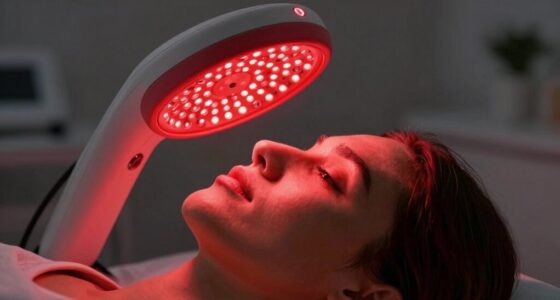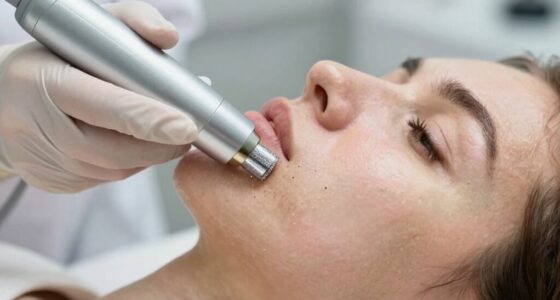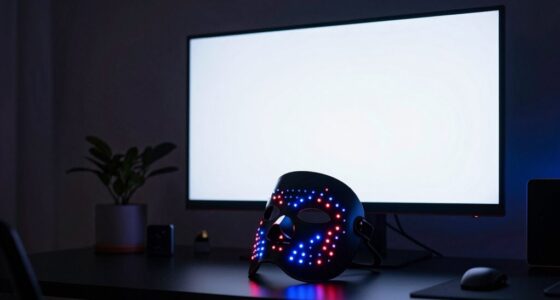


The distance you place your red light therapy device considerably impacts how well it works because it determines how much light penetrates your skin. If you hold it too close, you might cause discomfort or uneven coverage, while too far reduces effectiveness by lessening light intensity. Finding the ideal range—usually 6 to 12 inches—ensures you get maximum benefits safely. Keep in mind that proper placement and consistency are key, so learn more to maximize your results.
Key Takeaways
- Proper distance ensures optimal light absorption; too close or too far reduces effectiveness.
- Closer placement increases superficial tissue penetration but can cause discomfort or skin irritation.
- Farther distance decreases light intensity, limiting depth of tissue reach and overall benefits.
- Maintaining consistent positioning with measurements or mounts ensures uniform treatment results.
- Incorrect placement can lead to uneven therapy, reduced efficacy, or skin reactions, so proper calibration is essential.
How Does Red Light Therapy Work and Why Does Distance Matter?

Red light therapy works by delivering specific wavelengths of red and near-infrared light to your skin, which penetrate deep into tissues to promote healing, reduce inflammation, and boost cellular function. The effectiveness of this process relies on red light physics, where photons interact with cells, encouraging energy production within mitochondria. Skin absorption plays an essential role here; the light must reach your target tissues for ideal results. If the light is too far away, insufficient energy reaches your skin, reducing benefits. Conversely, too close can cause discomfort or uneven coverage. Understanding how red light interacts with your skin helps you position your device correctly, ensuring the right amount of light absorption and maximizing your therapy’s effectiveness. Proper light penetration is crucial for achieving optimal healing effects. Additionally, the distance from the device influences how well the light penetrates and distributes across the treatment area. Recognizing the importance of light intensity can help optimize therapy sessions for better outcomes. Maintaining the correct device placement ensures consistent and safe treatment. Being aware of factors like tissue absorption can further enhance treatment efficacy by tailoring sessions to individual needs.
What Is the Best Distance for Effective Red Light Therapy Sessions?
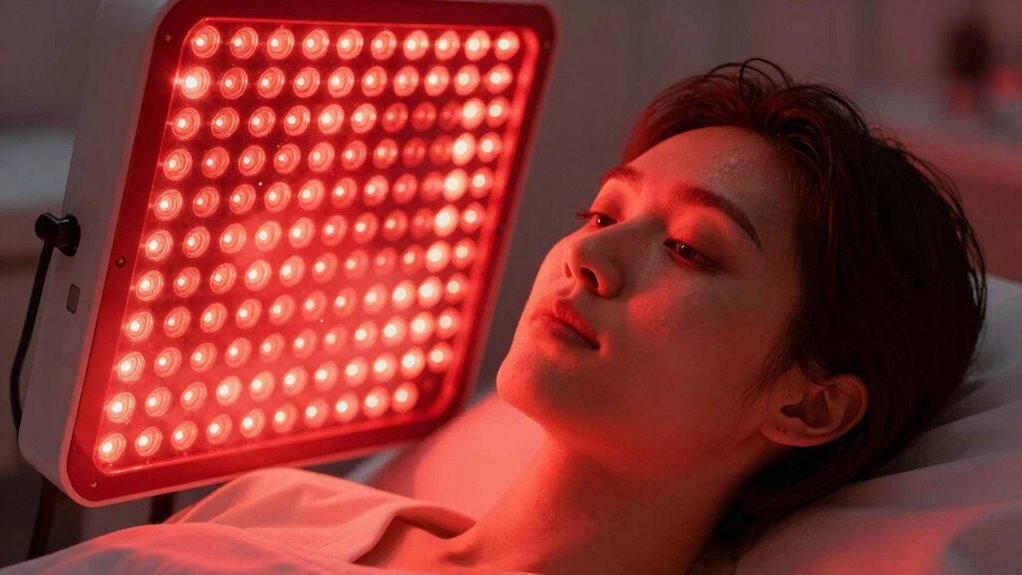
To get the most out of your red light therapy sessions, finding the right distance is key. Typically, an ideal range is around 6 to 12 inches from your skin, but this can vary based on your device. Keep in mind, placing the light too close may reduce effectiveness or cause discomfort. Proper device setup and understanding of safe distances can help maximize your results. Additionally, being aware of your skin’s response can ensure you maintain a comfortable and effective treatment. Adjusting the light intensity based on your distance can also optimize therapy outcomes. Regularly consulting manufacturer guidelines can further ensure safe and effective use. Considering treatment duration and frequency can also influence overall effectiveness and safety.
Optimal Distance Range
Finding the ideal distance for red light therapy sessions is vital to guarantee you get the most benefit from the treatment. The optimal distance allows for maximum light penetration into your skin and tissues without diminishing intensity. Typically, a range of 6 to 18 inches works well, but it depends on your device’s power and design. Devices with better ergonomics are easier to position accurately within this range, ensuring consistent treatment. Staying within this optimal distance helps deliver enough energy to stimulate cellular activity without risking light dispersion or insufficient exposure. Remember, too close may cause discomfort or uneven coverage, while too far reduces effectiveness. Adjust your distance based on your device’s specifications for the best results, always aiming to maintain consistent positioning throughout your session. Proper positioning enhances the efficacy of red light therapy and ensures safe, effective treatment outcomes.
Effects of Closer Placement
Placing the light closer to your skin can increase the intensity of the therapy, potentially boosting its effectiveness. When you reduce the distance, light absorption by your skin improves, allowing more photons to penetrate deeper tissues. This enhanced absorption can lead to a stronger skin response, promoting faster or more noticeable results. However, too close may cause discomfort or overexposure, so finding a balance is essential. Keep in mind that increased proximity doesn’t always mean better results; it depends on your skin type and the target area. Experimenting within safe distance ranges helps you optimize light absorption without risking adverse effects. Ultimately, understanding how closeness influences your skin response helps you tailor sessions for maximum benefits.
How Does Device Placement Affect Light Intensity and Penetration?
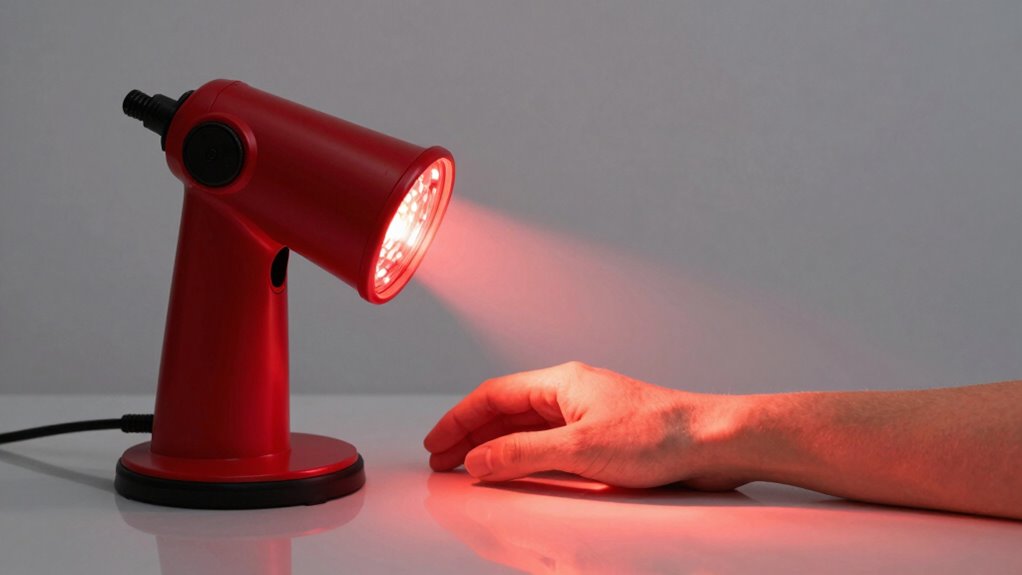
Device placement plays a crucial role in determining the effectiveness of red light therapy, as it directly influences both light intensity and how deeply the light penetrates your skin. When you position the device closer, you increase light absorption in the superficial layers, improving skin depth and overall benefits. Moving it farther away decreases light intensity, limiting how deeply the therapy reaches your tissues. Proper placement ensures ideal penetration for targeted results. Additionally, understanding the light intensity and penetration relationship helps you adjust your device for optimal outcomes. Recognizing the importance of device positioning allows you to tailor your therapy for maximum efficacy. Adjusting your device’s position based on these principles helps you optimize therapy outcomes efficiently. Being mindful of optimal distance can further enhance the therapy’s effectiveness by balancing coverage and intensity. Furthermore, considering light dispersion can help you achieve more uniform treatment results across larger areas. Knowing the effective range of your device can also assist in setting the most suitable distance for your specific needs.
What Common Mistakes Do People Make When Positioning Their Red Light Device?

One common mistake people make is positioning the red light device too close or too far from their skin without considering the recommended distance. This often results from neglecting proper device calibration and user positioning. If you’re too close, you risk overexposure, which can cause discomfort or diminish effectiveness. Conversely, placing the device too far reduces light intensity, limiting benefits. Many users overlook the importance of calibrating their device properly before use, leading to inconsistent results. Accurate user positioning ensures the device emits the correct amount of light at the ideal distance. Failing to follow these basics can compromise the therapy’s effectiveness. Additionally, understanding the light intensity and how it interacts with your skin can help optimize results. To ensure optimal outcomes, always verify the device calibration before starting your session and adhere to the recommended distance guidelines. Proper device placement is crucial for achieving consistent and safe therapy sessions. Being aware of recommended distances can help prevent common positioning errors and improve overall therapy efficacy. Regularly checking the device settings can also help maintain the proper light output throughout your treatment.
How Can You Measure and Adjust the Distance for Best Results?
To guarantee you’re getting the most out of your red light therapy, accurately measuring and adjusting the distance is key. Start by positioning the device at the recommended distance from your target area, considering ideal lighting angles for even coverage. Use a ruler or measuring tape to ensure consistency, especially if you move the device during sessions. Regular device calibration helps maintain accurate intensity and proper lighting angles, preventing over- or under-exposure. Remember, small adjustments can make a significant difference in results. Maintaining consistent lighting angles is crucial for even light distribution and optimal therapy effectiveness. Additionally, understanding the specifications of different devices can help you fine-tune your positioning for better outcomes. Monitoring light intensity levels can also ensure you are delivering the proper dose for maximum benefits.
Does Your Distance Impact How Long and How Often You Should Use Red Light Therapy?

Your distance from the light source can influence both how long and how often you should use red light therapy. If you’re closer, you might need shorter sessions, but at a greater distance, longer or more frequent treatments may be necessary. Understanding the ideal distance helps tailor your routine for the best results.
Optimal Distance Matters
The distance between you and the red light therapy device plays a crucial role in determining its effectiveness. Staying at the ideal distance ensures proper light absorption and a healthy skin response. Too close, and you might risk overstimulating your skin, leading to discomfort or diminishing returns. Too far, and the light intensity weakens, reducing benefits. Finding the right balance maximizes results without causing unnecessary strain. Remember, your skin’s response depends on how well it absorbs the light, which directly relates to your positioning. Adjusting the distance correctly can enhance recovery, boost energy, and improve overall outcomes. Keep these points in mind for best results:
- Proper distance enhances light absorption efficiency
- Skin response varies with proximity
- Perfect positioning prevents overstimulation
Duration Varies Accordingly
Since distance affects how much light your skin absorbs, it also influences how long and how often you should use red light therapy sessions. When you’re closer to the device, light absorption and skin penetration increase, allowing shorter sessions to be effective. Conversely, if you’re farther away, you’ll need longer or more frequent treatments to achieve similar results. Adjusting your session duration based on distance guarantees ideal skin penetration without overexposure. For example, closer positioning might mean 10-15 minutes per session, while greater distance could require 20-30 minutes. Listening to your body’s response and following manufacturer guidelines helps determine the right balance. Ultimately, understanding how distance impacts light absorption guides you in customizing your treatment duration for maximum benefits.
What Happens If You Place the Device Too Close or Too Far?

Placing a red light therapy device at the wrong distance can substantially affect its effectiveness. If you’re too close, you risk uneven device calibration, which can lead to skin irritation or burns. Conversely, positioning it too far reduces the light intensity, making the therapy less effective. Proper placement ensures you get the right dose of light energy for ideal results. Keep in mind:
- Incorrect distance can compromise device calibration, affecting treatment consistency.
- Too close might cause discomfort or damage, while too far leads to diminished benefits.
- User education on suitable positioning helps maximize therapy outcomes and prevents misuse.
How Can You Ensure Consistent and Proper Device Placement Every Time?

To make certain of consistent and proper device placement every time, establishing a routine that minimizes guesswork is vital. Start by calibrating your device according to the manufacturer’s instructions, ensuring it delivers the correct light intensity. Use a dedicated spot or mark on your setup area to position the device consistently. Keep user comfort in mind; adjust the device so it feels comfortable during treatment without straining your neck or eyes. Consider using a stand or mount to hold the device at a steady distance, preventing accidental shifts. Regularly check calibration settings and reposition the device if you move it, so you maintain the correct distance. These steps help you achieve reliable, effective results with minimal effort or guesswork.
When Should You Consult a Specialist or Follow Specific Protocols?

While establishing a routine helps guarantee proper device placement, there are situations where consulting a specialist or following specific protocols becomes necessary. If you’re unsure about device calibration or experience discomfort during sessions, it’s time to seek expert advice. Special cases, such as skin conditions or medical concerns, demand tailored guidance to ensure safety and effectiveness. Additionally, if you’re unsure about ideal distance or intensity, professionals can help you adjust settings for user comfort and safety.
- When experiencing persistent discomfort or unusual skin reactions
- If you’re unsure about correct device calibration for your needs
- When managing specific health conditions or seeking personalized protocols to maximize results
Frequently Asked Questions
How Do Different Skin Types Affect Optimal Device Placement?
Different skin types influence ideal device placement because skin absorption varies, affecting how much red light penetrates. For darker skin, you might need closer positioning or longer sessions, while lighter skin could require less. Always check the device calibration for your skin type to guarantee safe and effective treatment. Adjusting placement based on your skin’s response helps maximize benefits and minimizes risks, making your therapy more personalized and effective.
Can Improper Distance Cause Skin Irritation or Damage?
Imagine the red light as a gentle breeze on your skin; too close, and it feels harsh, risking irritation or damage. Improper distance guarantees device calibration, intensifying light exposure beyond safe limits. If you don’t position the device correctly, especially considering your skin sensitivity, it can cause redness, discomfort, or even burns. Always follow recommended distance guidelines to protect your skin and ensure effective therapy.
What Tools or Accessories Help Maintain Correct Device Positioning?
You can use device mountings and positioning aids to keep your red light therapy device correctly positioned. These tools help you maintain consistent distance, guaranteeing ideal results and preventing skin irritation or damage. Look for adjustable stands, wall mounts, or straps designed specifically for your device. By using these accessories, you ensure proper alignment, making your sessions safer and more effective without constantly adjusting or guessing your device’s placement.
How Does Room Lighting Influence Red Light Therapy Effectiveness?
Think of your room lighting as the backstage crew setting the perfect scene. Bright ambient lighting can diminish the spotlight of your device, reducing its brightness and effectiveness. Keep the area dim or use blackout curtains to let your device shine at full strength. By controlling ambient lighting, you ensure the red light therapy remains powerful, allowing you to maximize benefits and see results more quickly.
Are There Specific Guidelines for Positioning During Full-Body Treatments?
For full-body treatments, you should position yourself so the device is evenly spaced, typically around 6-12 inches away, to guarantee proper calibration. Keep your body relaxed and avoid blocking light. Follow the manufacturer’s guidelines for treatment duration, usually 10-20 minutes, and adjust based on your skin’s response. Proper positioning maximizes effectiveness, helping you get the best results from your red light therapy session.
Conclusion
To get the best results from red light therapy, paying attention to your device’s distance is key. Research shows that proper positioning can boost treatment effectiveness by up to 30%. By avoiding common mistakes like placing the device too close or too far, you guarantee consistent, ideal outcomes. Remember, if you’re unsure, consulting a specialist can help tailor the therapy to your needs and maximize benefits. Proper placement truly makes all the difference.