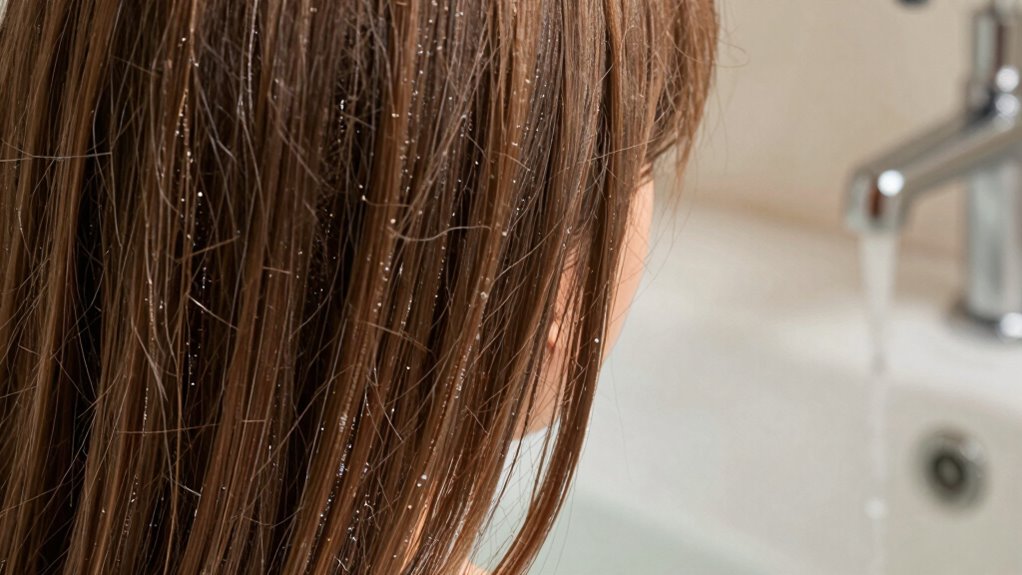

Hard water causes hair dullness and roughness by leaving mineral deposits from calcium and magnesium on your strands. These deposits coat your hair, weaken natural oils, and increase porosity, leading to dullness, brittleness, and breakage over time. They also block light reflection, making hair look lifeless. To keep your hair healthy and shiny, it’s essential to understand how to fight mineral buildup—keep exploring to find out how.
Key Takeaways
- Hard water minerals like calcium and magnesium form deposits on hair, causing dullness and rough texture.
- Mineral buildup blocks light reflection, making hair appear lifeless and less shiny over time.
- Prolonged exposure weakens hair strands, leading to breakage, split ends, and increased porosity.
- Hard water irritates the scalp, contributing to dryness, itching, and dull, brittle hair.
- Using water softeners or clarifying treatments can effectively remove mineral deposits and restore hair vibrancy.
How Can Hard Water Damage Your Hair?
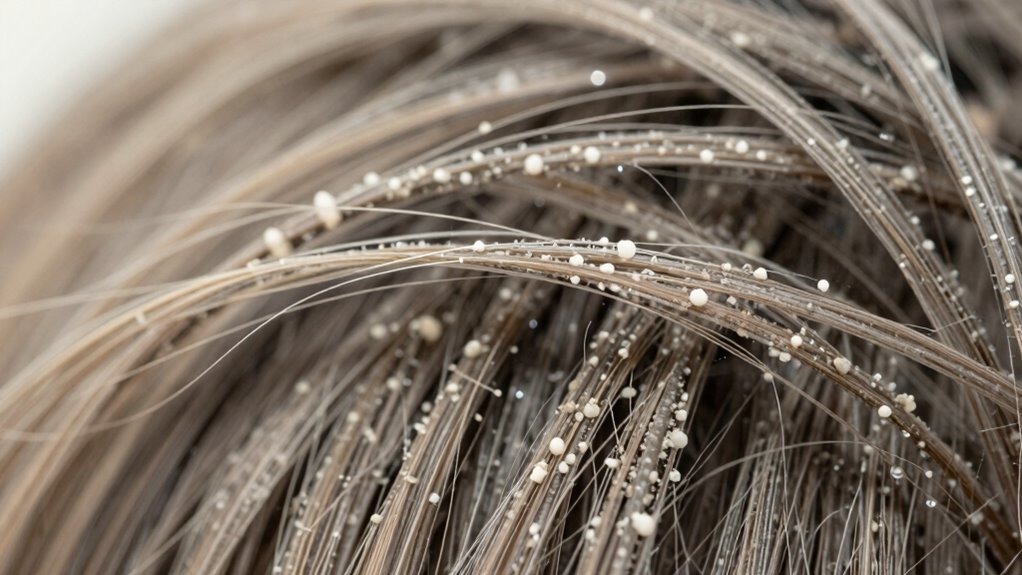
Have you ever wondered why your hair feels dull and stiff after washing with hard water? The answer lies in mineral buildup from the high calcium and magnesium content. Hard water leaves deposits that coat each strand, making hair appear lifeless and coarse. Without proper water filtration, these minerals accumulate over time, weakening your hair’s natural protective oils. This damage reduces shine, increases breakage, and strips your hair of softness. To protect your hair, consider using water filters designed to remove minerals before it touches your scalp. These filters act as a barrier, preventing mineral deposits from settling into your hair fibers. Additionally, incorporating air purification can improve overall water quality by reducing airborne pollutants that may contribute to hair damage. By investing in water filtration and practicing hair protection, you can maintain healthier, shinier hair despite hard water’s challenges.
Signs That Your Hair Is Suffering From Hard Water
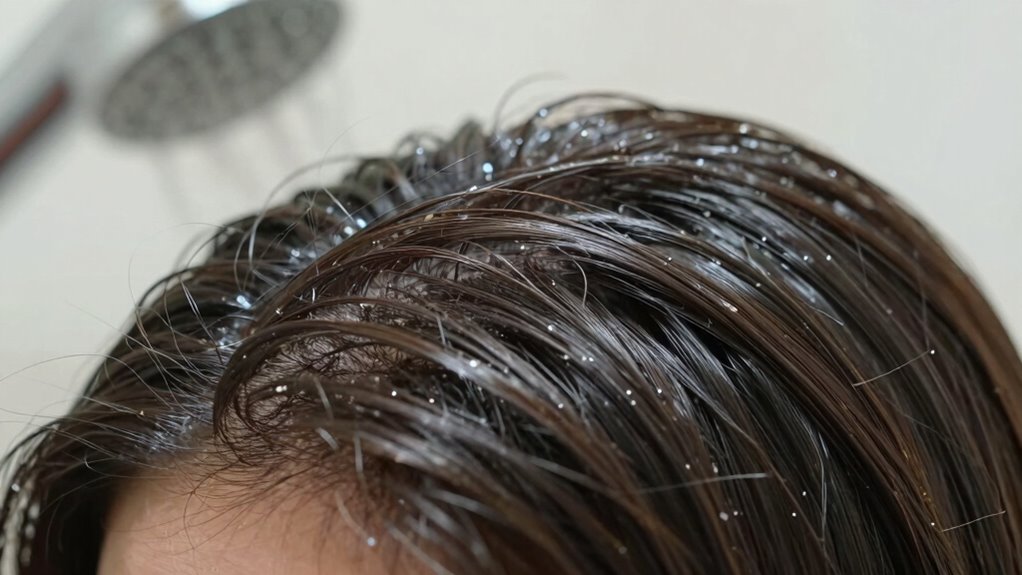
If your hair starts looking dull and lacks shine, hard water might be the culprit. You may also notice increased breakage or persistent dryness and itching on your scalp. Recognizing these signs early can help you take steps to protect your hair.
Dull, Lifeless Strands
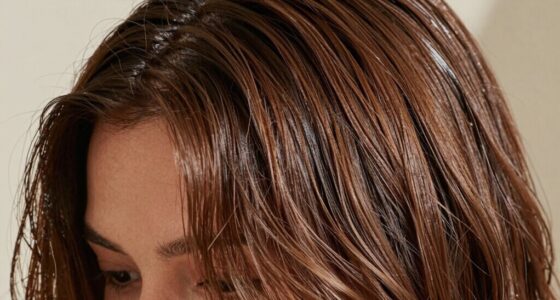
Hard water can strip away your hair’s natural shine, leaving strands looking dull and lifeless. When your hair’s porosity increases due to mineral buildup, it struggles to retain moisture, resulting in a flat, lifeless appearance. You might notice your hair feels coarse or rough, even after washing. Additionally, hard water can impact scalp health, causing dryness and irritation that further dulls your hair’s luster. The minerals deposit on your strands, making them less reflective and more prone to dullness over time. If your hair seems consistently lackluster despite regular care, hard water could be the culprit affecting both your scalp’s condition and your hair’s ability to shine. Addressing mineral buildup can restore vibrancy and improve overall hair health.
Excessive Hair Breakage
Excessive hair breakage is a common warning sign that your hair is suffering from hard water exposure. When your hair is regularly exposed to mineral-rich water, it can increase hair porosity, making strands more fragile and prone to snapping. You might notice your hair feels weaker, especially after washing, and experiences more breakage than usual. Hard water also accelerates hair color fading, which can make your hair look dull and lifeless. If you see split ends or strands that break easily, hard water could be the culprit. Over time, these mineral deposits damage hair cuticles, weakening the structure, and mineral buildup can further exacerbate damage. Recognizing these signs early can help you take steps to protect your hair from further damage and restore its strength and vibrancy. Additionally, understanding the contrast ratio of your water and hair treatments can help optimize your hair care routine for better results. Proper water filtration methods can significantly reduce mineral content and help maintain healthier hair.
Persistent Itching or Dryness
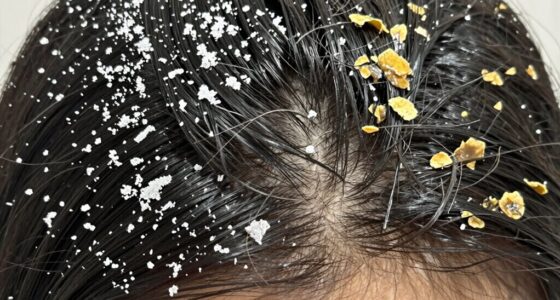
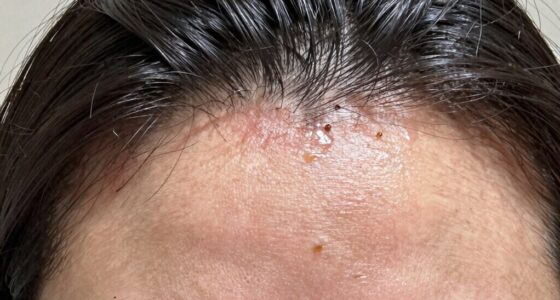
When mineral deposits from hard water accumulate on your hair and scalp, you may start noticing persistent itching or dryness that just won’t go away. This occurs because the minerals can strip natural oils, leading to skin irritation and compromised scalp health. As your scalp struggles to stay balanced, you might experience constant discomfort, flaking, or a tight feeling. The dryness can make your hair feel brittle and dull, while the skin irritation worsens if you scratch too much. Hard water’s minerals clog hair follicles and disrupt your scalp’s natural barrier, making it harder for your skin to retain moisture. Recognizing these signs early helps you address the underlying issue and protect your scalp’s health before further damage occurs. Understanding mineral buildup can help you take steps to mitigate these effects. Additionally, being aware of how water quality impacts your hair health can empower you to choose effective solutions.
Why Do Minerals Make Hair Look Dull and Feel Rough?
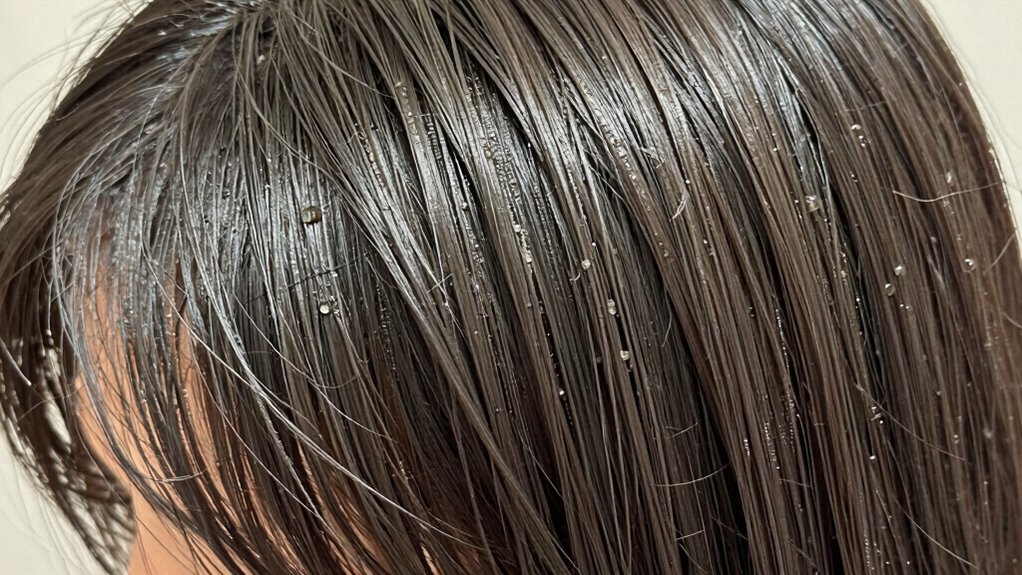
Minerals from hard water leave deposits on your hair, causing it to look dull and feel rough. These buildup layers block light and trap moisture, making your hair appear lifeless. Understanding how these deposits form helps you find ways to restore your hair’s natural shine and softness. Additionally, mineral deposits can alter the hair’s surface structure, further contributing to dullness and texture changes.
Mineral Buildup Causes Dullness
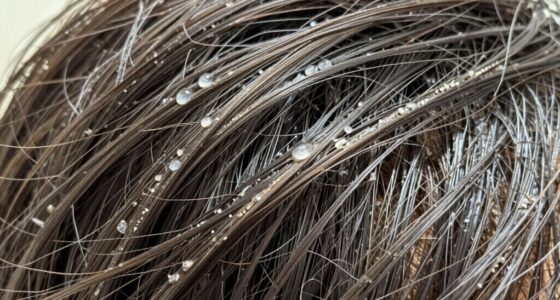
Mineral buildup from hard water can leave your hair looking dull and feeling rough because these deposits cling to the hair’s surface, forming a stubborn layer that blocks light reflection. Mineral deposits, mainly calcium and magnesium, settle on your strands, creating a barrier that prevents your hair from shining naturally. This buildup can also interfere with how your hair interacts with moisture and styling products. Water filtration systems help reduce mineral content in your water, preventing these deposits from forming on your hair. Without proper filtration, minerals accumulate over time, dulling your hair’s appearance and making it feel coarse. Regularly addressing mineral buildup by using water filters or clarifying treatments can restore your hair’s natural shine and smoothness. Additionally, understanding how hard water minerals impact hair health underscores the importance of implementing protective measures.
Rough Texture From Deposits
Hard water deposits minerals like calcium and magnesium onto your hair, causing it to feel rough and look dull. These mineral deposits can increase your hair’s porosity, making it more prone to damage and moisture loss. When minerals build up, they create a coating that weighs hair down and disrupts its natural texture, resulting in a rough, uneven feel. The deposits can also irritate your scalp, leading to itching or dandruff, which further affects your hair’s health. Over time, mineral buildup makes it harder for conditioners and treatments to penetrate your hair shaft, worsening the roughness. To maintain smooth, healthy hair, you need to remove these deposits regularly and protect your scalp from irritation caused by hard water minerals. Understanding how mineral buildup impacts hair health is essential for choosing the right care routine.
What Are the Long-Term Effects of Hard Water on Hair Health?
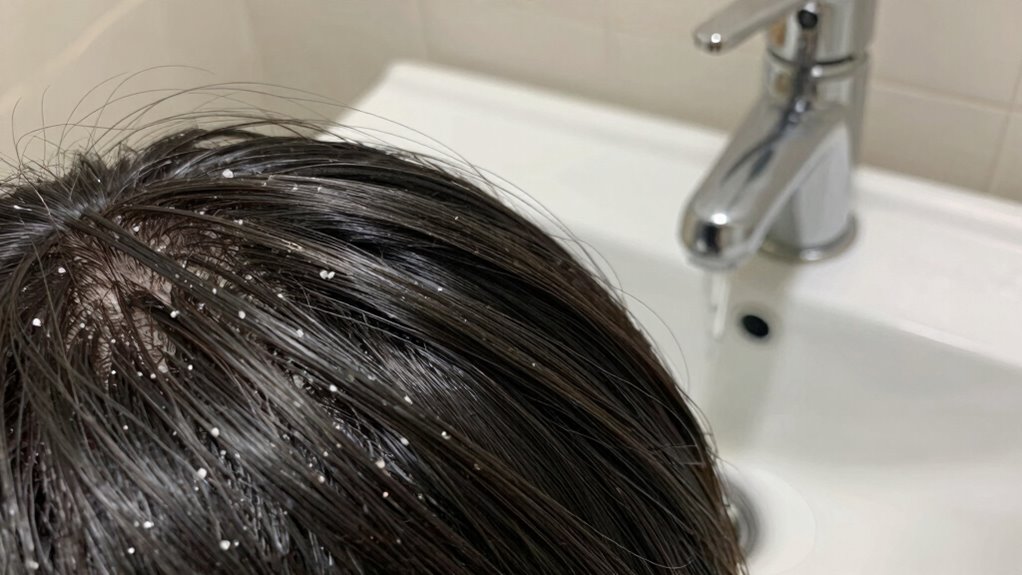
Over time, consistent exposure to hard water can cause your hair to become dull, brittle, and more prone to breakage. Hard water deposits minerals like calcium and magnesium, which can alter your hair’s porosity, making it less receptive to moisture and treatments. This results in increased dryness and a rough texture. Long-term exposure also weakens hair strands, leading to increased breakage and slow growth. To mitigate these effects, water filtration systems can be effective by removing or reducing mineral content, helping to preserve your hair’s health. Without proper filtration, mineral buildup persists, worsening the damage over years. Regular assessments of your water quality are crucial, as Gold IRA markets have shown that transparent and reliable information is essential for making informed investment decisions. Additionally, understanding the effects of mineral buildup on hair can motivate proactive measures to protect your hair from long-term damage. Implementing proper water treatment solutions can significantly reduce mineral accumulation and safeguard your hair’s vitality, especially since water quality varies greatly depending on geographic location.
Simple Ways to Protect Your Hair From Hard Water Damage
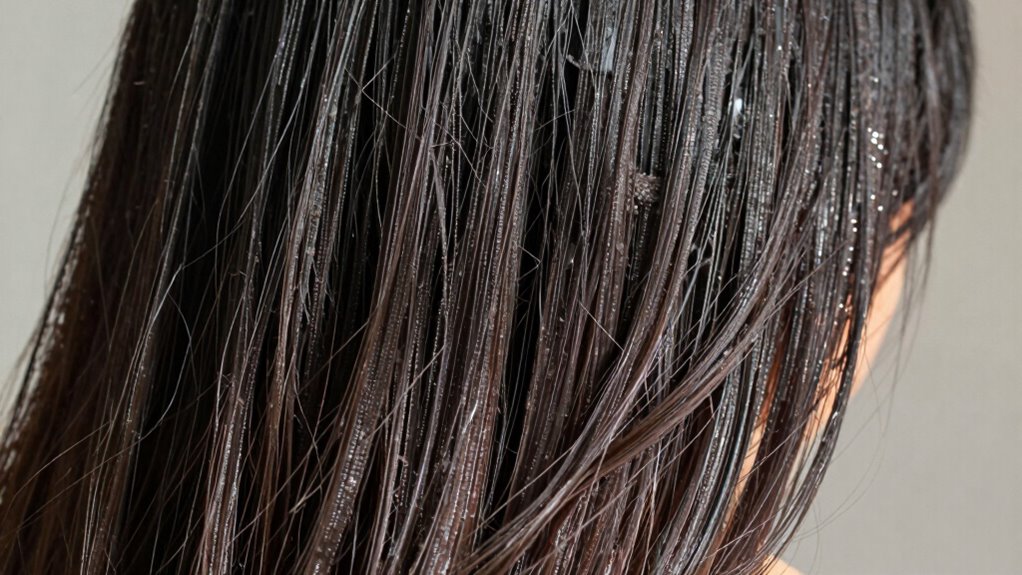
Fortunately, there are simple steps you can take to protect your hair from the damaging effects of hard water. Using a clarifying shampoo weekly helps remove mineral buildup that dulls hair color and affects hair porosity. Installing a water softener or using a shower filter can considerably reduce mineral content, safeguarding your hair’s health. Applying a pre-shampoo treatment, like a leave-in conditioner or oil, creates a barrier against minerals, especially if your hair has high porosity. Rinsing with cool water seals the cuticle, minimizing mineral absorption and maintaining shine. Regularly deep conditioning keeps hair hydrated and resilient against hard water’s effects. Additionally, choosing energy-efficient cloud servers can help support sustainable water management practices in larger scale water treatment solutions. Incorporating Free Floating landscaping ideas, such as natural pools and outdoor features, can enhance your backyard environment and contribute to better water quality management. Implementing water testing methods regularly can also help you monitor mineral levels and adjust your protective routines accordingly. Regular maintenance of plumbing systems is essential to prevent mineral buildup in household pipes, which can exacerbate water hardness and damage hair. These strategies help preserve vibrant hair color and improve manageability, ensuring your hair stays healthy and radiant despite hard water exposure.
Best Hair Products for Hard Water Users
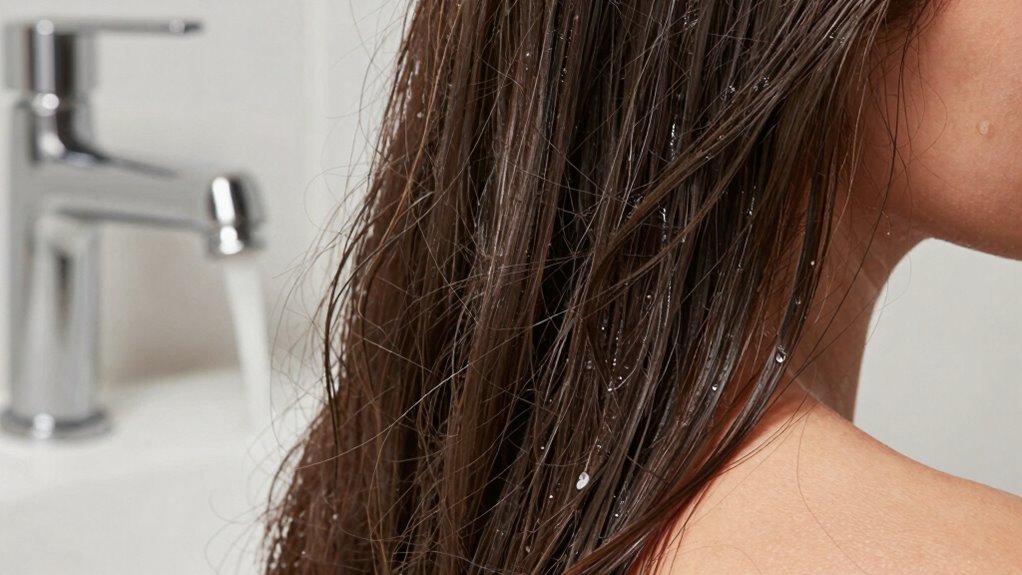
If you’re battling mineral buildup from hard water, choosing the right hair products can make a significant difference. Look for sulfate-free shampoos designed to remove mineral deposits without stripping your hair’s natural oils. Clarifying shampoos with chelating agents help eliminate mineral buildup that dulls your hair and affects your hair color vibrancy. Use deep-conditioning treatments to restore moisture and smoothness, especially if you notice scalp irritation from mineral residue. For color-treated hair, opt for color-safe formulas that protect your hair color from fading caused by hard water minerals. Additionally, lightweight leave-in conditioners can provide a barrier against mineral deposits and soothe scalp irritation. Being aware of toilet maintenance and repairs can help you understand how mineral deposits impact plumbing and water quality, further emphasizing the importance of using the right hair care products. Regular water testing can help you identify mineral levels early and adjust your hair care routine accordingly. Incorporating professional hair treatments can also help in managing mineral buildup more effectively. These targeted products help maintain your hair’s shine, health, and vibrant color despite hard water challenges. Moreover, using appropriate water softening methods can significantly reduce mineral content and improve your hair’s overall condition.
Home Remedies to Remove Mineral Buildup From Your Hair
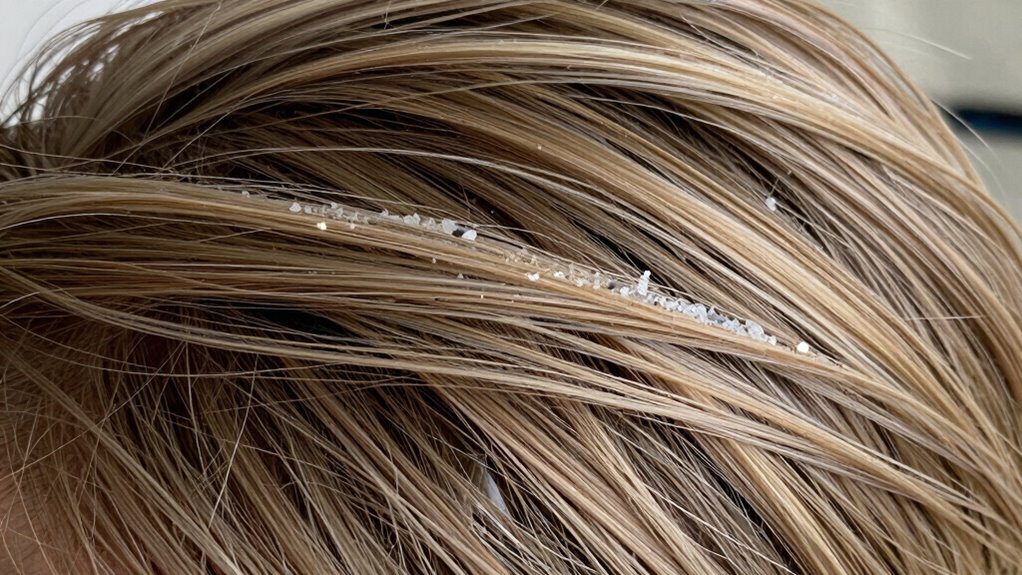
When mineral buildup from hard water starts dulling your hair’s shine and causing scalp irritation, home remedies can offer effective relief. Natural remedies like apple cider vinegar rinses help break down minerals and restore pH balance, leaving your hair smoother and shinier. Baking soda mixed with water creates a gentle clarifying paste that removes stubborn deposits. Lemon juice diluted in water can also help dissolve mineral build-up and brighten your scalp. While commercial treatments are available, these natural options are cost-effective, easy to use, and free of harsh chemicals. Regularly incorporating these remedies into your hair care routine can improve hair health and combat the effects of hard water without relying solely on store-bought solutions. Additionally, understanding the history of pinball machines can inspire creative ways to incorporate playful, stress-relieving activities into your self-care routine. Mineral deposits are a common challenge in areas with hard water, and being aware of their impact can motivate better prevention strategies.
Choosing the Right Water Softening Solutions for Your Hair
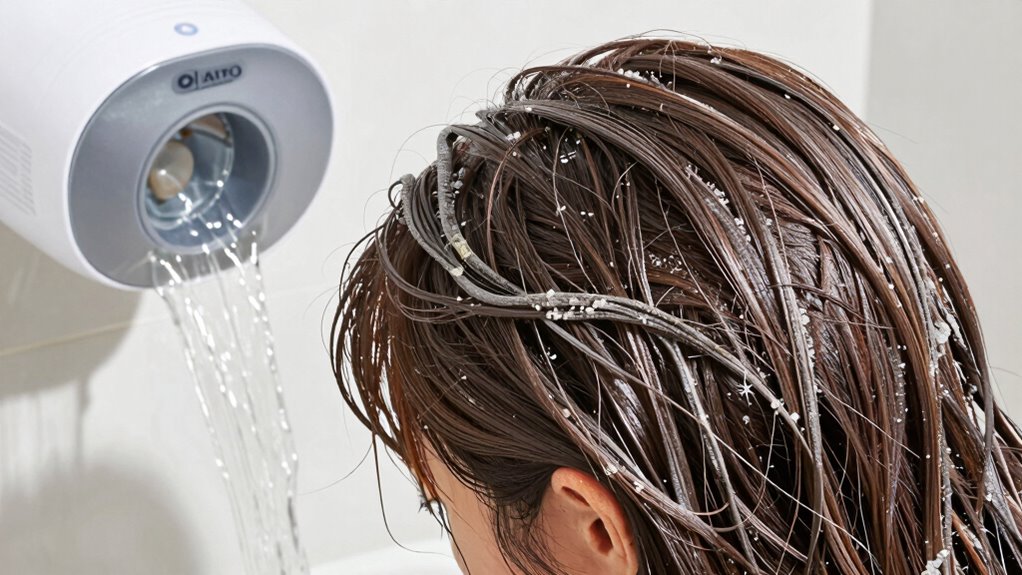
Choosing the right water softening solution is essential to protect your hair from the damaging effects of hard water. You need effective water filtration or softening systems that remove minerals like calcium and magnesium. Consider options like salt-based softeners, which exchange ions, or salt-free conditioners that alter mineral behavior. Evaluate your water quality and hair needs before selecting a system.
| Softening System | Water Filtration Method | Benefits |
|---|---|---|
| Salt-based Softener | Ion exchange | Removes minerals, softens water |
| Salt-free Conditioner | Template-assisted crystallization | Preserves minerals, protects hair |
| Reverse Osmosis | Membrane filtration | Purifies water, reduces buildup |
Frequently Asked Questions
Can Hard Water Cause Hair Color Fading?
Yes, hard water can cause hair color fading. The mineralization in hard water, like calcium and magnesium, interacts with hair dyes and shampoos, stripping away color molecules. This process reduces color longevity and makes your hair look dull over time. To protect your hair color, consider using a clarifying shampoo or installing a water softener, which can help minimize mineral buildup and preserve your vibrant hue.
Does Hard Water Affect Scalp Health?
Hard water can negatively impact your scalp health by causing scalp irritation and dandruff flare-ups. The minerals in hard water build up on your scalp, clogging hair follicles and leading to itchiness. This buildup also triggers inflammation, making dandruff worse. To protect your scalp, consider using a clarifying shampoo regularly, installing a water softener, or rinsing with distilled water to reduce mineral deposits and maintain scalp comfort.
Are Some Hair Types More Sensitive to Hard Water?
Like a delicate tapestry, certain hair types are more sensitive to hard water. High porosity hair, which absorbs moisture easily, and low elasticity, prone to breakage, suffer more from mineral buildup. You’ll notice dullness and damage faster if your hair falls into these categories. To protect your strands, consider clarifying treatments and gentle products tailored for high porosity or low-elasticity hair, keeping your hair resilient and vibrant.
How Often Should I Treat My Hair for Mineral Buildup?
You should treat your hair for mineral buildup every 4 to 6 weeks to maintain healthy strands. Regular hair treatment frequency helps prevent mineral buildup, which can cause dullness and damage over time. Use clarifying shampoos or hair treatments designed for mineral removal, especially if you notice dullness or dryness. Consistent prevention keeps your hair vibrant, soft, and manageable, reducing the effects of hard water and keeping your hair looking its best.
Can Switching to Filtered Water Prevent Dull Hair?
Switching to filtered water is like giving your hair a fresh start. Water filtration removes minerals that cause dullness, letting your hair shine brighter. When you use filtered water, you prevent mineral buildup, which keeps your hair cleaner and healthier. It’s a simple change that makes a big difference, helping your hair stay vibrant and smooth. So yes, switching to filtered water can effectively prevent dull hair caused by mineral deposits.
Conclusion
If you ignore hard water, your hair could turn into a lifeless, straw-like mess that screams neglect. Don’t let minerals steal your shine and turn your gorgeous locks into dull, rough strands begging for rescue. Take action now—protect your hair with smart products, remedies, and water solutions—before your hair’s health and beauty vanish into a dull, mineral-infested abyss. Act today, or risk saying goodbye to radiant, silky hair forever!