
How often you wash your hair depends on your hair type, scalp condition, and lifestyle. Oily scalps may need frequent washing, while dry or curly hair benefits from less. Environmental factors like pollution or humidity also play a role. Watch for signs like itchiness, grease, or dryness to adjust your routine. Keep exploring to discover personalized tips that help you find what works best for your hair needs.
Key Takeaways
- Hair type, scalp condition, and lifestyle determine optimal washing frequency.
- Signs like scalp irritation, greasiness, or dryness indicate when to wash.
- Environmental factors such as pollution and humidity influence how often you should clean your hair.
- Hair porosity and texture affect moisture retention and washing needs.
- Personal goals and styling habits should guide routine adjustments for healthy hair.
How Often Should You Wash Your Hair? The Quick Answer
How often should you wash your hair? Many people rely on hair care myths that suggest washing daily is necessary, but that’s not always true. Your washing frequency depends on your hair type, scalp condition, and lifestyle. If you have oily hair, you might need to wash more often, while dry or curly hair benefits from less frequent washing. Over-washing can strip natural oils, leading to dryness and irritation. Conversely, washing too infrequently can cause buildup and scalp issues. The key is finding a balance that suits your hair’s needs. Glycolic acid, known for its exfoliating properties, can also support scalp health when used appropriately, helping to remove dead skin cells and product buildup. Understanding your hair type and how it responds to different routines can help you develop a personalized hair care plan that maintains scalp health without overdoing it. Don’t fall for myths that prescribe a fixed routine. Instead, pay attention to how your hair and scalp feel, adjusting your washing frequency accordingly. For those with textured or curly hair, exploring different hair types can help determine the best washing schedule.
How Can You Tell When It’s Time to Wash Your Hair? Key Signs to Watch For
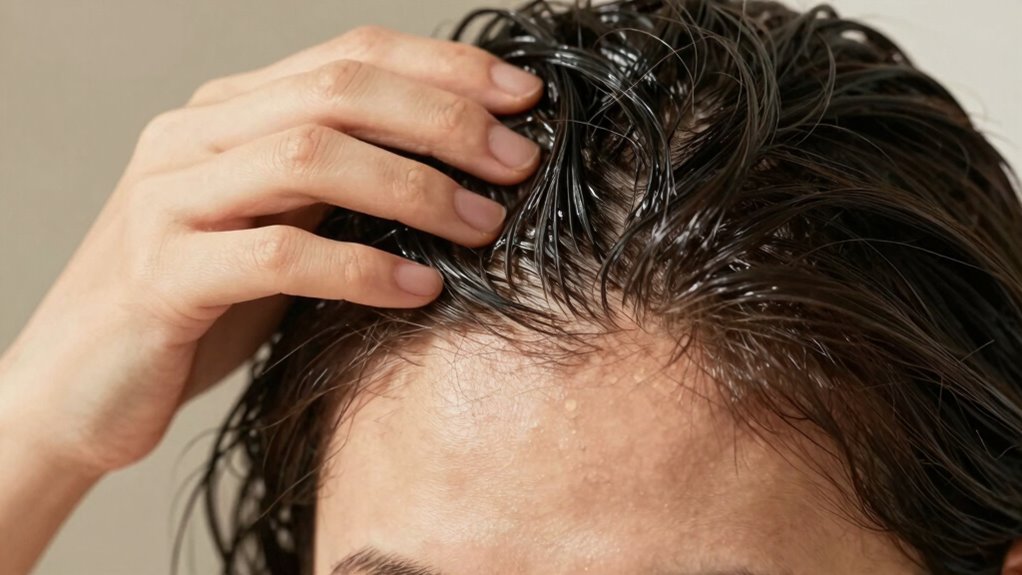
Knowing when to wash your hair isn’t about sticking to a strict schedule; instead, it’s about paying attention to your hair and scalp’s signals. If you notice scalp irritation or itching, it might be time for a wash. Changes in hair texture, like it feeling greasy, limp, or heavy, are clear signs you should clean your scalp. Conversely, if your hair feels dry or brittle, you might be over-washing. Pay attention to how your hair looks and feels daily. A greasy sheen or an increase in scalp discomfort indicates you need to refresh your hair. Additionally, understanding your hair’s contrast ratio and how it responds to different washing routines can help you find the optimal balance. Recognizing your scalp’s natural oils and how they fluctuate throughout the week can further refine your washing routine. Being aware of hair texture changes can also help you determine the right frequency for cleansing. Using proper filtration during hair washing can also help remove excess oils and buildup, promoting healthier scalp conditions. Incorporating scalp health practices into your routine can support long-term hair wellness. Listening to these cues helps you find the right balance, avoiding unnecessary washing while maintaining healthy hair and scalp.
What Are Your Hair and Scalp Types? How They Affect Washing Needs
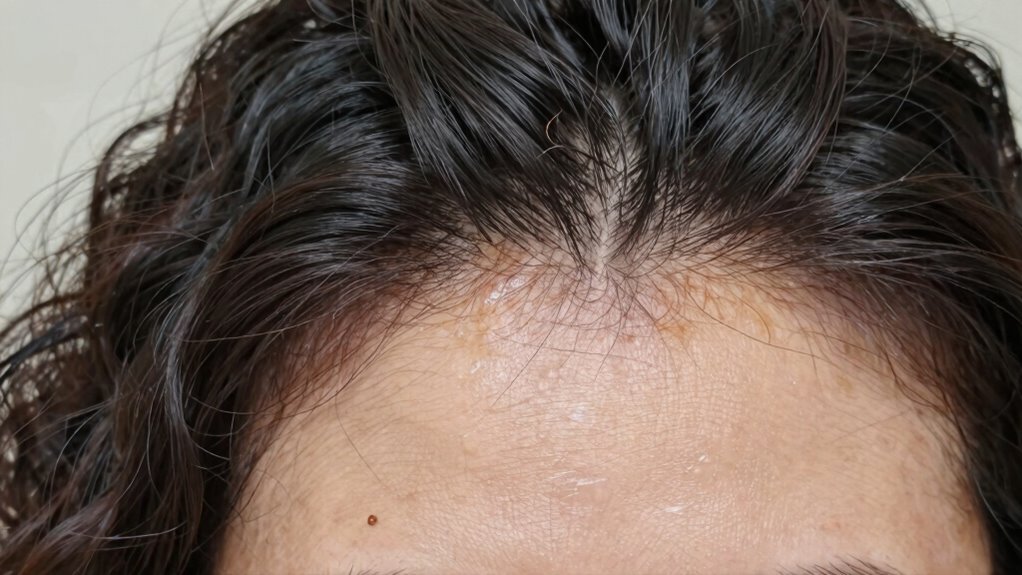
Your hair and scalp type play a significant role in determining how often you should wash. If you have high hair porosity, your strands absorb and lose moisture quickly, so washing too often can lead to dryness. Conversely, low porosity hair resists moisture and may require less frequent washing to avoid buildup. Scalp sensitivity also matters—if your scalp is prone to irritation or redness, washing with gentle products and less frequently can help prevent discomfort. Fine or oily scalps tend to need more regular washing to control excess oil, while thicker or dry scalps benefit from less frequent cleansings to maintain natural oils. Understanding your hair porosity and scalp sensitivity helps you tailor your washing routine, keeping your hair healthy and comfortable. Additionally, considering your hair texture and styling habits can further refine how often you should wash to maintain optimal hair health. Recognizing how scalp pH balance influences your scalp’s health can also guide your washing frequency to prevent issues like dryness or oiliness. Moreover, incorporating nourishing hair products suited to your scalp type can support a healthier scalp environment.
How Do Lifestyle and Environment Influence How Often You Wash?
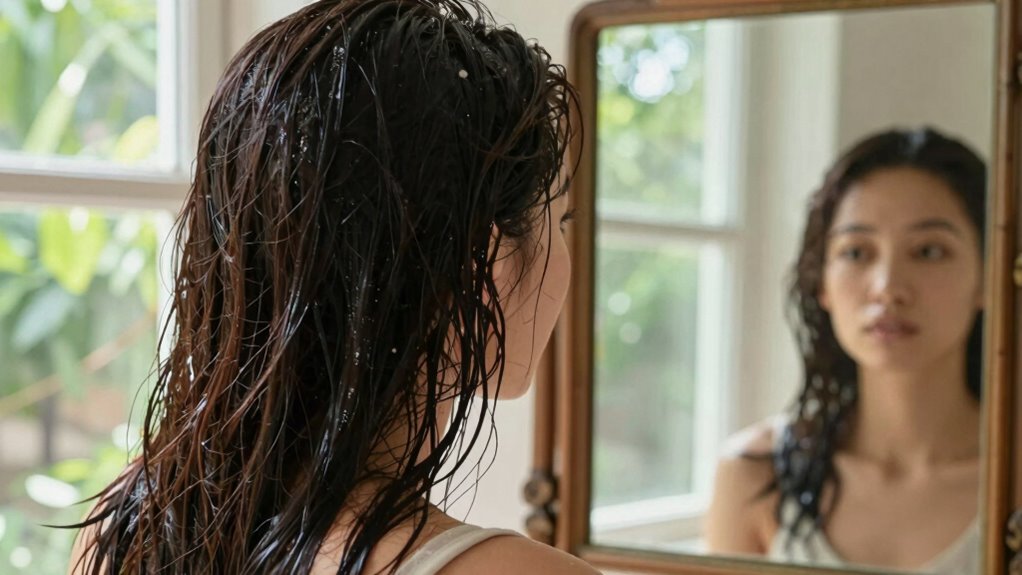
Have your daily routines and surrounding environment impact how often you need to wash your hair? Absolutely. If you have high hair porosity, your hair absorbs moisture quickly, so washing too often can strip natural oils, leading to dryness. Conversely, low porosity hair resists moisture, making less frequent washes preferable. Your environment also plays a role; if you’re exposed to pollution or sweat from outdoor activities, you might need to wash more frequently. Scalp sensitivity is another factor—if your scalp reacts negatively to certain products or frequent washing, adjusting your routine becomes essential. Living in humid climates can increase oil buildup, while dry environments may require less frequent washing. Tailoring your routine based on these factors helps maintain healthy hair and scalp. Additionally, understanding the potential of your hair care routine can help you optimize how often you wash for the best scalp health. Recognizing environmental influences can further refine your washing schedule to support overall hair health. Being aware of your hair porosity can also guide your washing frequency, ensuring your hair remains healthy and well-moisturized. Moreover, paying attention to seasonal changes can help you adapt your hair washing habits throughout the year. Considering hair type classification can also assist in customizing your routine for optimal results.
How Can You Create a Hair Washing Routine That Fits Your Goals and Preferences?
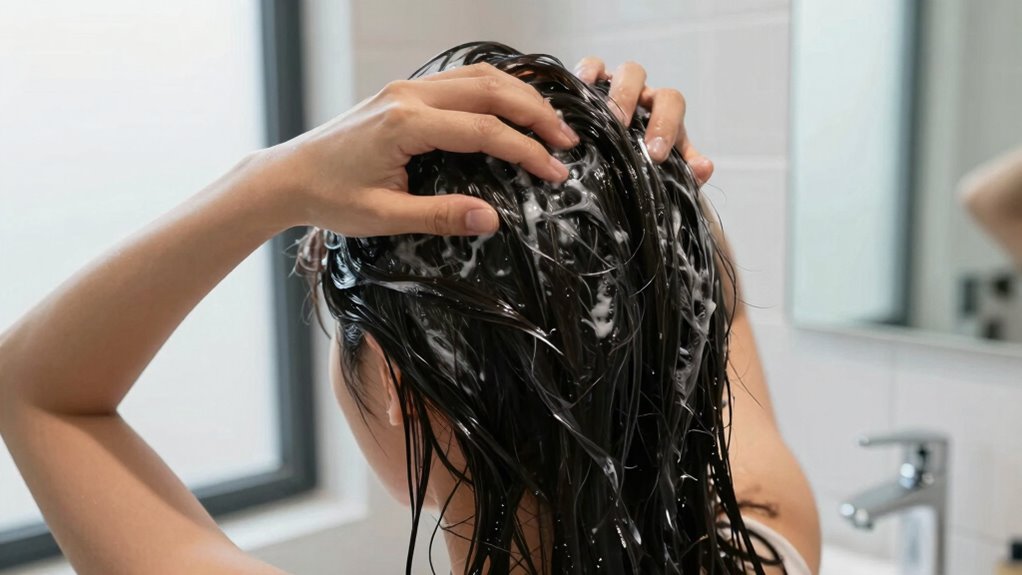
Creating a hair washing routine that aligns with your goals and preferences involves understanding your hair type, scalp condition, and lifestyle. First, identify whether your hair is oily, dry, or normal, and adjust your hair care routines accordingly. If you have a sensitive scalp, consider gentler shampoos and less frequent washes to maintain scalp health. Your daily activities and hair styling habits also influence your routine—active individuals may need more frequent washing, while others may benefit from less. Experiment to find what feels best without compromising scalp health. Pay attention to how your hair responds, and adapt your routine as needed. Balancing your goals with your scalp’s needs guarantees your hair stays healthy, shiny, and manageable. Incorporating proper maintenance schedules can help you optimize your hair care routine over time. Additionally, understanding cryptid mysteries, haunted folklore, or paranormal phenomena can add an intriguing layer to your knowledge, making your routine not only effective but also engaging. Regularly monitoring your scalp’s healing process and adjusting your washing frequency accordingly can further ensure your hair remains vibrant and healthy. Using broad-spectrum sunscreen on your scalp when exposed to the sun can also help protect against UV damage, especially if you have short or thinning hair. Being aware of scalp health indicators can help you catch issues early and adjust your routine proactively.
Frequently Asked Questions
Can Washing Hair Daily Damage My Scalp or Hair?
Washing your hair daily can sometimes damage your scalp and hair, especially if your scalp is sensitive or your hair has a delicate texture. Over-washing strips natural oils, leading to dryness, irritation, and potential scalp health issues. If you have oily hair, daily washing might work, but if your hair is dry or curly, washing less often helps maintain moisture and keeps your scalp healthy. Pay attention to how your hair responds.
How Does Hair Color Impact Washing Frequency?
Your hair color considerably impacts your washing frequency. If you have color-treated hair, you should wash less often to protect your dye and keep your color vibrant. Blonde or light-colored hair may fade faster, so washing every 3-4 days helps preserve it. Darker shades can handle slightly more frequent washes. Adjust your washing routine based on your hair color to maintain its health and appearance.
Do Hair Treatments or Styling Products Affect Washing Needs?
Ever wonder if your hair treatments or styling products change how often you should wash? They can, especially if you have high hair porosity or a sensitive scalp. Heavy products can build up, making you want to wash more often, while lighter formulas might require less frequent cleansing. Pay attention to your scalp’s response and product ingredients—these factors help you find your perfect washing routine.
Is It Necessary to Adjust Washing Routine Seasonally?
Yes, you should adjust your washing routine seasonally based on climate considerations. In humid summers, you might need to wash more often to prevent sweat and oil buildup. During colder months, washing less frequently helps retain moisture and protect your scalp from dryness. Pay attention to how your hair reacts in different seasons, and tailor your routine accordingly for healthy, balanced hair year-round.
How Do Age and Hormonal Changes Influence Hair Washing Frequency?
Age and hormonal fluctuations can impact how often you wash your hair. As you age, your scalp produces less oil, so you might find less frequent washing keeps your hair healthier. Hormonal changes, like during puberty or menopause, can increase oil production, making more frequent washing necessary. Pay attention to how your hair and scalp feel, and adjust your routine accordingly to maintain scalp health and manage oiliness effectively.
Conclusion
So, now you know the key factors influencing how often to wash your hair. But what if your needs change tomorrow? Could a new routine unveil healthier, shinier hair you never expected? The secret lies in paying attention to your scalp’s signals and adjusting as you go. Don’t settle for a one-size-fits-all answer—your perfect hair care routine might be closer than you think. Are you ready to discover it?