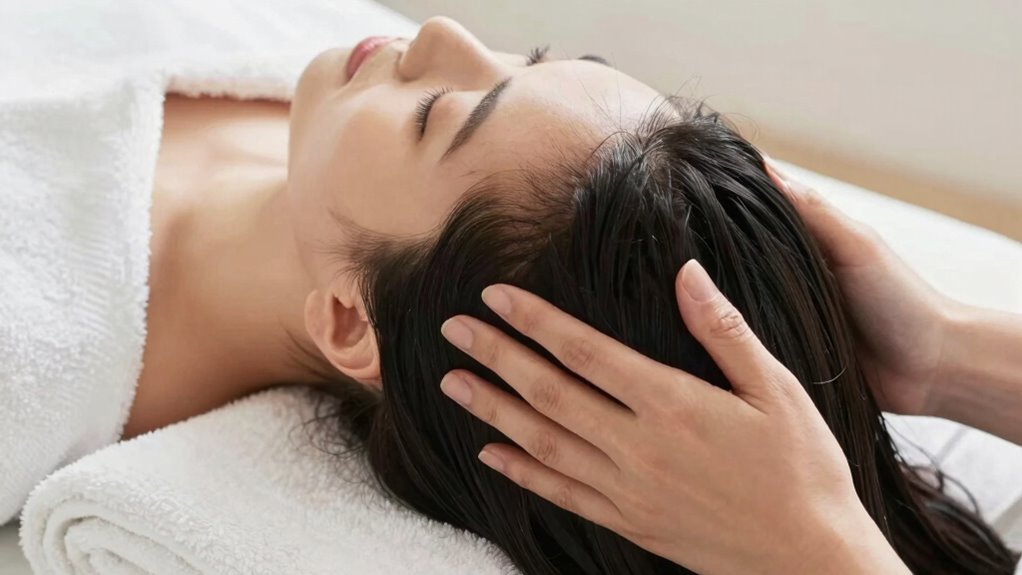
To support healthy-looking hair with a scalp massage routine, use your fingertips to gently massage your scalp in slow, circular motions for about 5-10 minutes, three to four times a week. Focus on relaxing your scalp while boosting blood flow and removing buildup with nourishing oils or serums. Consistency is key—proper technique and tools like silicone scalp massagers can maximize benefits. Keep going, and you’ll discover how to enhance your scalp health even more.
Key Takeaways
- Use gentle, circular fingertip motions to stimulate blood flow and activate hair follicles regularly.
- Incorporate nourishing oils or serums to hydrate the scalp and support healthy growth.
- Perform scalp massages 3-4 times weekly, maintaining consistency for best results.
- Keep the scalp clean before massaging to prevent buildup and enhance massage benefits.
- Maintain a balanced diet, stay hydrated, and avoid excessive heat styling to promote overall scalp and hair health.
Why Regular Scalp Massages Boost Hair Growth and Scalp Health
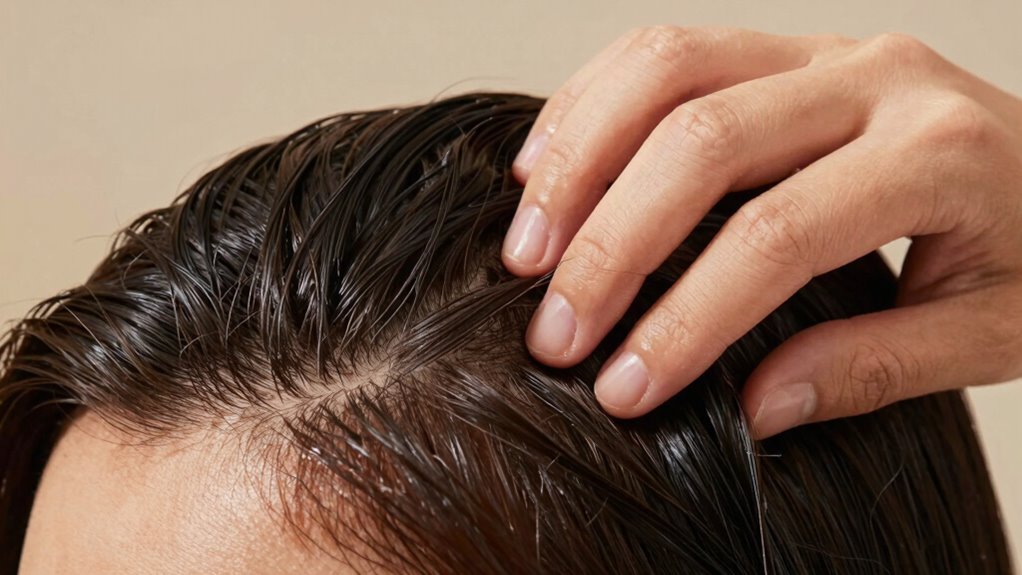
Regular scalp massages stimulate blood circulation in your scalp, which delivers more nutrients and oxygen to hair follicles. Improved scalp circulation enhances the delivery of essential nutrients that support healthy hair growth. When you massage your scalp, you activate hair follicle stimulation, encouraging follicles to remain active and healthy. This increased blood flow not only promotes growth but also helps remove toxins and reduce scalp tension. As a result, your scalp stays healthier, less prone to dryness, dandruff, and irritation. Regular massage keeps hair follicles strong and resilient, reducing hair breakage and shedding. Over time, this boost in scalp circulation and hair follicle stimulation contributes to fuller, thicker, and more vibrant hair, supporting your overall scalp health and hair growth goals. Additionally, maintaining a healthy scalp environment is crucial for long-term hair vitality and preventing issues like scalp inflammation. Regular massages also help maintain scalp elasticity, which can diminish with age and affect hair health. Enhancing scalp circulation through massage can also support the body’s natural detoxification processes, further promoting a healthy scalp. Incorporating techniques that improve scalp health can maximize these benefits for stronger, healthier hair.
How to Do a Relaxing, Effective Scalp Massage: A Step-by-Step Guide
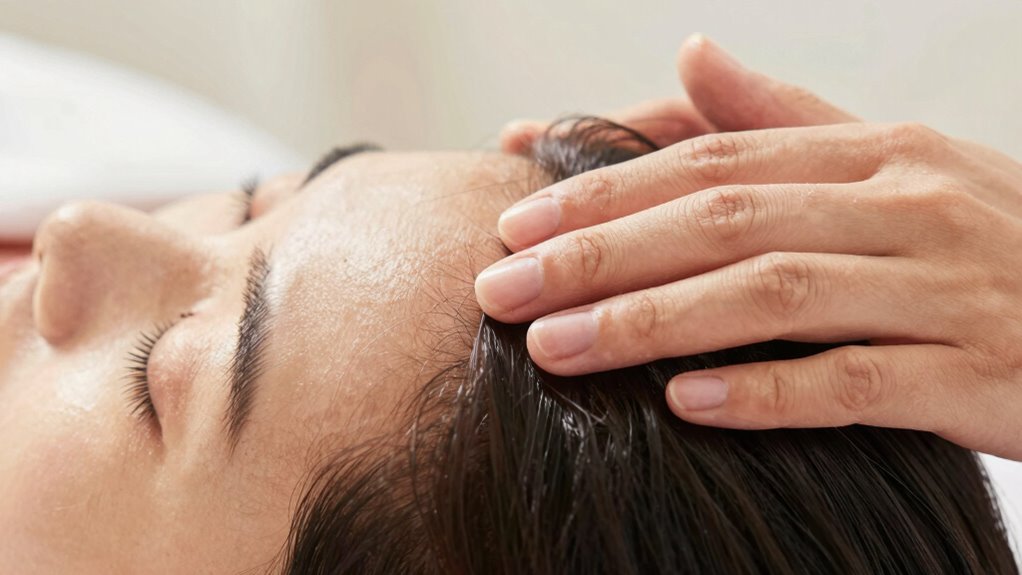
To perform a relaxing and effective scalp massage, start by finding a comfortable seated position in a quiet space. Focus on scalp relaxation and use gentle massage techniques to promote circulation. Begin by placing your fingertips on your scalp, applying light pressure. Use circular motions, moving from the front hairline to the crown, then to the sides and back. Keep your movements steady and avoid rushing. Incorporate these steps for maximum benefit:
- Use your fingertips, not nails
- Apply gentle, consistent pressure
- Use slow, circular motions
- Cover all areas of your scalp evenly
- Maintain a calm, relaxed breathing pattern
Additionally, understanding your scalp’s sensitivity can help tailor your massage to be both soothing and effective. Being aware of your scalp health can guide you in adjusting pressure and technique for optimal results. Incorporating proper techniques can enhance blood flow and stimulate hair follicles, making your routine both soothing and effective. Paying attention to scalp conditions can further improve the overall effectiveness of your massage routine, and exploring scalp massage benefits can motivate you to stay consistent with your routine.
The Best Tools and Products for Your Scalp Massage Routine
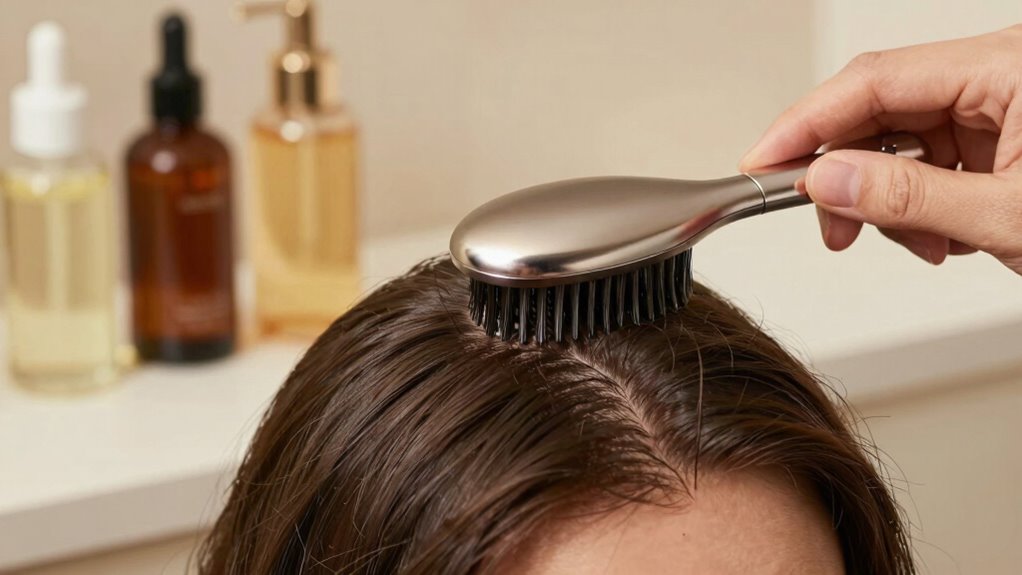
Choosing the right tools and products can substantially enhance your scalp massage routine. Using effective scalp massage tools, like gentle brushes or silicone scalp massagers, helps stimulate circulation without causing irritation. Nourishing scalp products, such as lightweight oils or serums, can deeply hydrate your scalp and promote healthy growth. Selecting tools and products suited to your scalp type for maximum benefits is essential for a successful routine. Here’s a quick guide:
| Tool/Product Type | Benefits |
|---|---|
| Silicone Scalp Massager | Gentle stimulation, easy to clean |
| Wooden Brush | Improves circulation, reduces buildup |
| Nourishing Serums | Moisturizes, supports scalp health |
| Lightweight Oils | Enhances shine, encourages growth |
| Scalp Scrubs | Removes dead skin, boosts absorption |
Incorporating scalp health awareness into your routine can help you make more informed choices about the best tools and products. Being aware of scalp conditions can help tailor your routine to address specific concerns. Utilizing scalp care techniques can further optimize your routine and promote overall scalp health for optimal results.
How Often Should You Massage Your Scalp for Best Results?
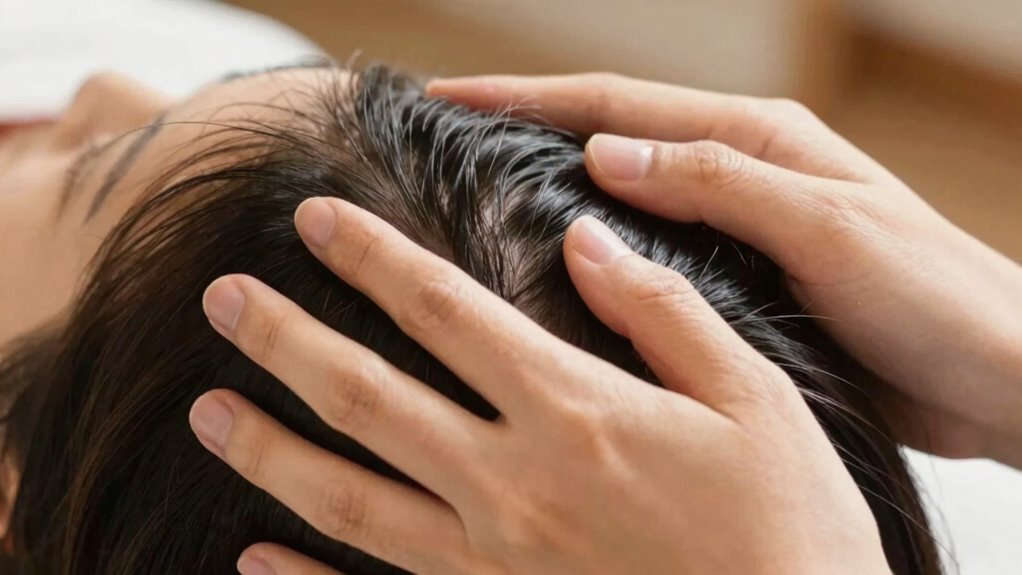
For ideal results, most people should massage their scalp 3 to 4 times a week. This frequency allows you to stimulate blood flow without overdoing it, supporting healthy hair growth. The key to a successful scalp massage routine is maintaining an ideal massage schedule that fits your lifestyle. Incorporating sound knowledge about hair health can help you understand the importance of consistent care. Additionally, understanding scalp stimulation techniques can enhance the effectiveness of your routine. Consider these tips for your scalp massage frequency: – Stick to consistent days each week – Avoid daily massages to prevent irritation – Adjust frequency if your scalp feels sensitive – Combine with other hair care routines for best results – Listen to your scalp’s response and modify accordingly. Staying informed about hair health practices can further optimize your routine. Remember, the perfect massage schedule varies from person to person, so stay attentive to how your scalp reacts. Recognizing scalp sensitivity signs can help you prevent damage and maintain scalp health. Moreover, being aware of proper massage techniques can significantly improve your experience and results.
Common Mistakes to Avoid During Your Scalp Massage
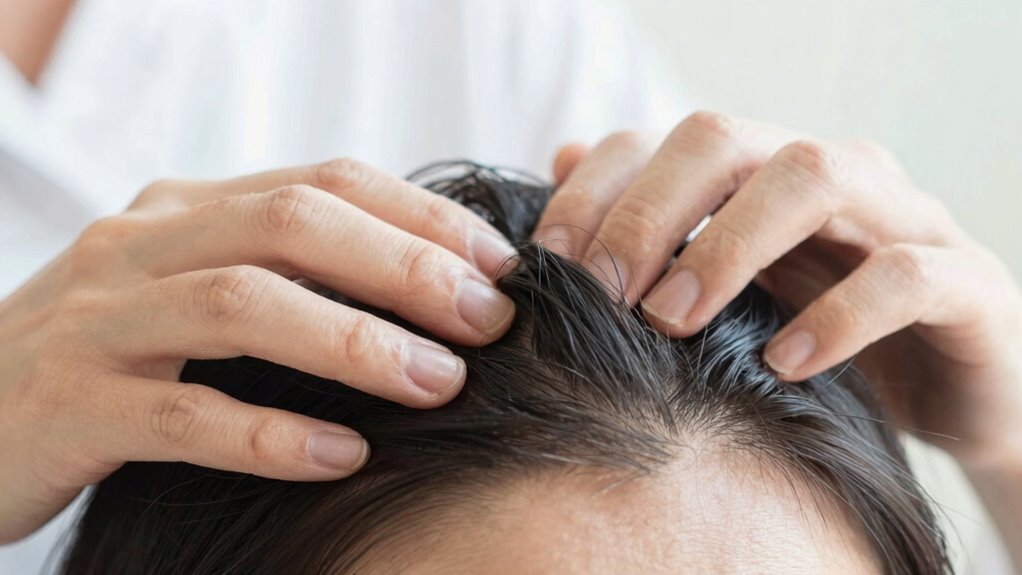
Avoid applying too much pressure during your scalp massage, as it can cause irritation or damage your scalp. Make sure your scalp is clean before massaging; neglecting hygiene can lead to buildup and clogged follicles. Staying mindful of these mistakes helps you get the best benefits without unintended harm. Additionally, using proper technique ensures a gentle and effective massage that promotes healthy scalp circulation. Incorporating scalp health practices can further enhance hair vitality and growth. Paying attention to modern kitchen technology advancements, such as using ergonomic tools or automated devices, can also improve your massage experience and results. Being aware of best vacuum features can help you select tools that are gentle yet effective for scalp care, especially when cleaning around sensitive areas. Utilizing innovative grooming tools designed specifically for scalp massage can also maximize the benefits of your routine.
Overusing Pressure
Applying too much pressure during your scalp massage can do more harm than good. Excessive force can cause pressure buildup, leading to scalp soreness and discomfort. When you press too hard, you risk damaging hair follicles and irritating your scalp. To avoid these issues, focus on gentle, steady movements instead of forceful presses. Incorporating energy-efficient cloud servers into your digital routine can help support sustainable and secure technology practices. Be mindful of these common mistakes:
- Using excessive pressure that causes discomfort
- Applying uneven pressure across different areas
- Massaging too aggressively, leading to soreness
- Ignoring your scalp’s response and continuing to press
- Overworking sensitive areas, increasing soreness and pressure buildup
Neglecting Scalp Hygiene
Neglecting proper scalp hygiene can undermine your massage efforts and lead to scalp issues. When you skip regular cleansing, dirt, oil, and product buildup accumulate, blocking hair follicles and impairing scalp health. This buildup can cause irritation, dandruff, and even hair thinning over time. A clean scalp promotes better circulation and allows your hair follicles to breathe, enhancing the benefits of your massage routine. During your massage, focus on gently stimulating your scalp, but never overlook washing your hair regularly. Maintaining good scalp hygiene ensures your scalp remains healthy and receptive to nutrients. Remember, a healthy scalp is the foundation for healthy-looking hair, so don’t overlook the importance of proper cleansing as part of your routine.
Extra Tips to Keep Your Scalp Healthy and Hair Shiny
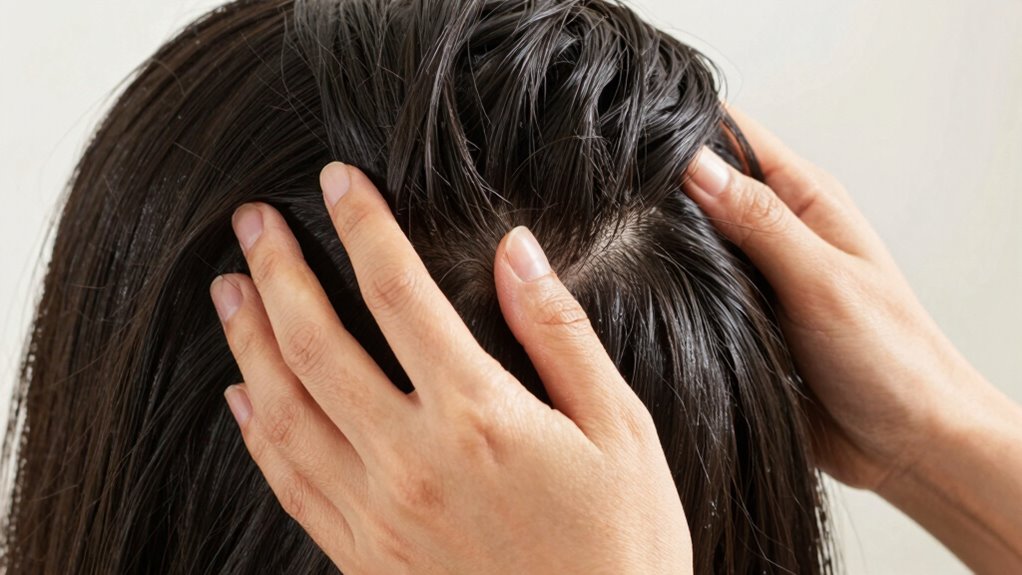
To keep your scalp healthy and your hair shiny, maintaining a balanced diet rich in vitamins and minerals is essential. Proper hair nutrition supports scalp health and enhances shine. Additionally, ensuring scalp hydration helps prevent dryness and flakiness, promoting a healthy environment for hair growth. Here are some extra tips:
Maintaining a balanced diet and proper hydration promotes healthy, shiny hair and a nourished scalp.
- Drink plenty of water daily to stay hydrated.
- Eat foods high in biotin, zinc, and omega-3 fatty acids.
- Use lightweight, nourishing hair oils or serums.
- Avoid excessive heat styling that can dry out your scalp.
- Massage your scalp regularly to boost blood flow and distribute scalp oils.
These simple habits help maintain scalp hydration, support hair nutrition, and contribute to shiny, healthy hair.
When Should You See a Professional for Hair or Scalp Issues
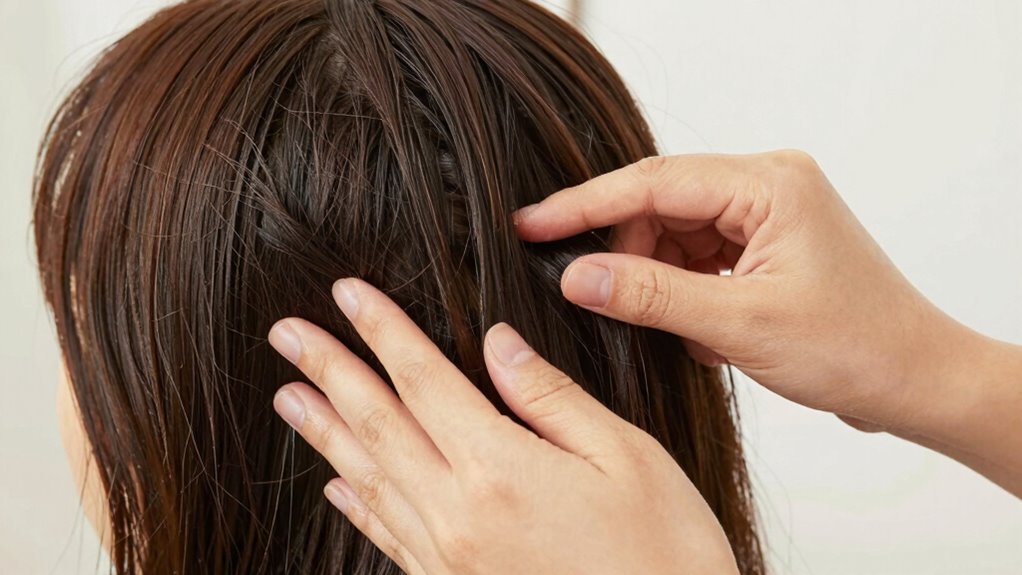
Knowing when to consult a professional for hair or scalp issues is essential for maintaining healthy hair. If you notice persistent scalp sensitivity or discomfort, it’s time to see a dermatologist or trichologist. Changes such as excessive itching, redness, or irritation that don’t improve with your usual hair care routine signal a problem. Also, if you experience significant hair loss or thinning, professional advice can help identify underlying causes. Don’t ignore symptoms like flakes, scaly patches, or pain, as these may indicate conditions requiring specialized treatment. Regularly evaluate your scalp health and adjust your hair care routine accordingly. Seeking expert help early can prevent more serious issues and ensure your scalp remains healthy, supporting the hair growth and shine you desire.
Frequently Asked Questions
Can Scalp Massages Help Prevent Hair Loss?
Yes, scalp massages can help prevent hair loss by boosting hair growth and improving scalp health. When you massage your scalp regularly, it stimulates blood flow to hair follicles, encouraging stronger, healthier hair. Plus, it can reduce stress, a factor linked to hair loss. Incorporate gentle, circular motions into your routine to support your scalp health and maintain vibrant, healthy-looking hair over time.
Are There Specific Massage Techniques for Oily Versus Dry Scalps?
You might notice that your scalp’s sensitivity and oil levels influence your massage techniques. For oily scalps, use gentle, circular motions with lighter pressure to help regulate excess sebum without irritation. Conversely, dry scalps benefit from a slightly firmer massage that stimulates blood flow, but avoid harsh pressure to prevent discomfort. Adjust your massage pressure based on how your scalp responds, ensuring a soothing experience tailored to your scalp’s specific needs.
What Natural Oils Are Best for Scalp Massage?
You should use a blend of essential oils like tea tree, peppermint, or lavender for scalp massage, as they promote scalp health and invigorate hair follicles. Mix these with carrier oils such as coconut, jojoba, or argan oil to guarantee smooth application and nourishment. These natural oils help balance oil production, soothe dryness, and stimulate circulation, supporting healthy-looking hair. Always dilute essential oils properly and do a patch test first.
How Long Should Each Massage Session Last?
They say “patience is a virtue,” and it’s true for scalp massages. Aim for 5 to 10 minutes per session, adjusting massage pressure based on your scalp sensitivity. Too much pressure can cause irritation, so stay gentle. Keep your strokes steady and consistent, ensuring you don’t rush. Regularly doing this for a few minutes daily can promote healthier hair without overtaxing your scalp.
Can Scalp Massages Replace Medical Treatments for Hair Issues?
Scalp massages can’t replace medical treatments for hair issues, but they do support hair growth and scalp health. Regular massages improve blood circulation, stimulate hair follicles, and reduce stress, which benefits hair quality. However, if you have underlying conditions like alopecia or scalp infections, it is crucial to consult a healthcare professional. Use scalp massages as a complementary practice to enhance overall scalp health, not as a substitute for medical advice.
Conclusion
Remember, a healthy scalp is the foundation for gorgeous hair, so make your massage routine a regular habit. With patience and consistency, you’ll see improvements in scalp health and hair growth. As the saying goes, “A little care goes a long way,” so don’t skip your massage sessions. Keep at it, stay gentle, and your hair will thank you with shine and vigor. Your efforts today pave the way for beautiful hair tomorrow.