
Your ends keep splitting because your hair’s cuticle gets damaged from repeated stress like heat styling, harsh chemicals, or rough brushing, which weakens the strands. Environmental factors and dehydration also make your hair more fragile, causing splits to form and worsen over time. If you want to understand the real causes and find effective solutions, there’s more to uncover that can help you keep your ends healthier.
Key Takeaways
- Repeated stress from heat, chemicals, and vigorous brushing weakens the hair cuticle, causing splits.
- Dehydration reduces moisture, elasticity, and resilience, leading to fragile, splitting ends.
- Environmental exposure to sun, wind, and pollution accelerates outer layer damage.
- Neglecting regular trims allows minor damage to progress and worsen over time.
- Using improper tools or techniques, especially on wet hair, increases mechanical stress and split ends.
Why Do Hair Ends Split? The Scientific Causes

Understanding why hair ends split starts with recognizing that the damage occurs when the protective outer layer, the cuticle, becomes compromised. Split end causes often stem from repeated stress on your hair, such as excessive heat styling, harsh chemical treatments, or vigorous brushing. When the cuticle weakens or lifts, it exposes the inner cortex, making your hair more susceptible to breakage. This damage accumulates over time, leading to split ends. Hair breakage happens when the weakened fibers can no longer withstand daily wear and tear, causing them to fray or snap. If you neglect proper hair care, these split end causes will continue to weaken your strands, making your hair more prone to splitting and breakage, ultimately undermining your hair’s health and appearance. Incorporating energy-efficient hair care routines can help reduce the ongoing damage and protect your strands from further splitting. Using gentle styling techniques can also minimize mechanical stress on your hair, helping to prevent splits. Additionally, using natural hair treatments can help reinforce the hair shaft and restore some resilience to damaged ends. Regular trims and minimizing mechanical stress are also essential to prevent further splitting and promote healthier hair growth. Proper hydration and nourishing your hair with vitamin-rich products can also strengthen weak strands, reducing the likelihood of split ends.
How Damage and Breakage Lead to Split Ends
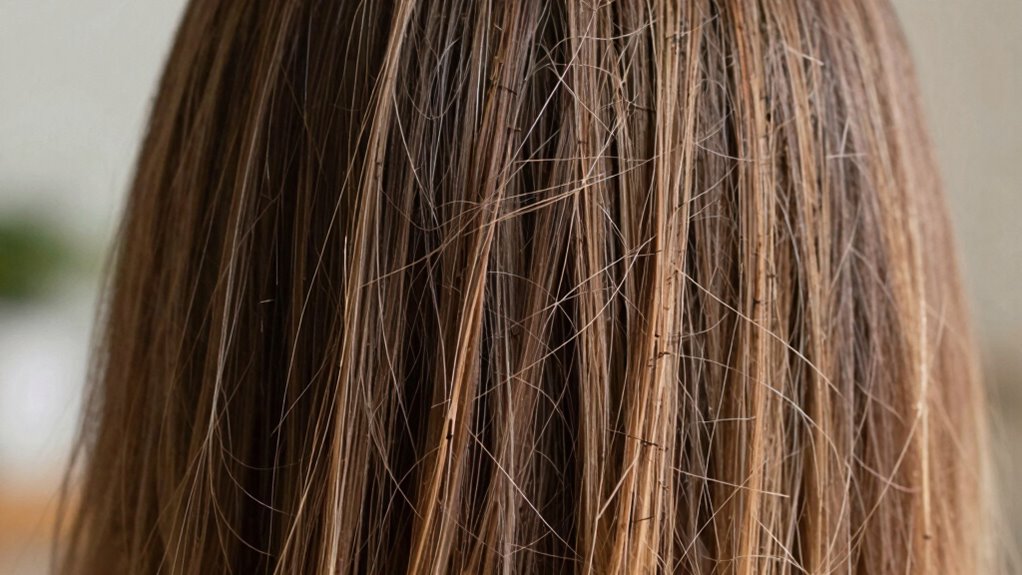
When your hair undergoes repeated stress or excessive heat styling, the cuticles weaken and become more prone to damage. This breakage creates tiny splits that can travel up the hair shaft, resulting in split ends. By understanding how these factors damage your hair, you can take steps to protect it and keep your ends healthy. Using the right hair care techniques and choosing suitable products can further minimize damage and maintain hair strength. Proper hydration and regular conditioning also play a crucial role in preventing split end formation, especially when you incorporate moisturizing treatments into your routine. Recognizing the importance of an energetic alignment with your hair care routines can also contribute to healthier hair overall, and being mindful of hair stressors allows for better preventative care.
Repeated Hair Stress
Repeated stress on your hair—such as excessive brushing, tight hairstyles, or heat styling—weakens its structure over time. Chemical treatments like hair color or relaxers can further damage your strands, making them more prone to splitting. These processes strip away protective layers, leaving your hair vulnerable to breakage. When you repeatedly stress your hair, the cuticle becomes damaged, resulting in weakened fibers that split easily. Over time, this damage accumulates, increasing the likelihood of split ends. Proper hair handling plays a key role in maintaining your strands’ health. By reducing repeated stress, you help preserve your hair’s integrity, keeping your ends healthier and less prone to splitting. Using gentle, nourishing products such as sulfate-free shampoos can also help protect your hair from further damage. Additionally, understanding hair structure can help you adopt better care practices to minimize damage. Embracing preventative measures like regular trims and deep conditioning treatments can significantly improve your hair’s resilience against damage.
Excessive Heat Styling
Excessive heat styling, such as using flat irons, curling wands, or blow dryers, can cause significant damage to your hair’s structure. This heat damage weakens the cuticle, making your strands prone to breakage and split ends. When you rely heavily on these styling techniques, your hair loses its natural moisture and elasticity, increasing the risk of damage over time. Incorporating seasonal hair care routines can help maintain hair health and prevent further damage. To protect your hair, consider these points:
- Applying heat protectant sprays before styling minimizes damage.
- Limiting heat use to a few times a week preserves hair health.
- Opting for lower heat settings reduces stress on your strands.
- Understanding heat damage can help you make smarter styling choices.
Additionally, using proper hair tools designed for gentle heat distribution can further lessen the risk of breakage.
The Impact of Heat Styling and Over-Processing
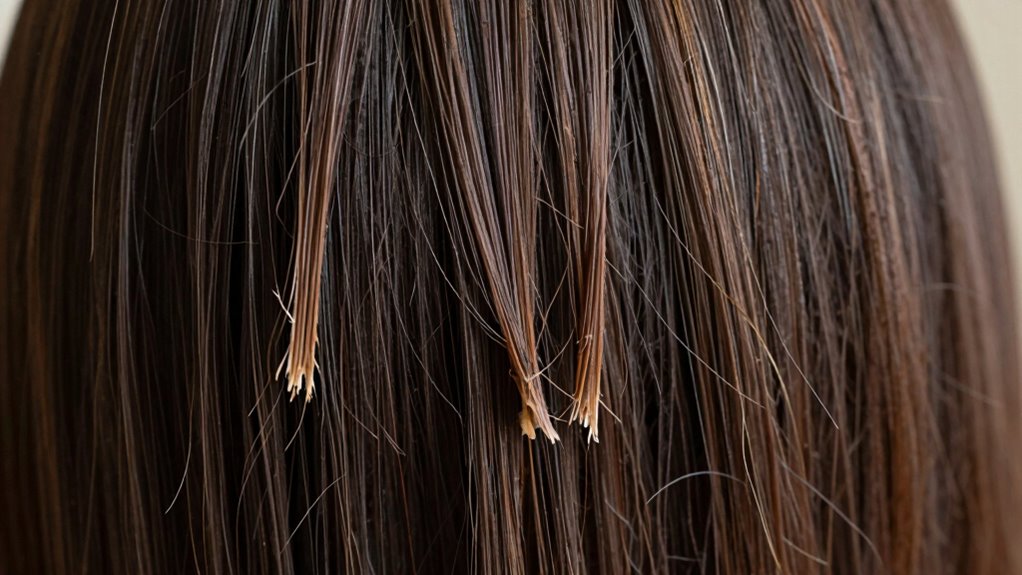
Heat styling and over-processing can severely damage your hair by weakening its structure and stripping away natural moisture. When you frequently use hot tools or chemical treatments, your hair becomes brittle and prone to splitting. To combat this, consider natural remedies like coconut oil or argan oil, which help restore some moisture and strengthen strands. Regular hair trimming is essential to remove split ends caused by damage, preventing them from traveling upward. Reducing heat exposure and limiting chemical treatments protect your hair’s integrity. Remember, over-processing weakens your hair’s fibers, making it more susceptible to breakage and split ends. Using specialized tools like hot rollers can help achieve styled looks with less direct heat, reducing damage. Additionally, employing proper heat settings and not leaving hot tools on your hair for extended periods can further minimize harm. Incorporating protective hair products before styling provides an extra barrier against heat damage. Being aware of your hair’s porosity can also help you choose the right products and styling techniques to minimize damage. To further safeguard your strands, consider using heat protectant sprays that form a barrier and distribute heat evenly. Taking these steps helps maintain healthier hair, but avoiding excessive heat and harsh chemicals remains vital for long-term damage control.
How Dryness Causes Split Ends
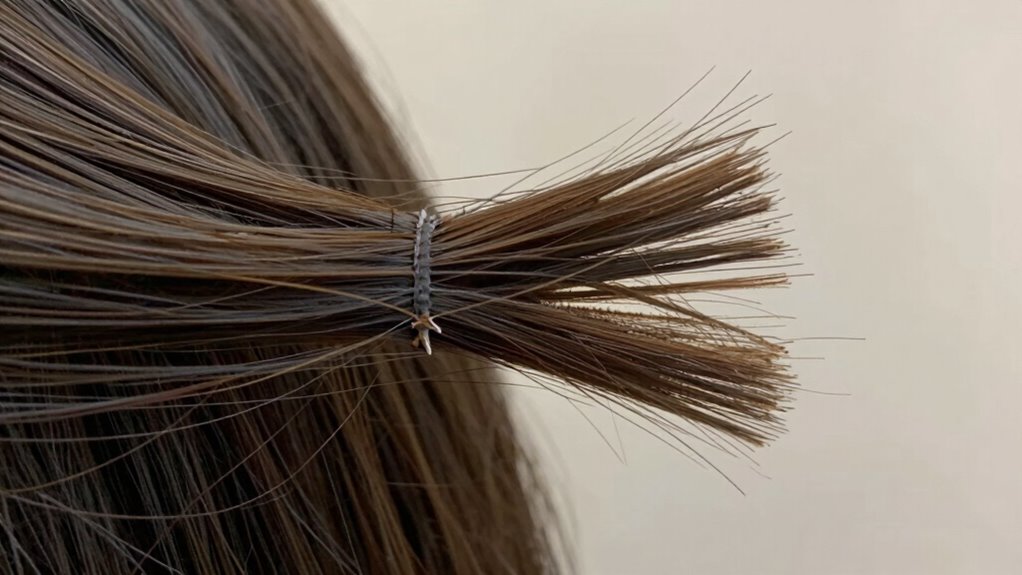
When your hair lacks moisture, it becomes weak and more prone to splitting. Dehydration strips away the natural oils that keep your strands healthy, making them more vulnerable to damage. Without proper hydration, your ends can easily split and break. Using proper storage methods for hair care products can help maintain moisture levels and prevent dryness. Incorporating moisture retention techniques can further enhance your hair’s resilience against splitting.
Dehydration Weakens Hair
Dryness strips your hair of its natural moisture, making the strands brittle and more prone to splitting. When your hair is dehydrated, it loses crucial hydration benefits that keep it strong and flexible. Without proper moisture retention, your strands become fragile, increasing the risk of split ends. To understand the impact, consider:
- Your hair becomes less elastic, snapping easily under minimal stress.
- The outer cuticle weakens, exposing inner fibers to damage.
- Moisture deficiency accelerates breakage, causing uneven, frayed ends.
Dehydration doesn’t just make your hair look dull; it actively weakens its structure. Keeping your hair hydrated supports moisture retention, helping to prevent split ends and maintain healthier, resilient strands. Proper hydration is essential for strong, beautiful hair.
Lack of Moisture Damage
Have you noticed how your hair becomes more prone to split ends when it feels dry and brittle? Lack of moisture damage occurs when your hair doesn’t retain enough moisture, weakening the strands and making them more susceptible to splitting. Without proper moisture retention, hair becomes rough, dull, and prone to breakage. To combat this, you need effective hydration techniques like deep conditioning, using leave-in treatments, and avoiding harsh shampoos. These methods help lock in moisture and maintain your hair’s flexibility and strength. When your hair stays hydrated, it’s less likely to develop split ends. Consistently nourishing your strands ensures they stay supple and resilient, preventing dryness from causing further damage. Remember, moisture is key to healthy, split-end-free hair.
Hair Type and Genetics: Do They Make Your Ends More Prone to Splitting?

Your hair type and genetics can considerably influence how prone your ends are to splitting. Your hair texture, whether straight, wavy, or curly, affects how fragile your strands are and how easily they split. If you have a genetic predisposition, you might naturally have weaker hair, making splits more likely. Consider these points:
- Fine hair often lacks strength, increasing split risk.
- Curly hair’s natural dryness can lead to more damage and splits.
- Your genetic background determines your hair’s resilience and vulnerability.
Understanding your unique hair texture and genetic predisposition helps you adopt tailored care routines. Recognizing these factors empowers you to protect your ends better and minimize split risks.
Common Hair Care Mistakes That Cause Breakage
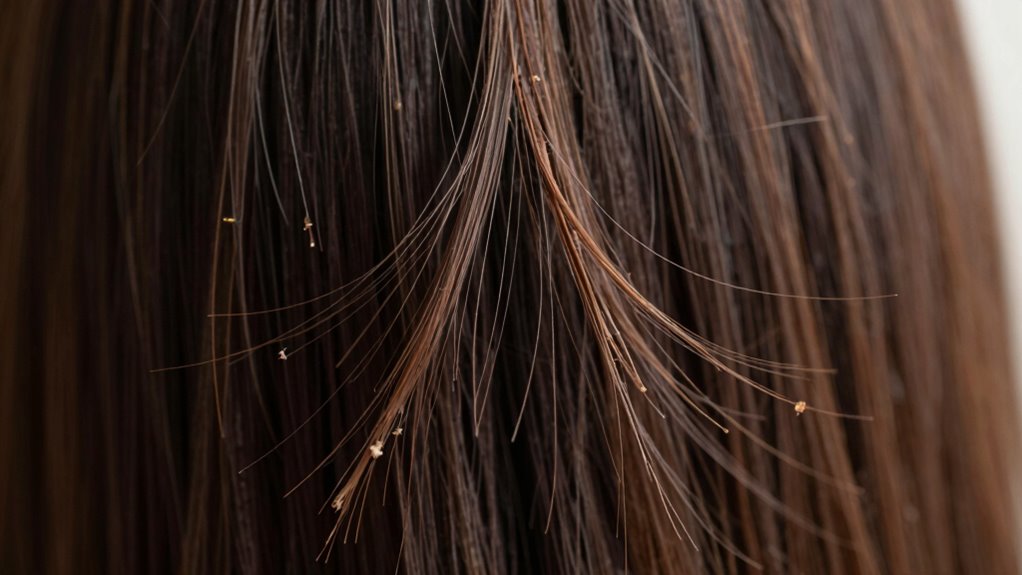
Many common hair care mistakes can weaken your strands and lead to breakage over time. Using DIY treatments without proper knowledge can damage your hair, especially if formulas are too harsh or applied incorrectly. Overusing heat styling tools also weakens your strands, making them more prone to splitting. Additionally, wearing tight hair accessories like elastics or clips can stress your ends, causing breakage and split ends. Neglecting regular trims allows minor damage to accumulate, worsening breakage. Using the wrong shampoo or skipping conditioner strips moisture, making hair brittle. Finally, brushing wet hair aggressively or with the wrong brush causes unnecessary stress, leading to more split ends. Avoid these mistakes to protect your hair’s health and reduce breakage over time.
Early Signs Your Ends Are Starting to Split
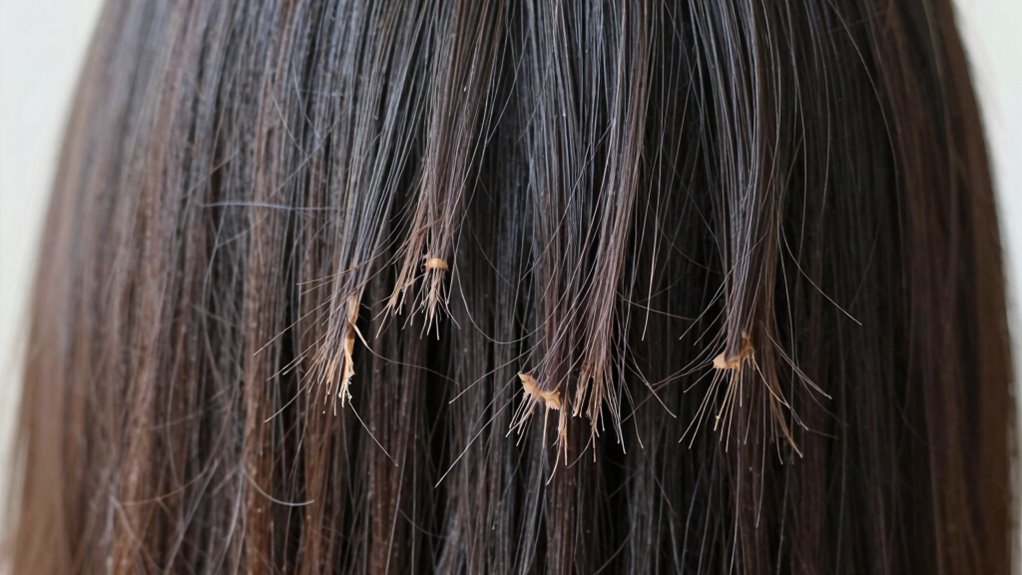
Detecting early signs of split ends can save you from more severe damage down the line. When your hair begins to show the first hints of trouble, it’s a sign your hair health needs attention. Watch out for these early indicators:
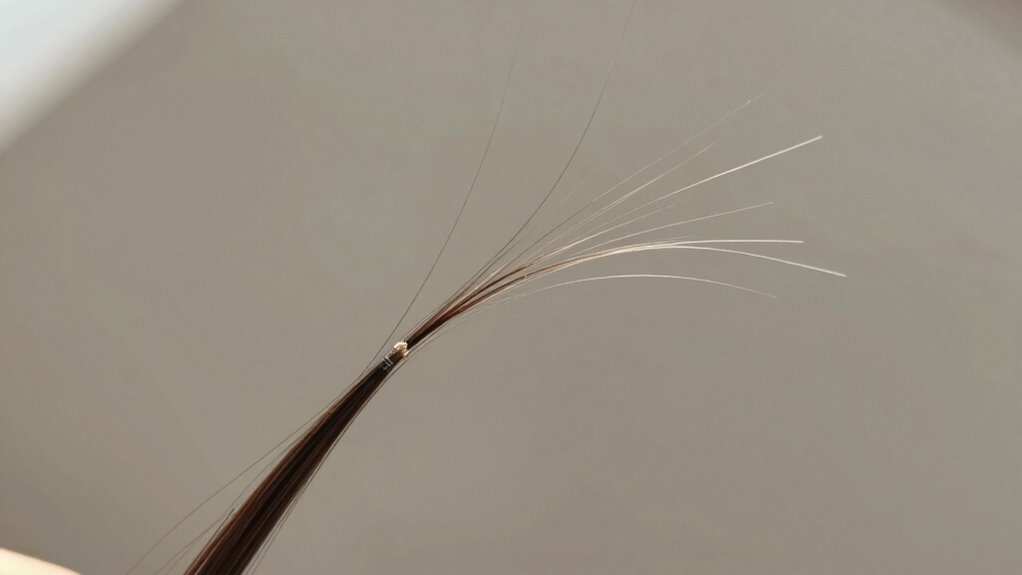
- Frayed or rough-looking ends that seem to split or unravel.
- Slight thinning at the tips, making your ends feel fragile or brittle.
- Unusual tangling or knotting, even with gentle brushing.
These subtle clues mean your ends are starting to split, which can worsen if ignored. Recognizing these signs allows you to act early, preserving your hair’s integrity and preventing further damage. Stay vigilant—your hair’s health depends on catching these warning signals early.
Simple Tips to Prevent Split Ends From Coming Back

Once you’ve identified early signs of split ends, taking proactive steps can prevent them from returning. To keep your hair healthy, avoid excessive chemical treatments and limit hair dyeing frequency. Use a heat protectant before styling tools, and trim your ends regularly to prevent splits from traveling upward. Deep conditioning treatments help strengthen weak strands, reducing breakage. When choosing products, opt for those designed for damaged hair. Additionally, avoid over-washing, which strips natural oils. Here’s a quick guide:
| Tip | Why it helps | Best Practices |
|---|---|---|
| Limit chemical treatments | Reduces weakening of hair | Space out chemical processes and use gentle dyes |
| Regular trims | Removes split ends early | Trim every 6-8 weeks |
| Use nourishing products | Strengthens and moisturizes hair | Incorporate deep conditioners regularly |
Frequently Asked Questions
Can Split Ends Be Permanently Repaired Without Cutting?
Split ends can’t be permanently repaired without cutting, but you can manage them with proper hair repair and split end remedies. Regular trimming prevents further damage, while deep conditioning and nourishing treatments strengthen your hair. Use leave-in conditioners and serums to temporarily seal split ends, reducing their appearance. Remember, consistent care helps improve hair health, but for a lasting fix, trimming remains essential.
How Often Should I Trim to Prevent Split Ends?
You should trim your hair every 6 to 8 weeks to prevent split ends. Regular hair trimming helps with split end prevention by removing damaged strands before they worsen. Keep in mind, consistency is key—skipping trims can lead to more split ends over time. Use gentle hair care products and avoid excessive heat styling to further protect your hair and maintain healthy, split-end-free ends.
Do Natural Oils Help in Preventing Split Ends?
Natural oils can help in preventing split ends by moisturizing and nourishing your hair. When you regularly apply oils like coconut, argan, or jojoba, they create a protective barrier that reduces dryness and brittleness. This added hydration strengthens your hair, making it less prone to splitting. Incorporate natural oils into your hair care routine for effective split end prevention, keeping your strands smooth, healthy, and less likely to break.
Are There Specific Hair Products That Reduce Split Ends?
You can find specific hair products that reduce split ends, like deep conditioning treatments and leave-in treatments. These products strengthen your hair by nourishing the strands and sealing the cuticle, which helps prevent further damage. While they can’t completely stop splits from forming, consistent use makes your hair more resilient. Remember, healthy hair starts with proper care, so choose products that target your needs and incorporate regular treatments.
Does Washing Frequency Affect the Likelihood of Split Ends?
Washing your hair too often can strip natural oils, leading to dry, brittle ends that split easily. On the other hand, infrequent washing might cause buildup, affecting scalp health and weakening your hair over time. Find a balance that keeps your scalp clean without over-drying your hair. Proper hair washing maintains scalp health, which in turn helps prevent split ends and keeps your hair stronger and healthier.
Conclusion
Understanding what causes split ends lets you take real steps to prevent them. While some say trimming is the only fix, keeping your hair hydrated and avoiding excessive heat can make a big difference. Remarkably, natural oils and gentle handling can also strengthen your ends over time. So, don’t just wait for splits to appear—be proactive with your hair care. With consistent effort, you can enjoy healthier, smoother ends and keep your hair looking its best.