

Cities choose between chloramine and chlorine for water disinfection based on their water chemistry, treatment goals, and regulations. Chlorine disinfects quickly but can impact taste and odor, while chloramine offers longer-lasting residual protection but is harder to remove with filters. Knowing which disinfectant your community uses helps you select the right filtration system. If you keep exploring, you’ll discover how different filters work best for each disinfectant and how to maintain clean, great-tasting water.

Turn your quiet moments into listening time
- Thousands of audiobooks, podcasts and originals
- Listen on your phone, tablet or Echo — also offline
- Cancel anytime
Key Takeaways
- Different cities use chlorine or chloramine based on their water chemistry, infrastructure, and regulatory requirements.
- Chloramine provides longer-lasting residual protection, suitable for extended water distribution systems.
- Chlorine reacts quickly but can affect water taste and odor, requiring specific filtration solutions.
- Chloramine’s chemical stability makes it harder to remove, necessitating specialized filtration systems like catalytic carbon.
- Filtration needs vary depending on the disinfectant used, influencing the choice of appropriate water treatment technologies.
As an affiliate, we earn on qualifying purchases.
What Are Chlorine and Chloramine, and How Do They Disinfect Water?
Chlorine and chloramine are chemicals commonly used to disinfect public water supplies, ensuring the water is safe to drink. These disinfectants work by altering water chemistry to eliminate harmful bacteria, viruses, and other pathogens. During disinfection processes, chlorine is often added directly to water, where it reacts with microorganisms, destroying their cell structures. Chloramine, a combination of chlorine and ammonia, is formed by adding ammonia to chlorine, creating a more stable disinfectant. This stability allows chloramine to provide longer-lasting residual protection in the water distribution system. Both chemicals effectively control microbial growth, but they differ in how they interact with water chemistry and their longevity in the system. Understanding these disinfection processes helps clarify why different cities choose specific methods. Additionally, the choice between chlorine and chloramine can impact taste and odor in the water supply, influencing consumer preferences and treatment strategies. Some cities opt for chloramine because it produces fewer disinfection byproducts that can affect water quality and health. The decision often considers factors like disinfection efficiency and the potential formation of byproducts that may pose health risks. Moreover, the byproduct formation varies depending on the chemical used, which can influence the regulatory standards and safety practices adopted by water treatment facilities.
As an affiliate, we earn on qualifying purchases.
Why Do Some Cities Use Chlorine Instead of Chloramine for Water Disinfection?
Many cities choose to use chlorine instead of chloramine because it disinfects water quickly and effectively, especially in situations where rapid microbial control is essential. Municipal regulations often favor chlorine because of its proven track record for immediate pathogen destruction. Water chemistry also plays a role; chlorine reacts swiftly with contaminants, providing quick disinfection. Additionally, chlorine’s shorter residual life can be be advantageous in systems requiring rapid turnover. Some cities face infrastructure constraints or specific regulatory requirements that make chlorine the preferred choice. Conversely, chloramine’s longer-lasting residuals are less desirable in certain settings. Overall, decisions depend on local water chemistry, treatment goals, and regulatory standards, which influence the choice of disinfectant to ensure safe, clean drinking water. Water treatment methods also impact the selection process, as different methods may favor one disinfectant over another.
under sink water filtration system
As an affiliate, we earn on qualifying purchases.
As an affiliate, we earn on qualifying purchases.
How Do Chlorine and Chloramine Affect Water Taste, Odor, and Quality?

Have you ever noticed a distinct smell or taste in your tap water? Chlorine often gives water a bleach-like scent and a harsh taste, which can be off-putting. Chloramine, on the other hand, tends to produce a milder odor but can leave a slightly chemical or medicinal taste. Both disinfectants impact water’s overall quality by affecting taste enhancement and odor control. Chlorine is known for its strong, easily noticeable scent but is effective at quickly reducing odors. Chloramine’s subtler smell can make water seem more neutral, but it may influence taste over time. These differences influence how water feels and tastes, making filtration necessary for those sensitive to these changes. Proper filtration methods can improve taste and odor, ensuring better water quality and a more pleasant drinking experience. Understanding water disinfection methods can help you choose the right filtration system for your needs. Additionally, certain water treatment systems are specifically designed to target chloramine, providing more effective removal for areas where it is used. Recognizing the disinfection methods employed in your water supply can help tailor your filtration choices for optimal results. Being aware of the chemical properties of these disinfectants can further inform your decisions about water treatment options.
whole house water filter for chloramine
As an affiliate, we earn on qualifying purchases.
As an affiliate, we earn on qualifying purchases.
How Can You Decide Which Disinfectant Is Used in Your Community?

You can find out which disinfectant your community uses by checking water treatment records or contacting your local water provider. These records often detail the chemicals added to keep your water safe. Additionally, local water quality tests can reveal which disinfectant is currently in use.
Water Treatment Records
Water treatment records provide essential information about which disinfectant—chloramine or chlorine—is used in your community. These records detail the water chemistry involved, including pH levels, disinfectant concentrations, and any treatment adjustments made over time. By reviewing these documents, you can determine which disinfectant is predominant, guiding your filtration choices. For example, communities using chloramine may require different filtration techniques than those using chlorine, since chloramine can be more stable and less reactive. Understanding these records helps you assess potential water quality concerns and select appropriate filtration systems to improve taste, odor, and safety. Staying informed about your local water treatment practices guarantees you make educated decisions for your household’s water quality needs.
Local Water Quality Tests
Reviewing local water quality test results can help you identify which disinfectant—chloramine or chlorine—your community uses. Water testing provides essential data on the presence of specific pollutants, including disinfectant byproducts. By examining recent test reports, you can see if chloramine or chlorine is dominant, as each leaves distinct signatures in water samples. Pollutant detection helps reveal how your water treatment plant manages contaminants and whether certain chemicals are more prevalent. If tests show higher levels of chloramine-related byproducts, your community likely uses chloramine. Conversely, elevated chlorine residuals or byproducts suggest chlorine is the primary disinfectant. Regular water quality testing empowers you to understand your water supply better and make informed decisions about filtration needs.
What Are the Best Filtration Systems to Remove Chlorine From Drinking Water?
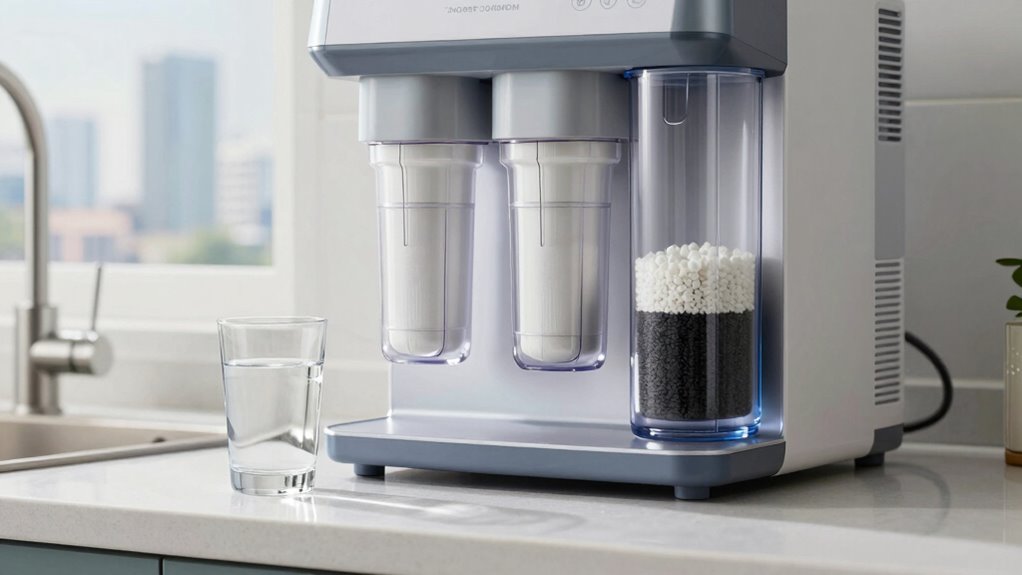
To effectively remove chlorine from your drinking water, choosing the right filtration system is essential. Activated carbon filters are among the best options because they excel at triggering chemical reactions that neutralize chlorine molecules. These filters work through adsorption, trapping chlorine and other chemicals, which improves water taste and reduces potential health impacts. Additionally, research indicates that activated carbon is particularly effective at removing chlorine due to its high surface area, which enhances adsorption efficiency. Reverse osmosis systems are also highly effective, forcing water through membranes to remove chlorine and contaminants. UV filters can target residual chlorine, providing an additional layer of safety. When selecting a system, consider your water quality and household needs. Proper filtration not only enhances taste but also minimizes risks associated with chemical reactions in your water, safeguarding your health and peace of mind. Understanding the filtration mechanism helps in choosing the most suitable system for your specific water conditions. Moreover, knowing the water quality factors can help you determine the most appropriate filtration approach for your home. For example, certain filters may perform better with specific types of water contaminants, making system compatibility an important consideration.
How Do You Effectively Remove Chloramine Using Water Filters?
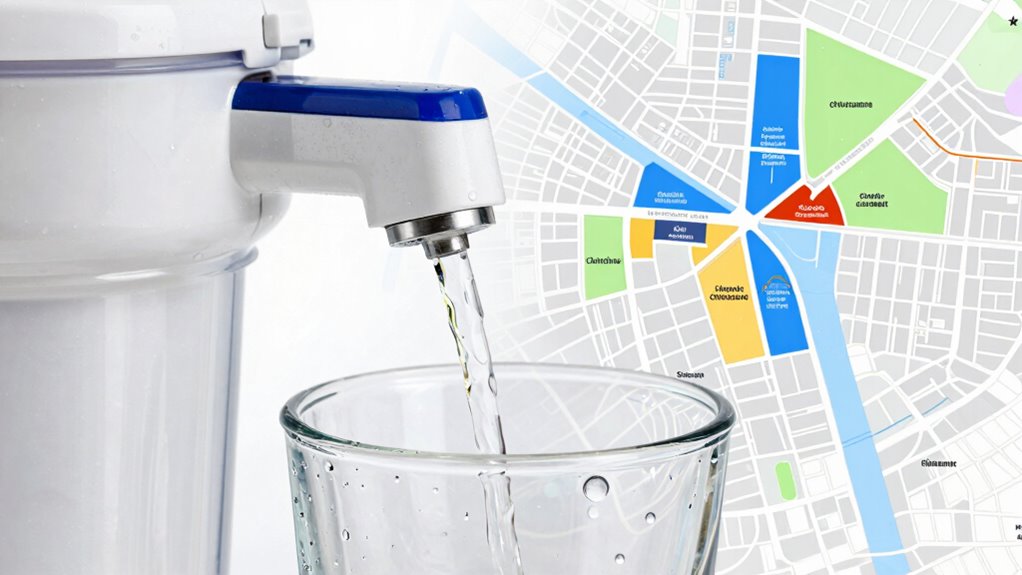
To effectively eliminate chloramine, you need the right filter technology, such as catalytic carbon or specialized filters designed for chloramine. Proper maintenance, like regular filter replacements, is essential to keep the system working efficiently. Staying attentive to your filter’s condition ensures your water stays clean and safe. Additionally, understanding the filter lifespan can help you plan timely replacements and maintain optimal filtration performance. Using appropriate filtration methods tailored for chloramine removal will guarantee better water quality for your household. For example, some advanced filters incorporate activated carbon that is specifically treated to break down chloramine compounds more effectively. The development of AI-driven water treatment innovations is also beginning to revolutionize how we approach water purification, making these processes more efficient and accessible. Recognizing the cryptid mysteries and other paranormal phenomena can also be an intriguing way to explore unseen or misunderstood aspects of the natural world.
Effective Filter Technologies
Effective removal of chloramine from water requires specialized filtration methods, as standard chlorine filters often fall short. To do this effectively, you need filters that incorporate specific filtration materials designed to target chloramine molecules. Activated carbon filters, especially those with catalytic carbon, are highly effective because they can break down chloramine through chemical reactions. These filters also help with TDS reduction, improving overall water quality. filtration materials and reverse osmosis systems are another excellent choice, as they physically remove chloramine along with other contaminants, providing thorough purification. When selecting a filter, look for ones labeled for chloramine removal and ensure they contain the appropriate filtration materials. Proper maintenance and regular filter replacement are essential to sustain filtration efficiency filter longevity, ensuring your water is safer, cleaner, and tastes better. Additionally, understanding the specific removal mechanisms can help you choose the most effective filtration system for your needs. Employing advanced filtration technology can further increase removal efficiency and adapt to varying water conditions.
Proper Maintenance Practices
Regular maintenance of your water filter is key to guaranteeing it continues to remove chloramine effectively. To maintain chemical stability, you should routinely replace filter cartridges as recommended by the manufacturer. Proper filter maintenance prevents buildup of contaminants that can compromise performance. Keep an eye on the filter’s lifespan and replace it promptly to avoid reduced efficiency. Additionally, clean the filter housing periodically to prevent microbial growth. Using high-quality filters designed specifically for chloramine removal helps ensure consistent results. Here are some tips to keep your filtration system in top shape:
- Follow manufacturer’s maintenance schedule closely
- Replace filters regularly for ideal chemical stability
- Clean filter housing to prevent bacterial growth
- Use filters rated for chloramine removal
- Monitor water quality to identify when maintenance is needed
Proper upkeep ensures your filter remains effective against chloramine.
What Factors Influence the Choice of Water Filtration for Chlorine or Chloramine?
When choosing a water filtration system, several factors influence whether chlorine or chloramine are better suited for removal. Your water source and treatment methods play key roles. For example, city water treated with chloramine may require specific filters, while untreated or chlorinated sources might need different approaches. Consider these factors:
| Factor | Impact on Filtration Choice |
|---|---|
| Water Source | Groundwater often contains chloramine; surface water may have chlorine. |
| Treatment Methods | Some municipalities use chloramine, affecting filter selection. |
| Water Quality | Higher organic content requires different filtration techniques. |
| Regulatory Standards | Local regulations may specify required filtration levels. |
| System Compatibility | Ensure your filter matches your water’s chemical profile. |
What Challenges Might You Face When Filtering Chlorine and Chloramine?
Filtering chlorine and chloramine presents several challenges because these disinfectants have different chemical properties that can affect removal methods. Chlorine easily reacts with many filtration media, but chloramine’s stability makes it harder to break down. You might encounter issues like:
- Complex chemical reactions that require specific filters
- Incomplete removal leading to residual disinfectants
- Formation of harmful byproducts during treatment
- Increased maintenance needs for certain filters
- Potential health concerns if contaminants aren’t fully eliminated
These challenges mean you must choose appropriate filtration systems carefully. Improper removal can cause health concerns, such as skin irritation or long-term exposure risks, emphasizing the importance of understanding how each disinfectant interacts with your water treatment options.
How Can Communities Select the Right Water Filter Based on Their Disinfection Method?
Choosing the right water filter depends on understanding your community’s disinfection method because different systems produce varying contaminants that require specific removal techniques. Water chemistry plays a significant role in this decision, as chloramine and chlorine create distinct byproducts that need targeted filtration. For example, activated carbon filters effectively remove chloramine, but some may require longer contact time or specialized media for ideal performance. When selecting a filter, consider ease of filter installation—whether it’s a simple pitcher, under-sink unit, or whole-house system—and verify it’s compatible with your water’s chemistry. Consulting water testing results helps identify the specific contaminants present, guiding you to choose a filter designed for your community’s disinfection process and ensuring safer, cleaner water.
Frequently Asked Questions
Are There Health Risks Associated With Long-Term Exposure to Chloramine?
Long-term exposure to chloramine can pose health risks, especially if you consume or use it regularly. It may cause skin and eye irritation, respiratory issues, or gastrointestinal problems over time. While generally considered safe at regulated levels, prolonged exposure might lead to more serious health concerns. To minimize risks, use proper filtration systems and stay informed about your water quality, especially if your city uses chloramine as a disinfectant.
How Does Chloramine Impact Aquatic Life in Natural Water Bodies?
Chloramine can harm aquatic life by increasing aquatic toxicity, which threatens fish and other organisms. When released into natural water bodies, it may cause ecosystem disruption, impairing reproduction and growth of aquatic species. You should be aware that chloramine’s presence can lead to long-term ecological imbalances, so proper management and filtration are essential to protect aquatic ecosystems from its negative impacts.
Can Household Water Filters Effectively Remove Both Chlorine and Chloramine?
Household water filters can effectively remove chlorine through activated carbon filtration, but they struggle with chloramine. To guarantee proper chemical removal, you’ll need a filter specifically designed for chloramine, often involving catalytic carbon. Check your filter’s specifications to confirm it targets both chemicals. Using the right filtration system guarantees cleaner water, protecting your health and improving taste, especially in areas where chloramine is used for water treatment.
What Are the Environmental Impacts of Using Chloramine Versus Chlorine?
You might think chloramine’s eco-friendly, but its chemical stability actually prolongs environmental toxicity, lingering longer in water and soil. Chlorine, though more reactive, breaks down faster, reducing long-term harm. Using chloramine can harm aquatic life and disrupt ecosystems, while chlorine’s quick degradation lessens its environmental impact. So, ironically, what seems safer—chloramine—may cause more persistent environmental issues, making it a complex choice for sustainable water management.
Are There Regulations Governing the Use of Chloramine in Municipal Water Supplies?
Yes, there are regulatory standards governing the use of chloramine in municipal water supplies. You need to guarantee water quality remains safe and compliant with agencies like the EPA, which set limits on chloramine levels to protect public health. Cities must follow these regulations to maintain proper chloramine concentrations, balancing effective disinfection with minimizing health risks. Staying informed about these standards helps you understand how water treatment processes prioritize safety and quality.
Conclusion
Ultimately, whether your city uses chlorine or chloramine, understanding their differences helps you choose the right filter. Coincidentally, the same water you rely on daily reveals its secrets through proper filtration, ensuring cleaner, better-tasting water. When you stay informed about your community’s disinfection methods, you can select the best system to meet your needs. After all, what flows from your tap is more than just water—it’s your health and comfort in disguise.
Halloween Picks
halloween
As an affiliate, we earn on qualifying purchases.