

Hard water minerals like calcium and magnesium bind to your cleanser’s surfactants, preventing them from foaming well and breaking down dirt effectively. These minerals also form insoluble compounds that weaken foam stability and reduce cleansing power. Additionally, hard water shifts pH levels toward alkalinity, disrupting your skin’s natural acidity. If you want to discover simple ways to optimize your skincare routine in hard water areas, learn more about effective solutions here.
Key Takeaways
- Minerals like calcium and magnesium in hard water bind with surfactants, reducing foam formation and stability.
- Hard water minerals create insoluble compounds with cleansers, leading to less effective foaming.
- Elevated pH from mineral interactions shifts water to alkalinity, weakening surfactant performance.
- Mineral deposits on the skin can clog pores and hinder foam generation during cleansing.
- Water softening or using pH-balanced, sulfate-free cleansers can improve foam quality in hard water.
What Causes Your Facial Cleanser to Foam Less in Hard Water?
Hard water contains high levels of minerals like calcium and magnesium, which interfere with the foaming process of your facial cleanser. These minerals cause mineral buildup on your skin and your cleanser, reducing foam stability. When minerals bind with surfactants, they form insoluble compounds that prevent the foam from forming or lasting. As a result, your cleanser won’t produce as much lather, making it seem less effective. The mineral buildup also leaves a residue that can clog pores and diminish the cleanser’s ability to remove dirt and oil properly. You might notice that even with the same amount of product, your foam is weaker or disappears faster. This reduction in foam stability directly impacts your cleansing experience and the overall effectiveness of your skincare routine. Additionally, water hardness can affect how well your cleanser interacts with your skin, further influencing its cleansing power. To improve foam and cleansing, consider using water softening solutions or choosing cleansers formulated for hard water environments. Using a gentle exfoliant can also help remove mineral deposits and restore your skin’s clarity, especially since buildup from hard water minerals can be difficult to eliminate without proper care.
What Is Hard Water and How Does It Affect Your Skin?
When minerals like calcium and magnesium are present in your water supply, they create what’s known as hard water. This water has high water hardness, which impacts your skin and cleansing routine. Hard water leads to mineral deposits on your skin, making it feel dry or tight. It can also cause your cleanser to foam less effectively, reducing its cleaning power. Understanding water hardness levels and sustainable, secure cloud solutions can inspire better water management practices that mitigate these effects.
Hard water causes mineral buildup, making skin feel dry and reducing cleanser effectiveness.
Key effects include:
- Formation of mineral deposits that can clog pores
- Reduced foam and cleansing efficiency
- Increased skin dryness and irritation
These mineral deposits not only affect how your skin feels but also interfere with your skincare products. Understanding water hardness helps you adapt your routine to maintain healthier, clearer skin despite hard water challenges.
How Do Minerals Interact With Your Cleanser and Skin?
Minerals in hard water can react with your cleanser’s surfactants, reducing their effectiveness and altering how your skin feels. They also influence the water’s pH, which can upset your skin’s natural balance. Over time, these interactions may weaken your skin’s barrier, making it more vulnerable to irritation. Understanding water chemistry can help you choose the right skincare routine, much like how understanding Gold IRA Markets can help you make informed choices about your investments. Additionally, being aware of hard water effects can aid in selecting appropriate skincare products to mitigate these issues. Recognizing water mineral content can further assist in tailoring your skincare to counteract these impacts.
Mineral Interactions With Surfactants
As minerals in hard water interact with your cleanser’s surfactants, they can substantially affect how well your product works and how your skin feels. Mineral bonding occurs when minerals attach to surfactant molecules, disrupting surfactant chemistry. This interaction can lead to:
- Reduced foam stability and lather quality
- Decreased cleansing efficiency due to mineral interference
- Increased potential for residue and skin dryness
These effects happen because minerals can bind with surfactants, altering their ability to produce foam and clean effectively. Understanding mineral bonding helps you grasp why your cleanser’s performance changes in hard water. Surfactant chemistry plays a vital role in how minerals interact, influencing both foam formation and cleansing power. Additionally, electric dirt bikes demonstrate how powerful interactions can be, as they produce significant horsepower and speed, which can be impacted by environmental factors. Recognizing these interactions allows you to choose products better suited for hard water conditions, ensuring optimal skin care and cleansing results.
Hard Water Effects on pH
Hard water minerals can considerably alter the pH balance of your cleanser and skin, affecting how they interact. Water mineralization introduces calcium, magnesium, and other minerals that can shift your cleanser’s pH toward more alkaline levels. This pH imbalance reduces the effectiveness of surfactants, making your cleanser less able to break down dirt and oils. Additionally, a higher pH can disrupt your skin’s natural acidity, which helps protect against bacteria and environmental stressors. When minerals interfere with pH, you might notice your skin feeling drier or more irritated after washing. These changes highlight how mineral content in hard water impacts your skincare routine, making it essential to evaluate water mineralization when choosing cleansers and optimizing their pH balance for healthier skin. Understanding Water mineralization can help you make better choices for your skincare and overall comfort, especially considering how skin’s natural acidity plays a critical role in maintaining barrier function and defense. Recognizing the effect of hard water minerals on skin can also guide you toward using appropriate skincare products to counteract these pH shifts, which can be influenced by water composition and its interaction with your skin’s pH balance.
Skin Barrier Disruption
When minerals from hard water interact with your cleanser and skin, they can compromise your skin’s protective barrier. This disruption often results from changes in skin pH, making it more alkaline and weakening the barrier. As a consequence, your skin’s ability to retain moisture diminishes, leading to dryness and irritation. Hard water minerals can also strip away natural oils, further impairing moisture retention. Additionally, studies show that vetted water softening techniques can help mitigate these effects. Using the right water treatment methods is crucial for maintaining skin health. Implementing effective mineral removal can significantly reduce mineral deposits that cause these issues. Be aware that:
- Altered skin pH can increase sensitivity and redness
- Reduced moisture retention causes dryness and flakiness
- Barrier disruption makes your skin more vulnerable to pollutants and bacteria
Furthermore, employing appropriate skincare routines can help restore and protect your skin’s barrier function over time. These effects can lead to longer-term skin issues, making it essential to understand how minerals impact your skin’s health and barrier integrity.
What Are the Best Tips for Cleansing in Hard Water?
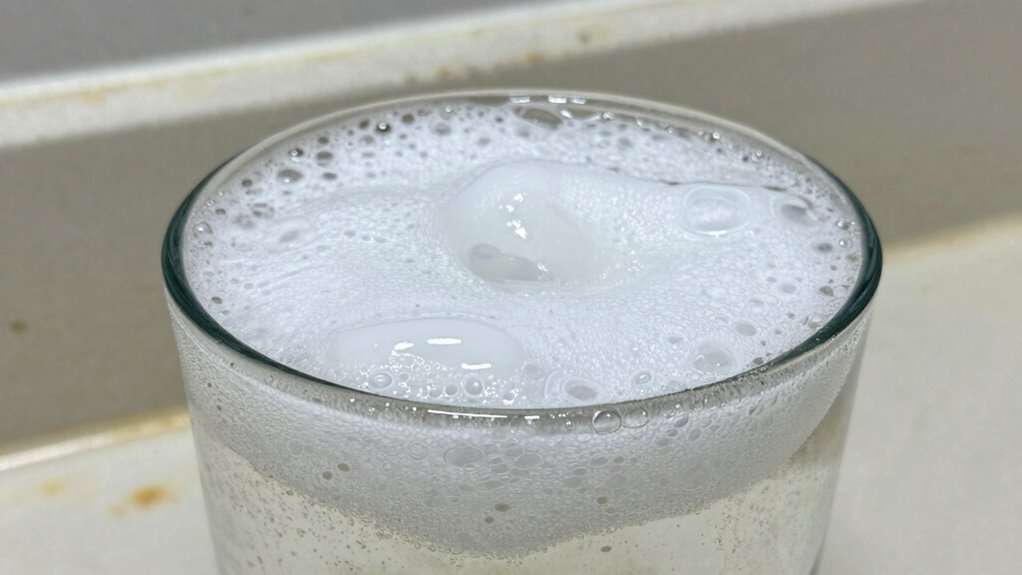
Cleansing in hard water can be challenging because minerals like calcium and magnesium can interfere with how your cleanser works. To combat this, consider water softening techniques such as installing a filter or using bottled water. These methods reduce mineral buildup on your skin and cleanser. Use a gentle, sulfate-free cleanser to minimize irritation caused by minerals. Avoid over-cleansing, which can strip your skin’s natural barrier. Pat your face dry instead of rubbing. Incorporate a hydrating toner afterward to restore moisture. Here’s a quick comparison:
| Tip | Benefit | Effect |
|---|---|---|
| Water softening | Fights mineral buildup | Softer water, clearer skin |
| Using gentle cleansers | Prevents irritation | Calm, balanced skin |
| Patting dry | Avoids barrier disruption | Less redness, irritation |
| Hydrating toner | Restores moisture | Smooth, refreshed skin |
Additionally, understanding water chemistry can help you choose the most effective cleansing routine. Being aware of hard water effects can further guide you in selecting appropriate skincare products and techniques. Recognizing mineral deposits can also help you identify when your skincare routine may need adjustment due to water quality changes. Incorporating these skincare tips ensures you maintain healthy skin despite challenging water conditions.
Which Cleansers Work Best in Hard Water Conditions?
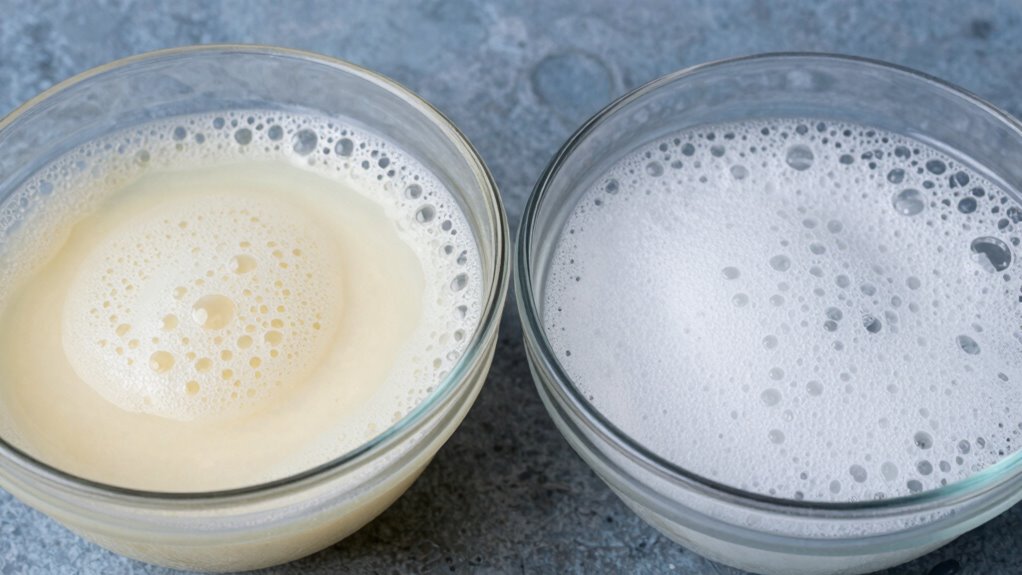
Choosing the right cleanser can make all the difference when dealing with mineral-rich water. In hard water conditions, look for gentle formulas that won’t strip your skin’s natural oils. These cleansers often have a balanced pH, which helps prevent dryness and irritation caused by mineral buildup.
To get the best results, focus on products that:
- Are labeled as pH balancing
- Contain gentle, non-irritating ingredients
- Are free from harsh sulfates and abrasives
These features ensure your skin is effectively cleaned without over-drying or causing damage. Hard water can make foaming tricky, but selecting the right cleanser helps you maintain a healthy, clear complexion. Remember, gentle formulas tailored for hard water will always serve you better.
How Can You Improve Your Skincare Routine in Hard Water Areas?
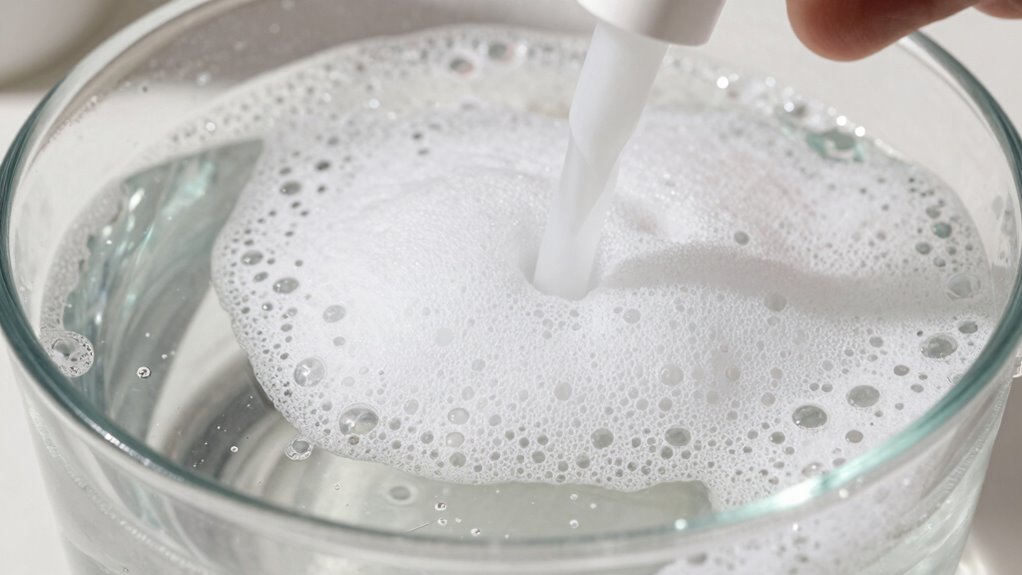
To improve your skincare routine in hard water areas, start by incorporating a gentle, pH-balanced cleanser that’s designed to handle mineral deposits. Water softening methods, like installing a water softener or using filtered water, can reduce mineral buildup on your skin. This prevents excess soap scum and mineral residue, which can cause dryness and irritation. Additionally, choosing pH balancing cleansers helps maintain your skin’s natural barrier, counteracting the effects of hard water’s alkalinity. Always opt for products formulated for hard water conditions, and consider using a hydrating toner afterward to restore moisture. Regularly updating your routine with these steps ensures your skin stays balanced, clean, and protected despite mineral-rich water.
Frequently Asked Questions
Can Water Softeners Improve Facial Cleanser Foam Quality?
Yes, water softeners can improve your facial cleanser’s foam quality. By reducing minerals through water softening, you help maintain foam stability, making your cleanser foam richer and longer-lasting. Hard water minerals often interfere with foam formation, so softening your water creates a better environment for your cleanser to work effectively. This results in a more pleasurable cleansing experience and leaves your skin feeling cleaner and more refreshed.
Do Different Cleanser Ingredients React Differently in Hard Water?
You might think all cleansers react the same in hard water, but surprise—ingredient reactions and formulation differences make a big difference. Some ingredients, like surfactants, cling to minerals and become less effective, while others may cause unexpected foaming issues. So, your cleanser’s success depends on its formulation, and no two products are exactly alike in how they handle those pesky minerals. Irony? Your favorite foam might just be the victim of hard water’s quirks.
How Often Should I Replace My Cleanser in Hard Water Areas?
You should replace your cleanser every three to six months in hard water areas. Over time, product shelf life diminishes, and bacteria buildup can occur, reducing effectiveness and risking skin irritation. Regularly check for changes in texture or smell, and don’t hesitate to substitute it sooner if needed. This ensures your cleanser stays fresh, effective, and safe for your skin.
Are There Specific Skincare Products Designed for Hard Water Use?
Yes, there are skincare products specifically designed for hard water use. Look for hard water skincare formulations that include gentle surfactants and chelating agents, which help prevent mineral buildup. These cleansers are formulated to work effectively in hard water, reducing residue and maintaining your skin’s balance. Using a cleanser with the right formulation guarantees you get a thorough clean without stripping moisture or causing irritation.
Does Hard Water Affect Other Skincare Products Besides Cleansers?
Yes, hard water can affect other skincare products by causing mineral buildup on your skin, which may clog pores and lead to breakouts. It also influences the pH balance of your skincare, making products less effective or irritating your skin. To counteract this, use gentle, pH-balanced formulas and consider water softening solutions. This helps sustain your skin’s health and ensures your products work as intended.
Conclusion
Understanding how hard water impacts your cleanser’s foam and your skin helps you adapt your routine. Think of your skin as a delicate garden; hard water is like an uninvited storm that can hinder growth. By choosing the right cleansers and techniques, you can protect your skin’s harmony. Don’t let mineral deposits be the silent thief of your glow—arm yourself with knowledge and turn hard water challenges into opportunities for radiant, resilient skin.