
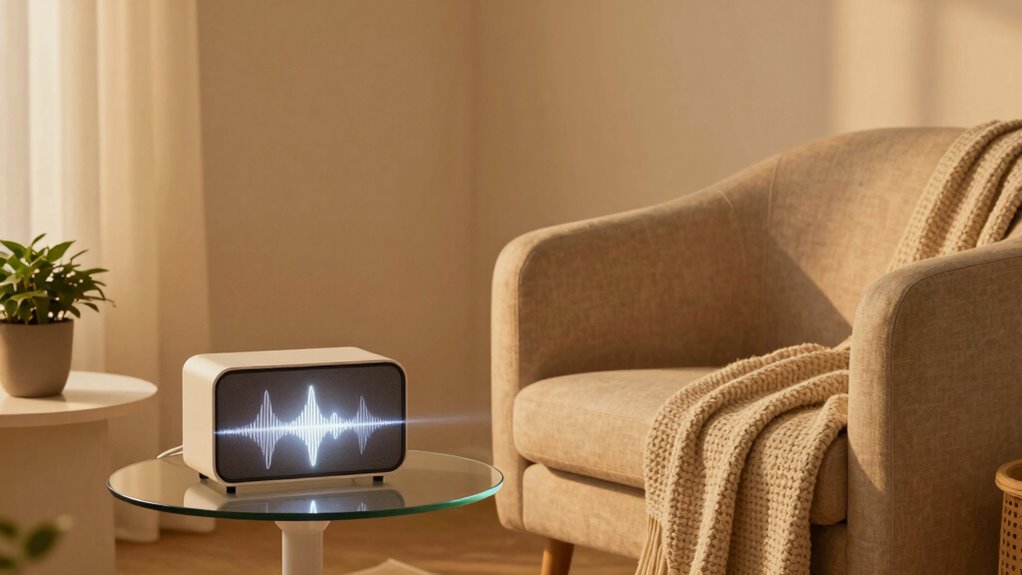

Natural sounds like rain, streams, and rustling leaves create a more immersive and calming environment than music. Combining these with binaural beats can deeply relax your mind, slow your heart rate, and reduce stress more effectively. Using quality headphones enhances these effects, creating a personalized, distraction-free space for mindfulness. If you’re curious about how sound design can boost your relaxation routine even further, there’s more to discover below.
Key Takeaways
- Natural soundscapes like rain, streams, and rustling leaves create immersive, stress-reducing environments without the distraction of lyrics or rhythm.
- Layered ambient textures enhance relaxation by providing a continuous, soothing auditory background tailored to individual preferences.
- Binaural beats can induce specific mental states such as deep relaxation or focused meditation, complementing natural sounds effectively.
- Using headphones with high-quality recordings maximizes the calming effects of natural sounds and binaural beats for personal routines.
- Consistent integration of natural sounds and binaural beats supports mental well-being, emotional balance, and stress management better than music alone.

Creating a calming environment through sound design involves carefully selecting and combining auditory elements that soothe the mind and body. Instead of relying solely on music, you can incorporate natural sounds and specialized audio techniques to deepen relaxation. Nature sounds, such as gentle rain, flowing streams, or rustling leaves, have a remarkable ability to reduce stress and promote a sense of peace. These sounds mimic the natural environment, creating an immersive atmosphere that helps you disconnect from daily worries. When you listen to nature sounds, your brain registers a calming effect, lowering cortisol levels and encouraging a relaxed state. Incorporating ambient soundscapes can further enhance the tranquil experience by layering subtle textures that support relaxation. Combining these with binaural beats enhances their effectiveness. Binaural beats involve playing two slightly different frequencies in each ear, which your brain perceives as a third tone. This process can induce specific mental states, like deep relaxation or focused meditation, making it a powerful tool for calming your mind. When you set up a sound environment with nature sounds and binaural beats, you’re effectively guiding your brain into a relaxed mode. This combination can slow your heart rate, reduce anxiety, and improve overall well-being. You don’t need complex equipment to experience these benefits; simply using headphones and a good quality sound source is enough to get started. Many apps and recordings now blend nature sounds with binaural beats, allowing you to create a personalized soundscape tailored to your calming needs. As you immerse yourself in these sounds, try to focus on your breath or let your mind drift, avoiding any distractions. The continuous, soothing qualities of nature sounds combined with the subtle influence of binaural beats can make your relaxation routine more effective and enjoyable. You might find that these sounds work better than music because they lack the lyrical or rhythmic elements that can sometimes distract or stimulate the brain rather than calm it. Instead, they act as gentle background signals that support your mental state. The key is consistency; incorporating these sounds into your daily routine can help establish a reliable space for relaxation and mindfulness. Over time, you’ll notice that your ability to stay calm and centered improves, making it easier to handle stress and maintain emotional balance. So, rather than reaching for music to unwind, consider exploring nature sounds and binaural beats as your go-to tools for creating a peaceful environment. They offer a simple yet powerful way to enhance your mental and physical well-being, helping you cultivate calmness in a natural and effective way.
Frequently Asked Questions
Can Natural Sounds Replace Music for Relaxation Purposes?
Yes, natural sounds can often replace music for relaxation. You find that nature recordings, like flowing water or gentle rain, create a calming effect. The diversity in soundscape helps you focus and unwind, making it a powerful alternative. By immersing yourself in these authentic natural sounds, you can achieve a peaceful state more effectively than with music, especially when you seek a distraction-free, soothing environment.
How Do Individual Preferences Influence Calming Sound Choices?
Think of calming sounds as a wardrobe—your personal taste and cultural influences pick out what fits perfectly. Your preferences shape which sounds bring you peace, whether it’s ocean waves or gentle forest whispers. Cultural background can make certain natural sounds more soothing, like traditional chants or local wildlife. By tuning into what resonates with you, you create a calming environment that truly feels personalized and effective.
What Equipment Is Best for Creating High-Quality Calming Sounds?
You should invest in high-quality equipment like a good microphone and audio interface to guarantee clear, crisp sound. Use headphones for precise sound layering, allowing you to blend natural sounds seamlessly. Quality equipment minimizes background noise and distortion, making your calming sounds more soothing. Focus on equipment that captures the nuances of natural elements, as this enhances the calming effect and creates a more immersive experience for your listeners.
Are There Any Risks Associated With Certain Sound Frequencies?
Imagine you’re in a Victorian lab; certain sound frequencies can pose health risks. Yes, some frequencies may cause discomfort or harm due to frequency sensitivity, especially at high volumes or prolonged exposure. While calming sounds are usually safe, be mindful of potential health implications like ear fatigue or stress. Always monitor volume levels and avoid excessively high frequencies that could negatively impact your well-being.
How Long Should Calming Sound Sessions Typically Last?
For calming sound sessions, aim for a duration of 15 to 30 minutes, following the general duration guidelines for relaxation practices. Keep session length flexible based on your comfort and schedule, but avoid overly long periods that might cause fatigue or discomfort. Shorter, consistent sessions are often more effective, helping you achieve a calm state without overstimulation. Adjust the duration as you become more accustomed to the sounds.
Conclusion
Instead of relying solely on music, you discover that thoughtful sound design creates a more genuine sense of calm. It’s the gentle rustle of leaves, the distant hum of a river, or soft ambient noises that soothe your mind. Unlike loud, intrusive melodies, these subtle sounds invite your senses to relax naturally. In embracing this quiet, you find peace not in distraction, but in the gentle, authentic harmony of the world around you.