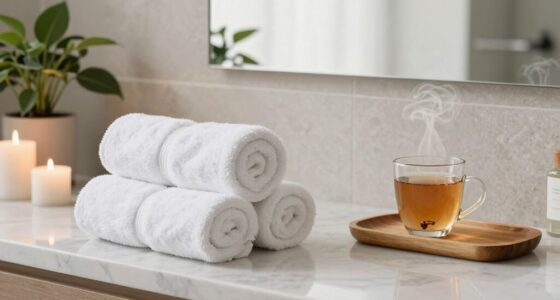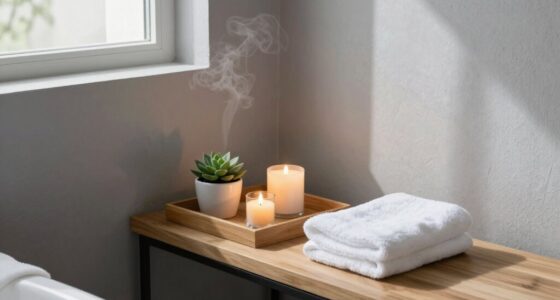
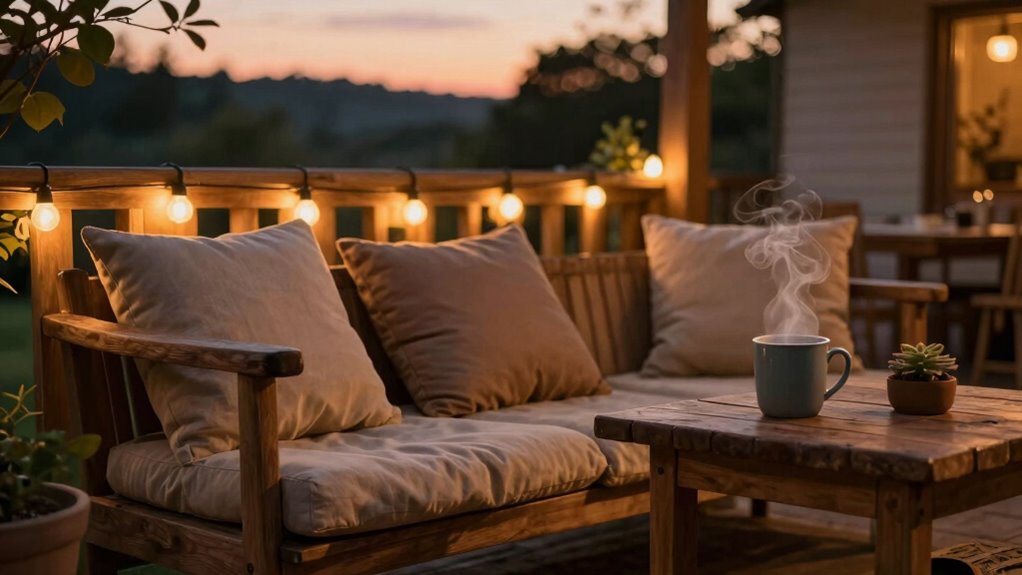

To follow the “Warm Light” rule for evening relaxation, switch to warm, low-blue-light lighting in your home as the day winds down. Use amber or yellow bulbs and dim the lights about an hour before bed to signal your body it’s time to relax. This helps your melatonin levels rise naturally, making it easier to fall asleep and enjoy restorative sleep. Keep exploring to discover simple ways to make your evenings more calming and sleep-friendly.
Key Takeaways
- Use warm, amber, or yellow-toned lighting in the evening to signal relaxation and promote sleep readiness.
- Dim lights gradually an hour before bedtime to help your brain transition to a restful state.
- Limit screen time in the evening to reduce blue light exposure that disrupts melatonin production.
- Adjust lighting settings to lower blue light content, supporting natural sleep hormone regulation.
- Incorporate warm lighting as part of a broader sleep hygiene routine for better overall sleep quality.
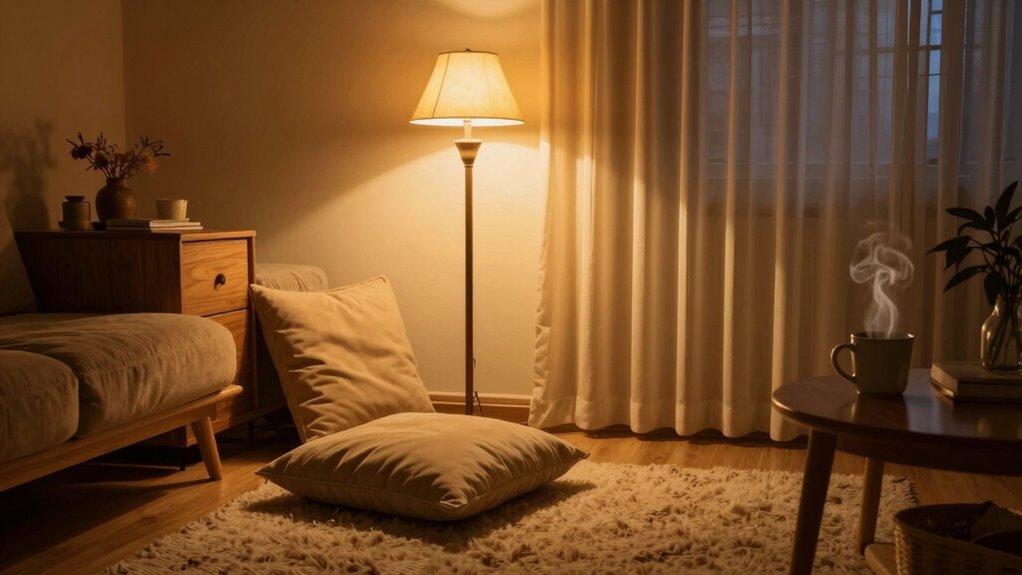
As evening approaches, switching to warm lighting can substantially enhance your relaxation. When you dim the lights and choose softer, warmer tones, you create an environment that signals to your brain it’s time to unwind. One of the key reasons this works is because warm light minimizes blue light exposure, which is known to interfere with your sleep hormone regulation. During the day, blue light from screens and bright LEDs helps keep you alert, but at night, it can disrupt your body’s natural rhythm. By shifting to warm light, you reduce the impact of blue light, allowing your melatonin levels to rise naturally and prepare you for restful sleep.
Blue light exposure in the evening can trick your brain into thinking it’s still daytime, suppressing melatonin production—the hormone responsible for making you feel sleepy. When melatonin levels stay low, falling asleep becomes more difficult, and your sleep quality diminishes. Warm lighting, with its lower blue light content, helps your body recognize that it’s time to wind down. This promotes better sleep hormone regulation, aligning your internal clock with your desired sleep schedule. As a result, you’ll find it easier to fall asleep quickly and experience more restorative rest throughout the night.
Using warm light in the evening isn’t just about aesthetics; it’s a practical step towards improving your overall sleep health. You can start by replacing bright white or cool-toned bulbs with those that emit a softer, amber or yellow hue. Dim your lights an hour before bed to further signal to your body that relaxation is imminent. This simple change can make a significant difference in how quickly you drift off and how deeply you sleep. Additionally, consider limiting screen time during this period, since screens emit blue light that can counteract the effects of warm lighting at home.
Implementing color temperature adjustments in your lighting setup can further optimize your environment for better sleep.
Frequently Asked Questions
Can Warm Light Improve Sleep Quality Long-Term?
Yes, warm light can improve your sleep quality long-term by enhancing your sleep hygiene and supporting your circadian rhythm. When you use warm lighting in the evening, it minimizes blue light exposure, which can disrupt melatonin production. This helps your body prepare for sleep naturally, leading to more restful nights. Consistently practicing this habit can strengthen your circadian rhythm, making it easier to fall asleep and wake up refreshed.
Is Warm Light Suitable for All Age Groups?
Warm light isn’t perfect for everyone; it’s like a magic potion that works differently for each age group. For kids and seniors, age-specific lighting can boost visual comfort and create a cozy, calming environment. Teens and adults might appreciate its relaxing effects, too. But remember, what’s soothing for one person could be less effective or even uncomfortable for another. Always consider individual needs to find the best lighting for your age.
How Does Warm Light Affect Mood and Mental Health?
Warm light positively influences your mood regulation and mental clarity by creating a calming environment. It helps reduce stress and anxiety, making you feel more relaxed and centered. When you use warm lighting in the evening, you promote better sleep patterns and mental well-being. This gentle illumination encourages a peaceful state of mind, enhancing overall mental health and helping you unwind after a busy day.
What Are the Best Warm Light Sources for Relaxation?
You should choose warm light sources with a cozy hue, like vintage filament bulbs or warm LED options, that offer a gentle glow. Aim for a color temperature around 2200-2700K to create a calming atmosphere. Keep the light intensity soft—just enough to see comfortably—so your space feels inviting without overstimulating. These choices help you unwind and foster relaxation after a busy day.
Can Warm Light Be Used Alongside Other Relaxation Techniques?
Yes, warm light can be used alongside other relaxation techniques. You can adjust the color temperature to create a calming environment and lower the light intensity to reduce stimulation. Combining warm light with deep breathing, meditation, or gentle stretching enhances relaxation, helping your body and mind unwind. Using this approach, you make your space more soothing, increasing the effectiveness of your relaxation routines and promoting better sleep.
Conclusion
Embracing the warm light rule is like wrapping yourself in a gentle sunset, signaling your mind to unwind. As the soft glow melts away the day’s stress, it becomes a symbol of change—guiding you from chaos to calm. By choosing warm lighting each evening, you invite tranquility into your life, creating a cozy space where peace can settle. Remember, sometimes the simplest glow can illuminate the path to true relaxation.