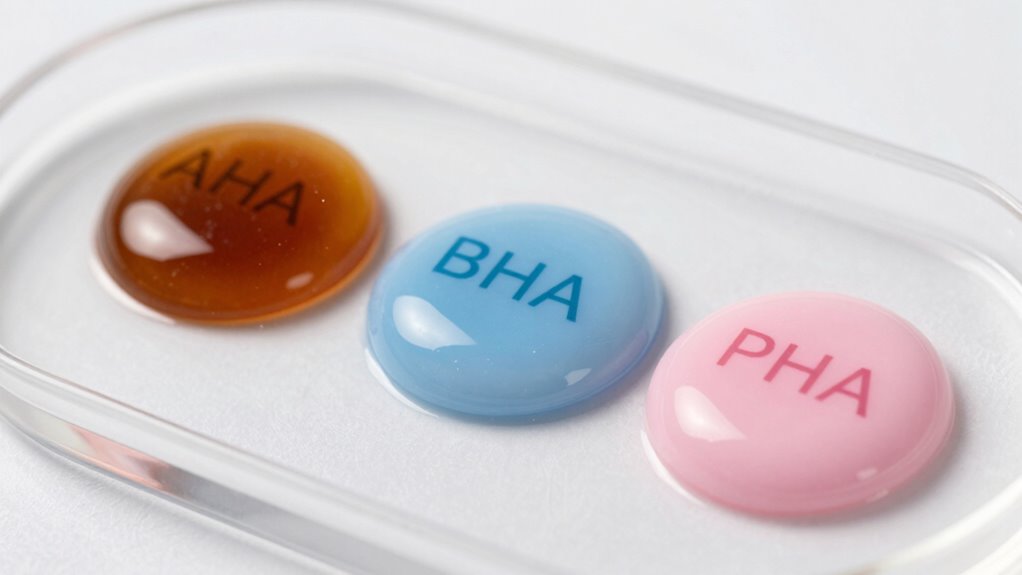

AHA, BHA, and PHA acids each target different skin concerns. AHAs, like glycolic and lactic acid, work on the surface to improve texture, brightness, and fine lines. BHAs, such as salicylic acid, penetrate pores to clear oil and prevent breakouts. PHAs are gentler, helping sensitive skin exfoliate without irritation while boosting hydration. Choosing the right one depends on your skin type and goals—continue exploring to find out which acid suits you best.
Key Takeaways
- AHAs primarily exfoliate the skin’s surface, improving brightness, texture, and reducing fine lines.
- BHAs penetrate deeply into pores, dissolving oil and dead cells to treat acne and blackheads.
- PHAs gently exfoliate sensitive skin with larger molecules, boosting hydration and reducing irritation.
- AHAs are ideal for dry or aging skin, while BHAs suit oily, acne-prone skin; PHAs are best for sensitive skin types.
- Use acids according to skin type, start with low concentrations, and always follow with sunscreen for safe, effective results.
What Are AHAs, BHAs, and PHAs? A Simple Explanation
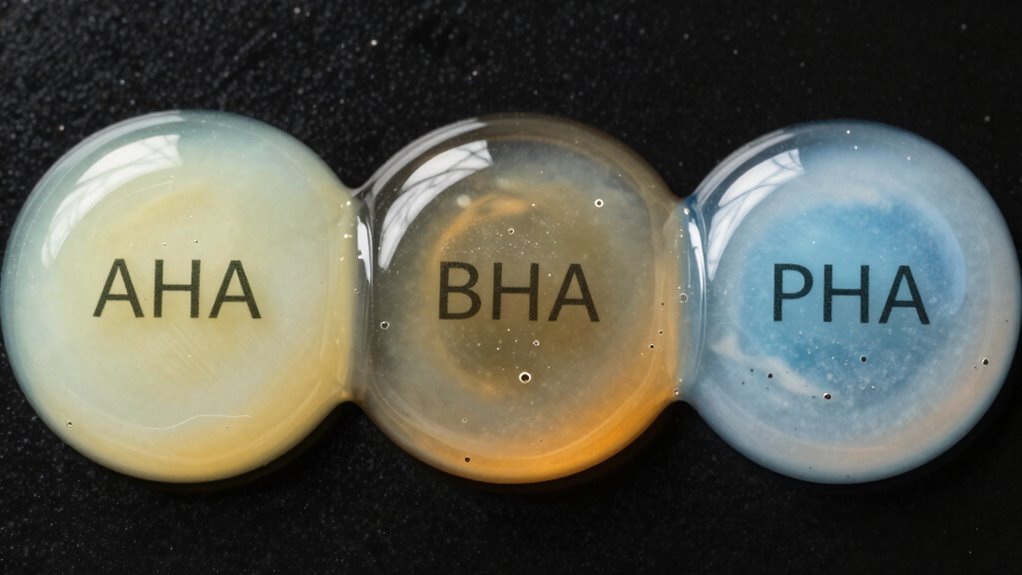
Have you ever wondered what makes certain skincare acids effective? The answer lies in understanding their role in chemical exfoliation. AHAs, like glycolic and lactic acid, are water-soluble and work on the skin’s surface. BHAs, such as salicylic acid, are oil-soluble, penetrating pores to clear out impurities. PHAs, including gluconolactone, are gentler, making them suitable for sensitive skin. Recognizing these ingredients on labels helps you choose the right product for your skin concerns. Each acid type offers unique benefits, but knowing their functions helps you optimize your skincare routine effectively. Incorporating proper application techniques and testing can help you determine which acid works best for your skin type and concerns. Understanding chemical exfoliation processes can further enhance your skincare choices and outcomes.
How Do AHAs Help Improve Skin Texture and Brightness?
AHAs, or alpha hydroxy acids, enhance skin texture and brightness by gently dissolving the bonds that hold dead skin cells together on the surface. This process, known as chemical exfoliation, removes dull, dry layers, revealing fresher, more radiant skin underneath. As you incorporate AHAs into your routine, they stimulate skin renewal, encouraging the growth of new, healthy cells. This not only improves your skin’s smoothness but also reduces the appearance of uneven tone and fine lines. Regular use helps refine your skin’s surface, making it feel softer and look more luminous. Understanding the importance of skin renewal can help optimize your skincare routine for better results. Incorporating AHAs effectively requires understanding proper application techniques to avoid irritation and maximize benefits, especially considering the ingredients to watch for non-halal additives. Additionally, choosing products with advanced technology and design can further enhance your skincare regimen.
How Do BHAs Help Clear Acne and Oily Skin?
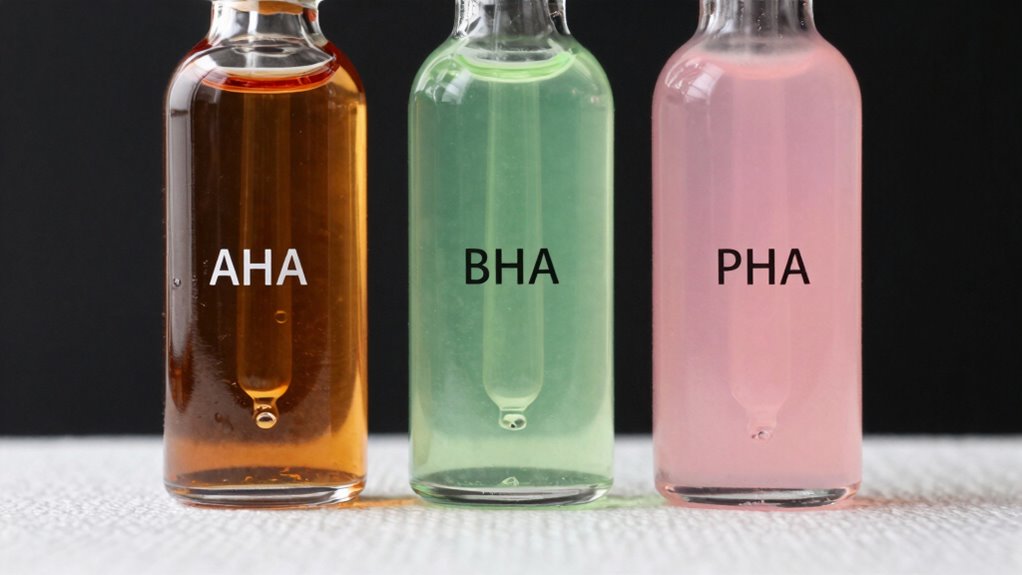
Wondering how BHAs can help manage acne and oily skin? Beta hydroxy acids, like salicylic acid, penetrate deeply into pores, helping to dissolve excess oil and dead skin cells. This makes them effective for preventing breakouts and reducing blackheads. Unlike some natural exfoliants, BHAs are oil-soluble, allowing them to reach into clogged pores more effectively. They’re often used in chemical peels to exfoliate skin gently but thoroughly, clearing away debris that causes acne. Regular use helps regulate oil production and keeps pores clean, leading to smoother, clearer skin. Additionally, skin penetration properties enable BHAs to target deep-seated impurities for more comprehensive results. Their ability to selectively exfoliate means they can treat specific skin concerns without over-irritating the surrounding tissue, making them a popular choice for effective skincare routines.
Are PHAs Gentle Enough for Sensitive Skin?
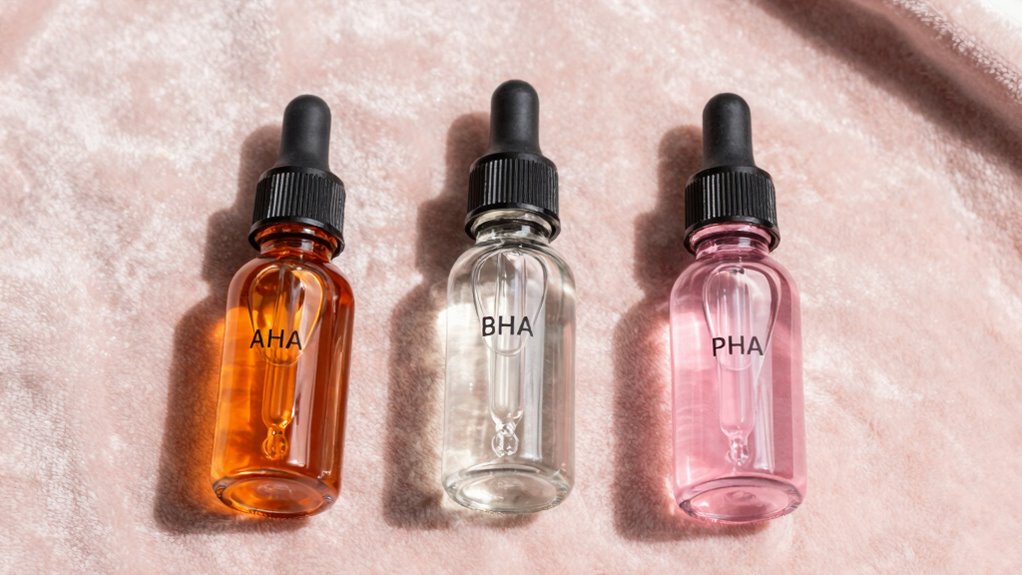
PHAs are known for their gentle exfoliation, making them a good option if your skin is sensitive. They help remove dead skin cells without causing irritation or redness. If you have sensitive skin, PHAs might be just the mild yet effective ingredient you need. Additionally, glycolic acid products with lower concentrations can be suitable for sensitive skin while still providing exfoliation benefits. For those seeking a gentle exfoliant, PHAs are often preferred over more aggressive acids. Incorporating skin barrier health considerations into your skincare routine can enhance the overall effectiveness of exfoliation and skin renewal, helping to maintain skin comfort and health.
Gentle Exfoliation Benefits
Are PHAs gentle enough for sensitive skin? Absolutely. Their chemical exfoliation process offers numerous benefits without causing irritation. Here are four reasons why PHAs support gentle skin renewal: 1. They have larger molecules, reducing penetration and minimizing irritation. 2. PHAs help remove dead skin cells smoothly, promoting a brighter complexion. 3. They boost skin hydration by attracting moisture, making your skin feel softer. 4. PHAs are less likely to cause redness or inflammation, ideal for sensitive skin types. Additionally, understanding the well-researched nature of PHAs can help you feel more confident in incorporating them into your skincare routine. Their proven gentle exfoliation properties make them especially suitable for those with delicate skin. This mild exfoliation improves skin texture and tone without sacrificing comfort. Unlike harsher acids, PHAs focus on skin renewal in a mild, effective way. The safety profile of PHAs further supports their use on sensitive skin, providing effective exfoliation with minimal risk of adverse reactions. If you seek a way to refresh your skin without irritation, PHAs are an excellent choice for gentle, consistent exfoliation.
Skin Sensitivity Compatibility
Because of their larger molecular size, PHAs are particularly suitable for sensitive skin, as they penetrate the skin more slowly and reduce the risk of irritation. This slower penetration allows for a more controlled exfoliation process, minimizing potential discomfort. This makes them an excellent exfoliation method for those with delicate or reactive skin types. Unlike stronger acids, PHAs gently remove dead skin cells without causing redness or burning sensations. They’re often recommended as a milder alternative to chemical peels, providing effective exfoliation without compromising skin barrier strength. If you’re concerned about sensitivity, PHAs can provide the benefits of exfoliation while minimizing discomfort. They help improve skin texture and tone without the harsh effects associated with some AHA or BHA treatments. Additionally, their gentle exfoliating properties make them suitable for long-term use and consistent skincare routines. The mildness of PHAs also makes them a popular choice for sensitive skin types, supporting ongoing skin health without irritation. Incorporating PHAs into your routine can also promote skin barrier repair, which is essential for maintaining healthy, resilient skin. Furthermore, research shows that PHAs can enhance moisture retention by strengthening the skin’s natural barrier. Understanding the unique molecular size of PHAs helps explain why they are especially effective and gentle for sensitive skin.
Which Skin Acid Is Best for Anti-Aging? A Benefits Comparison

When it comes to anti-aging benefits, choosing the right skin acid can make a significant difference. Each acid offers unique advantages:
- AHA: Excellent for surface exfoliation, revealing brighter skin and reducing fine lines.
- BHA: Penetrates pores deeply, helping with acne and improving skin texture.
- PHA: Provides gentle exfoliation with antioxidant properties, ideal for sensitive skin.
- Chemical peel benefits: Using acids in chemical peels can boost collagen production and smooth wrinkles.
For ideal results, follow acid application tips, such as starting with lower concentrations and avoiding overuse. The best acid for anti-aging depends on your skin type and goals, but incorporating these acids thoughtfully can help turn back the clock.
How to Incorporate AHAs, BHAs, and PHAs Into Your Skincare Routine
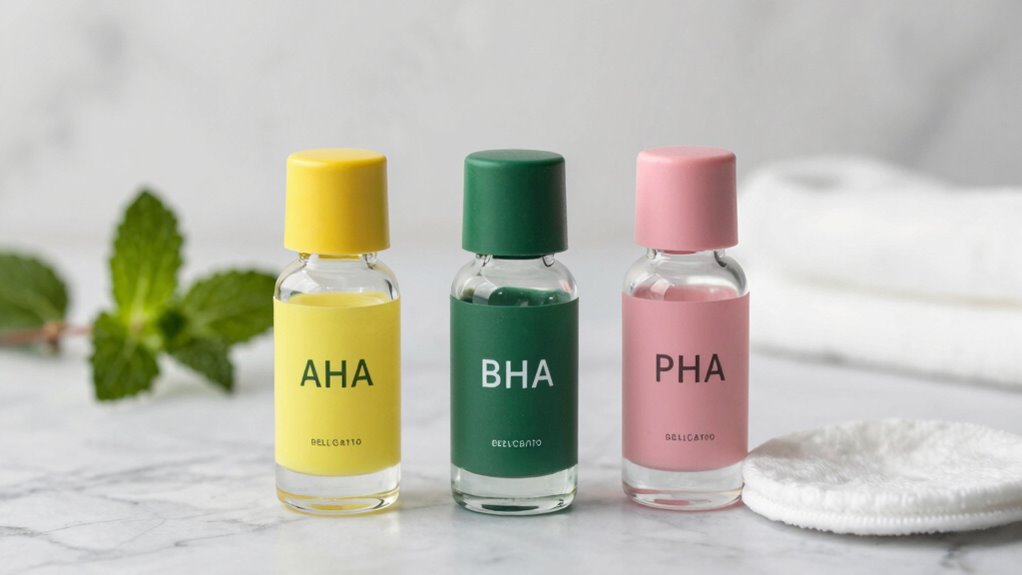
To effectively incorporate AHAs, BHAs, and PHAs into your skincare routine, start by identifying your skin type and specific concerns. Begin with a low acid concentration to minimize irritation, especially if you’re new to acids. Use products containing these acids gradually, applying them after cleansing and before moisturizing. For targeted results, consider a professional chemical peel with a higher acid concentration, but only under professional guidance. Always patch-test new products and follow recommended usage frequency—typically 2-3 times a week. Remember, consistency is key, but overuse can cause irritation. Adjust the concentration and frequency based on your skin’s response. Incorporating acids thoughtfully helps improve texture, clarity, and overall skin health without unnecessary irritation.
What Are the Side Effects of Skin Acids and How to Use Them Safely
While skin acids like AHAs, BHAs, and PHAs can transform your skin, they also come with potential side effects if not used properly. To stay safe, pay attention to these common issues:
- Irritation and redness: High acid concentrations or sensitive skin can cause discomfort. Always start with lower concentrations.
- Dryness and peeling: Excessive use or ingredient incompatibility can strip moisture. Use hydrating products alongside acids.
- Sun sensitivity: Acids increase photosensitivity. Apply broad-spectrum sunscreen diligently.
- Hyperpigmentation or uneven tone: Overuse or improper ingredient pairing might worsen spots. Follow recommended guidelines.
To minimize risks, choose products with appropriate acid concentrations and ensure ingredient compatibility. Patch test new products, and introduce acids gradually into your routine.
How to Choose the Right Acid for Your Skin Type and Concerns
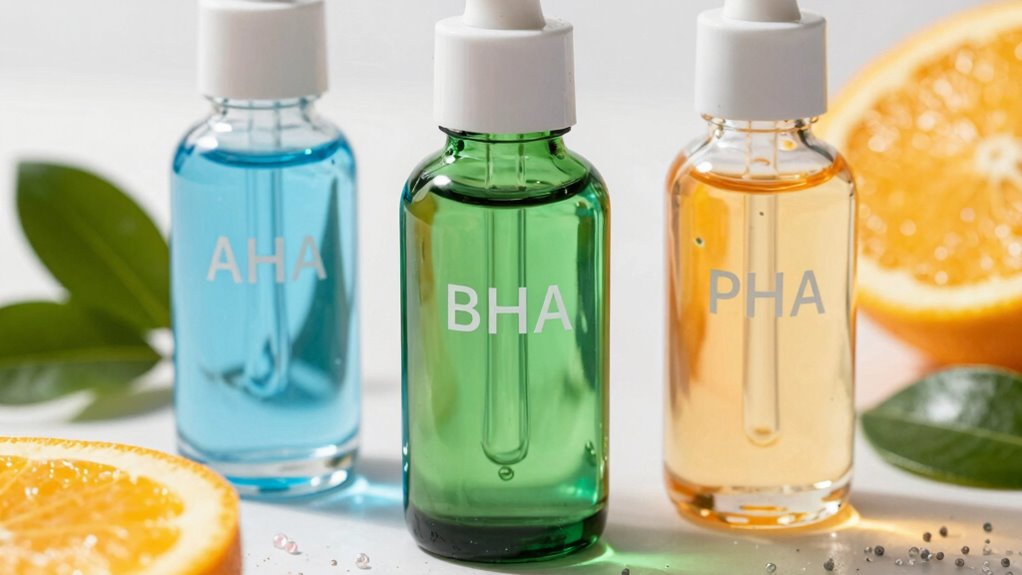
Choosing the right acid depends on your skin type and specific concerns. If you have oily or acne-prone skin, BHA might be your best option, while sensitive skin benefits from PHA. For dull or aging skin, AHA can help brighten and smooth your complexion.
Skin Type Compatibility
Not all acids work equally well for every skin type, so understanding your skin’s specific needs is essential when selecting the right one. Your skin type influences how acids interact with your skin, especially regarding ingredient combinations and formulation stability.
- Sensitive Skin: Opt for PHA, which is gentler, and look for formulations with added soothing ingredients.
- Oily or Acne-Prone Skin: BHA is ideal for deep pore cleansing and oil control, but ensure it’s compatible with other ingredients.
- Dry or Aging Skin: AHAs can improve texture and hydration, but check for formulations with moisturizers.
- Combination Skin: Choose acids based on specific areas needing treatment, prioritizing stable formulations to avoid irritation.
Matching your skin type with the right acid helps maximize results while minimizing irritation.
Targeted Skin Concerns
How do you select the right acid to target your specific skin concerns? Start by identifying your main issues—whether it’s acne, uneven tone, or signs of aging. Chemical exfoliation with BHAs penetrates pores to clear out excess oil and reduce breakouts. AHAs, on the other hand, gently remove dead skin cells from the surface, improving texture and brightness. PHAs are gentler options suitable for sensitive skin, helping to exfoliate without compromising the skin barrier. Consider your skin barrier’s strength; if it’s compromised, opt for milder acids like PHA. Matching your concerns with the right acid ensures effective treatment while maintaining skin health. Proper selection prevents over-exfoliation, reducing irritation and supporting a balanced, healthy complexion.
Common Mistakes to Avoid When Using Skin Exfoliating Acids
Using skin exfoliating acids like AHA, BHA, and PHA can deliver great results, but many people make common mistakes that can irritate their skin or reduce effectiveness.
- Overusing acids without considering pH balancing can lead to irritation; follow product instructions closely.
- Combining multiple acids or incompatible ingredients can disrupt ingredient synergy, causing redness or sensitivity.
- Applying acids on broken or sensitive skin increases risk of irritation—wait until skin heals.
- Neglecting sun protection after exfoliation diminishes benefits and can cause damage.
FAQs: How Do I Know Which Acid Is Right for Me?
Choosing the right exfoliating acid depends on your skin type and specific concerns. If you want gentle exfoliation benefits and have sensitive skin, PHA might be best due to its milder nature. For oily or acne-prone skin, BHA is effective at unclogging pores and reducing breakouts. If you’re aiming for surface skin renewal and improved texture, AHA can provide significant exfoliation benefits, especially for dry or sun-damaged skin. An ingredient comparison helps clarify which acid suits your needs. BHA penetrates deep into pores, while AHA works on the surface. PHA offers similar benefits to AHA but with less irritation. Consider your skin’s sensitivity, concerns, and desired results to choose the right acid for a safe, effective exfoliation routine.
Frequently Asked Questions
Can Skin Acids Be Combined in a Single Skincare Routine?
Yes, you can combine skin acids in a routine, but you should be careful with acid layering. Start by checking ingredient compatibility to avoid irritation, especially with strong acids. Use milder acids first and wait between applications to minimize sensitivity. It’s best to introduce acids gradually, observing how your skin reacts, and avoid overdoing it to prevent damage. Proper layering helps maximize benefits while keeping your skin safe.
How Often Should I Use AHAS, BHAS, or PHAS?
You should use acids 2 to 3 times a week, depending on your skin’s tolerance. Start with low frequency and gradually increase based on how your skin reacts. Apply acids after cleansing and before moisturizing, using gentle, even application methods to avoid irritation. Always observe your skin’s response, and if you experience redness or discomfort, reduce usage or consult a dermatologist for personalized advice.
Are Skin Acids Safe for Pregnant or Breastfeeding Women?
Skin acids can be safe during pregnancy and breastfeeding if you choose gentler formulas and consult your healthcare provider. Many pregnancy skincare products avoid high concentrations of acids to guarantee breastfeeding safety. It’s best to steer clear of strong acids like high-dose AHAs or BHA during this time. Always check ingredient labels and discuss your skincare routine with your doctor to keep both you and your baby safe.
Do Skin Acids Cause Photosensitivity or Increase Sun Damage?
Think of skin acids as a double-edged sword—while they brighten your complexion, they can also increase sun sensitivity if you’re not careful. Yes, acids can make your skin more vulnerable to sun damage, so you should use acid protection like broad-spectrum sunscreen daily. This helps shield your skin from UV rays, reducing the risk of sun sensitivity and keeping your skin safe while enjoying the benefits of acids.
How Long Does It Take to See Visible Results From Using Skin Acids?
You can start seeing visible improvements from using skin acids within a few weeks, typically around 4 to 6 weeks of consistent use. The timing for results varies depending on your skin type and concerns, but patience is key. You might notice smoother texture, brighter tone, or reduced blemishes gradually. Keep using your products as directed, and you’ll likely see those positive changes emerge in about a month or so.
Conclusion
Think of skin acids as your skincare symphony—each plays a unique note. Whether you’re chasing brightness, battling breakouts, or seeking gentle anti-aging, choosing the right acid tunes up your skin’s harmony. Use them wisely, like a skilled conductor, and watch your complexion glow like a radiant sunrise. Remember, with patience and care, you’ll master this delicate art and reveal a luminous, confident you.