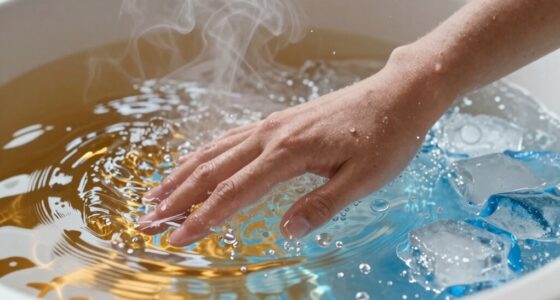
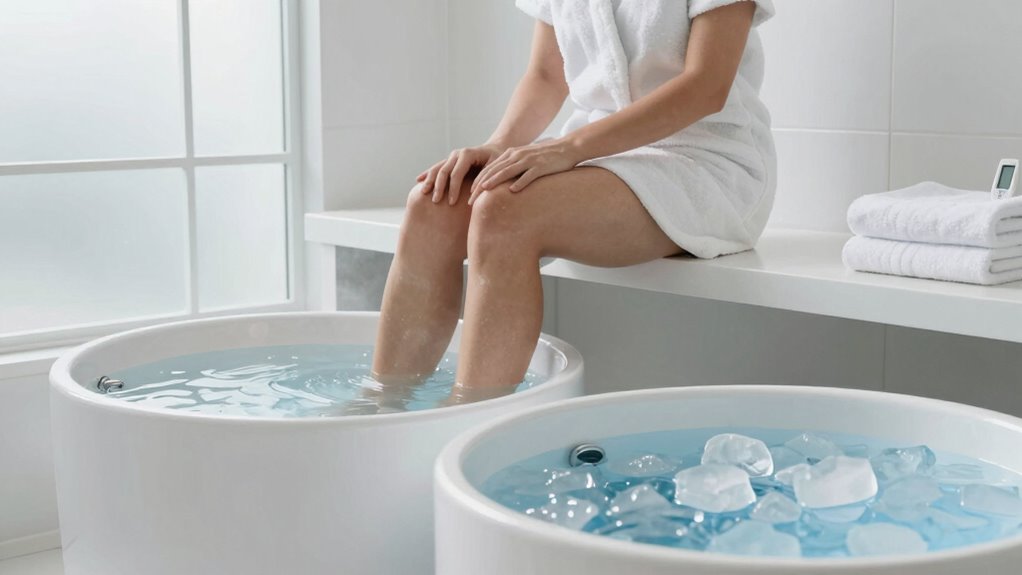

Contrast therapy at home involves alternating between warm and cold immersions to boost recovery safely and effectively. Start by setting up a comfortable space with water at safe temperatures, using a thermometer to keep things in check. Begin with a warm soak, then switch to cold, cycling 1-3 minutes each time. Stick to recommended durations and listen to your body. Want step-by-step guidance to do this safely and effectively? Keep going to learn more.
Key Takeaways
- Alternate between warm (hot) and cold water immersions, keeping each cycle within 1-3 minutes for safety and effectiveness.
- Use a thermometer to ensure water temperatures stay within safe ranges, avoiding burns or frostbite.
- Maintain a comfortable, accessible space with waterproof mats and proper equipment for safe transitions.
- Listen to your body; stop immediately if you experience numbness, dizziness, or excessive discomfort.
- Perform contrast therapy 2-3 times weekly, gradually adjusting durations and temperatures to personalize the routine.
What Is Contrast Therapy and How Does It Help Your Body?

Have you ever wondered how alternating hot and cold treatments can boost your recovery? Contrast therapy involves switching between hot therapy and cold immersion, which helps your body heal faster. When you expose yourself to cold immersion, you reduce inflammation and numb pain, making soreness less intense. Hot therapy, on the other hand, relaxes muscles, increases blood flow, and eases stiffness. Alternating these treatments creates a pump effect, flushing out toxins and delivering nutrients to your muscles. This cycle also stimulates your nervous system, enhancing overall recovery and reducing fatigue. Incorporating proper techniques can further optimize this process by tailoring the therapy to your individual needs. Using the right temperature protocols ensures you get the maximum benefit without risking discomfort or injury. By practicing contrast therapy at home, you can harness these benefits without needing extreme measures. It’s a simple, effective way to support your body’s natural healing process and improve your overall well-being. Being mindful of safe practices helps you avoid potential risks and makes the experience more beneficial. Understanding body response to temperature changes can help you adjust the therapy for better results.
How to Set Up Your Space for Safe Contrast Therapy
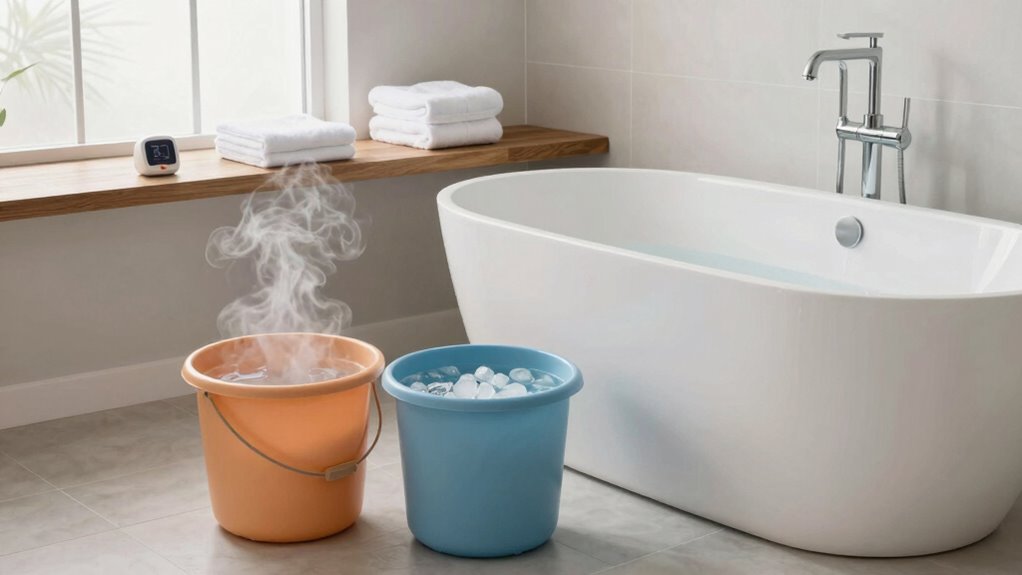
Creating a safe and effective space for contrast therapy starts with choosing a comfortable, easily accessible area in your home. Confirm the space allows you to comfortably sit or lie down, with enough room for water containers or baths. Maintain proper temperature safety by regularly checking the water temperature, avoiding extremes that could cause burns or chills. Keep your equipment in good condition, inspecting for leaks or damage, and clean it regularly to prevent mold or bacteria buildup. Use waterproof mats or towels to protect surfaces and minimize slipping. Good equipment maintenance is essential for safety and longevity. Keep a thermometer nearby to monitor water temperatures accurately. Organizing your space beforehand helps you focus on the therapy itself, ensuring a safe, enjoyable experience every time. Proper setup also involves ensuring adequate ventilation to prevent humidity buildup and maintain comfort during your sessions. Additionally, regular equipment inspections contribute significantly to overall safety by preventing potential hazards before they arise. Regularly updating your knowledge about home safety practices can further enhance your confidence and safety during contrast therapy sessions.
Step-by-Step: How to Do Contrast Therapy at Home
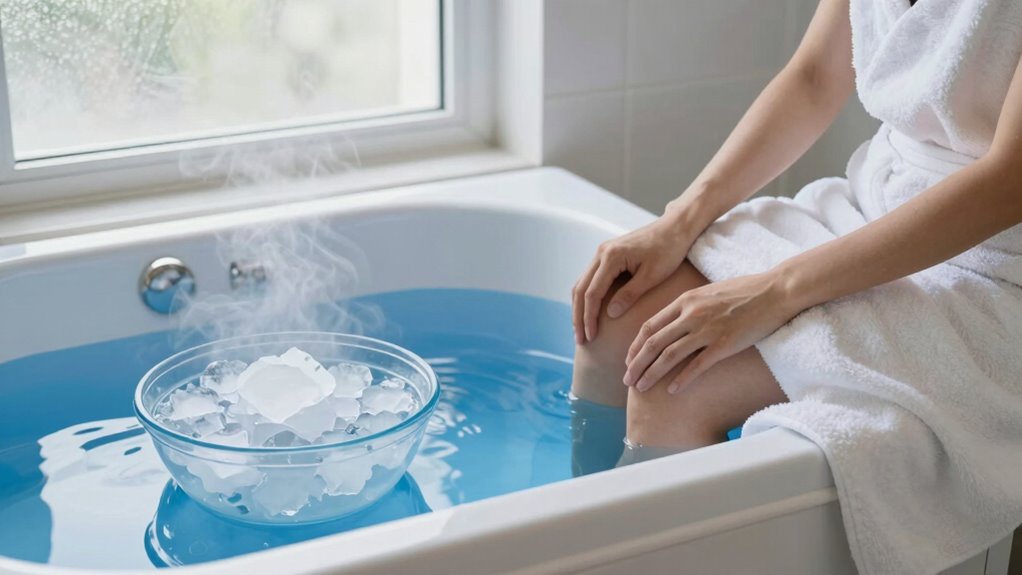
To effectively perform contrast therapy at home, you’ll need to follow a clear sequence of steps that alternate between hot and cold immersions. Start with a warm soak to promote relaxation techniques and enhance temperature regulation. After a few minutes, switch to cold water to invigorate your muscles and stimulate circulation. Repeat this cycle several times, ensuring each immersion lasts 1-3 minutes. Use the table below to visualize the process and keep your focus on relaxation and temperature changes:
| Hot Water | Cold Water |
|---|---|
| Relaxation | Refreshment |
| Loosen muscles | Stimulate circulation |
| Enhance comfort | Boost energy |
| Calm mind | Invigorate body |
This method helps balance your body’s temperature, reducing tension and promoting overall well-being. Incorporating proper air quality can also support relaxation and recovery by ensuring a clean breathing environment. Maintaining optimal climate control in your space can further enhance the effectiveness of contrast therapy by creating a comfortable environment for your sessions. Additionally, paying attention to indoor air quality can improve respiratory comfort during and after your contrast therapy routine. Considering the integration of household smart solutions, like air purifiers and climate regulation devices, can optimize your therapy experience.
How Often Should You Do Contrast Therapy for Best Results?

For the best results, most people should perform contrast therapy 2 to 3 times a week. This frequency allows you to experience the benefits of contrast therapy, such as improved circulation, reduced soreness, and faster recovery, without overdoing it. Keeping a consistent routine helps your body adapt and maximizes these benefits. Additionally, understanding cleaning appliances and systems can help you maintain your equipment properly, ensuring safety and optimal performance during therapy sessions. Regular maintenance of your air and heat systems can also improve their efficiency and comfort, making your contrast therapy sessions more effective. Being aware of proper temperature settings can prevent discomfort and skin irritation, ensuring a safer experience. It’s also helpful to familiarize yourself with system safety guidelines to prevent any accidents or misuse during sessions. However, safety precautions are essential—listen to your body and avoid overexposure to extreme temperatures or prolonged sessions, which can cause skin irritation or discomfort. Incorporating temperature regulation techniques can further enhance safety and comfort during contrast therapy. If you have underlying health conditions or concerns, consult a healthcare professional before starting. Regular, moderate contrast therapy sessions can enhance your overall wellness, but moderation ensures you enjoy the benefits safely and effectively.
Common Mistakes to Avoid and Tips to Improve Your Routine
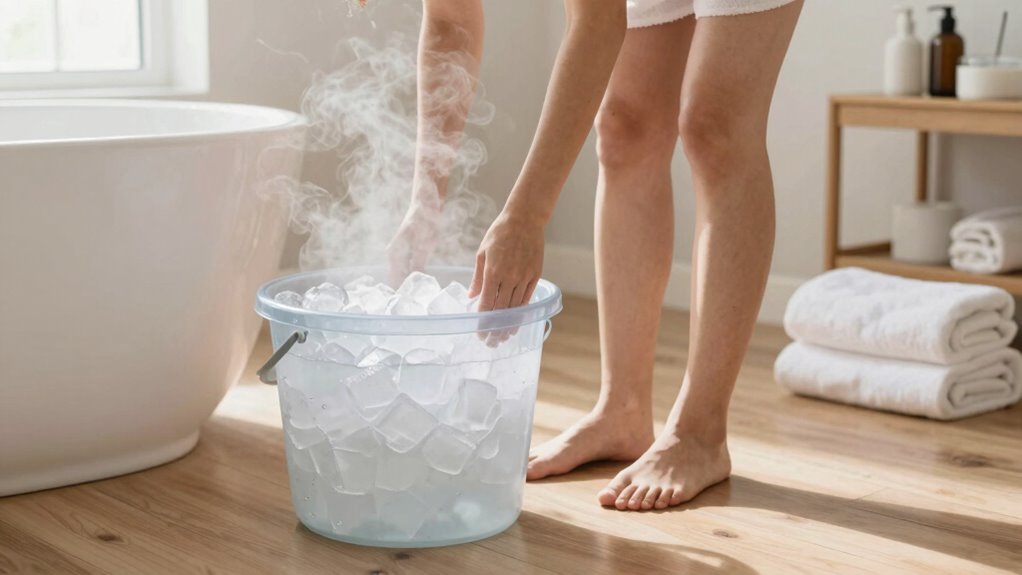
Be careful to avoid sudden temperature shifts, as extreme changes can cause discomfort or injury. Make sure to stick to proper durations for each session to get the best benefits without overdoing it. Using quality equipment helps guarantee safety and effective results in your contrast therapy routine. Additionally, maintaining a balance of awareness and preparation is key to preventing accidents and ensuring a safe experience. Familiarizing yourself with contrast therapy techniques can further enhance your routine and safety. It’s also important to consider your body’s natural response to temperature changes to avoid unnecessary stress or harm. Recognizing your individual health conditions can help customize your routine and prevent adverse effects during the process.
Avoid Sudden Temperature Changes
Sudden temperature changes can shock your body and reduce the effectiveness of contrast therapy. To avoid this, pay attention to temperature fluctuations and follow safety precautions. Rapid shifts can cause discomfort or even harm, so gradual adjustments are key. Here are some tips to help:
- Start with lukewarm water before moving to hotter or colder temps.
- Shift gradually between hot and cold to prevent sudden shocks.
- Monitor your body’s response; if you feel dizzy or overwhelmed, stop immediately.
- Keep the temperature difference within safe ranges to minimize risks.
- Using a thermometer can help you accurately gauge water temperatures and maintain safe variations.
- Being aware of body signals during contrast therapy can help you adjust the process to avoid adverse reactions.
Maintain Proper Duration
Maintaining the proper duration for each contrast therapy cycle is essential to maximize benefits and avoid potential harm. You should keep each exposure within recommended time frames, typically around 1 to 3 minutes for cold or hot treatments. Proper temperature control is crucial; ensure the water isn’t too hot or cold to prevent burns or frostbite. Always follow safety precautions, such as monitoring your body’s response and avoiding prolonged exposure that can cause discomfort or injury. If you start to feel numb, dizzy, or overly uncomfortable, remove yourself from the treatment immediately. Consistently timing your sessions ensures you gain the therapeutic benefits without risking skin damage or other safety issues. Staying attentive to your body’s signals is key to a safe, effective routine.
Use Quality Equipment
Using high-quality equipment is vital for safe and effective contrast therapy sessions. Poorly made or faulty equipment can compromise safety and reduce benefits. To guarantee you’re on the right track, consider these tips:
- Choose durable, well-reviewed products designed for temperature fluctuations.
- Use reliable thermometers to monitor water or ice temperatures accurately.
- Avoid DIY solutions that may leak or malfunction, risking safety precautions.
- Regularly inspect equipment for cracks, leaks, or damage before each use.
Investing in quality equipment helps prevent accidents and ensures consistent results. Remember, safety precautions are essential, so never overlook the importance of dependable tools. Proper gear not only enhances your comfort but also maximizes the benefits of your contrast therapy routine.
Customize Your Contrast Therapy Routine for Maximum Benefits

To get the most out of your contrast therapy routine, it’s important to tailor it to your specific needs and goals. Start by adjusting your personalized temperature settings to suit what your body responds to best, whether that’s hotter or colder temperatures. Experiment with different durations and intensities to find what delivers the most relief or recovery. If traditional hot and cold contrast doesn’t suit you, explore alternative contrast methods like contrast showers or ice packs combined with warm compresses. Listening to your body is key—if something feels uncomfortable, modify your routine accordingly. Customizing your routine ensures you maximize benefits while staying safe and comfortable. Remember, small adjustments can make a significant difference in your overall experience and results.
Frequently Asked Questions
Can Contrast Therapy Be Safely Combined With Other Treatments?
Yes, you can safely combine contrast therapy with other treatments if you focus on proper hydration strategies and temperature regulation. Make sure to stay well-hydrated before and after sessions, and carefully monitor the water temperatures to avoid burns or shock. Consult with your healthcare provider beforehand, especially if you’re using medications or have health conditions, to guarantee compatibility and safety with your combined treatments.
Are There Specific Health Conditions That Contraindicate Contrast Therapy?
Think of contrast therapy as a dance that requires the right rhythm. If you have medical contraindications like cardiovascular issues or skin allergies, it’s best to check with your doctor first. Allergies to cold or heat can turn this gentle routine into a risk. For safety’s sake, always consider allergy considerations and medical contraindications before you embark on contrast therapy at home.
What Are the Signs of Overdoing Contrast Therapy?
If you overdo contrast therapy, you might notice skin sensitivity, like redness or irritation, and your hydration levels could drop, making you feel weak or dizzy. You may also experience chills or headaches. Pay attention to these signs and stop if they occur. It’s important to listen to your body, stay well-hydrated, and avoid extreme temperature changes to prevent overdoing it and causing discomfort.
How Long Should Each Contrast Therapy Session Last?
Your contrast therapy session shouldn’t last forever—about 10 to 20 minutes is ideal for ideal timing. Each hot and cold cycle usually takes around 1 to 3 minutes, with a brief rest in between. This keeps the process effective without overdoing it. Stick to this duration, and you’ll experience the benefits without risking overstimulation or discomfort. Remember, moderation is key to safe, successful contrast therapy at home.
Is Contrast Therapy Effective for Mental Health Benefits?
Yes, contrast therapy can support mental health improvement by promoting relaxation benefits. When you alternate between hot and cold, it helps reduce stress and anxiety, leaving you feeling calmer and more centered. This simple routine can boost your mood and improve overall mental well-being. Incorporating contrast therapy into your self-care practices may give you a natural, non-invasive way to enhance mental clarity and emotional resilience.
Conclusion
Imagine your body as a garden, flourishing when you nurture it with gentle contrast. By following these simple steps safely at home, you’ll nurture your muscles and boost circulation without the extremes. Think of contrast therapy as a calming wave—sometimes warm, sometimes cool—that refreshes and revitalizes. With consistency and care, you’ll cultivate a healthier, more resilient you. Embrace this routine, and watch your wellness blossom like never before.