
Suction devices and pore strips mainly remove surface debris, but they don’t target the core differences between blackheads and sebaceous filaments. Blackheads are clogged pores with excess oil and dead skin that are more stubborn and darkened, while filaments are natural, tiny lines lining your pores. Using suction won’t fully clear either, especially if you don’t address underlying causes. Keep going to find out how to properly care for both conditions and achieve better results.
Key Takeaways
- Pore strips and suction devices mainly remove surface debris, targeting blackheads but often not affecting sebaceous filaments.
- Blackheads are larger, clogged pores with trapped debris, while filaments are natural, tiny structures lining pores.
- Suction tools cannot eliminate the root causes of blackheads or penetrate deep enough to remove sebaceous filaments.
- Overuse of suction devices can irritate skin and worsen pore congestion, making them ineffective long-term.
- Understanding the difference helps in choosing appropriate treatments, as suction isn’t a comprehensive solution for either condition.
What Are Blackheads and Sebaceous Filaments? How to Tell Them Apart
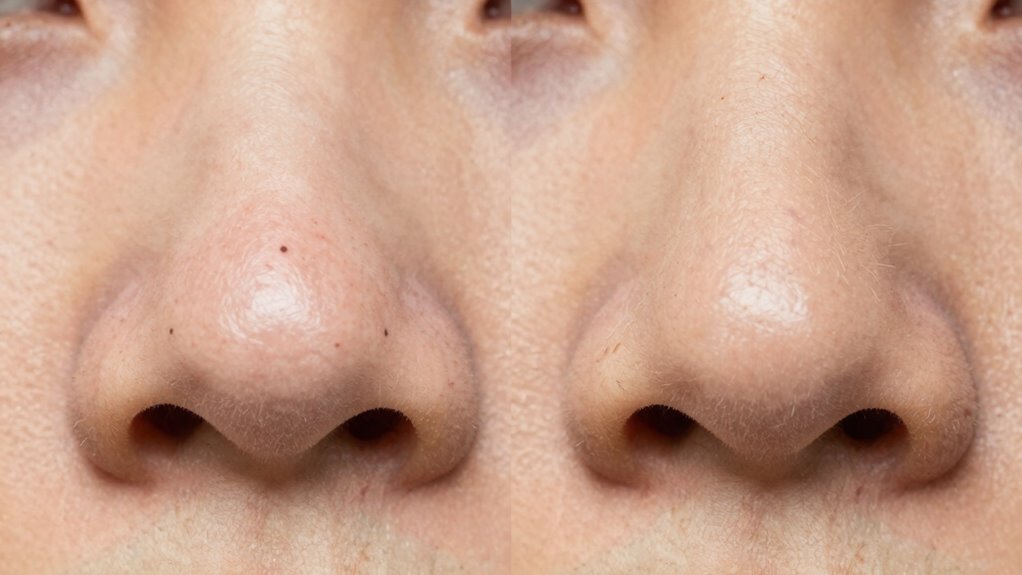
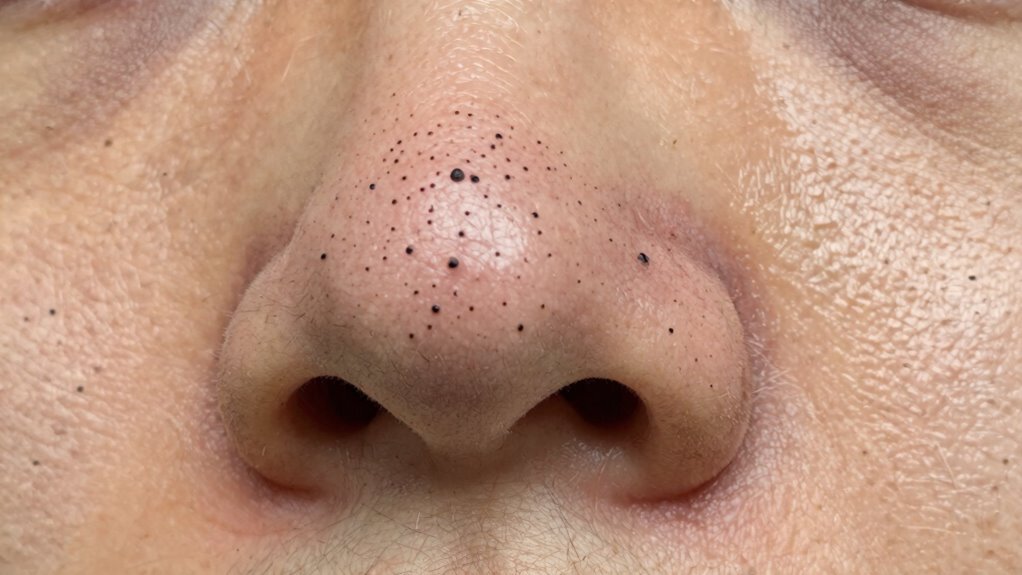
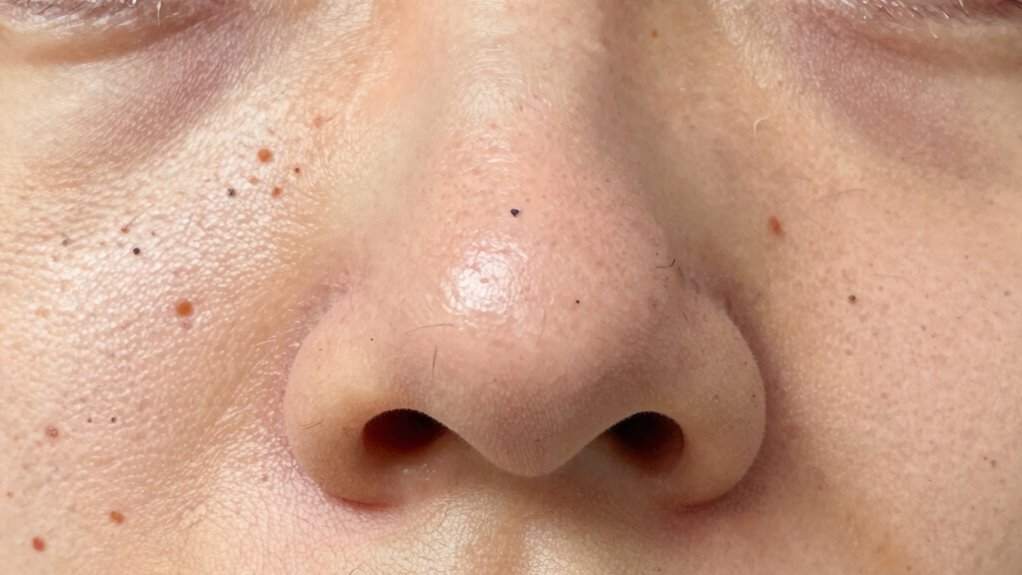
Understanding the difference between blackheads and sebaceous filaments can help you better manage your skin. Blackheads appear as dark spots on your pores, often due to clogged pore openings filled with excess oil and dead skin. They typically have a larger pore size and can cause uneven skin texture. Sebaceous filaments, however, are natural, tiny, off-white or flesh-colored lines that line your pores and help channel oil to the surface. They are usually less noticeable, giving your skin a smoother appearance. Recognizing these differences is key—blackheads are more prominent and darker, while sebaceous filaments blend into your skin. Knowing what each looks like allows you to tailor your skincare routine effectively, targeting blackheads without disrupting the natural function of sebaceous filaments.
Do Pore Strips and Suction Devices Really Work on Blackheads and Filaments?
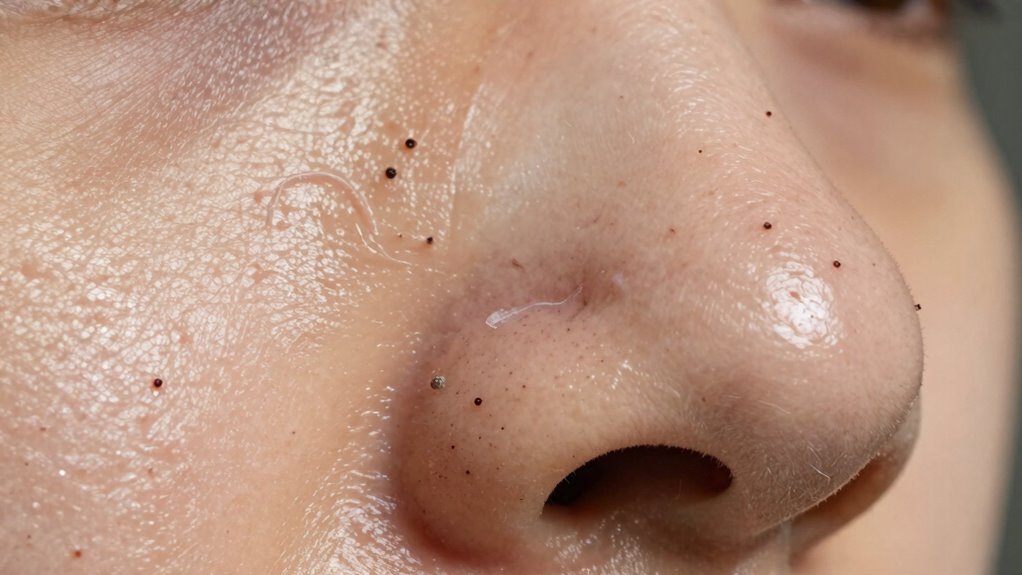
Pore strips and suction devices are popular tools for removing blackheads, but their effectiveness varies. Pore strip efficacy depends on how well they adhere to debris clogging pores; they can remove surface blackheads but often leave deeper ones untouched. Suction device safety is a concern if used improperly, as excessive pressure can irritate or damage your skin. While these tools may provide quick visual results, they don’t address the underlying causes of blackheads or sebaceous filaments. Suction devices can dislodge superficial debris temporarily, but they rarely eliminate the root issue. Additionally, high-performance projectors require proper calibration and maintenance to ensure optimal long-term results. Pore strips and suction devices work best as occasional aids rather than long-term solutions. For healthier skin, combining proper skincare with targeted treatments is more effective than relying solely on these devices.
How to Identify Blackheads Versus Sebaceous Filaments on Your Skin
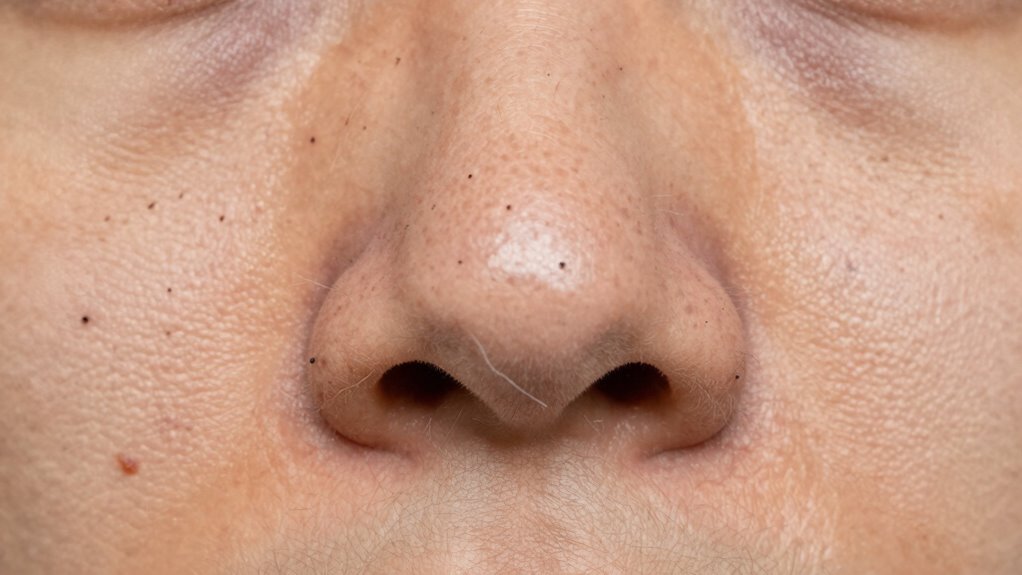
While tools like pore strips and suction devices can provide quick fixes, knowing what you’re dealing with is key to proper skincare. To distinguish blackheads from sebaceous filaments, examine your skin’s pore size and texture. Blackheads appear as small, dark spots with a slightly raised surface and are usually more noticeable on areas with larger pores, like the nose or chin. Sebaceous filaments, on the other hand, look like tiny, flesh-colored or whitish dots that line the inside of your pores, giving your skin a bumpy, uneven texture. They’re often less prominent but more spread out. Pay attention to whether the bumps are dark or light and how your skin feels—blackheads are more stubborn and darker, while sebaceous filaments blend into the skin’s natural texture.
Effective Skincare Tips for Removing Blackheads and Managing Sebaceous Filaments
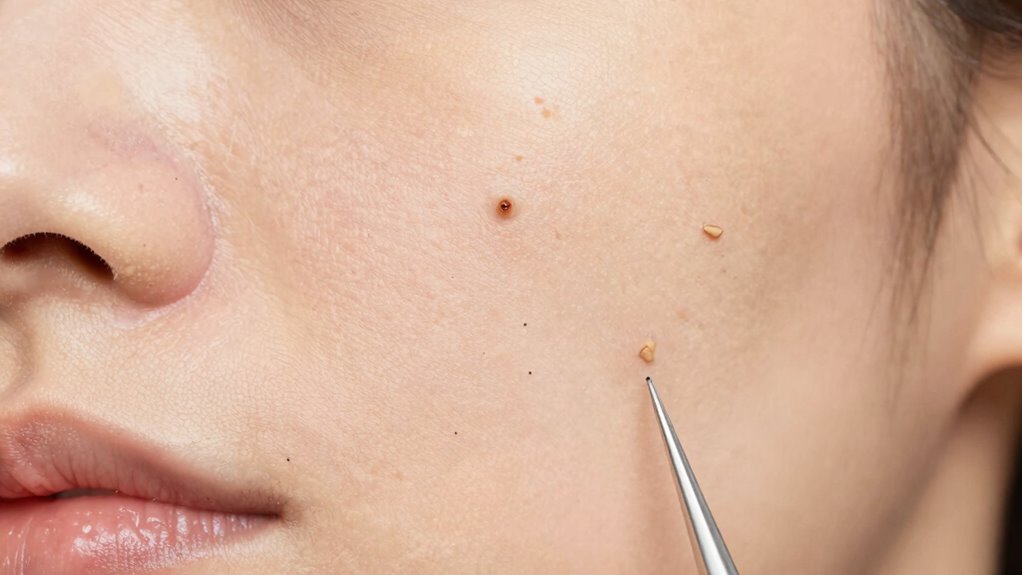
To effectively reduce blackheads and manage sebaceous filaments, adopting a consistent skincare routine is essential. Start with pore deep cleansing to remove dirt, excess oil, and debris that clog pores. Use gentle cleansers formulated for your skin type, avoiding harsh ingredients that can strip natural oils. Incorporate oil control techniques like oil-free moisturizers and blotting papers to minimize excess sebum production throughout the day. Exfoliating a few times weekly with salicylic acid helps clear out pores and prevent blackheads. Don’t forget to use non-comedogenic products to avoid further clogging. Additionally, understanding the difference between blackheads and sebaceous filaments can help tailor your skincare approach more effectively. Practicing consistent skincare and understanding your skin’s unique needs can significantly improve your results over time. Regular cleansing and oil management are crucial in maintaining clearer skin, as they help reduce the buildup of sebum and impurities that contribute to both blackheads and sebaceous filaments. Incorporating proper skincare tools such as gentle brushes or extractors can enhance your routine safely. Consistency is key; regular cleansing and oil management will keep your skin clearer and healthier, reducing the appearance of blackheads and sebaceous filaments over time.
Common Mistakes to Avoid When Clearing Clogged Pores
Many people make the mistake of over-clearing their skin or using harsh methods, which can actually worsen pore congestion. This often stems from skincare myths that suggest aggressive scrubbing or frequent extraction helps. Instead, these practices damage your skin barrier and can increase oil production. To avoid this, keep in mind:
- Don’t squeeze or pick at your skin — it can cause inflammation and scarring.
- Skip harsh scrubs or abrasive tools that irritate pores.
- Avoid over-washing, which strips natural oils and triggers more oil production.
- Use gentle, non-comedogenic products designed for your skin type.
- Recognizing the difference between blackheads and sebaceous filaments is essential, as suction devices may not effectively target both issues and can sometimes cause more harm than good.
Understanding these mistakes helps you prevent worsening clogged pores and promotes healthier skin. Clearer skin comes from patience, proper skincare, and avoiding harmful myths.
Frequently Asked Questions
Can Blackheads and Sebaceous Filaments Be Completely Eliminated Permanently?
You can’t achieve permanent removal of blackheads and sebaceous filaments, but consistent skincare can minimize their appearance. Natural remedies like salicylic acid or clay masks help control oil and prevent buildup. Regular cleansing, exfoliation, and professional treatments can keep your pores clearer over time. While you may not erase them permanently, maintaining a good routine helps reduce their visibility and keeps your skin looking healthier.
Are There Specific Ingredients That Target Only Blackheads or Sebaceous Filaments?
Targeted ingredients do exist for blackheads and sebaceous filaments, but ingredient specificity is limited. Salicylic acid effectively penetrates pores to dissolve blackheads, while niacinamide helps regulate oil production, reducing sebaceous filament visibility. You should choose products containing these ingredients based on your skin concerns. However, no ingredient exclusively targets one or the other perfectly. Consistent use and proper skincare routines are essential for managing both issues effectively.
How Often Should I Exfoliate to Prevent Blackheads and Clogged Pores?
Exfoliating is like watering a plant regularly to keep it healthy. You should exfoliate 2-3 times a week to maintain your pores and prevent blackheads. Overdoing it can cause irritation, so stick to this schedule for ideal pore maintenance. Consistent exfoliation helps remove dead skin cells, reducing clogging and keeping your skin clearer. Remember, gentle exfoliation is key to both preventing blackheads and maintaining overall skin health.
Do Professional Treatments Work Better Than At-Home Remedies?
Professional treatments generally work better than at-home remedies because they use stronger, more targeted approaches like chemical peels or extractions. You get faster and more visible results, and professionals can safely handle stubborn blackheads and clogged pores. While at-home remedies are convenient and cost-effective, they often lack the potency and precision of professional treatments, making them less effective for deep or persistent skin issues.
Can Diet Influence the Formation of Blackheads and Sebaceous Filaments?
Think of your skin as a garden—what you feed it impacts its growth. Your diet impact can influence blackheads and sebaceous filaments, as poor nutrition can fuel skin inflammation and clog pores. Eating too many greasy, sugary foods may promote these issues, while a balanced diet rich in fruits and vegetables can help keep your skin clear. So, yes, what you eat directly affects your skin’s health and appearance.
Conclusion
Understanding the difference between blackheads and sebaceous filaments is key to effective skincare. Remember, over 70% of people struggle with clogged pores, but using the right approach makes a difference. Suction devices might not always work, and knowing what’s actually beneath your skin helps you avoid unnecessary treatments. Focus on gentle, targeted skincare rather than quick fixes, and you’ll see better results. Your skin deserves patience and consistent care for a clearer, healthier look.