

Heat therapy increases blood flow to your muscles, delivering essential nutrients and oxygen for faster healing. It relaxes tight, sore tissues, easing stiffness and discomfort. The warmth also helps remove waste products from muscles, promoting recovery from strains or cramps. Different heat types, like moist or dry heat, penetrate tissues differently, so choosing the right method matters. Keep exploring to discover how proper application boosts your muscle relaxation and speeds up healing.
Key Takeaways
- Warmth from heat therapy increases blood flow, delivering nutrients and oxygen to muscle tissues.
- Heat relaxes tight muscles by reducing muscle spindle activity and decreasing muscle tone.
- Elevated tissue temperature enhances tissue elasticity, promoting flexibility and reducing stiffness.
- Heat facilitates the removal of metabolic waste products from muscle tissues, aiding recovery.
- Increased temperature accelerates tissue repair processes and speeds up recovery from muscle injuries.
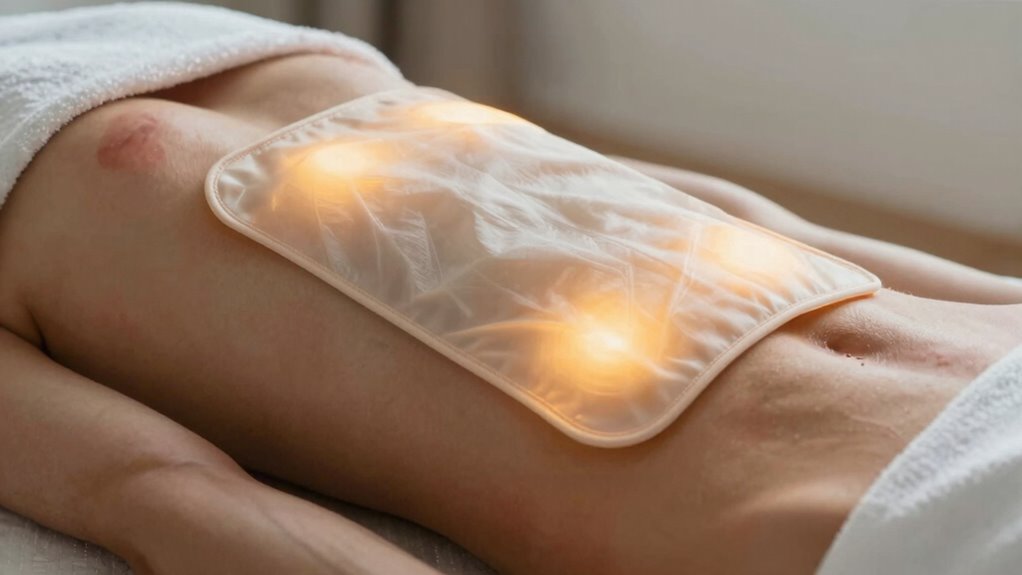
Heat therapy is an effective way to relieve muscle pain and stiffness by increasing blood flow and relaxing tight muscles. When you apply heat to sore or tense muscles, you stimulate blood vessels, which helps deliver essential nutrients and oxygen to the tissue while removing waste products. This process promotes healing and eases discomfort, making heat therapy a popular choice for managing muscle strains, cramps, or chronic stiffness.
Applying heat relaxes muscles, boosts circulation, and speeds healing for sore or tight muscles.
There are various types of heat you can use, each suited for different needs and situations. Moist heat, such as warm towels or moist heating packs, tends to penetrate deeper because moisture conducts heat more effectively than dry heat. These are ideal for targeting deeper muscle layers and can be applied directly to the skin or over clothing. Dry heat options include electric heating pads and warm packs, which are convenient and easy to control. These are typically used for broader areas, offering sustained warmth that helps loosen muscles over longer periods. You might also consider paraffin wax baths for hands or feet, especially if you deal with arthritis or localized joint pain. These waxes hold heat longer and can be particularly soothing for small, affected areas.
When it comes to application methods, you have several choices. Heating pads are among the most straightforward tools; you simply plug them in and adjust the temperature to your comfort level. They’re portable and versatile, suitable for back, shoulder, or leg muscle relief. Hot packs, which can be heated in a microwave, are another convenient option; just warm them up and place them on the affected area. Towels soaked in hot water or commercial moist heating packs also work well—just be cautious not to burn your skin. For localized pain, a paraffin wax bath can be effective—dip your hand or foot into the melted wax, let it cool slightly, then wrap it with plastic or a towel to trap the heat. This method provides sustained warmth, which can be especially beneficial for joint stiffness.
Regardless of the type or method you choose, it’s essential to apply heat safely. Limit each session to about 15-20 minutes to prevent burns or skin irritation, and always use a barrier—like a towel—between the heat source and your skin. Never fall asleep with a heating device on, and avoid applying heat to areas with swelling, open wounds, or skin infections. By selecting the appropriate type of heat and applying it correctly, you can effectively relax muscles, improve circulation, and accelerate your recovery process.
Frequently Asked Questions
Can Heat Therapy Prevent Muscle Injuries Before Activity?
Heat therapy can help prevent injury by warming up your muscles before activity. When you apply heat, it increases blood flow and flexibility, making your muscles less prone to strains or tears. This muscle warming prepares your tissues for movement, reduces stiffness, and enhances performance. Incorporating heat therapy into your warm-up routine is a smart way to protect your muscles and reduce the risk of injury during exercise.
How Long Does It Take for Heat Therapy to Relieve Muscle Pain?
You’ll typically notice heat therapy relieving muscle pain within 15 to 20 minutes. The timing effectiveness depends on the heat source and how long you’ve applied it. To maximize relief duration, keep the heat on for about 15-20 minutes, but avoid overdoing it to prevent burns. Consistent application can provide sustained comfort, helping to reduce stiffness and improve blood flow for ongoing muscle relaxation.
Is Heat Therapy Suitable for All Types of Muscle Soreness?
A stitch in time saves nine, and that applies to muscle soreness too. Heat therapy isn’t suitable for all types, especially if you experience severe muscle injury, swelling, or inflammation. It helps reduce muscle stiffness and improves tissue elasticity, but always listen to your body. If soreness is caused by injury or inflammation, consult a healthcare professional before applying heat. Otherwise, warmth can be a gentle remedy to ease discomfort.
Are There Risks of Using Heat Therapy Incorrectly?
Yes, using heat therapy incorrectly can pose risks like burns or overuse injuries. You should avoid applying heat for too long or at excessive temperatures, as this increases burn risks. Also, don’t use heat therapy on inflamed or swollen areas, which could worsen your condition or cause overuse injuries. Always follow safety guidelines, and consult a healthcare professional if you’re unsure about proper use.
How Does Heat Therapy Compare to Cold Therapy for Muscles?
Imagine you’re in a Roman bath, feeling relaxed—heat therapy works similarly, promoting muscle relaxation and increasing blood flow. Compared to cold therapy, which reduces swelling and numbs pain, heat therapy soothes tight muscles and enhances circulation. Use heat for chronic pain or stiffness, while cold is better for inflammation or injury. Both have their place, but understanding when to use each helps you recover faster and stay comfortable.
Conclusion
Now that you know how heat therapy can loosen tight muscles and boost blood flow, you’re better equipped to give it a try. Just remember, patience is a virtue—sometimes, warmth needs a little time to work its magic. When you’re feeling stiff or sore, a little heat can be just what the doctor ordered. Keep an open mind, and you’ll see how warmth can turn things around before you know it.