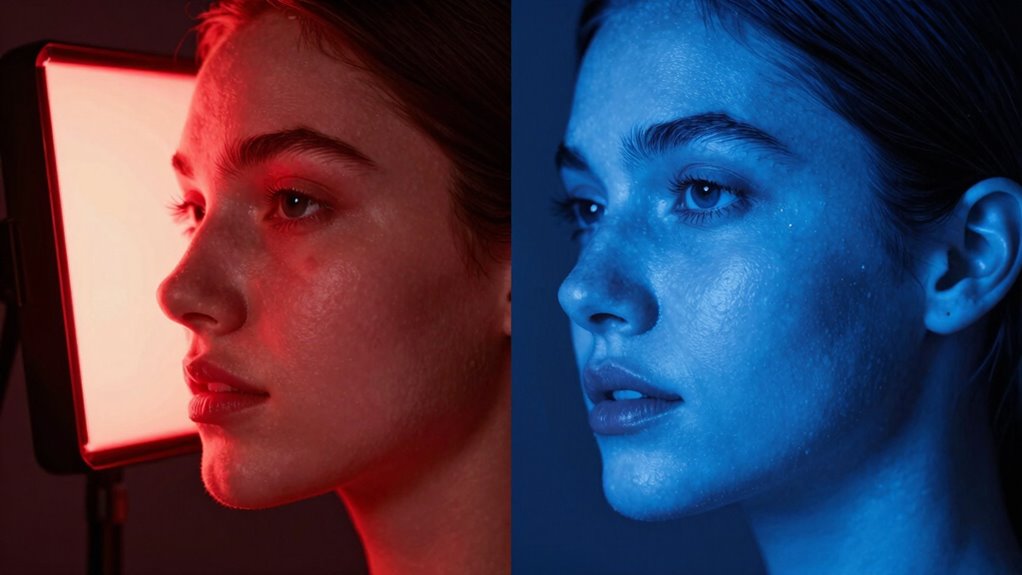

Red light therapy stimulates collagen production, improves skin elasticity, and promotes cell regeneration, making it great for anti-aging and skin firmness. Blue light therapy, on the other hand, targets acne-causing bacteria, reduces inflammation, and controls excess oil. Both are safe and non-invasive, but they address different concerns. Choosing the right depends on whether you want to fight aging or clear up acne—keep exploring to see which is best for your skin goals.
Key Takeaways
- Red light therapy penetrates deeper to stimulate collagen, improve skin firmness, and reduce signs of aging.
- Blue light therapy targets surface bacteria, effectively treating acne and controlling excess oil production.
- Red light enhances cellular activity and skin radiance, while blue light reduces inflammation and prevents breakouts.
- Both therapies are safe, non-invasive, and require consistent use for gradual skin improvements.
- Choosing between them depends on skin concerns: anti-aging and firmness or acne and oil control.

When it comes to skincare treatments, red light and blue light therapies are popular options, but they serve different purposes. You might be curious about how each wavelength works and which one suits your skin concerns best. Red light therapy is renowned for its anti-aging benefits. It penetrates deeper into the skin, stimulating collagen production and encouraging cell regeneration. As a result, you could notice improvements like smoother skin, reduced fine lines, and a more youthful appearance over time. If you’re aiming to combat signs of aging and restore firmness, red light therapy offers a non-invasive way to boost your skin’s elasticity and overall radiance.
Red light therapy boosts collagen, reduces fine lines, and promotes a youthful, radiant skin appearance.
On the other hand, blue light therapy primarily targets acne. It works on a different level by penetrating the upper layers of your skin to kill bacteria responsible for breakouts. By reducing the population of Propionibacterium acnes bacteria, blue light helps decrease inflammation and prevents new pimples from forming. This treatment is especially effective if you’re dealing with moderate to severe acne or frequent breakouts. Plus, blue light therapy can help control excess oil production, which often exacerbates acne issues. Since it targets the root causes of acne, many users see clearer skin and fewer blemishes after regular sessions.
While both therapies are generally safe, their benefits extend beyond just treating specific skin issues. Red light therapy is often used as part of a broader anti-aging routine because it promotes cellular activity that can slow down skin aging processes. Conversely, blue light therapy is more focused on controlling acne and preventing future outbreaks, making it a popular choice for those with oily or acne-prone skin. You might find that combining these treatments, or using them separately depending on your skin’s needs, can give you the best results.
Additionally, understanding the contrast ratio of a device can help you select the most effective therapy, as higher contrast ratios yield better image quality and deeper skin penetration. It’s important to remember that these treatments are not instant fixes. Consistency is key, and results tend to develop gradually. If you’re considering either therapy, it’s a good idea to consult with a dermatologist or skincare professional to determine the right approach for your skin type and goals. Whether you’re after anti-aging benefits or acne treatment, understanding how each wavelength works helps you make informed decisions. Both red and blue light therapies offer safe, non-invasive options to improve your skin’s health, but choosing the right one depends on what you want to achieve.
Frequently Asked Questions
Can Red and Blue Light Be Used Together Safely?
Yes, you can safely use red and blue light together through combination therapy if you follow proper safety protocols. It is crucial to consult a skincare professional beforehand, as they can recommend appropriate treatment durations and settings. Always use devices designed for combination therapy, and avoid overexposure. When done correctly, this approach can effectively target skin issues while minimizing risks, ensuring a safe and beneficial treatment experience.
How Long Should I Use Each Light Therapy Session?
You should aim for a session duration of about 10-20 minutes for each light therapy session. Typically, you can do treatments 3-5 times a week, depending on your skin’s response and your skincare goals. Always follow the device’s instructions and consult with a skincare professional if you’re unsure. Consistency is key, so stick to your treatment schedule to see the best results.
Are There Any Skin Types That Should Avoid Light Therapy?
You should avoid light therapy if you have high skin sensitivity or photosensitivity precautions, especially if you’re prone to reactions or taking photosensitive medications. People with darker skin tones or certain skin conditions might also need to consult a dermatologist before starting. Always perform a patch test first, and follow recommended guidelines to prevent irritation or adverse effects, ensuring safe and effective treatment tailored to your skin’s needs.
What Are the Potential Side Effects of Red and Blue Light Treatments?
Think of red and blue light treatments as a delicate dance—you need to be cautious. The side effects risks include skin sensitivity, redness, or irritation, especially if you have sensitive skin. Some may experience dryness or slight discomfort. While generally safe, overexposure can cause temporary changes. Always follow your practitioner’s guidance to minimize side effects and make certain your skin reaps the benefits without any unwanted surprises.
Can Light Therapy Replace Traditional Skincare Routines?
Light therapy can be a helpful alternative skincare option, but it shouldn’t fully replace your traditional routine. While it offers benefits like reduced inflammation and acne control, its effectiveness varies for different skin concerns. Incorporate light therapy as a supplement, not a substitute, to achieve ideal results. You’ll get the best outcomes by combining it with your established skincare routine for thorough skin health.
Conclusion
Imagine a world where red light gently boosts your skin’s healing, while blue light fiercely fights acne-causing bacteria. One offers warmth and renewal, the other delivers a cool, targeted punch. Both wavelengths work differently but aim for healthier skin. So, whether you seek soothing renewal or a clear complexion, understanding their unique powers helps you choose the right path. Ultimately, these lights are your allies in achieving vibrant, balanced skin—each playing their essential part.