
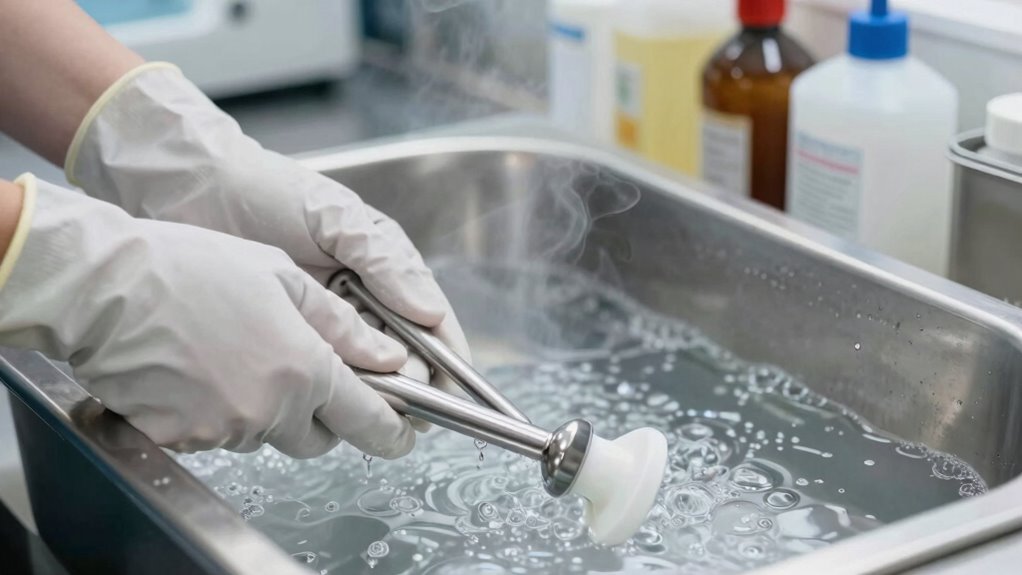

To sanitize tools without damaging their materials, identify their composition first. Use gentle cleaning solutions like diluted alcohol or specialized disinfectants suited for plastics, wood, or delicate metals. Avoid harsh chemicals and abrasive scrubbing that could cause wear or corrosion. Opt for lower temperatures when heat sterilizing, and always follow manufacturer instructions. Proper drying, storage, and regular inspection help maintain their integrity over time. Keep exploring for detailed tips to protect your tools effectively.
Key Takeaways
- Identify tool materials and choose gentle cleaning solutions and lower temperatures for delicate items.
- Follow manufacturer instructions for disinfectant concentration and contact time to prevent material damage.
- Use ultrasonic cleaners or soft brushes for intricate parts, avoiding abrasive scrubbing.
- Rinse thoroughly after disinfection to remove residual chemicals that may weaken materials.
- Store tools properly in dry, clean containers and avoid soaking in harsh chemicals to preserve integrity.
Sanitizing tools are essential for maintaining a clean and safe environment, whether you’re working in a healthcare setting, handling food, or cleaning at home. Proper disinfection techniques are crucial to eliminate germs, bacteria, and viruses without damaging your tools. When you choose the right methods, you guarantee your equipment stays effective and durable over time. To begin, assess the material of your tools. Soft plastics, delicate metals, and wooden handles each require specific approaches. For example, gentle cleaning solutions and lower temperatures are better for sensitive materials, while sturdier metals can withstand more aggressive disinfectants.
Maintaining clean, durable tools requires proper disinfection tailored to material sensitivities.
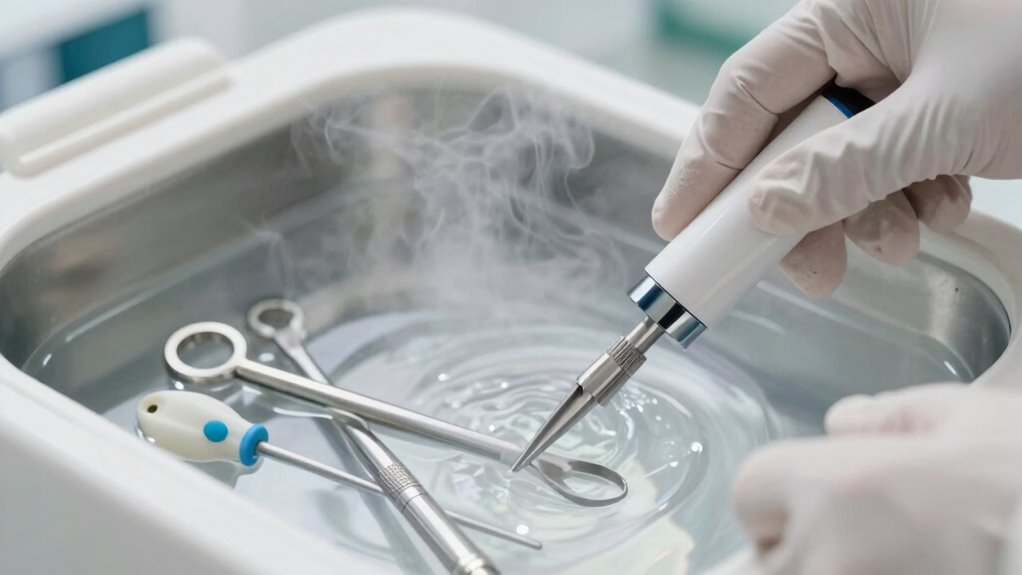
One effective disinfection technique involves using diluted solutions of alcohol or commercial disinfectants designed for specific materials. You should always follow the manufacturer’s instructions, ensuring the concentration and contact time are appropriate. This prevents corrosion or degradation of the tool’s surface. For tools with intricate parts or hard-to-reach areas, consider using brushes or ultrasonic cleaners. These methods allow thorough cleaning without the need for abrasive scrubbing, which can scratch or weaken materials. Be mindful of your tools’ tolerances; excessive scrubbing or harsh chemicals can compromise their integrity.
Tool maintenance plays a vital role in effective sanitization. Regular inspection helps you spot signs of wear, corrosion, or damage that could harbor bacteria or reduce the tool’s effectiveness. After each use, clean the tools immediately to prevent buildup of debris or residues that can interfere with disinfection. Dry them properly before storing to prevent rust or mold growth. When disinfecting, avoid soaking tools for too long in harsh chemicals, especially if they are made of sensitive materials. Instead, follow recommended contact times, and rinse thoroughly if required, to remove any residual disinfectant that could cause material degradation over time.
Storing your tools properly is equally important. Keep them in clean, dry containers or designated storage areas to prevent contamination. For tools that require sterilization, use autoclaves or heat sterilizers if compatible with the material. This process not only kills germs effectively but also preserves the tool’s structure. Additionally, choosing tools made from medical-grade materials can enhance durability and safety. Remember, consistent maintenance, along with proper disinfection techniques, ensures your tools remain in optimal condition. This prevents unnecessary replacements and guarantees that your tools function safely every time.
Frequently Asked Questions
Can All Tools Be Sanitized Using the Same Method?
No, not all tools can be sanitized using the same method. You need to contemplate tool material compatibility because some materials, like certain plastics or woods, can be damaged by harsh sanitizing agents or high heat. You should also account for sanitizing method variations, choosing gentler options like alcohol wipes for delicate tools and stronger solutions like bleach for durable metal tools. Always check manufacturer guidelines to avoid damage.
How Long Does Sanitizing Typically Take?
Sanitizing typically takes about 10 to 30 minutes, depending on the method you use. After applying your chosen sanitizing solution, you should allow tools to air dry or use drying techniques like wiping with a clean cloth. Once dry, store your tools in proper storage solutions to prevent contamination. This process guarantees effective sanitization without damaging materials, keeping your tools safe and ready for future use.
Are There Environmentally Friendly Sanitizing Options?
Yes, there are environmentally friendly sanitizing options you can use. Biodegradable disinfectants break down naturally, reducing environmental impact. Natural cleaning agents like vinegar, hydrogen peroxide, and tea tree oil also work effectively without harmful chemicals. By choosing these options, you can sanitize your tools safely and sustainably, protecting both your materials and the environment. Always follow proper dilution and usage instructions for maximum results.
How Often Should Tools Be Sanitized for Safety?
You should sanitize your tools after every use or at least once a day, depending on how often you work with them. It’s ironic, isn’t it? We trust our tools with safety, yet forget to follow proper tool sterilization routines. Stick to safety protocols and sanitize regularly to prevent cross-contamination. Keeping your tools clean isn’t just good practice — it’s essential for safety and health, no matter how busy you get.
What Signs Indicate a Tool Needs Sanitizing?
You’ll know a tool needs sanitizing when you notice signs like rust, corrosion, or buildup that can harbor bacteria. If a tool shows corrosion or grime, it’s a clear sign to increase your sanitizing frequency. Regularly sanitizing prevents damage and prolongs tool life. Remember, neglecting this can lead to contamination and deterioration, so stay vigilant and sanitize promptly whenever you see these signs to keep your tools in ideal condition.
Conclusion
Remember, sanitizing tools is about balancing cleanliness with preservation. While you want to eliminate germs and bacteria, you also need to protect delicate materials from damage. It’s like walking a tightrope—too harsh, and you risk destruction; too gentle, and you leave harmful microbes behind. By choosing the right methods, you guarantee your tools stay safe and effective. Ultimately, cleanliness and care go hand in hand, keeping your tools ready without compromising their integrity.