

To ease tension headaches caused by tight face muscles, try a simple release routine. Gently open and close your mouth, massage the area in front of your ears, and press lightly above your eyebrows to relax your forehead. Incorporate neck and shoulder stretches, along with deep breathing to calm your nerves. These practices can release muscle tightness, reduce pressure, and help prevent future headaches—keep going to discover more effective techniques.
Key Takeaways
- Gentle facial exercises like jaw relaxation, forehead presses, and eyebrow lifts reduce muscle tension associated with headaches.
- Neck and shoulder stretches, such as tilting and rolling, alleviate tension that can radiate to face muscles.
- Massage around the ears and in front of the ears relaxes facial muscles and relieves pressure.
- Deep breathing and stress relief techniques calm the nervous system, preventing muscle tightness and headache escalation.
- Consistent routine of relaxation and stretching improves circulation, reduces muscle tightness, and eases tension headache symptoms.
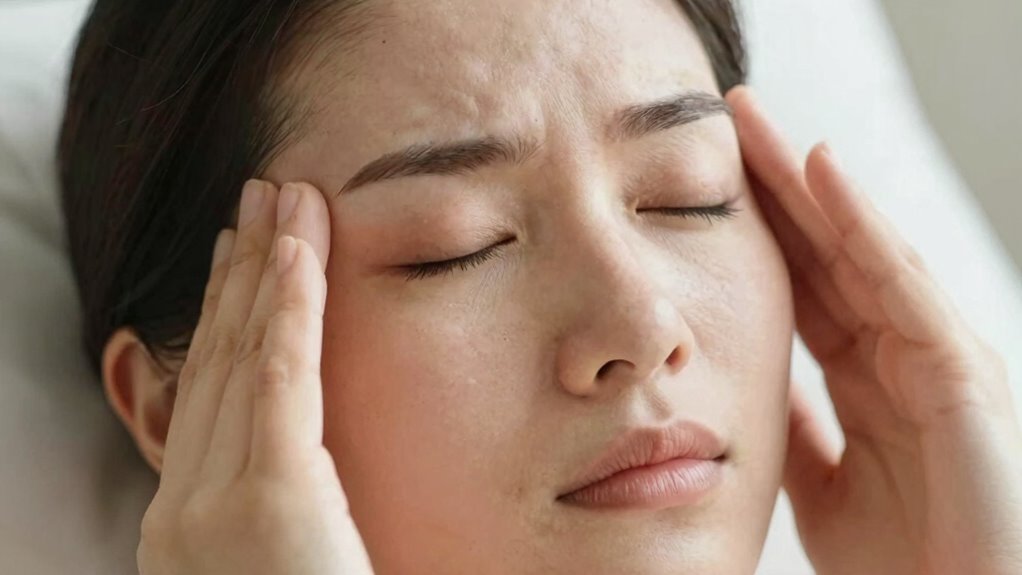
Tension headaches are a common type of headache that often stem from tightness and strain in the face and head muscles. If you’re experiencing these headaches regularly, it’s likely because your muscles are holding tension, which can create pressure and discomfort. Fortunately, simple techniques focused on stress relief and facial relaxation can make a significant difference. These methods help release the tightness, easing your headache and restoring a sense of calm.
Start by locating your jaw muscles. Many people clench their jaw or grind their teeth without realizing it, especially during stressful moments. To relax these muscles, gently open your mouth wide, then slowly close it while breathing deeply. Repeat this several times. You can also massage the area just in front of your ears, where your jaw muscles are. Use your fingertips to apply gentle pressure, kneading in small circles. This relaxes the muscles, reduces tension, and promotes overall facial relaxation.
Gently open and close your mouth, then massage in front of your ears to relax jaw muscles and ease tension.
Next, focus on your forehead and brow area, common sites of tension buildup. Place your fingertips just above your eyebrows and press gently. As you do this, take a deep breath and imagine releasing stress with each exhale. You can also try raising your eyebrows slowly, then relaxing them, to stretch and loosen the muscles. Incorporating facial relaxation exercises like this not only reduces muscle tightness but also encourages stress relief, which is often a root cause of tension headaches. Recognizing muscle tension patterns can help you identify and address sources of strain more effectively.
Don’t forget your neck and shoulders, which are often tight when you’re stressed. Gently tilt your head side to side, holding each stretch for a few seconds. Roll your shoulders forward and backward to loosen up any tightness. These movements help release tension that may radiate into your face and head muscles, intensifying your headache. Regularly doing these simple stretches can improve circulation and decrease muscle tightness, providing ongoing relief.
Throughout the day, take moments to pause and practice these relaxation techniques. Incorporate deep, diaphragmatic breathing to calm your nervous system, which helps reduce muscle tension across your face and head. The combination of focused facial relaxation and stress relief exercises can be a powerful way to prevent tension headaches from worsening. Consistency is key — the more you practice, the more natural it becomes to release built-up tension and feel calmer.
Frequently Asked Questions
Can Face Muscle Tension Cause Migraines?
Yes, facial stress and tense face muscles can trigger migraines. When you hold tension in your face, it can lead to muscle tightness that radiates, causing headache pain. Practicing muscle relaxation techniques helps release this tension, reducing the likelihood of migraines. By regularly relaxing your facial muscles, you may prevent some headache episodes and ease existing discomfort, making it a simple but effective way to manage migraine symptoms.
How Long Does a Face Muscle Release Routine Take?
A face muscle release routine typically takes about 5 to 10 minutes, making it quick and easy to fit into your day. Did you know that regular routines can reduce tension by up to 30%? For best results, aim to do this routine daily or at least several times a week. The duration estimate helps you stay consistent, so you can enjoy lasting relief from face muscle tension and headaches.
Are There Any Risks With Self-Massage Techniques?
Self-massage safety is important, so you should always use proper technique to avoid any risks. If you press too hard or massage sensitive areas improperly, you could cause bruising or irritation. Make sure to follow gentle, controlled motions and avoid areas with swelling or injury. By paying attention to your body’s responses and practicing proper technique, you can safely enjoy the benefits of self-massage without risking harm.
Should I See a Doctor for Persistent Headaches?
You should see a doctor if your headaches persist, even if you think it’s just stress or tension. Ironically, ignoring ongoing pain is like ignoring a warning light on your dashboard—it won’t fix itself. Your doctor can explore diagnostic considerations and suggest medication options, ensuring you get proper treatment. Don’t wait until your headaches become a permanent fixture; early intervention can make all the difference.
Can Lifestyle Changes Reduce Face Muscle Tension?
Yes, lifestyle changes can help reduce face muscle tension. Focus on stress management techniques like deep breathing or meditation to ease muscle tightness. Additionally, make ergonomic adjustments to your workspace, such as proper chair height and screen placement, to prevent strain. Regular breaks and stretching also help. These steps work together to relax your face muscles, lowering tension and decreasing headache frequency over time.
Conclusion
Imagine your face as a delicate garden, each muscle a fragile flower. When tension takes root, it can bloom into persistent headaches, clouding your day. But with a simple release routine, you hold the watering can, gently nourishing and freeing those muscles. Feel the weight lift, like dawn breaking over a restless night. Embrace this practice, and watch your headaches fade away, leaving your face and mind refreshed, ready to face whatever comes next.