

If you experience swollen legs at night, you can improve circulation by elevating your legs above heart level, using pillows or wedges. Incorporate gentle exercises like ankle rotations and calf raises before bed, stay well-hydrated, and wear compression stockings during the day. Maintaining these habits helps reduce swelling and boosts blood flow. Keep exploring so you can discover simple techniques that keep your legs comfortable and healthy all night long.
Key Takeaways
- Elevate legs above heart level during rest to improve blood flow and reduce swelling.
- Practice gentle leg exercises like stretching, ankle rotations, and calf raises before bed.
- Wear compression stockings during the day to support circulation and prevent fluid buildup.
- Stay well-hydrated, limit salt intake, and include potassium-rich foods to reduce fluid retention.
- Maintain consistent leg elevation and activity routines to promote healthy circulation and prevent nighttime swelling.
What Causes Swollen Legs at Night and When Should You Worry?
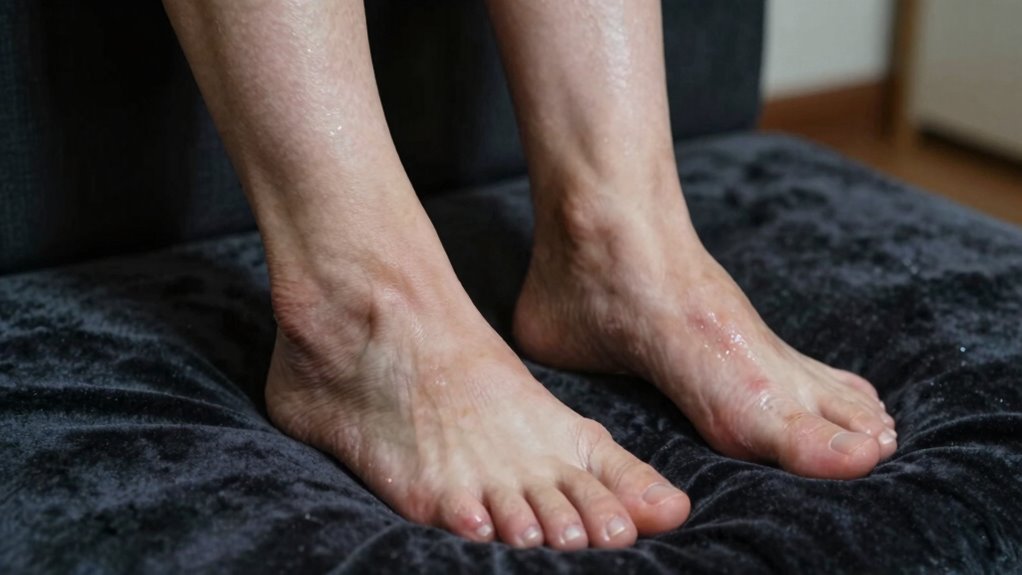
Have you ever noticed your legs swelling more at night? This often happens due to poor vein health, which causes blood to pool in your legs. When veins aren’t functioning properly, they can’t efficiently return blood to your heart, leading to increased pressure and swelling. Leg pain may accompany this swelling, signaling underlying issues like varicose veins or circulation problems. You should worry if the swelling is persistent, painful, or associated with skin changes, as these could indicate more serious conditions like deep vein thrombosis or heart problems. If you experience these symptoms regularly, it’s important to seek medical advice. Additionally, understanding the importance of circulation support can aid in managing and preventing these issues. Proper vein health can significantly reduce the risk of swelling and other complications. Maintaining good vascular function through lifestyle habits is also crucial for overall circulation.
How Sleeping Positions Can Help Reduce Leg Swelling

Adjusting your sleeping position can considerably reduce leg swelling, especially if you tend to experience it more at night. Your sleeping posture plays a crucial role in promoting proper blood flow and preventing fluid buildup. Elevating your legs slightly above heart level encourages gravity to assist circulation and reduces swelling. You can achieve this by placing a pillow under your calves or knees. Proper pillow positioning is key; avoid pillows that are too high or too flat, which might hinder circulation. Sleeping on your back with legs elevated is often most effective, but if you prefer sleeping on your side, use pillows to support your legs in a raised position. Small adjustments to your sleeping posture can make a significant difference in relieving swollen legs overnight. Additionally, ensuring your ventilation is adequate can help maintain overall circulation and comfort while sleeping. Improving air quality in your bedroom by using air purifiers can also support healthier blood flow and reduce swelling. Maintaining good bedroom airflow can further enhance circulation and help prevent fluid retention during sleep.
Simple Exercises to Improve Blood Flow Before Bed
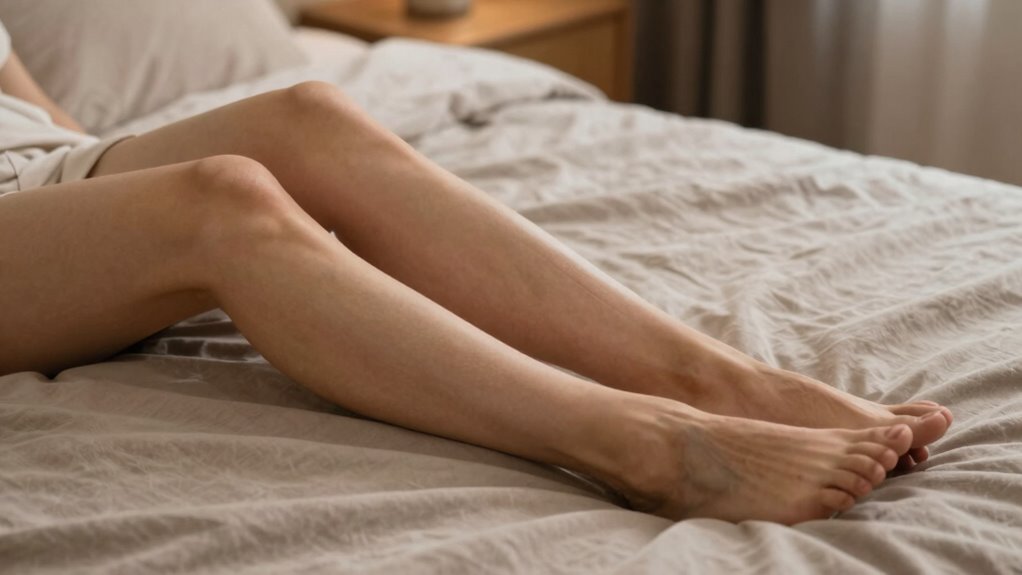
Incorporating simple exercises into your nightly routine can boost blood flow and help reduce leg swelling. Try these effective moves before bed:
- Leg stretches: Lie on your back and gently lift each leg, holding the stretch for 15 seconds. This helps loosen tight muscles and encourages circulation. Stretching can also improve muscle flexibility, which supports overall circulation health. Enhancing circulatory health through regular stretching can further prevent discomfort. Additionally, maintaining good muscle tone is crucial for sustained blood flow. Regularly practicing these stretches can also contribute to better limb mobility over time.
- Ankle rotations: While sitting or lying down, rotate your ankles clockwise and counterclockwise for 10 reps each way. This activates blood flow in your lower legs.
- Calf raises: Stand on your toes, lift your heels off the ground, then lower slowly. Repeat 10–15 times to strengthen muscles and promote circulation.
These simple exercises can make a significant difference in reducing nighttime leg swelling. Understanding blood flow is essential for improving circulation and overall wellness.
Elevating Your Legs: Easy Tips to Reduce Swelling Overnight

To reduce swelling overnight, it’s important to elevate your legs properly. Keep your legs raised at a level that promotes blood flow without causing discomfort. Consistently maintaining this position helps prevent fluid buildup and eases swelling by supporting proper circulation. Incorporating self-awareness into your routine can help you recognize when your legs need elevation before swelling worsens. Being mindful of home workout routines that encourage circulation can further enhance the effectiveness of your habits. Additionally, understanding the concept of Free Floating, which emphasizes natural and sustainable practices, can inspire you to adopt more holistic approaches to managing swelling. Practicing routine consistency can also help your body adapt and improve circulation over time. Developing digital safety habits ensures your health data remains protected while monitoring your progress.
Use Proper Elevation Techniques
Elevating your legs properly can substantially reduce nighttime swelling and improve circulation. To do this effectively: 1. Keep your legs elevated above heart level to encourage blood flow and reduce pressure. 2. Use a supportive pillow or leg wedge to maintain consistent leg elevation without slipping. 3. Combine leg elevation with ankle compression stockings for added support, especially if swelling persists. 4. Incorporating connected fitness devices can help monitor your circulation improvements over time. Ensure your legs are raised comfortably and steadily, avoiding uneven angles. Proper leg elevation helps prevent fluid buildup and promotes better circulation overnight. Remember, the key is maintaining a consistent position that keeps your ankles and legs slightly higher than your heart. This simple habit can make a significant difference in reducing swollen legs at night and supporting overall vascular health.
Maintain Consistent Leg Height
Maintaining a consistent leg height throughout the night is essential for reducing swelling and improving circulation. When you keep your legs elevated at a steady height, it helps blood flow back toward your heart, preventing fluid buildup. Use pillows or a wedge to support your legs at a level above your heart, ensuring you stay in the same position. Avoid shifting or lowering your legs, as inconsistent elevation can hinder circulation tips and worsen swelling. Staying consistent with your leg elevation allows your body to adapt and promotes better circulation overnight. This simple habit can make a significant difference in reducing swollen legs and discomfort, especially if you experience chronic issues. Stick to a steady elevation to maximize the benefits of proper circulation tips. Additionally, choosing the right backup power system can ensure your health devices remain operational during outages. Incorporating proper positioning techniques can further enhance blood flow and reduce swelling, especially when combined with other circulation improvement strategies. Practicing consistent elevation not only aids in swelling reduction but also supports overall vascular health, making it a vital part of managing circulatory concerns.
Lifestyle Habits That Prevent Swelling During the Day and Night
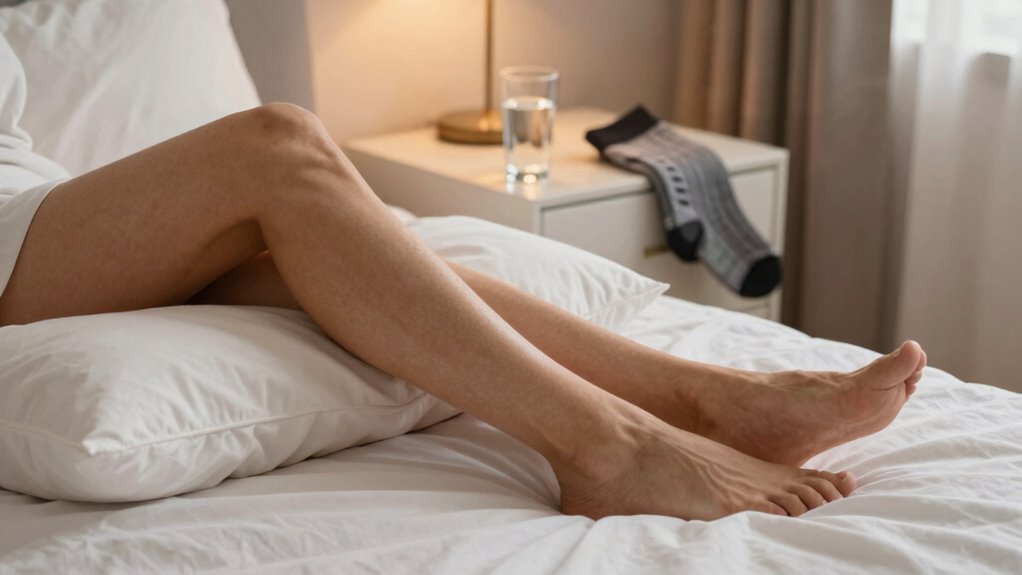
You can help prevent swollen legs by making simple lifestyle changes. Regularly elevating your legs, staying well-hydrated, and wearing compression garments all support better circulation. Incorporating these habits into your routine can reduce swelling during the day and at night. Additionally, maintaining awareness of empowering independent sellers can help you access products and support that promote healthy circulation. For example, learning how sending money with MoneyGram can be done more efficiently might free up resources for health-related needs. Exploring Kwatsjpedia can also provide insights into current trends and innovations that support overall well-being.
Elevate Legs Regularly
Since swollen legs often result from fluid buildup, elevating your legs regularly can help reduce swelling and improve circulation. By doing so, you encourage fluid movement back toward your heart, easing pressure. To maximize benefits, consider these tips:
- Use leg elevation during breaks or after long periods of standing to encourage fluid drainage.
- Combine leg elevation with compression therapy, such as compression stockings, for added support.
- Keep your legs elevated for at least 15-20 minutes at a time, ideally above heart level, to enhance circulation.
Regular elevation helps prevent fluid accumulation overnight and during the day. It’s a simple, effective habit that promotes healthier circulation and reduces swollen legs.
Maintain Hydration Levels
Proper hydration plays a key role in preventing swollen legs by helping your body efficiently manage fluid balance. When you maintain adequate fluid intake, it supports your circulatory system and reduces fluid buildup in your legs overnight. The importance of hydration isn’t just about drinking water; it’s about timing and consistency.
Here’s a quick overview of hydration tips:
| Hydration Tip | Why It Matters | Best Practices |
|---|---|---|
| Drink water regularly | Keeps fluids moving smoothly | Sip throughout the day |
| Limit salty foods | Prevents water retention | Choose fresh, unprocessed foods |
| Avoid excessive caffeine | Dehydrates your body | Opt for herbal teas |
| Consume hydrating foods | Supports fluid levels | Fruits and vegetables |
| Listen to your body | Prevents overhydration | Drink when thirsty |
Wear Compression Garments
Wearing compression garments can substantially reduce swelling by supporting healthy blood flow and preventing fluid from pooling in your legs. This form of compression therapy enhances circulation, making it easier for blood to return to your heart. To maximize benefits, consider these tips:
- Choose the right compression level, typically graduated compression for most users.
- Wear compression stockings or sleeves during the day, especially if you stand or sit for long periods.
- Ensure proper fit; ill-fitting garments can cause discomfort and reduce effectiveness.
Foods and Drinks That Naturally Help Reduce Leg Swelling

Certain foods and drinks can naturally help reduce leg swelling by decreasing fluid retention and inflammation. Hydrating drinks like water, herbal teas, and coconut water keep you well-hydrated, supporting better circulation and preventing fluid buildup. Incorporate foods rich in potassium, such as bananas, sweet potatoes, and spinach, which help balance sodium levels and reduce swelling. Eating anti-inflammatory foods like berries, cherries, and fatty fish can also decrease inflammation in your legs. Elevating your legs while resting encourages fluid drainage, complementing your diet choices. Avoid excessive salt, which can worsen swelling. Combining these dietary habits with leg elevation helps improve circulation and reduces nighttime swelling, making it easier to find relief and sleep peacefully.
Signs You Should See a Doctor About Persistent Leg Swelling

Persistent leg swelling that doesn’t improve with home remedies or worsens over time should prompt you to see a doctor. You should seek medical advice if you notice:
- Sudden, severe swelling or pain, which could indicate a blood clot.
- Swelling accompanied by redness, warmth, or skin changes, suggesting infection or inflammation.
- Swelling that persists despite trying dietary supplements or alternative therapies, as it may signal an underlying health condition.
Ignoring these signs can lead to complications. A doctor can evaluate your symptoms, possibly recommending diagnostic tests or treatments. They may suggest medications, lifestyle changes, or alternative therapies to manage your swelling effectively. Don’t delay if your symptoms worsen or persist.
Daily Habits to Support Healthy Circulation and Prevent Swelling

Maintaining healthy circulation is key to preventing leg swelling and ensuring your legs stay comfortable throughout the day. One effective daily habit is staying hydrated; proper hydration supports blood flow and reduces fluid retention, which can lead to swelling. Pay attention to your sleep positions as well—elevating your legs slightly while sleeping helps improve venous return and prevents fluid buildup. Avoid crossing your legs during the day, as this can restrict circulation. Incorporate brief movement breaks if you sit for long periods, such as stretching or walking around. Wearing compression stockings can also promote blood flow. These small but consistent habits help keep your circulation healthy, reducing the likelihood of swelling and discomfort at night.
When to Seek Medical Advice for Swollen Legs at Night

While occasional swelling at night might not be a cause for concern, you should see a doctor if your legs become consistently swollen, painful, or warm to the touch. Persistent symptoms could indicate underlying conditions like deep vein thrombosis or heart issues. Watch for these warning signs:
- Swelling that doesn’t improve with leg elevation or hydration tips.
- Severe pain or warmth indicating possible infection.
- Sudden swelling accompanied by chest pain, shortness of breath, or dizziness.
If you notice any of these, seek medical advice promptly. A healthcare professional can evaluate your symptoms and may recommend additional tests or treatments. Prioritize your health by maintaining good hydration, practicing leg elevation, and addressing persistent swelling early.
Frequently Asked Questions
Can Dehydration Cause Nighttime Leg Swelling?
Yes, dehydration can cause nighttime leg swelling because it disrupts your fluid balance. When you’re not properly hydrated, your body may retain fluids to compensate, leading to swelling, especially in your legs. To avoid this, focus on good hydration habits throughout the day, drinking enough water, but not too much close to bedtime. Maintaining proper fluid balance helps reduce swelling and improves circulation during the night.
Are Compression Socks Effective for Preventing Swollen Legs at Night?
Think of compression socks as a gentle embrace for your legs, offering unwavering support. Yes, they’re effective for preventing swollen legs at night by enhancing circulation through compression therapy. They act like a sturdy bridge, guiding blood back to your heart and reducing fluid buildup. Wearing them provides reliable leg support, easing discomfort and helping you rest peacefully, knowing your legs are nurtured and protected throughout the night.
How Does Sleep Apnea Impact Leg Swelling During Sleep?
Sleep apnea symptoms, like interrupted breathing, cause circulation disruption, which can lead to leg swelling during sleep. When your airflow is blocked, your body struggles to circulate blood efficiently, causing fluid to build up in your legs. This swelling tends to worsen at night when you’re lying down. Managing sleep apnea with proper treatment can improve circulation, reduce swelling, and help you sleep more comfortably through the night.
Can Smoking Worsen Leg Swelling and Circulation Issues?
You might think smoking only affects your lungs, but it actually worsens circulation concerns and can intensify leg swelling. Smoking’s effects narrow your blood vessels, making it harder for blood to flow properly. This increased strain can lead to fluid buildup and worse swelling, especially at night. Quitting smoking improves your circulation, helps reduce swelling, and promotes healthier legs. Don’t wait—taking this step benefits your overall circulation and well-being.
Do Hormonal Changes Influence Nighttime Leg Swelling?
Yes, hormonal fluctuations can influence nighttime leg swelling. During your menstrual cycle, hormone levels rise and fall, which may lead to fluid retention and increased swelling. These hormonal changes can cause your legs to feel more swollen at night, especially during PMS or menstruation. Staying active, elevating your legs, and maintaining a healthy diet can help mitigate these effects and improve circulation during this time.
Conclusion
By making these simple changes, you’re taking control of your circulation and easing nighttime swelling. But remember, persistent or worsening swelling isn’t something to ignore. Imagine waking up refreshed, free from discomfort—yet that’s only possible if you act now. Keep an eye on your symptoms, adopt healthy habits, and don’t hesitate to seek help if things don’t improve. Your legs deserve the best care—are you ready to make the change?