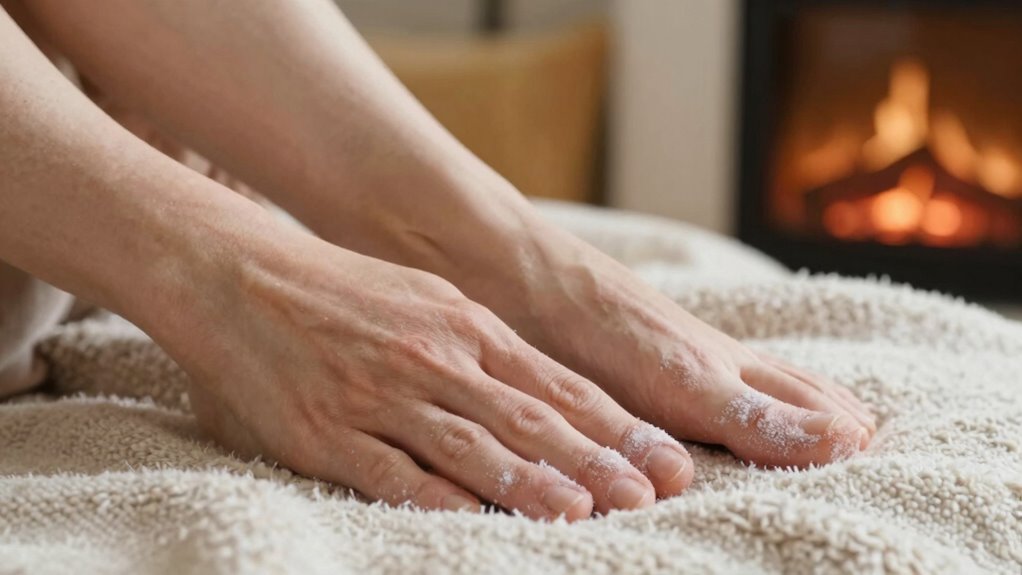

Cold hands and feet can be caused by normal responses to cold environments, stress, or tight clothing that restrict circulation. However, persistent coldness might signal health issues like poor circulation, anemia, or nerve problems. To warm up quickly, wear insulated gloves and socks, perform hand exercises, or sip warm fluids. Long-term, focus on lifestyle changes like staying active and wearing layers. Keep exploring to discover more simple ways to improve your circulation and stay warmer.
Key Takeaways
- Cold hands and feet often result from blood vessel constriction to conserve heat, especially in cold environments or during stress.
- Persistent coldness may indicate underlying issues like poor circulation, anemia, nerve damage, or health conditions needing medical evaluation.
- Simple warm-up moves, such as hand exercises and wearing insulating clothing, can quickly improve circulation and warmth.
- Long-term strategies include maintaining a warm environment, wearing layered clothing, and engaging in physical activity to boost circulation.
- Consuming herbal teas like ginger or cinnamon can naturally enhance blood flow and help keep extremities warm.
What Causes Cold Hands and Feet? (Common Reasons and Underlying Factors)
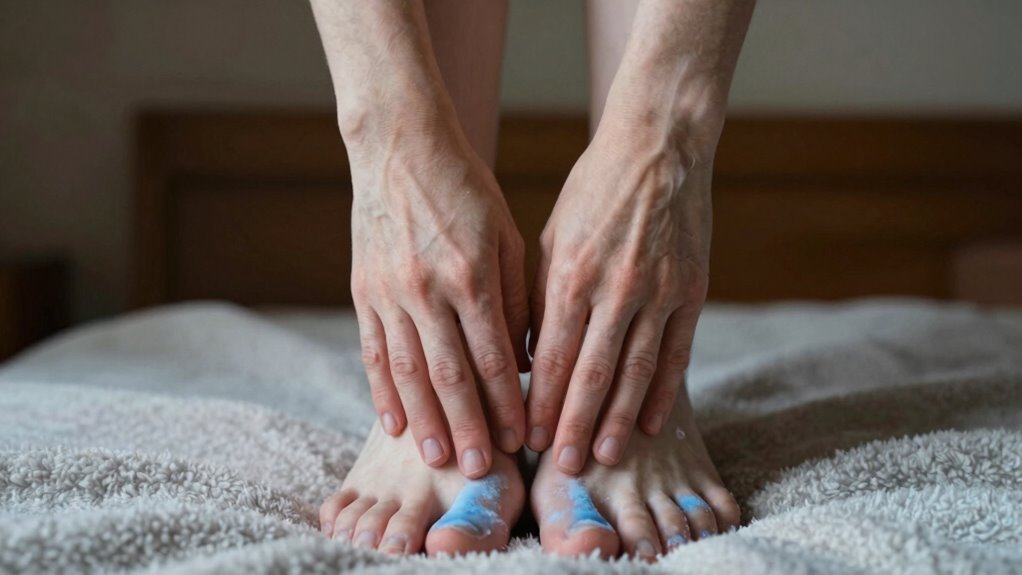
Cold hands and feet are often caused by your body narrowing blood vessels to conserve heat, especially in response to cold environments or stress. When blood flow slows, less warm blood reaches your extremities, making them feel chilly. This narrowing also affects nerve sensitivity, leading to tingling or numbness. Reduced blood circulation can be a normal reaction, but it may also point to underlying issues like poor circulation, anemia, or nerve problems. Stress can trigger similar responses, causing your body to prioritize essential organs over your extremities. Additionally, certain medications or health conditions can influence blood vessel constriction and nerve response, further contributing to cold hands and feet. Proper blood flow regulation is essential for maintaining warmth and sensation in your extremities. Factors such as vascular health play a crucial role in ensuring adequate circulation and preventing cold extremities. Maintaining good circulatory system function can help improve blood flow and reduce symptoms.
How Do You Know When Cold Hands and Feet Are a Sign of a Health Problem?
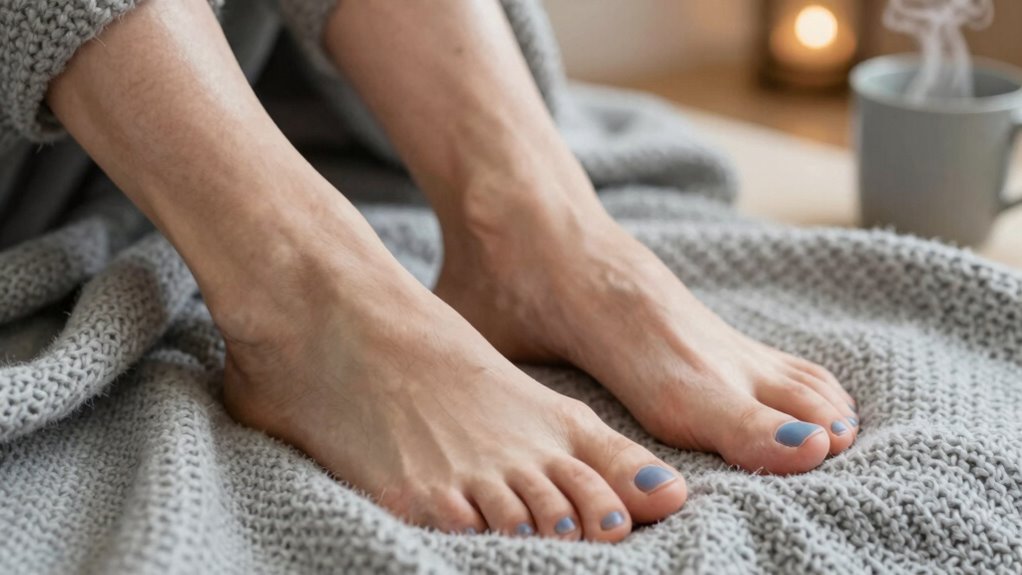
While experiencing occasional cold hands and feet is common, persistent or severe symptoms may signal a health problem needing attention. If your cold extremities are accompanied by symptoms like numbness, discoloration, or pain, it could be due to poor blood flow or nerve damage. These signs suggest that your body isn’t delivering adequate oxygen and nutrients or that nerve signals aren’t functioning properly. To better understand, consider this table:
| Symptom | Possible Cause | Action Needed |
|---|---|---|
| Persistent coldness | Blood flow issues | Seek medical advice |
| Numbness or tingling | Nerve damage | Consult a healthcare professional |
| Discoloration (pale or blue) | Circulatory problems | Get evaluated promptly |
| Pain or cramping | Circulation or nerve issues | See a doctor |
| Swelling or ulcers | Severe circulation issues | Urgent medical attention |
Recognizing these signs helps determine if your cold hands and feet are a red flag for underlying health concerns. Additionally, understanding the significance of circulation can guide you in taking timely action. Maintaining healthy circulation is crucial for overall well-being and avoiding serious health complications.
Quick and Easy Ways to Warm Up Your Hands and Feet Now
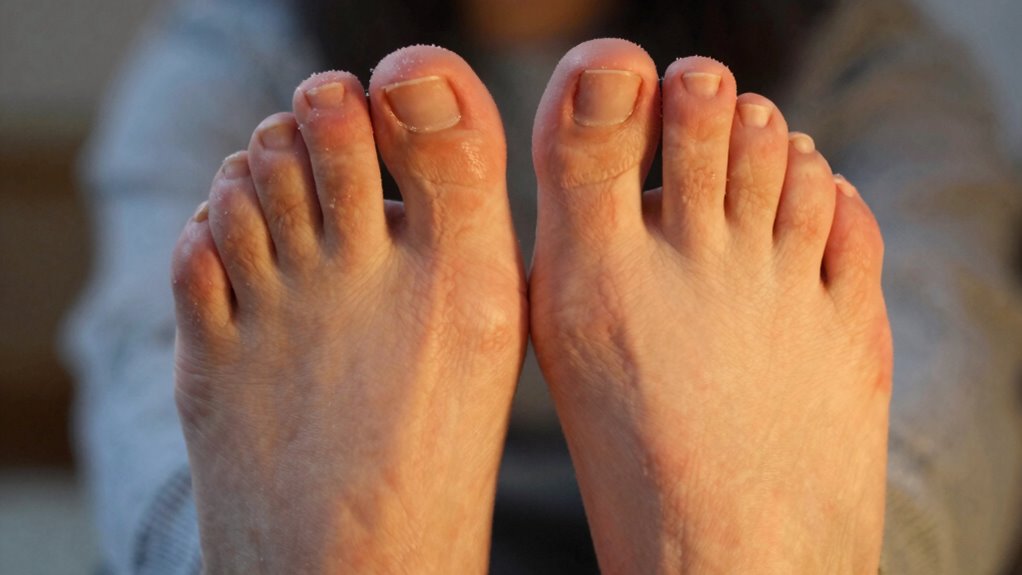
When your hands and feet feel painfully cold, quick action can help restore warmth and improve comfort. First, put on thermal clothing, like insulated gloves and warm socks, to trap heat and prevent further cooling. You can also do simple hand exercises, such as clenching and unclenching your fists or squeezing a stress ball, to stimulate blood flow. Warming your core with a blanket or sipping warm fluids can also help transfer heat to your extremities. Avoid sudden movements that could cause blood vessel constriction. If you’re indoors, use a space heater or warm water bottles on your hands and feet. These simple steps are effective for quick relief and help keep your extremities warm until your body naturally adjusts. Remember, blood circulation plays a crucial role in maintaining extremity warmth, so promoting healthy blood flow is key. Additionally, engaging in gentle activity or biohacking techniques like specific breathing exercises might further support circulation and warmth. Incorporating circulatory health practices can enhance your body’s ability to sustain warmth over time. Maintaining overall cardiovascular health through regular exercise can also help improve circulation and prevent cold extremities.
Simple Lifestyle Changes to Keep Your Hands and Feet Warm Long-Term
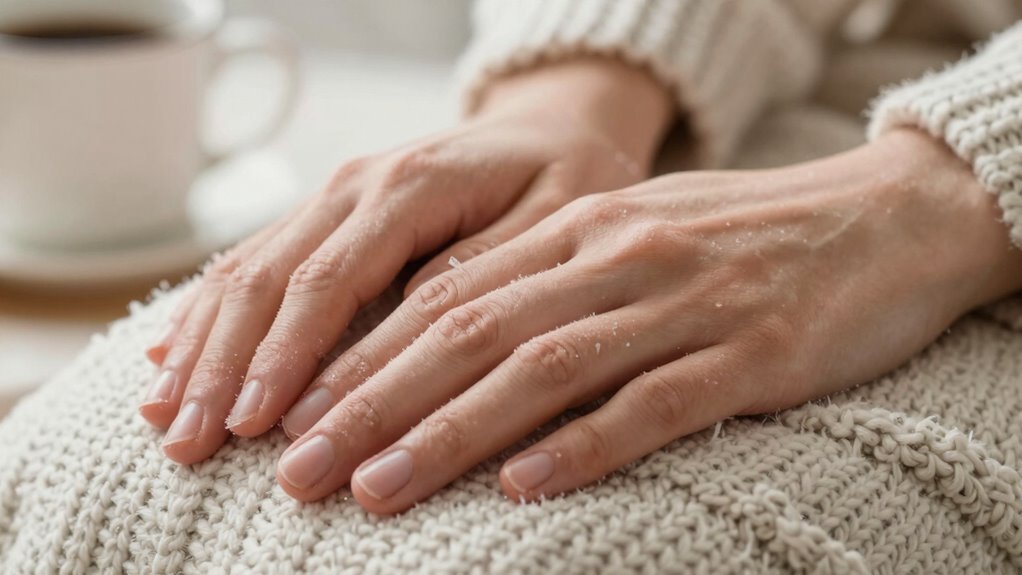
Implementing simple lifestyle changes can substantially help keep your hands and feet warm over the long term. Your clothing choices play an essential role; opt for layered, insulating fabrics like wool or thermal wear to retain body heat. Avoid tight clothing that restricts circulation, which can worsen cold extremities. Additionally, maintaining consistent home heating is fundamental—set your thermostat to a comfortable level and use space heaters in colder rooms to prevent temperature drops. Regularly wearing warm socks and gloves indoors can also make a difference. Incorporating circulation-boosting exercises into your routine can further improve blood flow and keep your extremities warmer. Ensuring your home heating systems are properly maintained and functioning efficiently can contribute to more consistent warmth throughout your living space. Proper home insulation is also key to preventing heat loss and maintaining a cozy environment. Being mindful of clothing choices and how they affect circulation can significantly impact your comfort during cold weather. Maintaining proper shop layout and electrical loads ensures your heating devices operate safely and effectively, supporting your warmth goals. By being mindful of how you dress and ensuring your living environment stays warm, you support better circulation and reduce the likelihood of persistent cold hands and feet over time.
Natural Remedies for Improving Circulation and Staying Warm
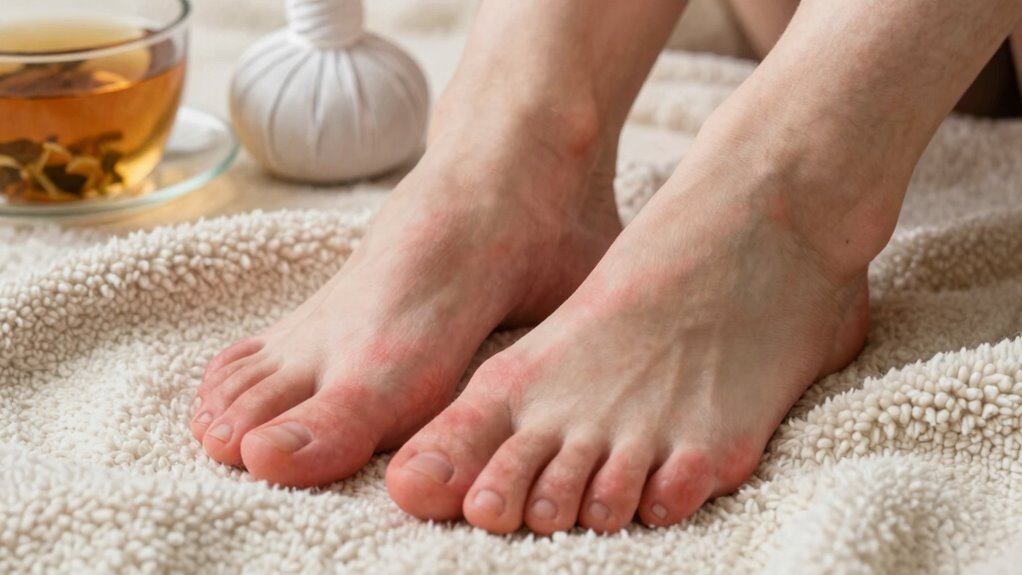
Natural remedies can effectively boost circulation and help keep your hands and feet warm. Herbal teas like ginger or cinnamon stimulate blood flow and provide warmth from the inside out. Breathing exercises, such as diaphragmatic breathing, improve oxygen circulation and relax your body, reducing cold extremities. Incorporate these simple practices into your daily routine for better warmth and circulation. Here’s a quick overview:
| Remedy | How It Works | Best For |
|---|---|---|
| Herbal teas | Warmth + blood flow boost | Cold hands and feet |
| Breathing exercises | Oxygen circulation improvement | Relaxation and warmth |
| Regular movement | Stimulates circulation | Long-term warmth |
| Warm clothing | Insulation and warmth | Immediate cold relief |
| Proper hydration | Maintains blood volume | Overall circulation health |
Additionally, understanding the importance of circulation health can help you target the root causes of cold extremities more effectively. Engaging in physical activity regularly can also significantly improve your overall circulation and warmth, which is supported by various medical studies. Improving circulation is crucial for overall health, and lifestyle changes can make a substantial difference in preventing cold extremities. Moreover, adopting practices that promote blood flow can enhance your body’s ability to generate heat and maintain warmth naturally.
Frequently Asked Questions
Can Cold Hands and Feet Be Linked to Anxiety or Stress?
Yes, cold hands and feet can be linked to anxiety or stress because stress-related symptoms trigger your body’s fight-or-flight response, narrowing blood flow to extremities. Hormonal influences, like adrenaline and cortisol, also play a role in constricting blood vessels, making your hands and feet feel colder. When you’re anxious or stressed, these physiological changes happen, so managing your stress can help improve circulation and reduce cold extremities.
How Does Caffeine Consumption Affect Circulation and Extremity Temperature?
Imagine your blood vessels as busy highways carrying warmth through your body. Caffeine’s impact causes blood vessel constriction, narrowing these pathways. This constriction slows circulation, making your extremities feel colder and less lively. So, when you sip coffee or energy drinks, you’re fundamentally tightening the traffic flow, which can lead to cold hands and feet. To keep warmth flowing, consider cutting back on caffeine and staying active.
Are There Specific Vitamins or Minerals That Improve Circulation?
Taking nutritional supplements containing circulation nutrients like magnesium, vitamin B12, and iron can help improve your circulation. These vitamins and minerals support blood flow and oxygen delivery to extremities. You should focus on a balanced diet and consider talking to your healthcare provider before adding supplements. Incorporating these circulation nutrients can make your hands and feet feel warmer and less numb over time, boosting overall comfort and health.
Does Smoking Worsen Cold Extremities Over Time?
You might notice your extremities getting colder over time if you smoke, and that’s no coincidence. Nicotine’s impact causes vasoconstriction effects, narrowing your blood vessels and reducing blood flow. This makes it harder for warmth to reach your hands and feet. The more you smoke, the worse it gets, so quitting can help improve circulation and keep your extremities warmer naturally.
Can Cold Hands and Feet Indicate Early Signs of Diabetes?
Cold hands and feet can be early signs of diabetes, as it affects your circulatory health and impairs blood flow. If you notice persistent cold extremities, it’s important to increase your symptom awareness and consult a healthcare professional. This could signal underlying issues like nerve damage or circulatory problems linked to diabetes. Addressing these early signs promptly helps manage your overall health and prevents complications.
Conclusion
Remember, cold hands and feet are like warning signs flashing on your body’s dashboard. While they often stem from simple causes, they can also hint at deeper health issues. By staying active, dressing warmly, and trying natural remedies, you can keep your circulation flowing smoothly. Think of it as tending to a garden—regular care helps your body stay healthy and vibrant, so you can enjoy life with warmth and comfort in every step.