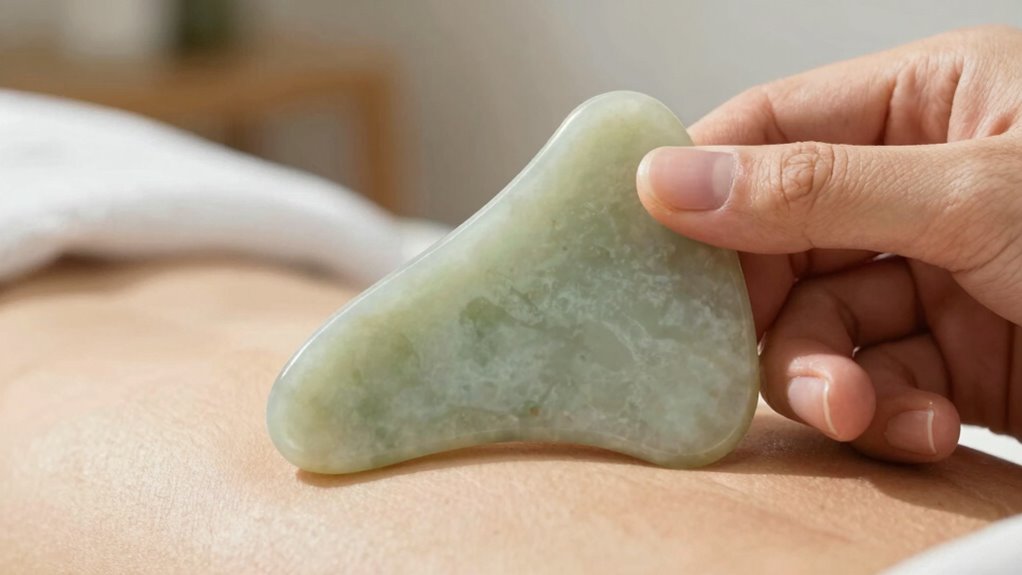
To master Gua Sha, you need to use gentle, steady pressure—start light and build gradually, relying on your body weight rather than brute strength. Keep your tool at a 15-30° angle, following natural face contours for effective results without irritation. The biggest mistake is applying too much pressure or improper angles, which can cause discomfort or bruising. If you keep these tips in mind, you’ll improve your technique and get the most benefits from each session.

Turn your quiet moments into listening time
- Thousands of audiobooks, podcasts and originals
- Listen on your phone, tablet or Echo — also offline
- Cancel anytime
Key Takeaways
- Use gentle, steady pressure and start light, gradually increasing to avoid skin irritation or bruising.
- Follow facial contours at 15-30° angles for effective muscle targeting and contouring.
- Keep movements smooth, controlled, and consistent, adjusting pressure based on skin sensitivity.
- The biggest mistake is applying excessive force, which can cause discomfort, bruising, and skin damage.
- Proper technique involves understanding facial anatomy, choosing suitable tools, and monitoring skin response.
As an affiliate, we earn on qualifying purchases.
What Is Gua Sha and How Does It Benefit Your Skin?
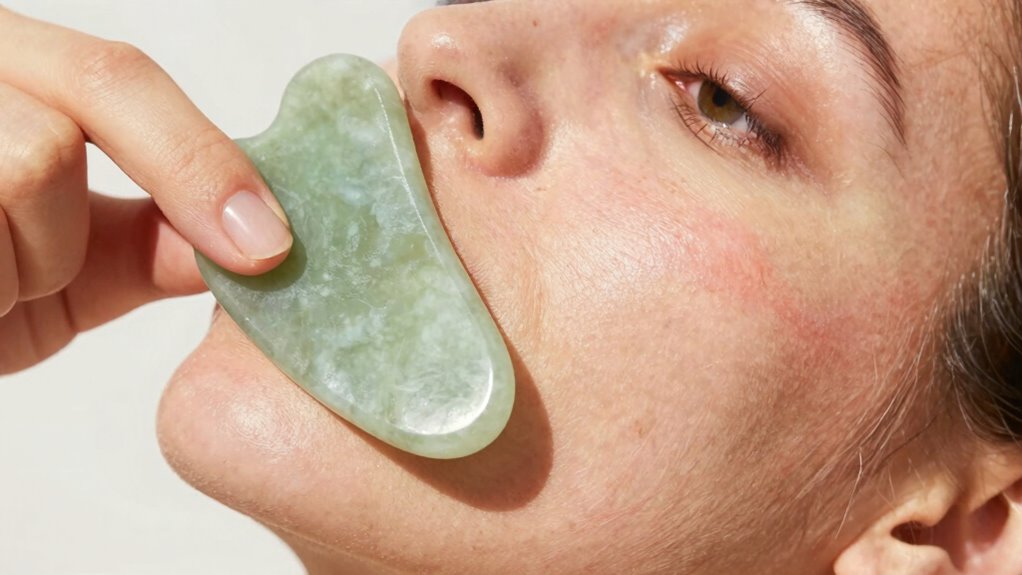
Gua Sha is a traditional skincare technique that involves scraping a smooth-edged tool across your skin to stimulate circulation and promote healing. When done correctly, it encourages lymphatic drainage, helping to reduce puffiness and improve facial contour. This process also boosts blood flow, bringing oxygen and nutrients to your skin cells. As a result, your skin becomes more radiant and firm. Gua Sha enhances skin elasticity by supporting collagen production, which helps maintain a youthful appearance. Regular practice can lead to smoother, more resilient skin while reducing the appearance of fine lines. By stimulating facial lymphatics, you help your body detoxify more efficiently, leaving your skin healthier and more vibrant. It’s a simple, effective way to support your skin’s natural healing and resilience. Incorporating proper pressure and angles during Gua Sha is crucial to avoid common mistakes, and understanding the fundamentals of ergonomics can help you develop a comfortable and effective technique, ensuring you avoid unnecessary strain during your practice. Additionally, paying attention to pressure application can significantly impact your results and prevent discomfort. Being aware of aesthetic benefits can motivate consistent practice and better technique. Using high-quality tools and proper technique can further enhance your skincare routine.
As an affiliate, we earn on qualifying purchases.
How to Use the Right Pressure When Doing Gua Sha
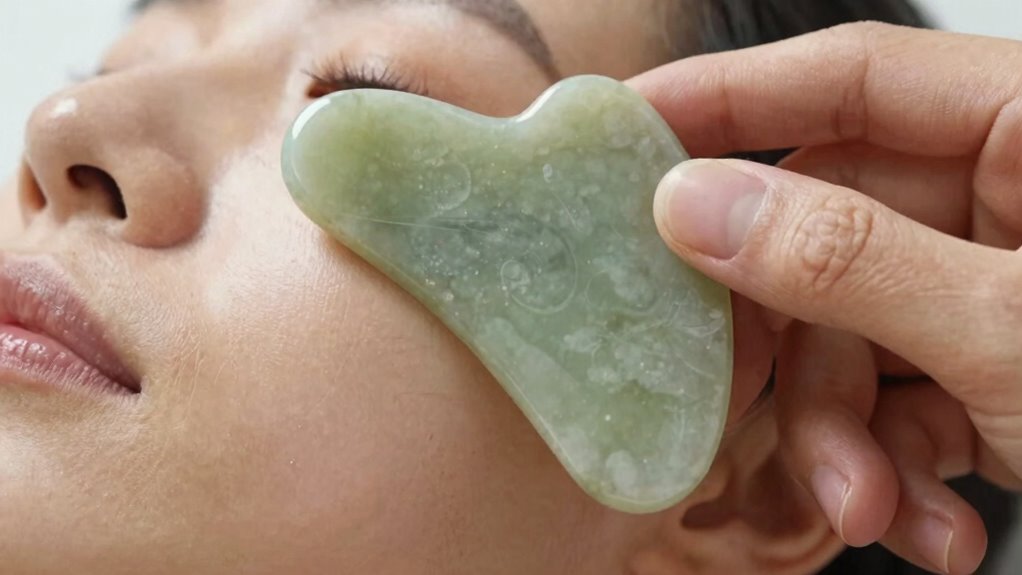
Using the right pressure during Gua Sha is essential to maximize its benefits and prevent skin irritation. Proper pressure control allows you to stimulate blood flow without causing damage. Focus on gentle, consistent pressure, gradually increasing as you refine your technique. Remember, too much force can lead to redness or bruising, while too little won’t be effective. To improve, consider these tips:
Use gentle, steady pressure during Gua Sha to boost benefits and avoid skin irritation.
- Start with light pressure and build gradually
- Use your body weight rather than just hand strength
- Keep a steady, even pressure throughout each stroke
- Pay attention to how your skin reacts and adjust accordingly
- Incorporating pressure modulation and airflow concepts can help you better understand how to modulate pressure for safer, more effective results. Being mindful of skin sensitivity is also crucial to avoid overstimulation or irritation. Additionally, understanding skin reaction cues can guide you in adjusting your technique in real-time to prevent adverse effects. Developing an awareness of connected fitness technology can provide feedback to fine-tune your pressure control and ensure optimal results.
As an affiliate, we earn on qualifying purchases.
Finding the Best Angles for Different Areas of Your Face
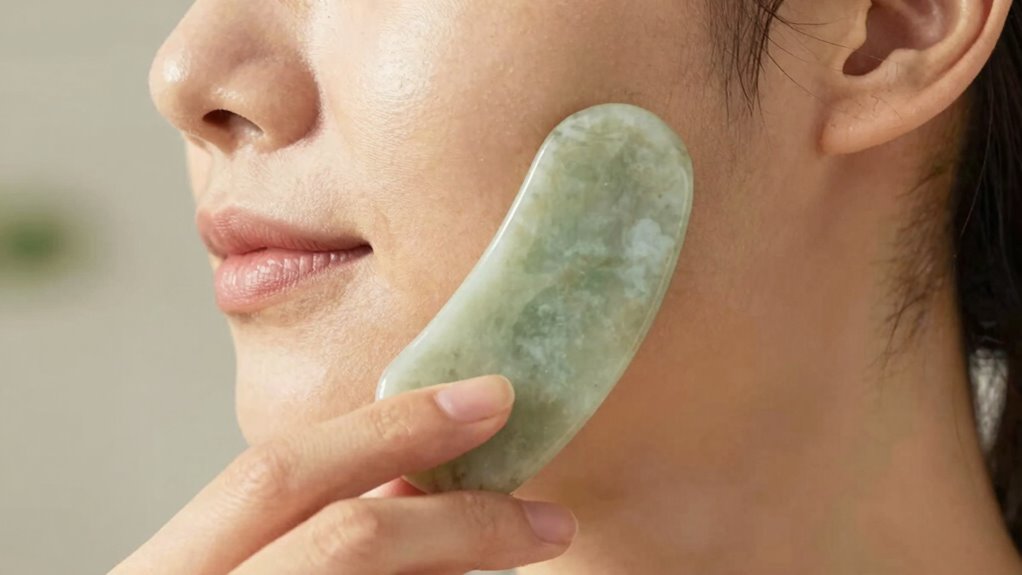
To effectively target different areas of your face with Gua Sha, it’s important to find the most favorable angles that suit each zone. For facial muscle targeting, angle the tool to follow the natural lines of your face, usually at a 15-30 degree tilt. This helps lift and relax muscles without causing strain. When it comes to contour enhancement, tilt the Gua Sha to emphasize the cheekbones or jawline by angling the tool upward or along the bone structure. Adjust your grip and angle based on the area, keeping movements smooth and controlled. Proper angles ensure you engage the right muscles, promote lymphatic drainage, and enhance facial contours. Experiment with slight variations to discover what feels most effective and comfortable for each zone. Recognizing signs of twin flame connection can also foster a deeper understanding of your emotional and energetic health as you practice self-care routines. Being mindful of your pressure and how your skin responds helps prevent overstimulation and ensures a safe, relaxing experience. Additionally, understanding the importance of cloud computing regulations can help ensure your data privacy when researching or purchasing Gua Sha tools online. Incorporating proper angle techniques can optimize results and reduce the risk of irritation. Moreover, paying attention to skin sensitivity can guide you in choosing the right Gua Sha tool and technique to avoid irritation.
As an affiliate, we earn on qualifying purchases.
Common Mistakes to Avoid When Practicing Gua Sha
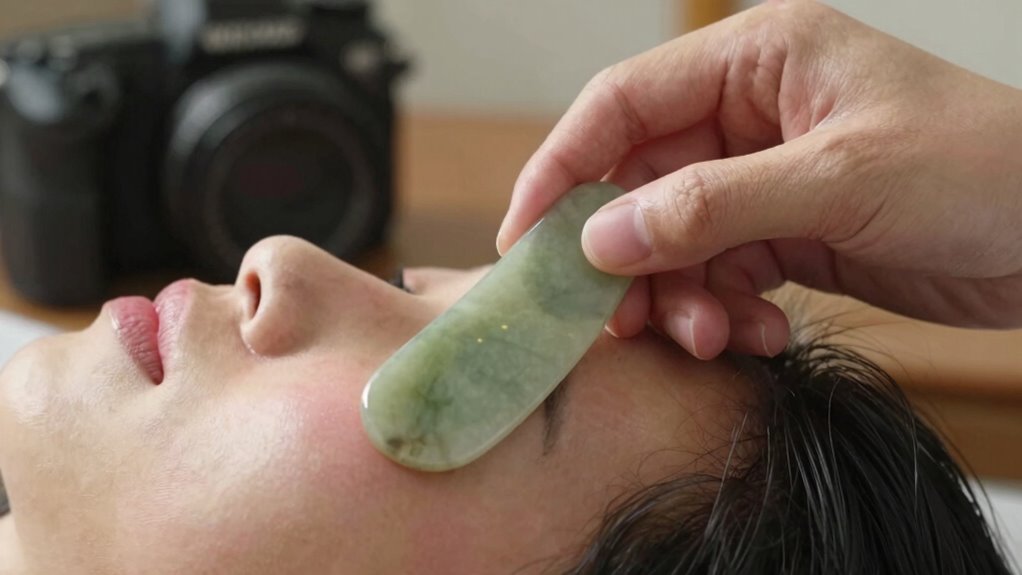
One common mistake is applying too much pressure, which can cause discomfort or even bruising. To prevent this, focus on maintaining technique consistency and selecting the right tool for your skin type. Poor technique can lead to uneven results or skin irritation. Be mindful of these mistakes:
- Using excessive force instead of gentle, controlled strokes
- Neglecting to follow proper angles during each pass
- Switching tools without considering their suitability for your skin
- Skipping routine checks to ensure consistent pressure and technique
How to Adjust Your Technique for Safe and Effective Gua Sha
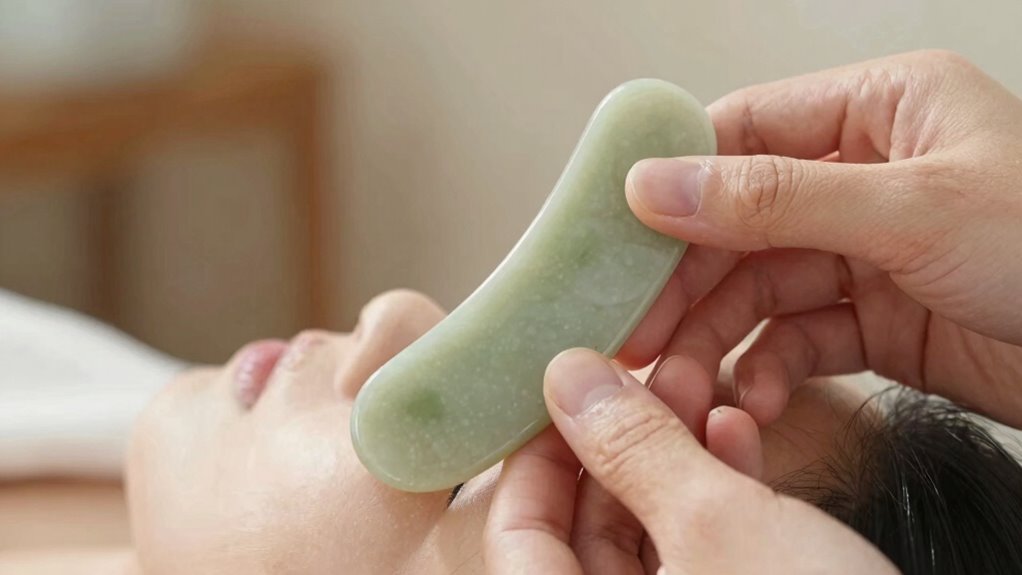
Adjusting your technique is key to ensuring safe and effective Gua Sha sessions. To do this, start by understanding facial anatomy; different areas have unique structures and sensitivities. For example, avoid applying too much pressure over bony areas or sensitive zones like around the eyes. Tool selection also matters—choose the right Gua Sha tool with smooth edges suited for your face. Use lighter pressure and gentle angles, especially near delicate regions. Pay attention to how your skin responds, and adjust pressure accordingly. If you notice redness or discomfort, lighten your touch. Consistently refine your technique by practicing mindful movements that respect facial anatomy, ensuring you reap the benefits without risking irritation or injury.
Frequently Asked Questions
Can Gua Sha Be Used on Sensitive or Broken Skin?
You shouldn’t use gua sha on sensitive or broken skin, as it can worsen skin sensitivity and hinder healing cuts. Applying it on damaged areas may cause irritation, inflammation, or infection. Instead, wait until your skin fully heals before using gua sha, and always be gentle around sensitive spots. Protect your skin’s health by avoiding gua sha on broken or inflamed areas to guarantee safe and effective results.
How Often Should I Perform Gua Sha for Best Results?
Think of your skin as a delicate garden—you don’t want to overwater it. For ideal routines, you should perform Gua Sha 3 to 4 times a week. Stick to these frequency guidelines to avoid irritation and see steady results. Consistency is key; overdoing it can cause more harm than good. Listen to your skin’s response and adjust accordingly for a healthy, glowing complexion.
Are There Specific Oils or Serums Recommended for Gua Sha?
For best results, use facial oils or serums that are compatible with your skin type when doing gua sha. Opt for lightweight, non-comedogenic facial oils like jojoba or squalane, which allow the tools to glide smoothly without pulling or tugging. Serums with hydrating ingredients work well too. Avoid thick creams or oily products that can clog pores or hinder the movement of the gua sha tool.
What Signs Indicate I Am Applying Too Much Pressure?
If you notice pressure marks or skin redness after your gua sha session, you’re likely applying too much pressure. In fact, excessive pressure can cause microtears in your skin, leading to visible signs. You should feel gentle, glide-like movements rather than discomfort or heaviness. Pay attention to your skin’s response, and if redness or marks persist, lighten your touch to avoid damage and promote healthy circulation.
Is Gua Sha Suitable for All Skin Types and Ages?
Gua Sha can be suitable for most skin types and ages, but you should consider skin compatibility and age considerations first. If you have sensitive or inflammatory skin, start gently and test a small area. For older skin, use lighter pressure to avoid damage. Always listen to your skin’s response and consult a professional if you’re unsure, ensuring safe and effective use tailored to your individual needs.
Conclusion
Mastering gua sha isn’t just about applying pressure or finding the right angles — it’s about patience and practice. While the technique can boost your skin’s glow, rushing can cause harm. Think of it as a gentle dance, not a race. When you balance confidence with caution, you’ll uncover the full benefits safely. So, embrace the process, and let your skin flourish without the risk of the biggest mistake: rushing perfection.
Halloween Picks
halloween
As an affiliate, we earn on qualifying purchases.