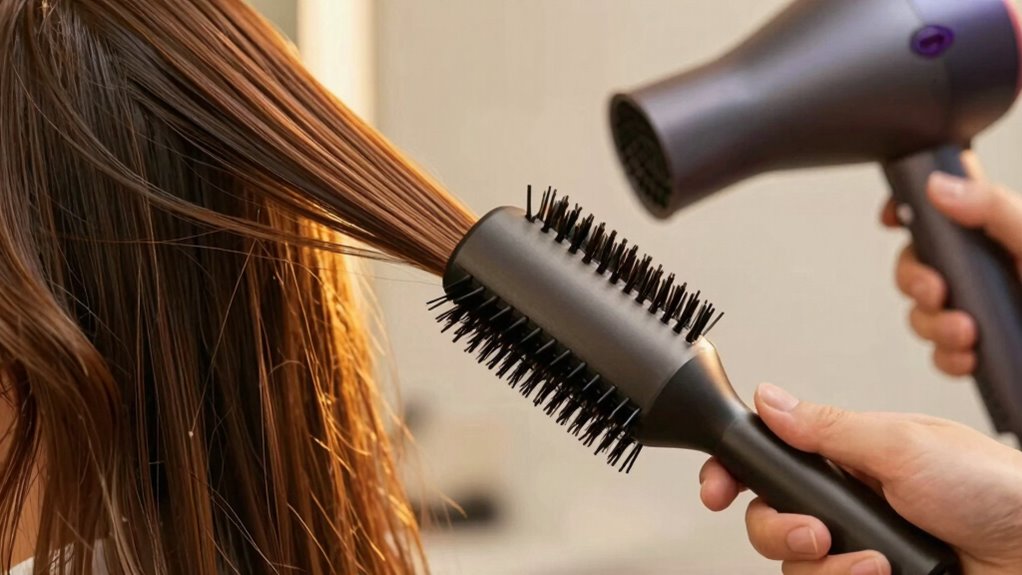

To master a round brush blowout, focus on controlling tension, heat, and timing. Keep a gentle but firm grip on the brush to avoid tugging, and choose heat settings suited to your hair type—lower for fine or damaged hair, higher for thicker strands. Move quickly to prevent over-drying, using a cool shot to lock in shine. If you stay attentive to these fundamentals, you’ll achieve professional, healthy-looking results. Learn more tips to perfect your technique.
Listen free for 30 days with Audible
Thousands of audiobooks and originals — cancel anytime.
As an affiliate, we earn on qualifying purchases.
Key Takeaways
- Use gentle, consistent tension with a round brush to prevent hair damage and ensure smooth, voluminous results.
- Select heat settings appropriate for hair type; avoid high temperatures on fine or damaged hair to prevent breakage.
- Properly prepare hair by detangling, applying heat protectant, and sectioning for efficient and safe blow-drying.
- Wrap hair evenly around the brush and rotate for uniform curls and bounce, maintaining control over tension and heat.
- Incorporate a cool shot at the end to set the style, lock in shine, and avoid over-drying, ensuring longevity and health.
As an affiliate, we earn on qualifying purchases.
Why a Perfect Blowout Matters and What You’ll Learn
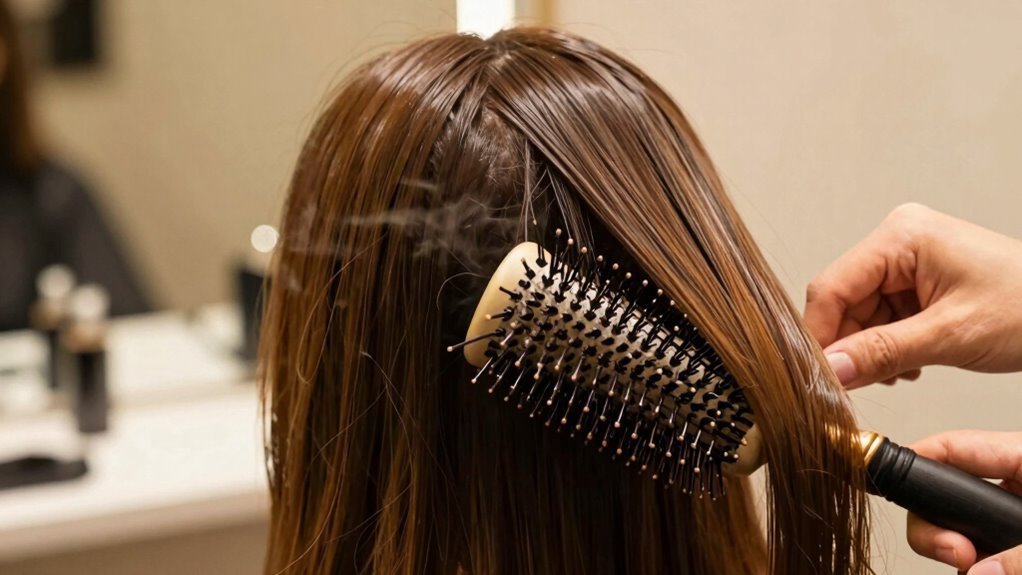
A perfect blowout can dramatically boost your confidence and style, making your hair look polished and voluminous. It’s more than just a beauty routine — it’s a way to elevate your overall look and feel. When you master the basics, you’ll understand how proper hair care and styling tips work together to create long-lasting results. A flawless blowout isn’t just about aesthetics; it also protects your hair from damage caused by heat and styling. Learning the essentials helps you achieve shine, bounce, and smoothness without sacrificing hair health. By focusing on key techniques like tension, heat control, and timing, you’ll develop skills that make every blowout look professional. Ultimately, it’s about feeling confident and stylish every time you step out the door.
As an affiliate, we earn on qualifying purchases.
The Essential Tools and Techniques for a Flawless Blowout
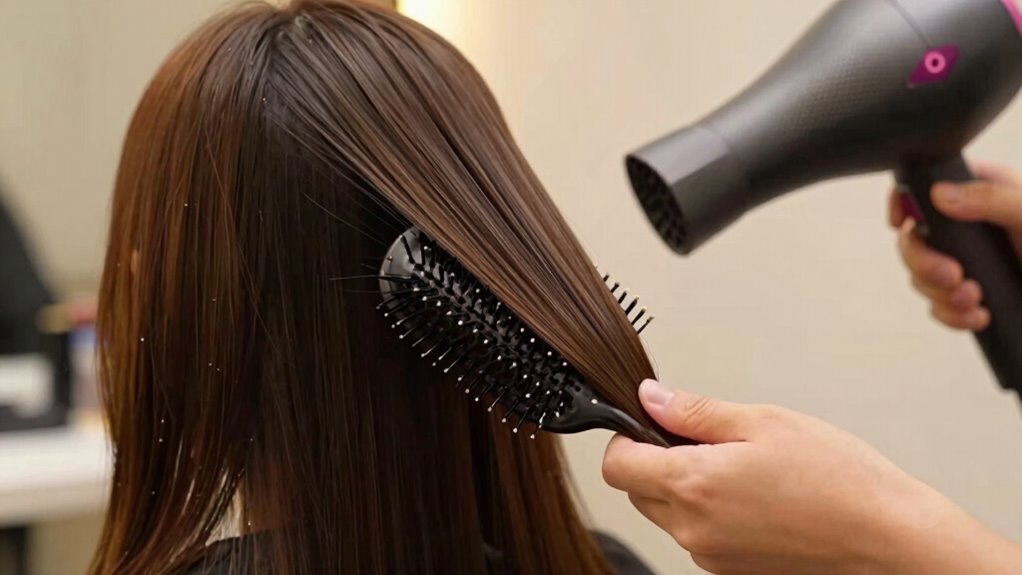
To achieve a flawless blowout, you need the right tools and techniques at your fingertips. Start with a quality round brush to create volume and smoothness. Use hair clips or sectioning clips to keep sections manageable. Incorporate curling techniques such as wrapping hair evenly around the brush for consistent waves. Hair accessories like clips or pins help secure sections during styling. Here’s a quick overview:
| Tool/Technique | Purpose |
|---|---|
| Round brush | Adds volume and smoothes the hair |
| Sectioning clips | Keeps hair organized during blowout |
| Curling techniques | Ensures even curls and bounce |
Mastering these tools and techniques guarantees your blowout is polished and long-lasting. Additionally, understanding heat distribution can help prevent damage and improve styling results. Proper heat application ensures the hair is styled effectively without excessive damage. Being mindful of tension during styling can also contribute to a sleek finish and reduce breakage.
professional blow dryer with cool shot
As an affiliate, we earn on qualifying purchases.
As an affiliate, we earn on qualifying purchases.
How to Choose the Best Heat Settings for Your Hair Type
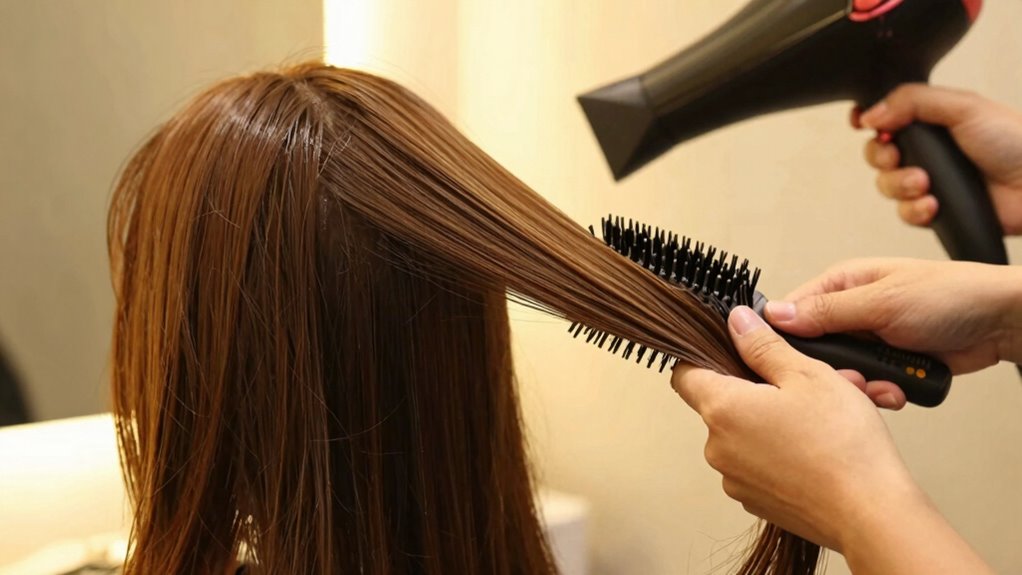
Choosing the right heat setting depends on your hair type and texture. If your hair is fine or damaged, lower temperatures will protect it from heat damage, while thicker or coarse hair may need higher heat for effective styling. Always adjust your heat to avoid unnecessary damage and achieve the best results. For optimal safety and performance, consider proper equipment maintenance and using quality heat protectant products. Additionally, understanding hair heat tolerance can help you select the most suitable temperature to prevent long-term damage.
Heat Level Recommendations
Selecting the right heat setting is essential to prevent damage and achieve a sleek, polished blowout. For fine or damaged hair, keep the temperature low—around 300°F or less—to minimize heat stress. Medium heat, 350-375°F, works well for normal hair, offering a balance of styling power and safety. Thick, coarse, or curly hair requires higher temperatures, around 400°F, but always prioritize temperature control and avoid excessive heat to prevent damage. Use heat protection spray before styling, regardless of your hair type, to shield strands from high temperatures. Remember, less is often more; start with a lower setting and increase if needed. Proper heat level choices help maintain hair health while delivering the desired sleekness and shine.
Hair Texture Considerations
Your hair texture plays an essential role in determining the best heat settings for a blowout. If you have fine or thin hair, use lower heat to prevent damage and preserve volume. Those with thick or coarse hair might need higher settings to effectively smooth and style. Curl pattern also matters; tighter curls often require more heat to straighten or loosen, while looser waves need less. Additionally, consider scalp sensitivity—if your scalp reacts to heat, opt for lower temperatures or shorter exposure times to avoid irritation. Using appropriate heat tools tailored to your hair type can also make a significant difference. Recognizing hair porosity can help you choose the right heat settings and products for optimal results. Properly managing heat damage prevention techniques is also crucial for maintaining healthy hair over time.
sectioning clips for hair styling
As an affiliate, we earn on qualifying purchases.
As an affiliate, we earn on qualifying purchases.
How Tension Affects Your Style and Hair Health
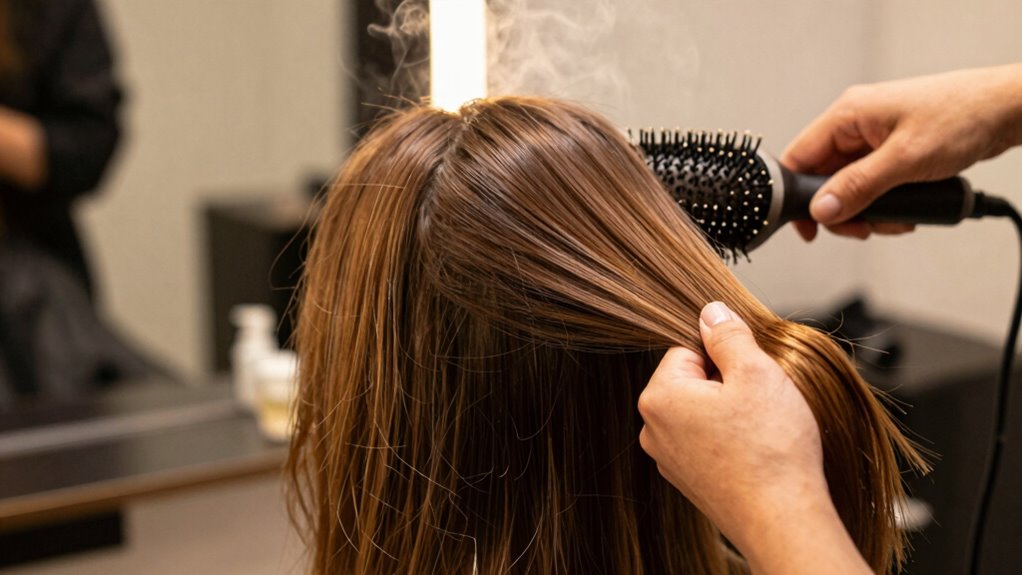
Excessive tension during blow-drying can damage your hair and compromise your style. When you pull or stretch your hair too tightly, it stresses the strands and weakens the cuticle, leading to breakage over time. To prevent this, practice proper tension control by using gentle, consistent pressure with your round brush. Incorporate effective detangling techniques before blow-drying to reduce tugging and snagging. Carefully detangle with a wide-tooth comb or a brush designed for detangling, especially on damp hair. Maintaining appropriate tension not only helps preserve your hair’s health but also ensures a smoother, more polished finish. Remember, controlling tension is key to achieving a long-lasting, healthy blowout without causing unnecessary damage. Additionally, being mindful of your hair care tools can further support the health of your hair during styling. Using proper tension techniques can also help minimize damage and improve your styling results over time. Recognizing the importance of gentle handling can significantly reduce stress on your hair and promote overall hair integrity. Being aware of hair elasticity can help you better adjust your tension to suit your hair type and avoid unnecessary stress. Incorporating proper heat settings into your routine can further reduce damage and maintain hair moisture during styling.
Timing Your Blowout: Achieving Long-Lasting Smoothness

Timing plays a pivotal role in locking in a sleek, long-lasting blowout. Being aware of your timing helps you finish your style at the perfect moment, ensuring maximum smoothness and volume. To achieve this, consider your hair’s dryness level; avoid over-drying, which can make styling difficult. Keep product compatibility in mind—use heat protectants and finishing sprays that work well together to seal in your style. Additionally, incorporating free floating techniques can help you maintain a natural look while optimizing your styling process. Paying attention to your hair’s timing and temperature control allows for better results and prevents damage. Monitoring your hair’s texture and adjusting your blow-drying speed accordingly can prevent unnecessary heat exposure and enhance overall results. Apply styling products just before the final pass for longer hold. Use a cool shot at the end to set the style and lock in shine. Mastering timing awareness and understanding projector technology can also contribute to achieving a polished, long-lasting style that stays put longer.
Common Mistakes to Avoid During Your Blowout
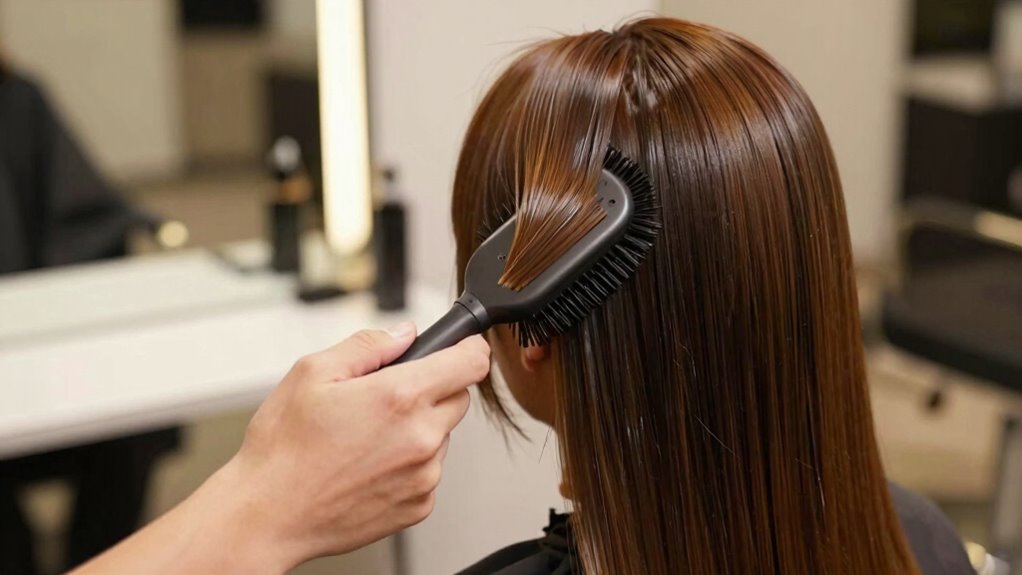
One common mistake to avoid during your blowout is overusing heat or holding the dryer in one spot for too long, which can damage your hair and cause frizz. To prevent this, don’t rely on high heat settings unnecessarily, and move the dryer constantly to distribute heat evenly. Neglecting hair prep is another mistake; skipping heat protectant sprays or not thoroughly detangling can lead to uneven results and damage. Always start with a heat protectant and ensure your hair is completely dry and detangled before blow-drying. Overusing heat weakens hair strands, making them prone to breakage. Using appropriate hair care methods and techniques can help maintain healthy, shiny hair and achieve a smooth, polished blowout. Being mindful of your technique and temperature can significantly prevent damage and help maintain healthy, shiny hair and achieve a smooth, polished blowout. Additionally, avoiding proper hair care and hygiene can help prevent damage and maintain the health of your hair during styling.
The Best Tools and Products to Enhance Your Blowout
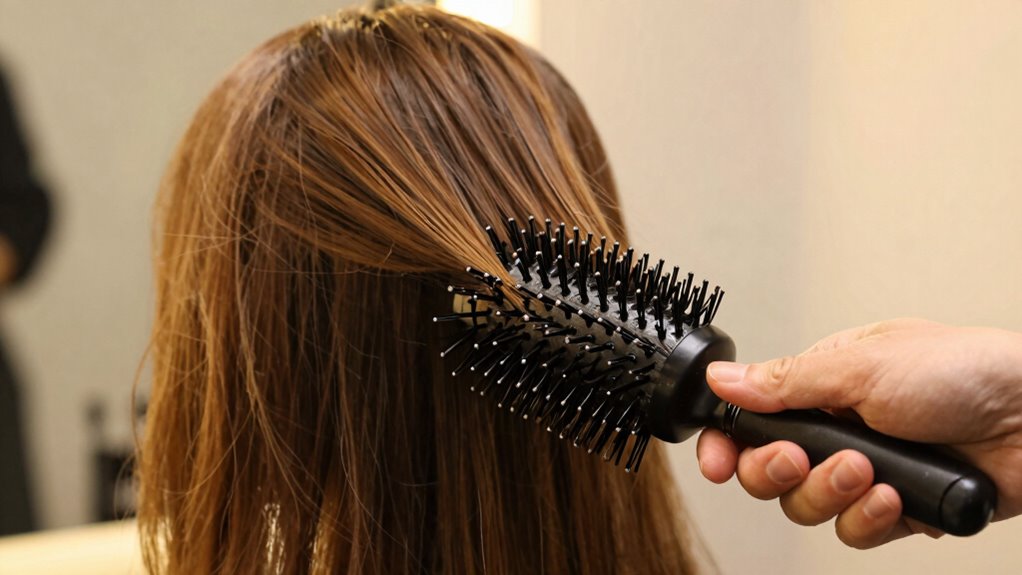
To achieve a flawless blowout, choosing the right tools and products is essential. The best hair accessories, like high-quality round brushes, help you create smooth, voluminous styles. Look for brushes with ionic or ceramic coatings to reduce heat damage and improve shine. Using lightweight styling products, such as heat protectants and volumizing sprays, can also enhance your results. Don’t forget scalp health—gentle scalp massages with nourishing oils promote scalp vitality and hair growth. Consider incorporating scalp-friendly accessories like soft headbands or silk hair ties to prevent breakage. These tools and products work together to give you a sleek, healthy finish while protecting your scalp and hair from damage during styling. Additionally, selecting proper hair tools and accessories can help ensure your styling routine remains safe and protected from potential hazards. Incorporating professional styling tools, such as quality blow dryers and round brushes, can further elevate your results and streamline your routine. Being mindful of energy-efficient devices can also contribute to a more environmentally conscious styling process. Using versatile and multi-functional accessories can optimize your styling efficiency and reduce clutter.
Step-by-Step: How to Get a Salon-Quality Blowout at Home
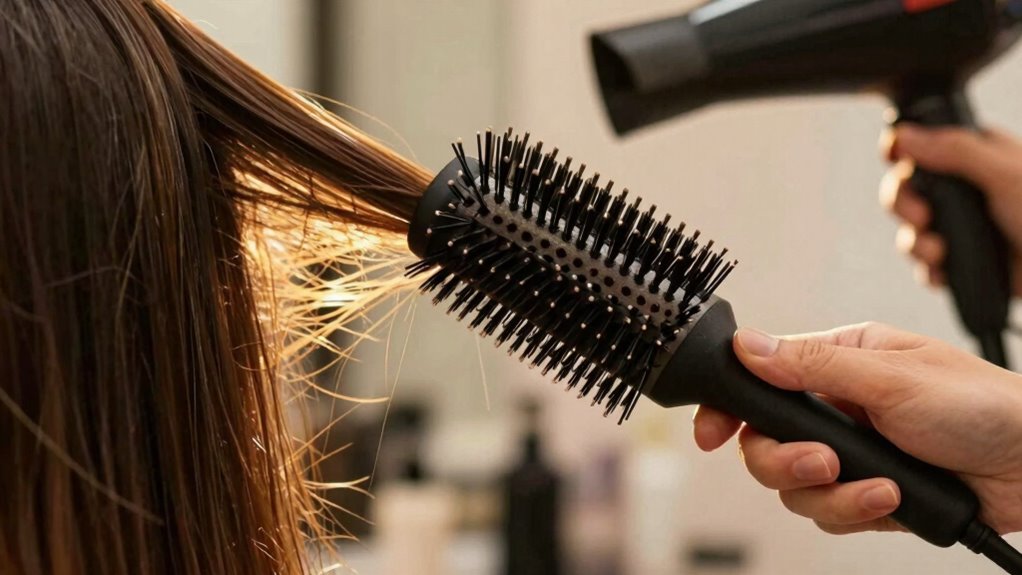
To achieve a salon-quality blowout at home, you need to start with properly prepared hair. Then, focus on mastering your blow-dry technique to create volume and smoothness. Finally, finish with the right styling touches to guarantee a polished, long-lasting result.
Prepare Your Hair Properly
Achieving a salon-quality blowout starts with properly preparing your hair. To guarantee smooth results, begin by detangling knots gently with a wide-tooth comb or your fingers. This prevents snagging and breakage during styling. Next, choose the right brush—preferably a round brush with natural bristles—to help create volume and shine. Before blow-drying, apply a heat protectant spray to shield your hair from damage. Make sure your hair is towel-dried, not dripping wet, to allow for even heat distribution. Additionally, sectioning your hair into manageable parts makes the blowout process easier and more efficient. Proper preparation minimizes frizz, enhances smoothness, and sets the foundation for a flawless finish.
Master Blow-Dry Technique
Once your hair is properly prepared, it’s time to master the blow-dry technique to achieve that sleek, salon-quality look. Start by applying a heat protectant evenly through damp hair to shield it from heat damage. Next, work in a small section at a time, using a round brush to lift hair at the roots and guide it downward. Keep the tension firm but gentle, rotating the brush to create smooth, voluminous strands. As you dry each section, direct the airflow downward to smooth the cuticles. For added shine and manageability, run a few drops of hair serum through the ends once dry. Consistent tension, controlled heat, and precise timing are key to a flawless, professional-looking blowout at home.
Finish and Style Perfectly
After you’ve finished blow-drying each section, it’s time to set your style and add the finishing touches. To enhance texture control, gently run your fingers or a wide-tooth comb through your hair to smooth out any flyaways. Use a light finishing spray or serum to add shine and tame frizz without weighing down your hair. Be mindful of scalp health by avoiding heavy products that can clog pores or cause buildup. For a polished look, consider wrapping small sections around your fingers and pinning them until cool, then releasing for soft waves. This technique helps maintain volume and a sleek finish. Remember, a good blowout combines texture, shine, and scalp comfort for a flawless, salon-quality style.
Frequently Asked Questions
How Often Should I Wash My Hair Before a Blowout?
You should wash your hair every 2 to 3 days to maintain a good hair washing schedule that supports scalp health. Over-washing can strip natural oils, leading to dryness, while infrequent washing may cause buildup, making blowouts less smooth. Adjust based on your scalp’s oil production and lifestyle. Properly clean hair guarantees your blowout lasts longer and stays healthy, giving you a fresh, polished look every time.
Can I Use a Round Brush on Wet Hair?
While it’s tempting to style right away, using a round brush on wet hair isn’t ideal. For best results, wait until your hair is damp or towel-dried. Choose a brush with natural boar or ceramic bristles suited to your hair length, as these materials help smooth and add shine. Wet hair is fragile, and using a round brush on it can cause breakage, so patience pays off for a flawless blowout.
What Are the Best Ways to Prevent Heat Damage?
To prevent heat damage when using styling tools, always apply a heat protectant or thermal barrier beforehand. These products create a shield that minimizes direct heat contact, reducing damage. Keep the heat setting on your blow dryer or curling iron at the lowest effective level, and avoid prolonged contact with your hair. Regularly using heat protectants guarantees you maintain healthy hair while achieving your desired style.
How Do I Maintain Volume After a Blowout?
To maintain volume after a blowout, focus on styling techniques that lift your roots and create body. Use a round brush during drying to lift hair at the roots, and avoid over-combing to preserve fullness. Finish with a light-hold spray at the roots to lock in volume without weighing hair down. Additionally, sleep on a silk pillowcase to reduce flattening overnight, ensuring your style stays voluminous longer.
Are There Specific Products for Different Hair Textures?
Think of hair products like a tailored wardrobe—they need to match your unique style. For different hair textures, you’ll want specific products that guarantee product compatibility. For fine hair, lightweight mousses and volumizing sprays work best, while thicker or curly hair benefits from richer creams and oils. Using the right products for your hair texture helps you achieve a flawless blowout and keeps your style looking fresh and vibrant all day.
Conclusion
Now that you know the basics of tension, heat, and timing, you’re all set to master your blowout at home. Remember, practice makes perfect, so don’t get discouraged if it doesn’t turn out flawless the first time. Keep experimenting and refining your technique, and soon you’ll be turning heads with your salon-quality style. With patience and persistence, you’ll prove that the proof of the pudding is in the eating!
NFL season / tailgating Picks
team gear
As an affiliate, we earn on qualifying purchases.