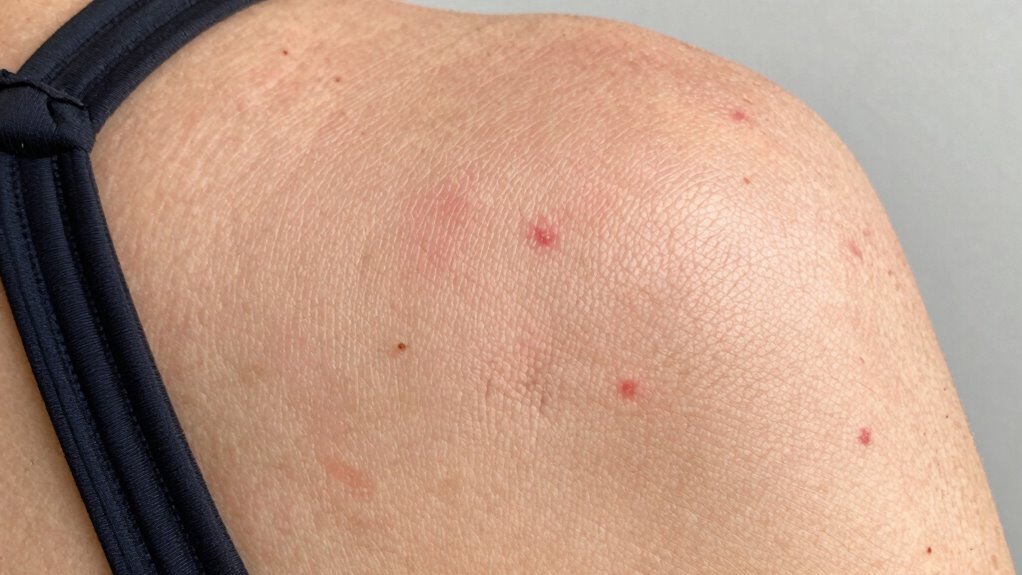

Body breakouts often start from friction and irritation caused by tight clothes or repetitive rubbing, not just skincare products. When your skin experiences constant rubbing, it can get inflamed, clogged, and prone to pimples, folliculitis, or cystic acne. Sweat and bacteria can worsen the problem, especially if your clothing is tight or made from rough fabrics. If you want to understand more about how friction impacts your skin and ways to prevent it, keep exploring these insights.
Key Takeaways
- Friction causes skin irritation and tiny injuries that promote clogged pores and inflammation, leading to breakouts.
- Repeated rubbing damages the skin barrier, increasing sensitivity and susceptibility to breakouts independent of products.
- Tight clothing and rough fabrics increase mechanical stress, which triggers inflammatory skin responses.
- Sweat and friction together create an environment conducive to bacteria growth, worsening breakouts.
- Proper clothing choices and gentle skincare can prevent friction-induced skin irritation and subsequent breakouts.
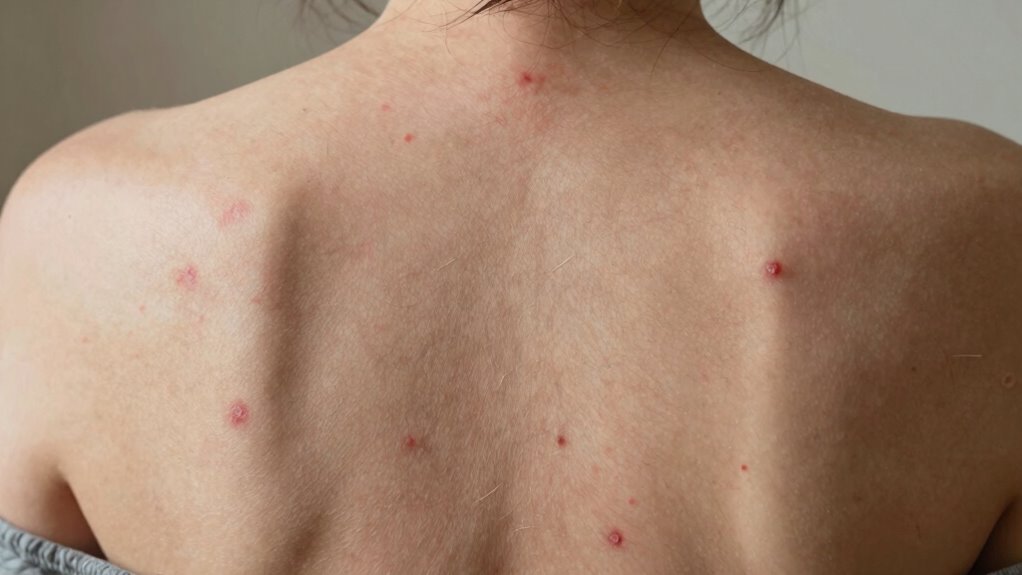
Friction is a common cause of body breakouts, especially in areas where skin repeatedly rubs against clothing, accessories, or other surfaces. When your skin experiences constant friction, it can lead to friction induced irritation, which often results in clogged pores and inflamed bumps. This irritation doesn’t happen overnight; it develops gradually as the skin becomes inflamed and sensitive to ongoing mechanical stress. You might notice that areas like your sides, shoulders, or thighs are more prone to breakouts after wearing tight clothing or carrying heavy bags. The repetitive rubbing causes tiny injuries to the skin’s surface, which can trigger an immune response, leading to pimples, folliculitis, or even cystic acne. Recognizing skin sensitivity triggers is key to preventing these breakouts and maintaining healthier skin.
Repeated friction from tight clothing can cause skin irritation and breakouts.
Understanding skin sensitivity triggers is key to preventing these breakouts. For some people, their skin is naturally more sensitive to friction because of underlying skin conditions or genetic factors. When your skin is sensitive, even mild rubbing can cause enough irritation to clog pores and cause breakouts. Wearing rough fabrics or tight clothes can exacerbate this problem, especially if the clothing isn’t breathable or if you sweat a lot. Sweat combined with friction creates a perfect environment for bacteria to thrive, which worsens the inflammation and leads to more breakouts. Additionally, skin barrier health plays a crucial role in defending against irritation and bacterial invasion, making it even more important to protect and strengthen your skin. Incorporating moisturizing routines can help maintain the skin’s barrier and reduce sensitivity over time.
It’s important to recognize that friction isn’t the only factor at play; sometimes, it’s the combination of friction and skin sensitivity triggers that causes breakouts to develop. For instance, if you wear synthetic fabrics that trap heat and moisture, you’re more likely to experience friction induced irritation. Over time, this irritation weakens the skin’s barrier, lowering its resistance to bacteria and other irritants. As a result, you develop those stubborn body breakouts that seem to appear out of nowhere, especially after wearing certain clothing or accessories. Proper clothing choices and maintaining good hygiene can significantly reduce these risks, especially when combined with mindful skincare practices. To minimize friction-related breakouts, you should opt for loose, breathable clothing made from natural fibers like cotton or linen. Avoid tight-fitting garments that cause constant rubbing. If you notice breakouts developing in a specific area, try to reduce friction by switching to softer fabrics or adjusting how you wear your clothes. Also, keep your skin dry and clean—sweat and dirt trapped under clothing only make irritation worse. Applying gentle, soothing skincare can help strengthen your skin’s barrier, reducing sensitivity triggers. Ultimately, understanding how friction contributes to breakouts empowers you to make smarter choices about your clothing and skincare routine, helping you keep your skin clearer and healthier.
breathable moisture-wicking clothing for sensitive skin
As an affiliate, we earn on qualifying purchases.
As an affiliate, we earn on qualifying purchases.
Frequently Asked Questions
Can Certain Fabrics Worsen Friction-Related Breakouts?
Yes, certain fabrics can worsen friction-related breakouts. If you wear rough or non-breathable fabrics, they can cause fabric irritation and increase skin friction, leading to breakouts. Your clothing choice matters; opt for soft, smooth, and breathable materials like cotton or moisture-wicking fabrics to reduce irritation and keep your skin healthier. Avoid tight or rough-textured clothing that can trap sweat and cause further friction.
Are There Specific Activities That Cause More Friction-Related Skin Issues?
Activities involving tight clothing, like running or cycling, often cause more friction-related skin issues. For example, a cyclist might develop breakouts from constant skin friction and clothing irritation around the waistband and underarms. These repetitive movements increase skin friction, leading to irritation and breakouts. To prevent this, choose moisture-wicking, well-fitted clothing, and take breaks to reduce skin friction. Staying mindful of clothing fit helps minimize irritation and breakouts.
How Can I Prevent Friction-Induced Breakouts During Exercise?
To prevent friction-induced breakouts during exercise, guarantee your clothing fits well—neither too tight nor too loose—to reduce skin rubbing. Keep your skin well-hydrated with a lightweight, non-comedogenic moisturizer before working out, as hydrated skin is more resilient. Also, choose moisture-wicking fabrics that minimize sweat and friction. After exercise, promptly shower and gently cleanse your skin to remove sweat and bacteria that can cause breakouts.
Do Friction-Related Breakouts Heal Faster Than Product-Induced Ones?
Friction-related breakouts often heal faster than product-induced ones because they typically involve less bacterial infection and scar tissue formation. When you avoid constant rubbing or irritation, your skin can recover more quickly, reducing the chance of long-term scars. Keep the area clean, avoid picking, and give your skin time to heal. This approach minimizes bacterial buildup and helps prevent persistent scars, leading to faster recovery overall.
Is There a Link Between Sweat and Friction-Related Skin Irritation?
Yes, sweat triggers can contribute to skin irritation, especially when combined with friction. When you sweat, moisture increases, making your skin more vulnerable to chafing and irritation from clothing or accessories. Friction then worsens the irritation, potentially leading to breakouts. To prevent this, keep your skin dry, wear breathable fabrics, and avoid excessive friction, especially during workouts or hot weather. These steps help reduce sweat-related skin irritation effectively.
gentle body wash for friction-prone skin
As an affiliate, we earn on qualifying purchases.
As an affiliate, we earn on qualifying purchases.
Conclusion
Understanding that friction can be a root cause of body breakouts helps you take smarter steps beyond just changing skincare products. You might think, “If I switch products, I’ll fix this,” but often, reducing friction from clothing or activities makes a bigger difference. Addressing these physical sources of irritation not only clears your skin faster but also prevents future breakouts. So, before reaching for new creams, consider how your daily habits and wardrobe might be fueling the problem.
anti-friction body lotion for skin irritation
As an affiliate, we earn on qualifying purchases.
As an affiliate, we earn on qualifying purchases.

COSRX 7X Ceramide Moisturizer for Face, Barrier Repair Face Cream, 2.7oz
- Ceramide Barrier Complex: Supports and repairs dry, sensitive skin
- Long-lasting Hydration: Provides 200+ hours of moisture per use
- Soothes Sensitive Skin: Calms dryness, itchiness, and irritation
As an affiliate, we earn on qualifying purchases.
As an affiliate, we earn on qualifying purchases.