
Unwanted echoes and amplified sounds from tiles, fixtures, and plumbing can make your bathroom feel loud and restless. Hard surfaces reflect sound waves, creating noise that disrupts your sense of calm. Gaps around fixtures or vents allow sound to travel and worsen the problem. Using soft materials like rugs, acoustic panels, and sealing gaps can turn your bathroom into a more peaceful space. Keep exploring to discover more ways to tame bathroom noise and restore serenity.

Turn your quiet moments into listening time
- Thousands of audiobooks, podcasts and originals
- Listen on your phone, tablet or Echo — also offline
- Cancel anytime
Key Takeaways
- Hard surfaces like tiles and porcelain reflect sound, creating echoes and increasing noise levels.
- Lack of soft materials causes insufficient sound absorption, making the space feel noisy and chaotic.
- Gaps and cracks around fixtures allow sound to escape and travel, disrupting tranquility.
- Uninsulated pipes and plumbing produce loud noises that disturb relaxation.
- Absence of acoustic treatments results in poor sound management and a less restful environment.
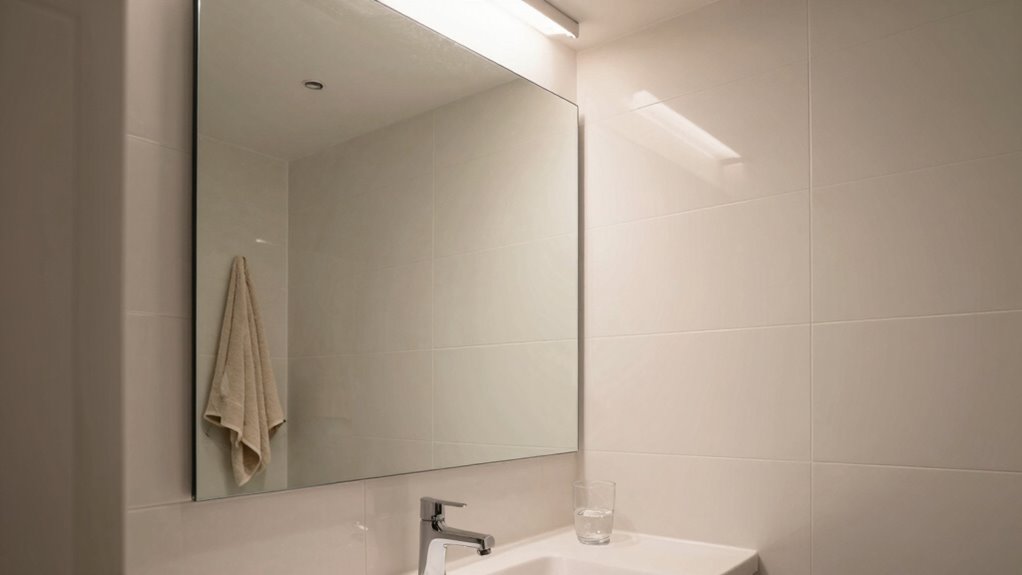
Bathrooms often pose unique sound challenges because their enclosed spaces and hard surfaces can amplify noise. You might notice that sounds like running water, flushing, or even footsteps echo loudly, making the space feel less peaceful. This is a common issue related to bathroom acoustics, which refers to how sound behaves within the room. Hard tiles, porcelain fixtures, and bare walls reflect sound waves rather than absorb them, causing noises to bounce around and amplify. The result is a space that feels noisy and chaotic, undermining the relaxing atmosphere you want in your bathroom.
Addressing these sound problems involves improving noise insulation and managing how sound travels within the space. Noise insulation isn’t just about blocking sound from escaping; it also enhances the room’s ability to contain and dampen noise. One effective way to do this is by adding soft materials or acoustic treatments. For instance, installing a fabric shower curtain rather than a glass enclosure can absorb some sound, reducing echoes. You could also incorporate rugs or mats on the floor, especially if you have tile or wood surfaces, to help absorb footstep noise and water splashes. Wall-mounted acoustic panels or foam can be subtly added to absorb sound waves, minimizing their reflection and echo. Proper sound management is essential for creating a peaceful bathroom environment. Additionally, understanding sound absorption techniques can help you choose the best materials for your space.
Another important step is sealing gaps and cracks around fixtures and vents. Even small openings can allow sound to escape or travel into adjacent rooms, creating a sense of noise leakage that makes the bathroom feel less tranquil. Proper insulation around pipes and behind walls can also cut down on loud plumbing noises, which often become a distraction during quiet moments. Additionally, upgrading the toilet or faucet fixtures to quieter models can significantly reduce the amount of noise generated during use, contributing to a more restful environment.
Ultimately, improving bathroom acoustics requires a combination of strategic sound absorption and noise insulation. By choosing soft, sound-absorbing materials and sealing gaps, you can transform your bathroom into a calmer, more peaceful space. These adjustments won’t just make your bathroom quieter—they’ll enhance its overall comfort, helping you feel more relaxed and at ease whenever you step inside. Whether you’re looking to quiet the water running or muffling echoes, focusing on noise insulation and acoustic treatments will make a noticeable difference in how restful your bathroom feels. Incorporating acoustic treatments can be an especially effective way to address persistent sound issues and create a more serene environment. Understanding soundproofing techniques can further optimize your efforts to reduce noise.
As an affiliate, we earn on qualifying purchases.
Frequently Asked Questions
How Can I Reduce Echo in My Bathroom?
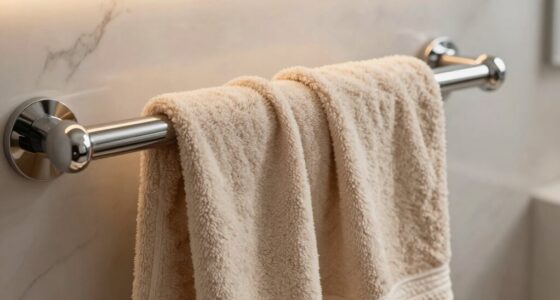
To reduce echo in your bathroom, start by adding soft bathroom decor like plush towels, rugs, or fabric shower curtains, which absorb sound. Make lighting adjustments by installing dimmer switches or warm lighting to create a cozy atmosphere that minimizes harsh reflections. You can also incorporate wall-mounted shelves or artwork with sound-absorbing materials to further dampen echoes, making your bathroom feel more restful and inviting.
What Materials Best Absorb Bathroom Sounds?
To absorb bathroom sounds effectively, you should consider using acoustic materials like decorative wall panels and acoustic ceiling tiles. Decorative wall panels not only add style but also help dampen echoes by absorbing sound waves. Acoustic ceiling tiles are excellent for reducing overall noise levels, especially in larger bathrooms. Combining these materials creates a quieter, more relaxing environment, making your bathroom feel more restful and comfortable.
Do Soundproofing Solutions Affect Bathroom Ventilation?
Yes, soundproofing solutions can affect bathroom ventilation. When you add soundproof paint or other materials, they might slightly restrict airflow, which could increase ventilation noise or reduce efficiency. To avoid this, confirm your ventilation system is properly sealed and compatible with soundproofing materials. Good ventilation and soundproofing work together when you choose products designed for both noise reduction and airflow, so you maintain a peaceful, well-ventilated bathroom.
Can Plants Improve Bathroom Acoustics?
Yes, plants can subtly enhance your bathroom acoustics. By thoughtfully placing acoustic greenery, like lush ferns or hanging ivy, you soften echoes and reduce noise. Proper plant placement helps absorb sound waves, creating a more peaceful atmosphere. While they won’t eliminate all noise, these natural elements add a calming vibe and improve sound quality. Incorporate different textures and heights for the best acoustic effect, turning your bathroom into a tranquil retreat.
Are There Quick Fixes for Noisy Bathroom Fans?
Yes, there are quick fixes for noisy bathroom fans. You can start by replacing the fan with a quieter model for effective fan noise reduction. Adding soundproofing materials, like acoustic foam or mass-loaded vinyl, around the fan or duct can also dampen noise. Additionally, securing loose parts or installing a rubber gasket can minimize vibrations, further reducing sound. These simple steps make your bathroom quieter without major renovations.
As an affiliate, we earn on qualifying purchases.
Conclusion
Imagine your bathroom as a peaceful oasis, where every sound whispers calm instead of chaos. By addressing the sound problems, you transform your space into a sanctuary—a place where serenity flows as smoothly as water. Don’t let noise turn your refuge into a battleground. Instead, take charge and craft a haven of tranquility. After all, your bathroom should be a retreat, not a raucous echo chamber. Quietness isn’t just an option; it’s your right.
As an affiliate, we earn on qualifying purchases.
As an affiliate, we earn on qualifying purchases.
Fall Picks
fall essentials
As an affiliate, we earn on qualifying purchases.