

To prevent steam, moisture, and calm from turning into mustiness, focus on maintaining proper ventilation and humidity levels. Use exhaust fans in the bathroom and kitchen during activities that generate steam, and consider installing additional vents or dehumidifiers if needed. Open windows or doors to promote air circulation, and wipe down damp surfaces with vinegar to inhibit mold. Keeping these habits steady will help you stay ahead of mustiness and enjoy fresher indoor air. Keep going to learn more practical tips and tricks.

Turn your quiet moments into listening time
- Thousands of audiobooks, podcasts and originals
- Listen on your phone, tablet or Echo — also offline
- Cancel anytime
Key Takeaways
- Use exhaust fans during steam-generating activities to quickly remove moisture from indoor air.
- Maintain indoor humidity below 50% with dehumidifiers or vents to prevent mold growth.
- Improve air circulation by opening windows and doors or using fans to disperse moisture.
- Regularly clean and wipe damp surfaces with vinegar to inhibit mold development.
- Monitor hidden areas like basements and behind furniture for dampness and address promptly.
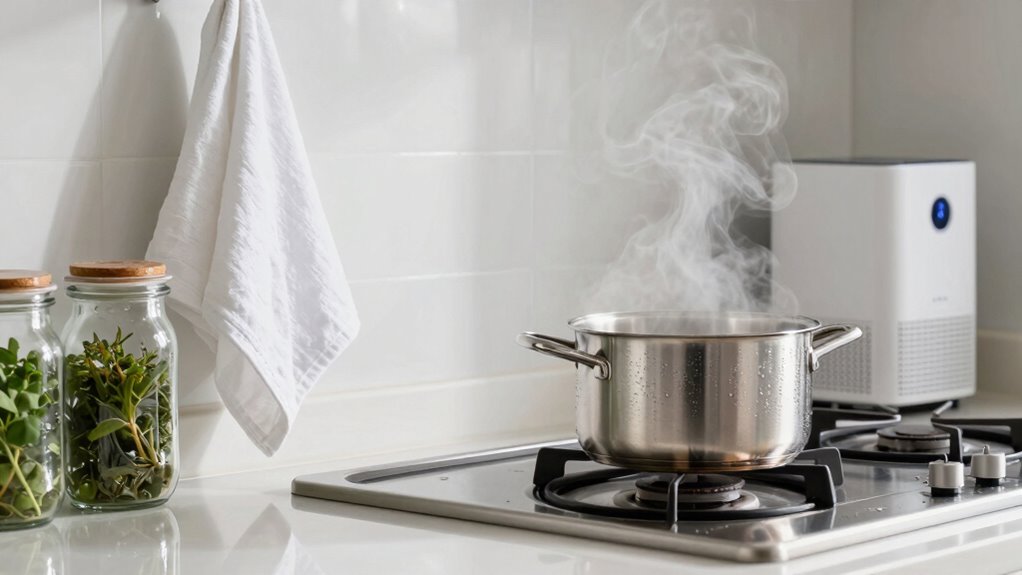
When steam, moisture, and a sense of calm linger in your home, they can create the perfect environment for mustiness to develop. To prevent this, you need to be proactive about managing humidity and ensuring proper air circulation. Mold prevention is essential because mold thrives in damp, stagnant spaces, and once it takes hold, it’s tough to eliminate. Keeping your home dry and well-ventilated is your best defense against mold and mustiness.
Start by using exhaust fans in your bathroom and kitchen whenever you’re cooking, showering, or bathing. These fans help remove excess moisture before it has a chance to settle into surfaces and fabrics. If your home lacks sufficient ventilation, consider installing additional vents or a dehumidifier. A dehumidifier can considerably reduce indoor humidity levels, ideally keeping them below 50%, which discourages mold growth.
Use exhaust fans and dehumidifiers to keep humidity below 50% and prevent mold growth.
Air circulation plays a critical role in preventing mustiness. When hot water creates steam, it’s essential to allow the moisture to escape rather than trapping it. Open windows or interior doors to promote airflow. This not only disperses humidity but also helps dry out damp areas faster. If you’re unable to open windows, use fans to promote circulation. Positioning a fan near a window or door can help push moist air outside and bring in fresh air.
Pay close attention to areas prone to dampness, like basements, closets, and behind furniture. Regularly check for signs of moisture or mold, especially in hidden corners or under sinks. Wiping down surfaces with a mixture of water and vinegar can inhibit mold growth. Keep fabrics, such as curtains and upholstery, dry and clean, as they tend to trap moisture and promote mustiness. Additionally, proper ventilation and controlling humidity are essential to maintaining a healthy indoor environment. Regularly monitoring indoor humidity levels can help you identify potential problems before they develop into larger issues. Controlling indoor humidity is also crucial because it directly impacts mold growth and indoor air quality, which can affect your health. Properly managing air quality can also help prevent airborne mold spores from accumulating and causing health issues.
Frequently Asked Questions
Can Using a Dehumidifier Prevent Mustiness Caused by Moisture?
Yes, using a dehumidifier effectively prevents mustiness caused by moisture. It removes excess humidity, keeping the air dry and reducing mold and mildew growth. To maximize its effectiveness, combine it with good moisture control techniques like proper ventilation and fixing leaks. Regularly empty or clean the dehumidifier to maintain ideal performance. This proactive approach helps maintain a fresh, mold-free environment and prevents mustiness from developing over time.
How Often Should I Clean My Ventilation System?
Think of your ventilation system as the lungs of your home—it needs regular care to breathe freely. You should clean your ducts and replace air filters every 3 to 6 months to prevent mustiness and moisture buildup. Regular duct cleaning guarantees dust, mold, and debris don’t settle in, keeping your air fresh and healthy. Staying consistent with maintenance keeps your home smelling clean and feeling calm.
Are There Natural Remedies to Absorb Excess Moisture?
Yes, natural absorbers can help with moisture control. You can use silica gel packets, activated charcoal, or baking soda to absorb excess moisture in your space. Place these in areas prone to humidity, like closets or basements. Regularly replacing or revitalizing them guarantees continued effectiveness. These natural remedies are eco-friendly and affordable, making them a simple, effective way to prevent mustiness caused by excess moisture and keep your environment crisp.
What Signs Indicate Mold Growth Due to Humidity?
You’ll notice mold growth through visible black, green, or white patches on walls, ceilings, or fabrics. A musty odor also signals mold presence. To prevent this, focus on mold prevention by controlling humidity levels, ideally between 30-50%. Use dehumidifiers or ventilation fans to maintain proper humidity control, and address any water leaks promptly. Regularly inspecting your space helps catch mold early before it spreads and causes further damage.
Does Opening Windows Help Reduce Indoor Moisture Levels?
Yes, opening windows can help reduce indoor moisture levels by improving ventilation effectiveness. When you open windows, fresh air circulates, allowing excess humidity to escape and preventing moisture buildup. However, make sure your window insulation is adequate; poorly insulated windows can let in cold air, decreasing the efficiency. For ideal results, open windows during dry, mild weather and consider using exhaust fans or dehumidifiers to further control humidity indoors.
Conclusion
By implementing these simple tips, you can effectively prevent steam, moisture, and clutter from turning your space into a musty environment. Keep your rooms well-ventilated, use moisture absorbers, and stay organized to maintain a fresh, calm atmosphere. Some might think these steps are unnecessary or time-consuming, but consistent effort pays off in long-term comfort and air quality. With a little care, you’ll enjoy a clean, inviting space free from dampness and mustiness.
Fall Picks
fall essentials
As an affiliate, we earn on qualifying purchases.