
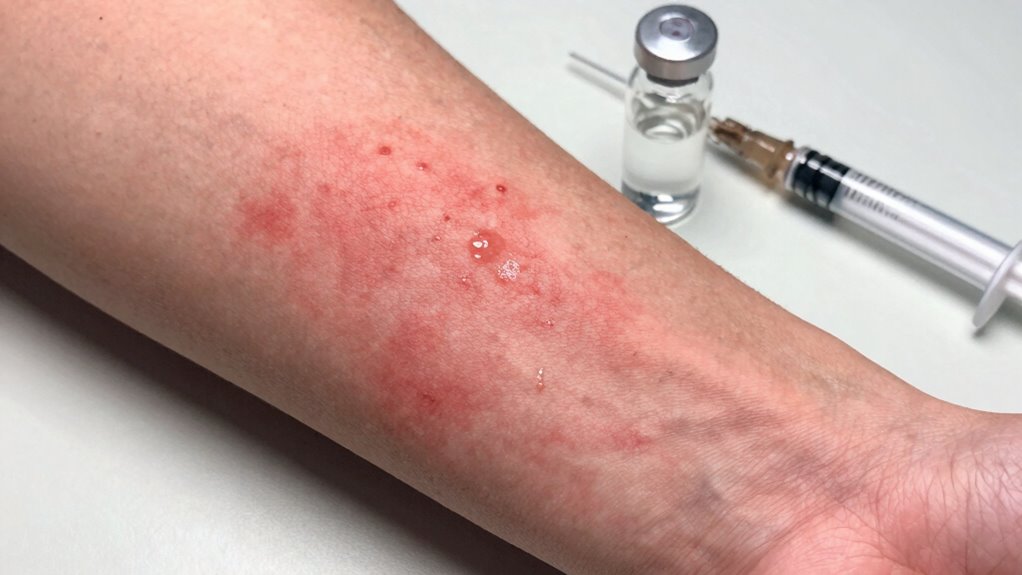

You can tell your reaction is worsening if redness, swelling, or pain increase, or if blistering, open sores, or tenderness develop. If symptoms like burning or tightness persist despite stopping the product, or the area becomes more inflamed and damages skin, it’s a sign to seek help. Watch for signs of infection or systemic symptoms like dizziness or difficulty breathing. Continue here to learn how to protect yourself and when to seek urgent care.
Key Takeaways
- Redness, swelling, or inflammation intensifies or spreads over time.
- Blisters, open sores, or skin damage develop despite discontinuing the product.
- Symptoms like burning, stinging, or tenderness worsen or persist beyond initial hours.
- Additional symptoms such as fever, dizziness, or difficulty breathing appear.
- The reaction does not improve or worsens even after removing the product.

If you notice your skin reaction worsening instead of improving after using a new product, it’s vital to recognize the signs early. Sometimes, what begins as mild skin irritation can quickly escalate, especially if you have chemical sensitivity. You might see redness intensify, swelling increase, or the affected area become more inflamed. These are clear indicators that your skin isn’t just reacting temporarily but is actually getting worse. It’s essential to pay close attention because further exposure could lead to more severe reactions or even allergic responses.
Watch for worsening symptoms—redness, swelling, or inflammation—that signal your skin reaction is escalating and needs prompt attention.
In cases of chemical sensitivity, your skin might react more intensely to certain ingredients, and what seemed harmless at first can become problematic over time. If you notice that symptoms like burning, stinging, or tightness persist or worsen, it’s a sign that the reaction isn’t subsiding. Instead, it’s intensifying. Skin irritation that doesn’t improve within a few hours or days warrants immediate caution. Continuing to use the product could cause increased discomfort, and in some cases, damage your skin barrier, making it more vulnerable to other irritants. Recognizing signs of skin barrier damage early can help prevent further complications. Additionally, paying attention to the chemical components involved can help you identify potential allergens or irritants.
Another red flag is the appearance of new symptoms. If, in addition to redness, you develop blisters, open sores, or the area feels warm and tender, these are signs your skin isn’t just irritated but possibly inflamed or infected. These worsening signs suggest your skin is overwhelmed and that the reaction might be progressing into a more serious condition. If you notice such symptoms, it’s also important to consider allergic dermatitis, which can develop if the reaction persists. In some cases, prolonged exposure can exacerbate the severity of the reaction, so prompt action is crucial. In such cases, it’s best to remove the product immediately and wash the area with cool water to soothe the skin.
Monitoring for signs of chemical sensitivity can also help you determine if the irritation is worsening, as a compromised barrier makes your skin more susceptible to further reactions. You should also be alert to systemic signs like dizziness, difficulty breathing, or swelling beyond the skin—these could indicate a severe allergic reaction requiring urgent medical attention. If you notice worsening skin irritation despite discontinuing the product, consult a healthcare professional. They can help determine whether you’re experiencing a delayed allergic response or if another underlying condition is contributing to your symptoms.
skin allergy reaction relief cream
As an affiliate, we earn on qualifying purchases.
As an affiliate, we earn on qualifying purchases.
Frequently Asked Questions
Can a Reaction Worsen Even After Initial Improvement?
Yes, a reaction can worsen even after initial improvement. If you notice increased redness, swelling, or discomfort, it might be due to hidden allergy triggers or ingredient sensitivities in the product. Sometimes, your body reacts slowly, and symptoms can fluctuate. You should stop using the product immediately and consult a healthcare professional. Monitoring your symptoms closely helps identify if the reaction is escalating or improving over time.
Are Certain Ingredients More Likely to Cause Worsening Reactions?
Some ingredients are more likely to trigger ingredient allergies or chemical sensitivities, leading to reactions that worsen over time. Fragrances, preservatives, and certain dyes often cause heightened sensitivities. If you notice your skin reacting more intensely, it’s wise to scrutinize product labels for these common irritants. Avoiding products with known problematic ingredients can help prevent reactions from escalating, keeping your skin calmer and healthier.
How Quickly Should I See Improvement After Discontinuing the Product?
You should typically see improvement within a few days to a week after stopping the product, especially if it’s due to ingredient sensitivity or allergy testing. If your symptoms persist or worsen, it indicates the reaction might be getting worse. Keep track of your skin’s response, and consult a healthcare professional if there’s no improvement, as they can help identify the allergen and recommend appropriate treatment.
Should I Stop Using the Product if Symptoms Fluctuate?
When symptoms fluctuate, it’s like riding a roller coaster—sometimes you feel better, sometimes worse. If your skin sensitivity worsens or your product tolerance drops, it’s wise to stop using the product. Fluctuating symptoms can signal your skin’s trying to tell you it’s overwhelmed. Trust your instincts; consulting a dermatologist can help determine if continuing may cause more harm or if you need a break to restore balance.
When Is It Safe to Resume Using a Product After a Worsening Reaction?
You should wait until your symptoms fully subside before resuming the product. It’s best to consult a healthcare professional or undergo allergy testing to identify specific sensitivities. A skincare consultation can also help determine if the product is suitable for your skin type. Never rush back into using the product, especially after a worsening reaction. Prioritize your safety and get personalized advice to prevent further irritation.
As an affiliate, we earn on qualifying purchases.
Conclusion
Knowing whether your product reaction is improving or worsening is like reading a weather forecast—you need to watch the signs closely. Pay attention to persistent or intensifying symptoms, unusual smells, or new reactions. If things seem to take a turn for the worse, don’t ignore it; act quickly. Remember, catching trouble early is like catching a leak before it floods your whole house. Stay alert, and don’t hesitate to seek help when in doubt.
As an affiliate, we earn on qualifying purchases.
As an affiliate, we earn on qualifying purchases.