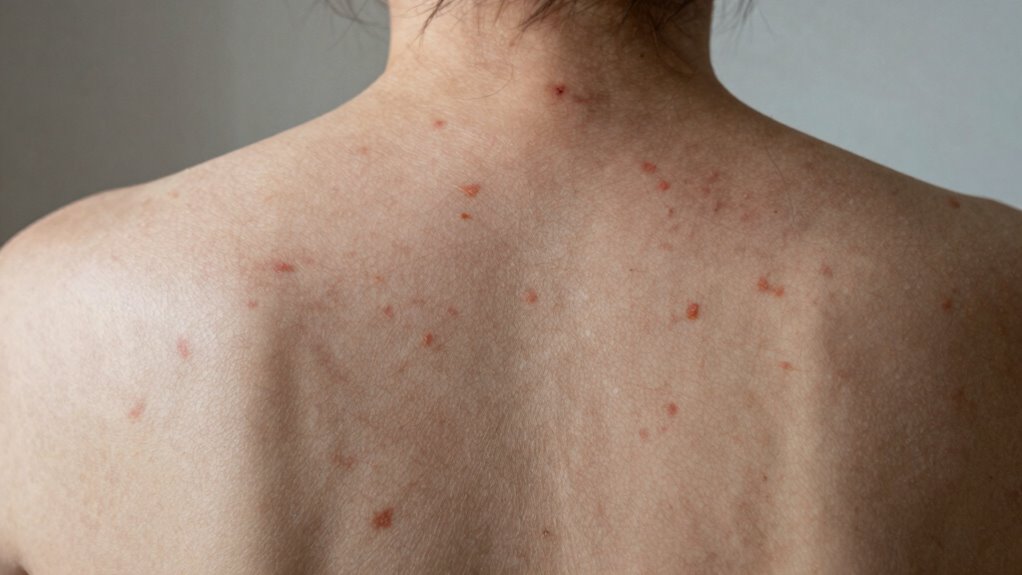

Your back tends to break out more than your face because it has more oil glands, larger pores, and is more prone to trapping sweat, dirt, and bacteria—especially during exercise or in hot, humid weather. Tight clothes and not showering promptly after sweating can make things worse. The back’s structure makes it harder to keep clean and treat pimples early. Keep going, and you’ll discover more ways to keep your back clear.
Key Takeaways
- The back has more oil glands and larger pores, making it more prone to clogged pores and breakouts.
- Sweating during physical activity traps dirt and oil on the back, leading to acne if not cleaned promptly.
- Hormonal fluctuations increase oil production more significantly on the back due to its dense hair follicle network.
- Tight clothing and poor hygiene after sweating can trap bacteria and irritate the skin, worsening back acne.
- Limited access to the back makes early detection and treatment difficult, allowing breakouts to worsen compared to the face.
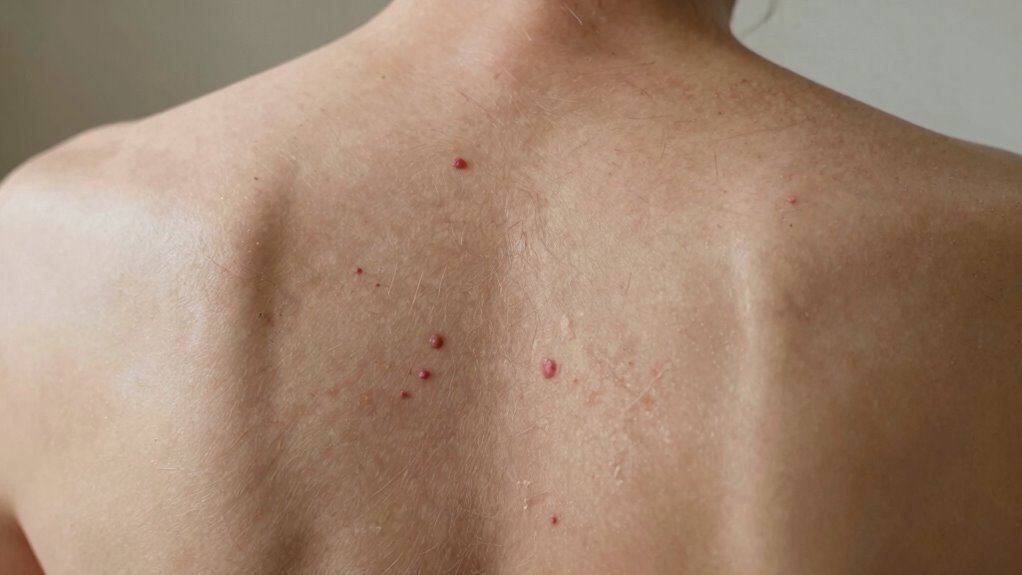
Many people notice breakouts more frequently on their back than on their face, and understanding why can help you take better care of your skin. Your back’s tendency to develop more acne isn’t just coincidence; it’s influenced by several factors, especially hormonal fluctuations and sweat accumulation. These elements work together to create a perfect environment for breakouts, making your back more prone to acne than your face.
Understanding hormonal fluctuations and sweat buildup explains why your back is more prone to breakouts.
Hormonal fluctuations are a primary reason why your back might break out more often. During times of hormonal imbalance—such as puberty, stress, or hormonal cycles—your sebaceous glands produce more oil. This excess oil can clog pores on your back, leading to acne. Since the skin on your back has larger pores and more oil glands compared to your face, it’s more susceptible to blockages caused by these hormonal changes. When your hormones surge, your skin responds by overproducing oil, which then mixes with dead skin cells and dirt, creating the ideal conditions for breakouts.
Sweat accumulation further amplifies this problem. Your back tends to sweat more than your face, especially during physical activity or in hot, humid weather. Sweat can mix with oils and dirt on your skin, clogging pores and trapping bacteria inside. If you don’t shower promptly after sweating, this mixture becomes a breeding ground for acne-causing bacteria. Additionally, sweat can irritate the skin, leading to inflammation and even more breakouts. Wearing tight or non-breathable clothing can trap sweat against your skin, increasing the risk of clogged pores and irritation. This is why sweating without proper hygiene often results in back acne.
Another factor that makes your back more prone to breakouts is the presence of hair follicles. The back has a dense network of hair follicles that can trap dirt, oil, and dead skin cells. When these follicles become clogged, pimples and cysts can develop. Moreover, your back isn’t as easy to reach or see clearly, so you might not notice early signs of breakouts or be able to treat them promptly, allowing them to worsen.
Incorporating a good skincare routine that targets these issues can help. Use gentle, oil-free cleansers after sweating and consider exfoliating to clear dead skin cells. Wearing loose, breathable clothing during workouts and showering soon after sweating can minimize sweat buildup. If hormonal fluctuations are a consistent issue, consulting with a healthcare provider or dermatologist for appropriate treatments can make a significant difference. By understanding these factors, you can better prevent and manage back breakouts, keeping your skin healthier and clearer.
Frequently Asked Questions
Can Diet Influence Back Acne More Than Facial Acne?
Yes, diet impact can influence back acne more than facial acne. Your nutritional influence affects oil production and inflammation, which can lead to breakouts on your back. Foods high in sugar and processed ingredients often trigger acne flare-ups, especially on your back where skin is thicker and more prone to clogged pores. By adjusting your diet, you may reduce back acne more effectively than focusing solely on facial skincare.
Are Certain Clothing Materials Worse for Back Breakouts?
Certain clothing fabrics can be more irritating for your skin, especially if they trap sweat and bacteria. Smooth, breathable fabrics like cotton are usually gentler, while rougher materials like polyester or nylon might worsen back breakouts. Also, using harsh laundry detergents can leave residues that clog pores. To keep your skin clear, choose soft fabrics and opt for gentle, fragrance-free detergents, letting your skin breathe and stay fresh.
Does Stress Impact Back Acne Differently Than Facial Acne?
Stress impact can make your back acne worse than facial acne because it triggers skin inflammation in different areas. When you’re stressed, your body releases hormones that increase oil production and inflammation, especially on your back where sweat and friction are common. This combination worsens breakouts. So, managing stress helps reduce skin inflammation, which can prevent or lessen back acne more effectively than just focusing on facial skin.
How Does Hormone Imbalance Specifically Affect Back Acne?
Did you know that hormone imbalances can cause up to 80% of acne cases? When your hormones fluctuate, it disrupts hormone regulation, leading to increased sebaceous activity. This excess oil clogs pores on your back, making breakouts more frequent and stubborn compared to your face. So, if your back keeps breaking out, it’s likely your hormones are out of sync, stimulating oil production and causing those pesky pimples.
Can Skincare Routines for Face Be Ineffective for Back Acne?
Skincare routines for your face can be ineffective for back acne because the skin on your back differs in oil production and thickness. You need specific skincare ingredients like salicylic acid or benzoyl peroxide, and proper application techniques, such as thorough cleansing and targeted spot treatments. Applying facial products with the same technique often neglects the deeper pores on your back, so customizing your routine ensures better results.
Conclusion
So, next time your back feels like a battlefield of breakouts, remember it’s more vulnerable than your face, like a hidden garden under constant siege. Keep it clean, wear breathable fabrics, and avoid heavy creams that clog pores. Treat your back with the same care as your face, and soon it’ll clear up, revealing smooth skin beneath like a calm lake after a storm. Your back deserves love—after all, it’s the foundation that carries you through every day.