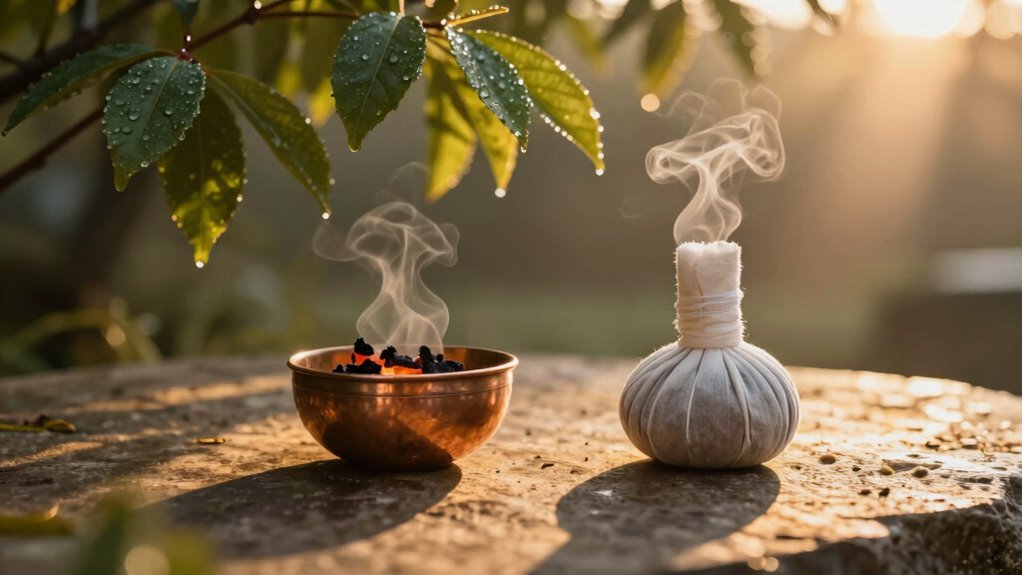

The best time for heat rituals is in the early evening, about 1-2 hours before you plan to sleep. This aligns with your body’s natural temperature drops that signal it’s time to rest, helping you relax and fall asleep faster. Evening heat sessions support circadian rhythms and promote core temperature reduction. If you want to optimize your sleep quality and recovery, discovering how to time your heat rituals properly can make a big difference.
Key Takeaways
- Schedule heat rituals 1-2 hours before bedtime to support natural core temperature decline and circadian sleep cues.
- Engage in heat therapy during the early evening to promote relaxation and facilitate sleep onset.
- Avoid late-night heat sessions to prevent disrupting the body’s natural cooling process and circadian signals.
- Use morning heat rituals to boost alertness, aligning with the body’s rising core temperature and circadian rhythm.
- Finish evening heat routines at least an hour before sleep to allow core temperature to decrease naturally.
How Your Body’s Temperature Affects Sleep
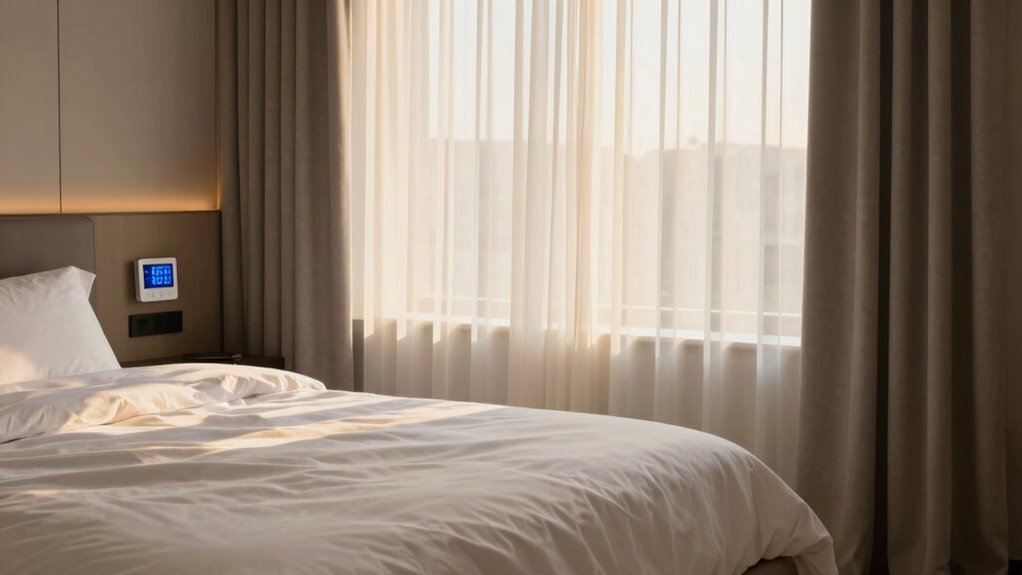
Your body’s temperature plays a crucial role in determining how well you sleep. Proper temperature regulation helps your body shift smoothly through sleep cycles. As you prepare for sleep, your core temperature naturally drops, signaling your body to wind down. If your body stays too warm or too cool, it disrupts this process, making it harder to fall asleep or stay asleep. Temperature regulation is essential for maintaining healthy sleep cycles, ensuring you progress through REM and non-REM stages properly. External factors like room temperature and heat rituals can influence this process by either supporting or hindering your body’s natural temperature drop. Additionally, understanding sleep biology and how it interacts with homeostatic processes can help you optimize your sleep environment for better rest and overall health. Recognizing the circadian rhythm and its influence on temperature fluctuation can further enhance your sleep quality, especially when timed with your body’s natural temperature cycles. Optimizing these biological processes can lead to improved sleep efficiency and overall well-being.
The Daily Fluctuation of Core Body Temperature
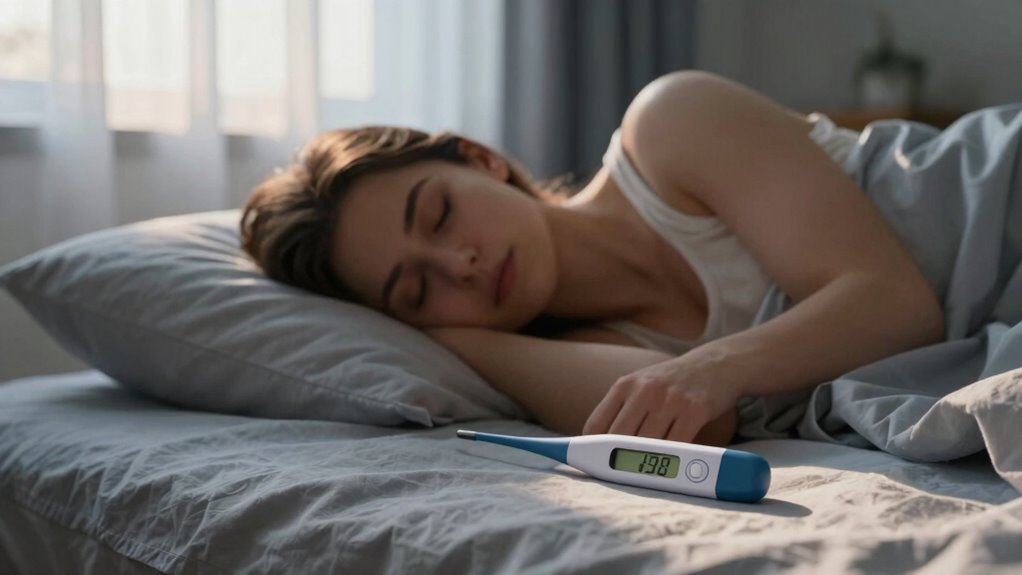
Your core body temperature naturally follows a daily pattern, rising in the morning and dropping at night. During the nighttime cooling phase, your body prepares for rest, while the morning temperature rise signals waking. Understanding this rhythm can help you optimize the timing of heat rituals for better results. Additionally, aligning heat rituals with your circadian rhythm may enhance their effectiveness. Incorporating knowledge about skin temperature fluctuations and best timing for heat exposure can further improve outcomes. Recognizing that your body’s temperature pattern is influenced by biological clocks can help you tailor heat therapy sessions to when your body is most receptive. Being aware of these natural temperature variations can guide you in scheduling heat rituals to maximize relaxation and recovery. Moreover, paying attention to internal temperature cues can assist in choosing optimal times for heat application, ensuring your body benefits most from the practice.
Circadian Temperature Rhythm
The circadian temperature rhythm reflects the natural fluctuations in core body temperature that occur over a 24-hour cycle, guiding many biological processes. During this cycle, your body employs thermoregulation processes and temperature regulation mechanisms to maintain balance. Understanding this rhythm helps you align heat rituals with your body’s natural temperature changes, enhancing comfort and effectiveness while respecting your body’s temperature regulation mechanisms. Recognizing that support for breakfast options can influence overall well-being during this cycle can further optimize your daily routine. Additionally, recognizing the importance of sleep biology can help you synchronize your habits with your body’s internal clock for better health. Being aware of core body temperature fluctuations can also inform the timing of heat-based practices for optimal results. Incorporating knowledge of the circadian system can further refine the timing of heat rituals to match your body’s natural peaks and lows. Moreover, understanding temperature regulation mechanisms can help you tailor your heat rituals to support your body’s ability to cool down or warm up as needed throughout the day.
Nighttime Cooling Phase
As night approaches, core body temperature begins to decline, signaling your body’s shift toward rest and recovery. This cooling phase is essential for restful sleep, so creating a comfortable sleep environment helps facilitate this natural process. Keep your room cool, dark, and quiet to support the body’s temperature drop. Your bedtime routines also play a role; engaging in relaxing activities like reading or gentle stretching can promote the cooling phase. Avoid bright screens or stimulating tasks close to bedtime, as they can hinder the temperature decline. Being aware of your sleep cycle and how it fluctuates throughout the night can help you align your habits more effectively. Incorporating smart home automation to control lighting and temperature can further optimize your sleep environment. Additionally, understanding your body’s temperature regulation can help you make more informed adjustments to your sleep setting. Recognizing the natural temperature fluctuation throughout the night allows you to time your routines more effectively, enhancing sleep quality. By aligning your sleep environment and routines with this natural cooling, you enhance your chances of falling asleep faster and enjoying deeper, more restorative sleep. Understanding this fluctuation helps you optimize your habits for better sleep quality, especially when combined with knowledge about home water quality that impacts overall comfort.
Morning Temperature Rise
Morning signals the start of a rapid rise in core body temperature, which helps energize you for the day ahead. This temperature increase promotes thermal comfort and boosts your morning alertness. During this phase, your body actively adjusts to prepare for daily activity. Here are three key points to contemplate:
- Your core temperature naturally begins to climb, signaling wakefulness.
- This rise enhances thermal comfort, making you feel more alert and less sluggish.
- The temperature fluctuation supports ideal cognitive function and physical readiness.
- Recognizing these natural patterns can optimize thermal regulation and your morning routines. Additionally, understanding the odor associated with body temperature changes can provide insights into your overall health and well-being. Being aware of these body responses can help you develop more effective and comfortable morning practices.
- Awareness of biological rhythms, such as the circadian cycle, can further help in timing heat rituals to align with your body’s natural processes for better energy and comfort.
Understanding this pattern allows you to time heat rituals effectively, aligning them with your body’s natural temperature rise to maximize energy and comfort in the morning.
How Heat Rituals Help Relaxation and Improve Circulation
Heat rituals promote relaxation by soothing tense muscles and calming the mind, making it easier to unwind. When you regularly incorporate heat, your circulation improves as blood flow increases, helping to deliver oxygen and nutrients more efficiently throughout your body. This enhanced circulation supports skin health by promoting better nutrient delivery and waste removal, leaving your skin looking healthier and more radiant. Additionally, heat encourages you to develop better hydration habits, which are essential for maintaining elasticity and preventing dryness. As your muscles relax and circulation improves, you’ll notice reduced stress and a greater sense of calm. These benefits work together to create a more relaxed state, making heat rituals an effective way to prepare your body and mind for restful sleep.
When Is the Best Time to Do Heat Rituals for Better Sleep?
The best time to do heat rituals for better sleep is typically about 1 to 2 hours before you plan to go to bed. This timing supports circadian alignment and enhances thermal regulation, helping your body prepare for sleep. To maximize benefits, consider these key points:
- Perform heat rituals during this window to sync your body’s internal clock with natural rhythms.
- Use heat to boost thermal regulation, making it easier to fall asleep and stay asleep.
- Avoid doing heat sessions too early or late, as it may disrupt your circadian signals.
Why Evening Heat Sessions May Boost Your Sleep Quality

Doing heat rituals in the evening can boost your melatonin production, helping you fall asleep faster. It also encourages a relaxation response that eases tension and stress. Plus, this timing aligns with your circadian rhythm, supporting healthier sleep patterns.
Enhances Melatonin Production
Since your body’s melatonin levels naturally rise in the evening, engaging in heat rituals during this time can further support this process. Heat sessions can enhance your melatonin boost, leading to improved sleep quality. Here’s how:
- They signal your brain that bedtime is near, reinforcing your natural circadian rhythm.
- Elevated body temperature from heat therapy can stimulate melatonin secretion.
- Consistent evening routines help your body associate heat sessions with sleep, strengthening the melatonin response.
Promotes Relaxation Response
Engaging in heat sessions in the evening can activate your body’s relaxation response, making it easier to unwind and prepare for sleep. As your muscles relax and your breathing slows, you’ll find it simpler to let go of stress. Incorporate breathing exercises or meditation techniques during your heat ritual to deepen relaxation. Visualize this calming scene:
| Calm Environment | Gentle Movements | Peaceful Mindset |
|---|---|---|
| Soft lighting | Slow stretches | Focused breathing |
| Warmth on skin | Deep inhalations | Quiet meditation |
| Relaxed muscles | Mindfulness | Tranquil thoughts |
| Stillness | Clearing mind | Inner calm |
This combination helps signal your nervous system to relax, paving the way for restorative sleep.
Aligns With Circadian Rhythm
Heat sessions in the evening can work synergistically with your body’s natural circadian rhythm, helping to signal that it’s time to wind down. When timed correctly, they support circadian alignment, promoting better sleep. Here’s how:
- They encourage temperature regulation, lowering your core temperature as your body prepares for rest.
- They reinforce your body’s internal clock, signaling that bedtime is near.
- They enhance melatonin production, aiding in deeper, more restorative sleep.
What Not to Do: Timing Heat Rituals Incorrectly
Timing your heat rituals incorrectly can undermine their effectiveness and even cause discomfort. If you schedule sessions too close to bedtime or during the day when your body isn’t prepared, it can disrupt temperature regulation and throw off your circadian alignment. Heating too early in the day may leave you feeling energized when you should be winding down, while doing it too late can interfere with your sleep onset. Improper timing can also lead to feelings of restlessness or overheating, which hampers restful sleep. To avoid these pitfalls, don’t disregard your body’s natural rhythms. Instead, aim for times when your core temperature naturally dips or rises, ensuring your heat rituals support your sleep biology rather than sabotage it.
Practical Tips for Timing Sauna and Bath Sessions
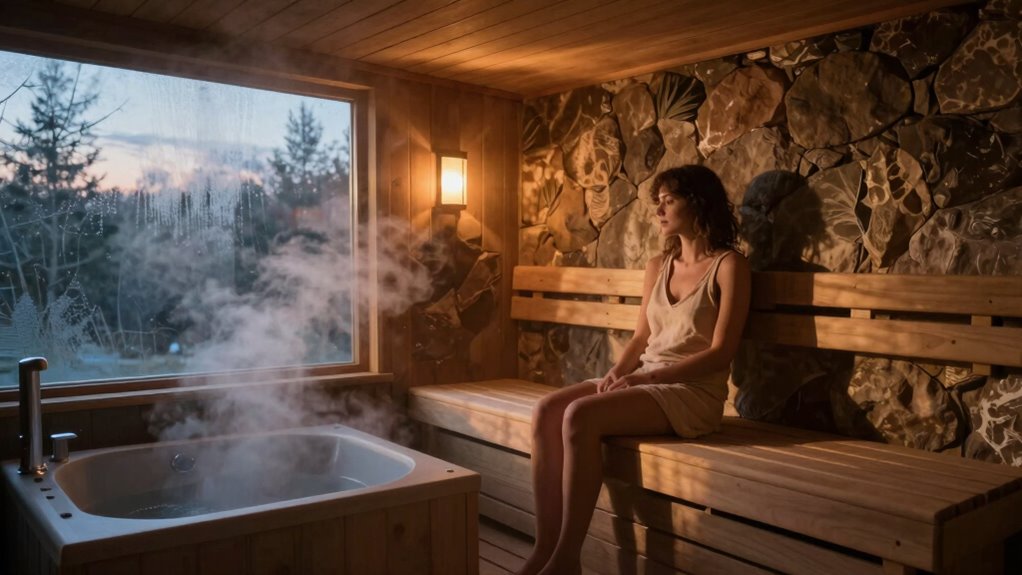
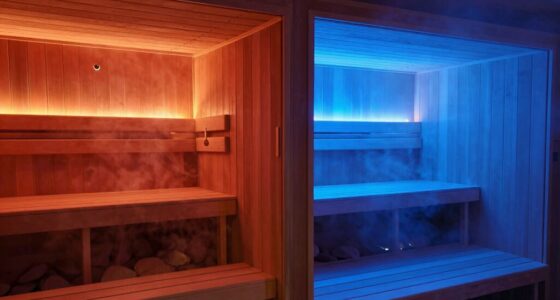
Timing your sauna and bath sessions can make a big difference in how you feel afterward. For example, taking a sauna in the evening can help you relax and improve your sleep quality. Knowing the best times to indulge guarantees you get the most benefits from your heat rituals.
Optimal Timing for Sauna
To get the most benefits from your sauna sessions, it’s important to choose the right time of day. Ideal timing supports temperature regulation and aligns with your circadian rhythms. Consider these tips:
- Aim for mid-afternoon, when your body’s core temperature naturally rises, enhancing heat absorption.
- Avoid early mornings or late evenings, as these times can disrupt your circadian alignment and sleep quality.
- Stay consistent; regular sessions at the same time help your body adapt and maximize the benefits of heat exposure.
Scheduling your sauna around your natural temperature fluctuations boosts relaxation and recovery. By syncing your sessions with your circadian biology, you enhance overall well-being and make your heat rituals more effective.
Evening Bath Benefits
Scheduling your evening bath or sauna session can considerably enhance relaxation and recovery after a busy day. A warm bath or sauna promotes skin hydration by opening pores and increasing blood flow, helping your skin retain moisture and feel revitalized. It also supports muscle recovery by easing tension and reducing soreness, making it easier to unwind before bed. To maximize benefits, aim to finish your session at least an hour before bedtime, allowing your body to cool down naturally. Use calming scents or soothing music to deepen relaxation. Consistent timing helps regulate your sleep cycle, making it easier to fall asleep and enjoy restorative rest. Incorporating evening heat rituals into your routine can improve both skin health and muscle recovery, setting the stage for better sleep quality.
How Morning Heat Rituals Can Energize Your Day
Starting your day with a morning heat ritual can considerably boost your energy levels and set a positive tone for what’s ahead. Incorporating heat into your morning routine helps kick-start circulation, wake up your muscles, and clear mental fog. Here are three ways it energizes your day:
Starting your day with heat boosts energy, circulation, and mental clarity for a fresh, focused start.
- Enhances blood flow, delivering oxygen and nutrients faster to your brain and body.
- Elevates core temperature, signaling your body to wake up fully.
- Promotes mental clarity, making it easier to focus and stay alert.
Customizing Your Heat Ritual Routine for Better Sleep and Relaxation
By tailoring your heat ritual routine, you can create a calming environment that promotes better sleep and relaxation. Focus on temperature regulation by adjusting the heat level to suit your comfort, ensuring it’s warm enough to relax your muscles without overheating. Incorporate relaxation techniques such as deep breathing, progressive muscle relaxation, or gentle stretching alongside your heat ritual. These practices enhance the calming effects and help signal to your body that it’s time to wind down. Consistency is key—develop a routine that you follow each night, making adjustments based on how your body responds. When you personalize your heat ritual, you support your body’s natural sleep cues and foster a more restful, restorative sleep environment.
Maximizing Heat Ritual Benefits: The Best Times Based on Your Sleep Biology
Understanding your body’s natural sleep rhythms can help you get the most out of your heat ritual. Timing matters for maximizing thermal comfort and supporting sleep hygiene. To optimize benefits, consider these key moments:
Knowing your sleep rhythms helps optimize heat therapy for better rest.
- Early evening: A heat ritual now can gently lower your core temperature later, preparing you for restful sleep.
- Before bedtime: Engaging in heat therapy about 30-60 minutes before sleep enhances relaxation without disrupting your sleep cycle.
- Avoid late-night sessions: Too close to waking time may interfere with your body’s natural temperature drop, reducing sleep quality.
Frequently Asked Questions
How Does Individual Sleep Cycle Variation Affect Optimal Heat Ritual Timing?
Your individual sleep cycle variation influences the best timing for heat rituals because personal sleep patterns and circadian alignment are key. If you have a delayed sleep phase, you might benefit from heat rituals later in the evening, aligning with your body’s natural temperature drop. Conversely, early risers should consider earlier timings. Paying attention to your body’s signals helps optimize heat rituals, ensuring they support your unique sleep cycle and enhance relaxation.
Can Heat Rituals Help With Specific Sleep Disorders Like Insomnia?
Heat rituals can improve sleep quality and reduce stress, making them helpful for managing insomnia symptoms. You might find that a warm bath or heat pack before bed relaxes your muscles and calms your mind, easing the progression into sleep. By lowering stress levels and promoting relaxation, heat rituals support a more restful night, especially if anxiety or racing thoughts keep you awake. Give them a try to enhance your sleep experience.
Is There a Recommended Duration for Heat Rituals at Different Times of Day?
You should aim for heat rituals lasting about 15-20 minutes, aligning with your body’s natural temperature fluctuations. Stick to consistent timing each day to reinforce your sleep cues and enhance relaxation. Longer durations may lead to discomfort or disrupt sleep, so follow these duration guidelines and prioritize timing consistency to optimize the benefits of your heat rituals and improve your overall sleep quality.
How Do Age and Gender Influence the Best Timing for Heat Rituals?
Age differences and gender effects influence the best timing for your heat rituals. Younger individuals often find early evening ideal, aligning with natural body temperature peaks, while older adults might benefit from later times to match their circadian rhythms. Gender effects can also play a role, as hormonal fluctuations impact temperature regulation. Adjust your heat ritual schedule accordingly to optimize comfort and sleep, considering your age and gender-specific needs.
Are There Any Risks Associated With Doing Heat Rituals at Certain Times?
Like a knight facing a dragon, you risk heat exhaustion or skin burns if you perform heat rituals at improper times. Doing them too long or during peak heat can dehydrate you or cause burns on sensitive skin. To stay safe, avoid intense heat during the hottest parts of the day, and listen to your body’s signals. Proper timing reduces risks and helps you enjoy the benefits safely.
Conclusion
By syncing your heat rituals with your body’s natural rhythms, you can turn relaxation into a symphony of comfort. Whether you choose evening sauna sessions or morning warm baths, timing them just right helps your sleep blossom like a well-tended garden. Think of your body as a delicate clock—when you honor its timing, you reveal deeper rest and renewed energy. Embrace these moments, and watch your sleep and relaxation flourish like a vibrant sunrise.