
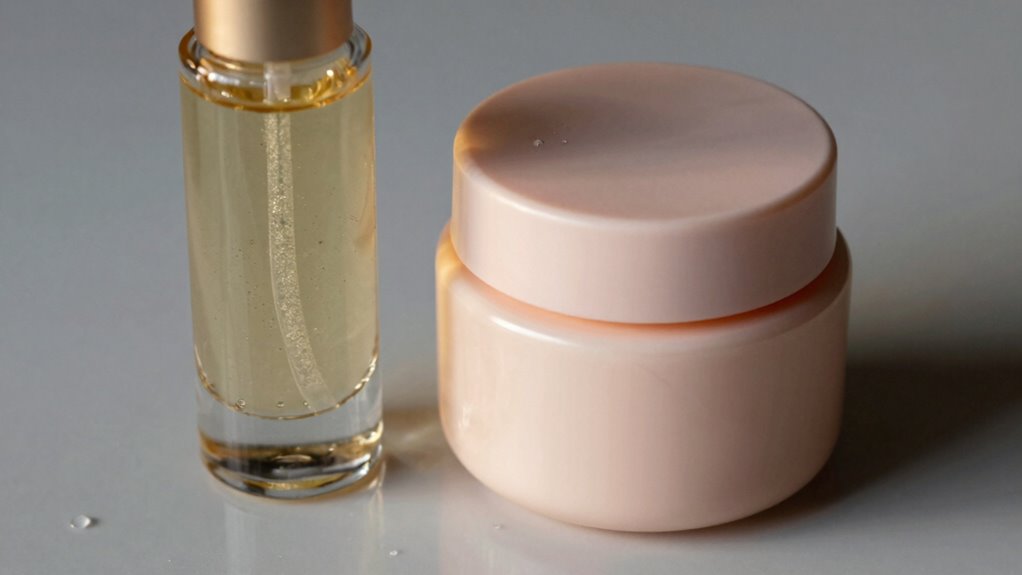

Body serums deliver concentrated active ingredients designed to target specific concerns like dryness or uneven tone, with smaller molecules that absorb quickly for deep action. Lotions, on the other hand, provide a lighter, balanced hydration using water and oils, suited for daily comfort and overall moisture. Both serve different needs, and selecting the right one depends on your skin goals. Keep exploring to discover how to make these products work best for you.
Key Takeaways
- Serums contain concentrated active ingredients for targeted skin concerns, while lotions provide lighter, overall hydration.
- Serums have smaller molecules for faster absorption and deeper penetration; lotions have a balanced water-oil mix for surface hydration.
- Serums are applied in small amounts before moisturizers, whereas lotions are used generously as a final step for soothing and barrier protection.
- Serums are ideal for addressing specific issues like dark spots or fine lines, while lotions suit daily hydration and skin comfort.
- Proper formulation and application techniques enhance effectiveness; serums target deeper layers, lotions create a protective, moisturizing layer.
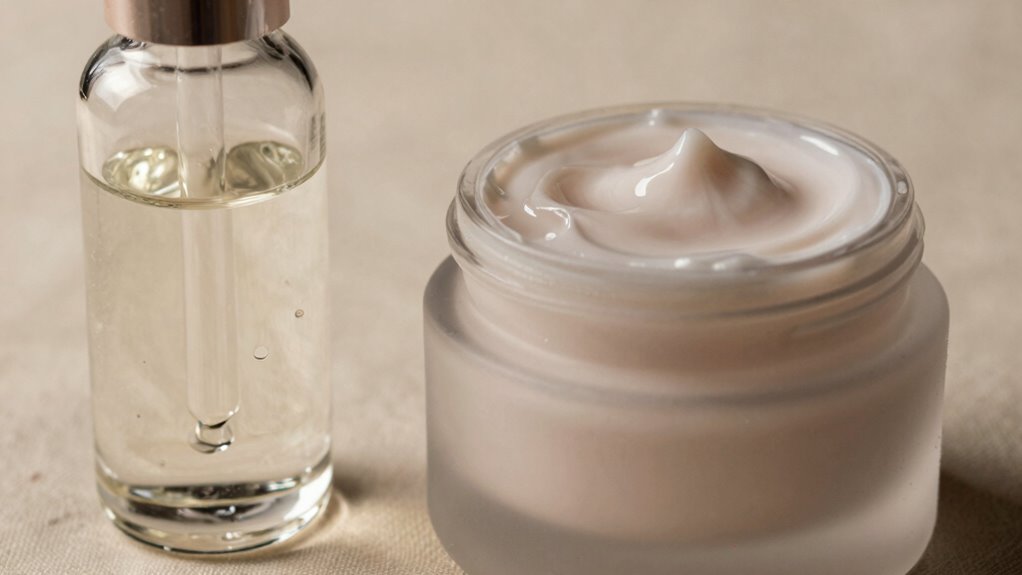
When it comes to nourishing your skin, choosing between body serums and lotions can be confusing. Both products aim to hydrate and improve your skin’s appearance, but they do so in different ways, and understanding these differences can help you make better choices. A key factor in deciding is the ingredients comparison. Serums typically contain highly concentrated active ingredients, like antioxidants, vitamins, or hyaluronic acid, that target specific skin concerns such as dullness or uneven texture. They’re usually formulated with smaller molecules, allowing faster absorption and deeper penetration into the skin. Lotions, on the other hand, tend to have a more balanced mix of water and oils, providing a lighter layer of hydration. They often contain emollients and humectants that soothe dryness and create a protective barrier, but their active ingredient concentration is generally lower than in serums.
When you’re selecting between the two, it’s essential to ponder your skin type and goals. If you’re dealing with specific issues like fine lines, dark spots, or uneven tone, a serum with targeted ingredients might be more effective. For overall hydration and skin comfort, a lotion can be sufficient and easier to apply regularly. Application techniques also matter. Serums are typically applied in smaller amounts because of their potency. You should warm a few drops between your hands and gently press or pat them onto your skin, focusing on problem areas or your entire body if needed. Since serums absorb quickly, you can follow up with a lotion or moisturizer to lock in the active ingredients and add a layer of hydration. Lotions are generally easier to spread over large areas. You simply dispense a generous amount and massage it into your skin in circular motions. They can be used daily or as needed, and their lighter texture makes them suitable for layering under other products.
Additionally, choosing products with proper ingredient formulations can help maximize their effectiveness and suit your individual skin needs. Another aspect to contemplate is how each product interacts with your skincare routine. Serums deliver potent ingredients directly to your skin’s surface, so they’re often used after cleansing and before heavier moisturizers. Lotions work well as a final step, providing a hydration boost and sealing in active ingredients from other products. Ultimately, your choice depends on your skin’s needs and your preferences for application. If you want quick, targeted treatment, serums are your best bet. For everyday hydration and ease of use, lotions are reliable. Understanding the ingredients comparison and application techniques helps you tailor your skincare routine to achieve the best results.
Frequently Asked Questions
Are Body Serums Suitable for All Skin Types?
Yes, body serums can suit all skin types, but you should consider your skin sensitivity and ingredient compatibility. If you have sensitive skin, look for serums with gentle, hypoallergenic ingredients. For oily or acne-prone skin, choose lightweight, non-comedogenic formulas. Always patch-test new serums to guarantee they don’t cause irritation. By selecting serums tailored to your skin’s needs, you can enjoy their benefits regardless of your skin type.
Can Serums Replace Traditional Body Lotions Entirely?
Serums can’t fully substitute traditional body lotions because they focus on targeted issues and absorb quickly, but lotions provide more hydration and form a barrier. You need both for complete skin care; serums enhance absorption of active ingredients, while lotions ensure compatibility and long-lasting moisture. Using a serum alone might leave your skin feeling dry or lacking depth, so combining both gives you the best results.
How Long Does It Take to See Results From Serums?
You can expect to see visible improvements from serums within a few days to a few weeks, depending on your skin concerns. Timing expectations vary based on the ingredients and your skin type, so consistency is crucial. For best results, use the serum daily and give it time to work. Patience helps you notice the full benefits and ensures your skin responds positively to the treatment.
Are There Any Ingredients to Avoid in Body Serums?
You should avoid body serums with chemical irritants and harmful preservatives, as these can cause skin reactions or sensitivities. Always check the ingredient list for synthetic fragrances, parabens, and alcohol, which may irritate your skin or disrupt your skin’s natural balance. Opt for products with natural, gentle ingredients to keep your skin healthy and avoid unnecessary irritation or long-term damage.
Should Serums Be Used Before or After Lotion Application?
Think of your skincare as building a sandwich—you want the layers to work together. You should apply serums before lotions, allowing proper absorption timing. For example, if you put lotion on first, it creates a barrier, preventing the serum from penetrating deeply. Wait a minute or two between layers to maximize effectiveness. Proper layering techniques guarantee your serum delivers its active ingredients where they’re needed most.
Conclusion
Ultimately, understanding the difference between body serums and lotions helps you choose what truly benefits your skin. Some believe serums are the “secret weapon” for targeted care, but lotions offer essential hydration. The truth is, both work best when tailored to your skin’s needs. Don’t buy into one-size-fits-all solutions—trust that mixing them wisely can access healthier, more radiant skin. Your skin’s unique needs hold the real key to your perfect routine.