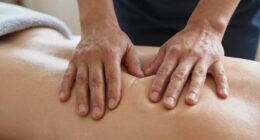

Calf massage can help soothe restless legs by boosting circulation and releasing muscle tension with gentle strokes and targeted pressure. Use light, slow motions and avoid overstretching or pressing directly on bones or nerves, as these can worsen discomfort. Incorporate tools like foam rollers or massage balls for deeper relief, and combine massage with stretching and relaxation techniques. Stay aware of practices that irritate your calves—if symptoms persist or worsen, consulting a healthcare professional is wise. If you want to learn more, keep exploring effective strategies to manage your symptoms.
Key Takeaways
- Gentle long strokes along calves promote circulation and relaxation, alleviating RLS discomfort.
- Targeted pressure on tense spots can relieve muscle tension without irritating nerves or bones.
- Using massage oils and tools enhances comfort and effectiveness during calf massage.
- Avoid over-stretching, excessive pressure, or massaging areas with skin abnormalities or swelling.
- Overuse of caffeine, alcohol, and poor sleep routines can worsen RLS symptoms and irritate calves.
What Is Restless Legs Syndrome and How Does It Affect Your Calves?
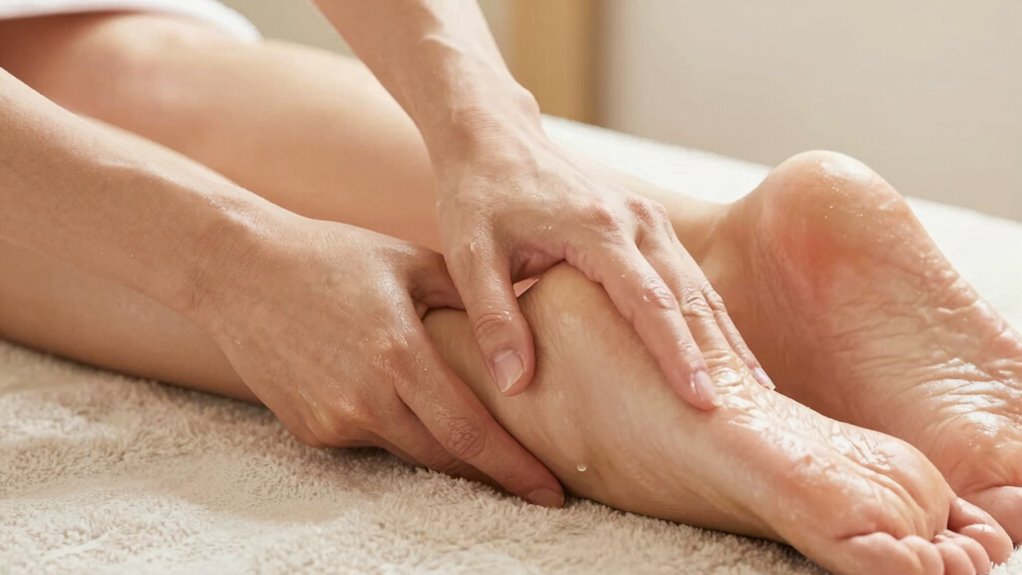
Have you ever experienced an uncontrollable urge to move your legs, especially when you’re trying to relax? That sensation often relates to Restless Legs Syndrome (RLS), a neurological condition that affects your calf muscles and their anatomy. RLS causes uncomfortable sensations, like tingling or crawling feelings, prompting involuntary movements. Its exact cause remains uncertain, but research shows it may involve dopamine pathways in the brain. Historically, massage has been used to soothe muscle discomfort, with roots tracing back centuries across various cultures. While massage may provide relief, understanding how RLS impacts your calves helps you identify triggers and manage symptoms. Recognizing how this condition involves your calf muscles is a key step toward effective relief and treatment strategies.
How Calf Massage Can Help Ease Restless Leg Symptoms

Calf massage can be an effective way to reduce the discomfort associated with Restless Legs Syndrome by promoting relaxation and improving circulation. When you massage your calves, you encourage calf relaxation, which can help ease the involuntary movements and sensations that disrupt your rest. The massage benefits go beyond immediate relief; they help release muscle tension, reduce stiffness, and stimulate blood flow, making symptoms less intense. Regular calf massage can also lower stress levels, further decreasing the likelihood of restless sensations. Incorporating massage techniques into your routine can maximize the benefits and provide targeted relief. Deep tissue work and gentle kneading are particularly effective for muscle tension relief, enhancing overall comfort. Additionally, maintaining an appropriate sleep environment can support your relaxation efforts and improve overall sleep quality. Creating a calming bedtime routine can further enhance these effects and promote better rest. Paying attention to stress management strategies can also help reduce the frequency of restless leg symptoms, making calf massage a valuable part of your self-care. Overall, incorporating calf massage into your routine offers a natural, soothing way to ease restless leg discomfort.
The Best Calf Massage Techniques for Relief
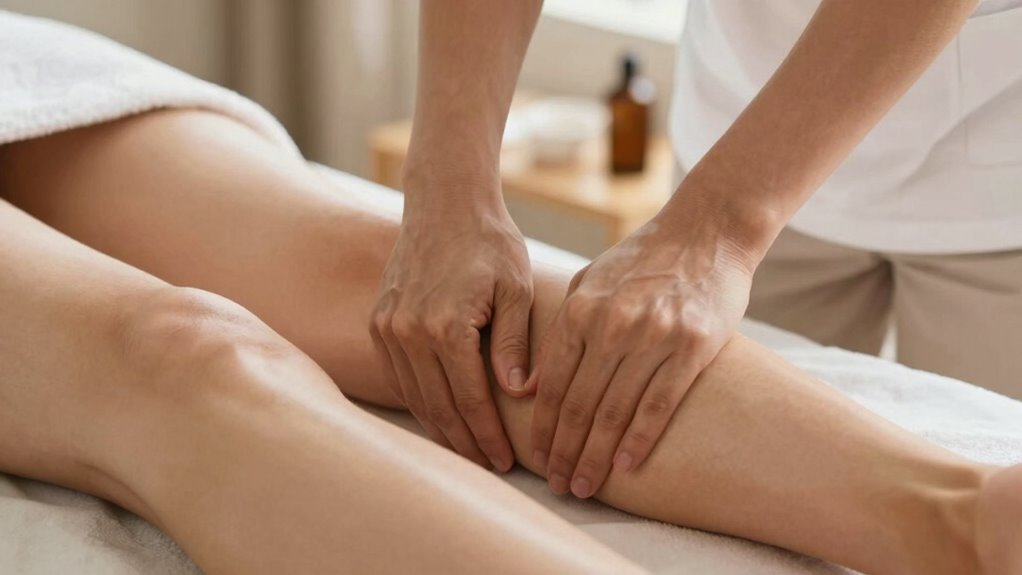
To find relief, start with gentle long strokes along your calf muscles to relax tension. Apply targeted pressure to specific points that feel tight or sore, helping release built-up strain. You can also incorporate massage tools to enhance pressure and reach deeper muscles more comfortably. Additionally, using proper backup power sources can ensure your devices stay charged during outages, preventing unnecessary discomfort or stress. Maintaining clean and safe equipment can also improve massage effectiveness and reduce the risk of irritation. Regularly checking your home charging setup can help ensure safe and reliable power, supporting your overall comfort and well-being during massages. Ensuring your massage environment is free from airborne irritants can further enhance relief and prevent aggravation of sensitive skin or respiratory issues. Investing in air purifier maintenance can help keep the environment free of airborne irritants that might worsen discomfort during massages.
Gentle Long Strokes
Gentle long strokes are one of the most effective techniques for soothing restless legs, as they promote relaxation and improve circulation. By following the calf anatomy, you guarantee each stroke covers the entire muscle group, targeting areas prone to tension. Keep your pressure light and steady, avoiding any discomfort. Use slow, sweeping motions from your ankle toward your knee, then back down, to encourage blood flow and ease muscle tightness. Usually, a gentle massage frequency of about 10 to 15 minutes is enough to provide relief without overstimulating the muscles. Practicing consistent pressure helps prevent overstimulation and ensures a comfortable experience. Incorporating proper technique ensures you maximize the benefits while minimizing the risk of irritation or injury. Additionally, understanding muscle relaxation techniques can further enhance the calming effects of your massage routine, especially when combined with breathing exercises to deepen relaxation.
Targeted Muscle Pressure
Targeted muscle pressure can be highly effective for relieving restless legs by directly releasing tension in specific areas of the calf. Applying firm pressure to tight spots helps reduce muscle tension and stimulates nerves, promoting relaxation. Focus on areas where you feel knotting or discomfort, and hold gentle pressure for 20-30 seconds before moving on. This technique encourages nerve stimulation, which can interrupt the itch or twitch signals associated with restless legs. Remember, too much pressure can irritate nerves and worsen symptoms. Use these tips for ideal relief:
- Apply steady pressure to tense muscle fibers
- Use your fingertips or thumbs for precision
- Avoid pressing directly on bones or nerve points
- Focus on knots and tight bands
- Combine with gentle stretching for better results
- Proper pressure application enhances effectiveness and prevents irritation
- Incorporating innovative materials from sneaker culture, such as those used in Nike Tech, can improve overall comfort during massage routines.
Use of Massage Tools
Using massage tools can enhance your calf relief routine by providing precise and consistent pressure that’s difficult to achieve with hands alone. Tools like massage rollers or handheld massagers target tight muscles effectively, helping reduce restless legs symptoms. When selecting footwear, opt for supportive shoes that don’t restrict circulation, complementing your massage efforts. Incorporating dietary adjustments, such as increasing magnesium intake, can also support muscle relaxation alongside massage therapy. Using tools allows you to focus on specific areas of tension, delivering deeper relief. Be mindful of your footwear choice and how it affects calf muscles, and combine this with regular use of massage tools for ideal results. Additionally, understanding the importance of muscle relaxation techniques can help optimize your relief strategies. Incorporating at-home technology like microcurrent devices or LED therapy may further enhance muscle recovery and comfort. Exploring proper stretching methods can also improve flexibility and reduce tension in your calves. Incorporating self-care practices that promote circulation and relaxation can significantly improve comfort, reduce irritation, and promote better sleep. Exploring advanced massage tools designed for targeted relief can further optimize your calf relaxation routine.
Practices That Could Worsen Restless Legs: What to Avoid
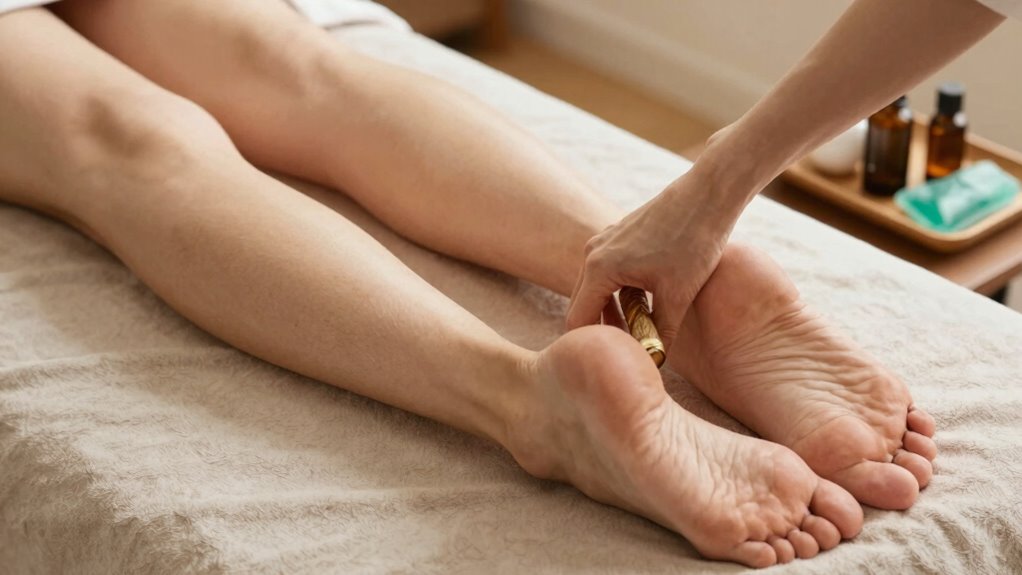
Certain habits can make restless legs worse, so it’s important to recognize and avoid them. Engaging in intense or improper stretching routines can aggravate symptoms. Similarly, poor dietary considerations, like excessive caffeine or lack of magnesium, may worsen discomfort. Avoid these common pitfalls:
- Overstretching calves or leg muscles
- Ignoring balanced nutrition and hydration
- Consuming too much caffeine or alcohol
- Skipping regular exercise or movement
- Relying on quick fixes instead of addressing underlying issues
- Failing to understand the Gold IRA Markets, which can lead to poor investment choices that indirectly affect overall health and well-being. Additionally, neglecting proper user privacy practices can lead to increased discomfort if personal data is mishandled or misused.
Sticking to gentle stretches and maintaining a healthy diet can help manage symptoms. Be cautious with routines that cause muscle strain or disrupt your nutritional balance, as they can intensify restless leg sensations and make relaxation more difficult.
Why Gentle Pressure Is Key When Massaging Your Calves
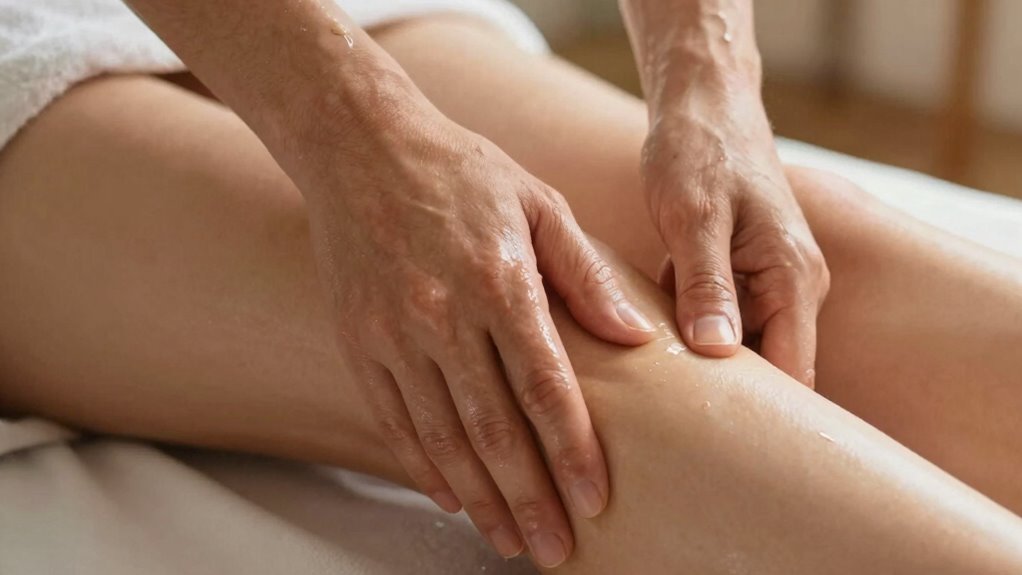
Practicing gentle pressure when massaging your calves can make a significant difference in easing restless leg symptoms. Using light, deliberate pressure helps target specific pressure points that relax muscles without causing discomfort. Applying too much force can irritate nerves or overstimulate your calves, worsening symptoms. Incorporate massage oils to reduce friction and allow smooth, controlled movements, enhancing relaxation. Gentle pressure encourages circulation and helps release tension in tight muscles, which may reduce the urge to move. Focus on slow, steady strokes, especially around key pressure points like the calves’ midsection and behind the knees. Remember, the goal is to soothe your muscles, not to cause pain. Consistent, gentle massage can promote calmness and improve your comfort during restless leg episodes.
Signs That You Should Skip Massage and See a Doctor
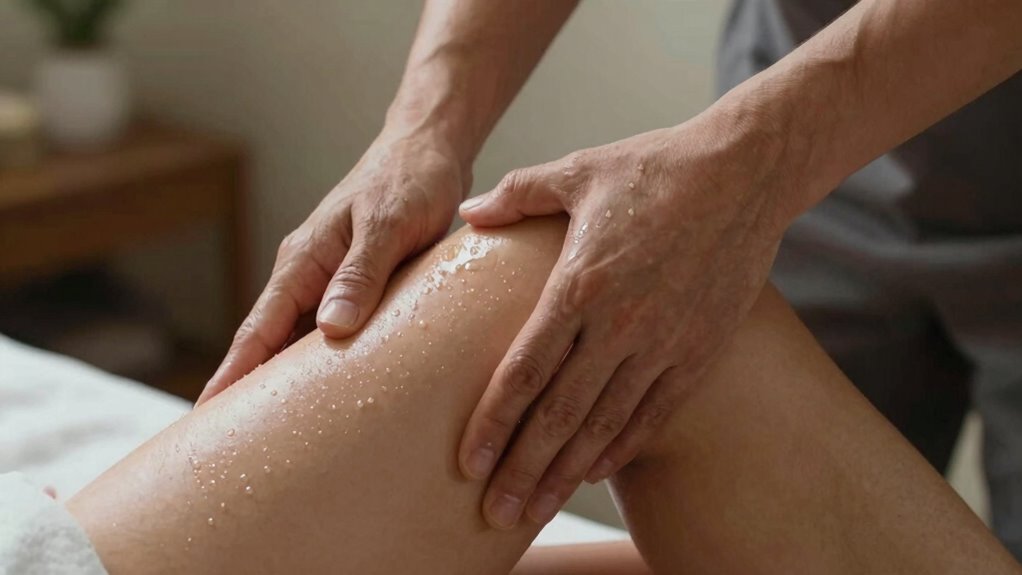
While calf massage can often provide relief, you should see a doctor if you notice persistent or severe symptoms that don’t improve with gentle treatments. If your restless legs are accompanied by worsening sleep disturbances, it’s a red flag. Additionally, avoid massage if you experience:
- Sudden, intense calf pain
- Signs of swelling, redness, or warmth
- Symptoms linked to dietary triggers that worsen your condition
- Numbness or tingling that doesn’t resolve
- Symptoms that interfere with daily activities
These signs could indicate underlying issues needing medical attention, such as nerve problems or circulation issues. Ignoring persistent symptoms might lead to worsening discomfort or complications. Always prioritize professional advice if your symptoms are severe or unresponsive to simple remedies.
Top Tools and Devices for Self-Massaging Your Calves

If you’re considering self-massaging your calves for relief, having the right tools can make a significant difference. Understanding calf muscle anatomy helps you target specific areas for relief, whether it’s the gastrocnemius or soleus muscles. Tools like foam rollers, massage balls, and handheld massagers are excellent options to reach deep tissues without strain. These devices allow you to apply consistent pressure, improving blood flow and releasing tension. Incorporating massage oil benefits, such as reduced friction and enhanced muscle relaxation, makes self-massage more comfortable and effective. Choose tools that suit your comfort level and muscle tightness, and use them regularly to ease restless legs. Proper technique combined with these tools can help alleviate discomfort and promote calf muscle relaxation.
Stretching and Relaxation Tips to Complement Your Massage Routine
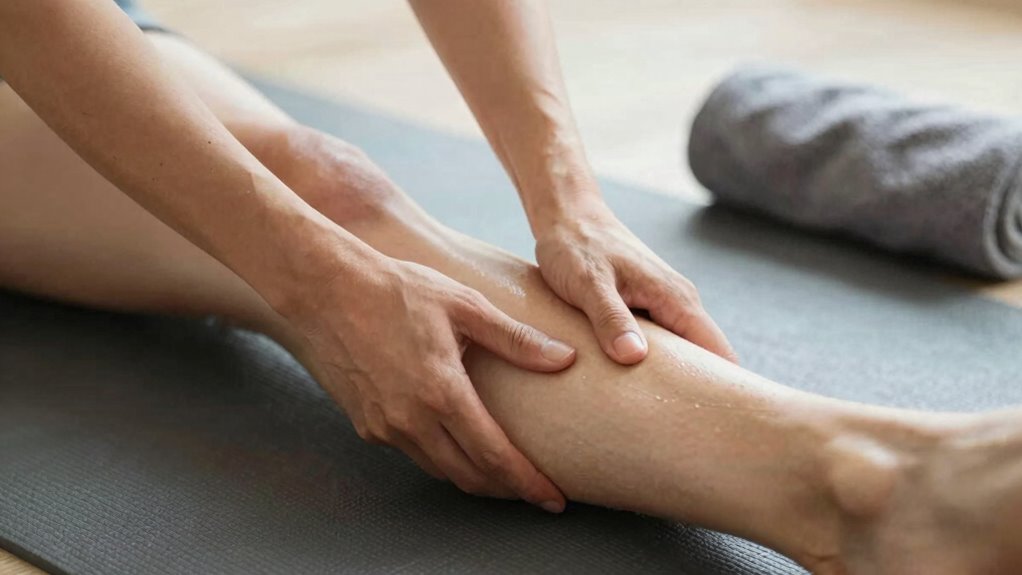
Incorporating gentle stretching techniques can help ease muscle tension and enhance your massage results. Deep breathing exercises promote relaxation and reduce stress that may trigger restless legs. Using relaxation positions, like lying on your back with your legs elevated, can further soothe your calves and improve overall comfort.
Gentle Stretching Techniques
Gentle stretching can considerably enhance your calf massage routine by loosening tight muscles and promoting relaxation. Understanding calf anatomy helps you target specific areas, making your stretches more effective. Use massage oils to reduce friction and ease movement, preventing strain. When stretching, focus on slow, controlled motions that gently lengthen your calf muscles without causing discomfort. This not only complements your massage but also aids in reducing restless legs. Consider these tips for effective stretching:
- Keep movements smooth and steady
- Hold each stretch for 15-30 seconds
- Avoid bouncing or overstretching
- Breathe deeply to deepen relaxation
- Incorporate calf-specific stretches like toe raises or wall stretches
These techniques work best when combined with your massage routine, helping to relax muscles and improve circulation.
Deep Breathing Exercises
Deep breathing exercises can markedly enhance your calf massage routine by promoting relaxation and reducing muscle tension. By focusing on your breathing patterns, you activate relaxation techniques that calm your nervous system. Start with slow, deep inhales through your nose, allowing your lungs to fill completely, then exhale gradually through your mouth. Concentrate on each breath, letting go of any tension as you exhale. Incorporate mindfulness into your practice by paying attention to the sensation of your breath, which helps quiet racing thoughts. Regularly practicing these relaxation techniques alongside your massage can improve blood flow, ease discomfort, and prepare your muscles for better recovery. Deep breathing isn’t just calming—it’s a powerful tool to complement your efforts in managing restless legs effectively.
Relaxation Position Strategies
Choosing the right relaxation position can substantially enhance your calf massage and deepen your sense of calm. Proper positioning helps target pressure points and maximizes relaxation techniques, reducing restless legs. When you lie down, elevate your legs to improve circulation and ease muscle tension. Incorporate gentle stretching to loosen tight muscles and prepare them for massage. Focus on relaxing your calves by avoiding tensing your muscles or crossing your legs tightly. You can also use supportive pillows to maintain a comfortable posture. Remember, relaxation positions should promote openness and ease.
- Keep your legs elevated comfortably
- Use pillows to support your calves
- Maintain a gentle, relaxed posture
- Avoid crossing legs tightly
- Focus on slow, deep breathing
How Often Should You Massage Your Calves for Best Results?
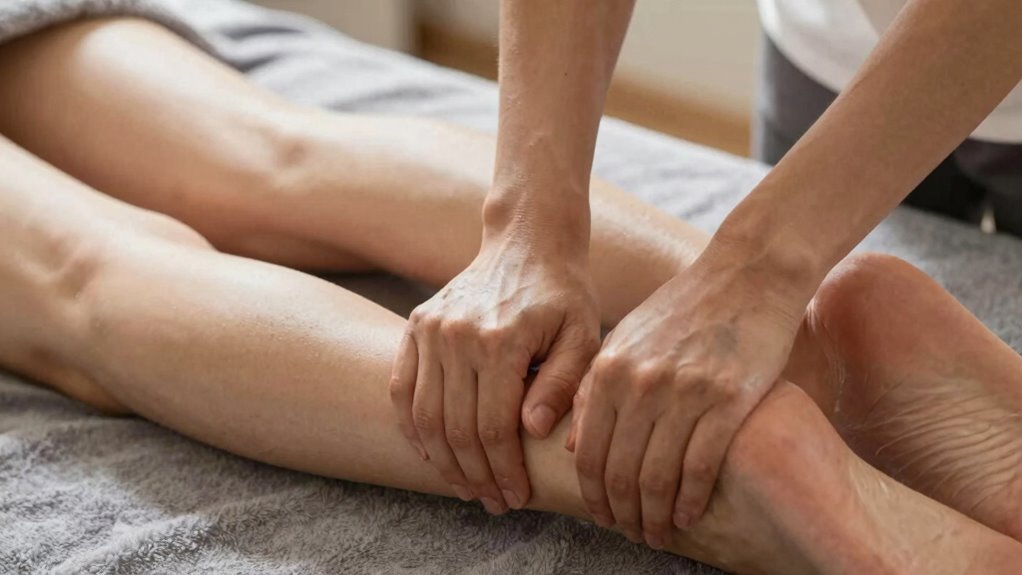
To achieve the best results from calf massage, it’s important to find a balance in how often you perform it. Too frequent massage can increase calf soreness or cause irritation, while too infrequent sessions might not provide relief. Typically, massaging your calves two to three times a week is effective for managing restless legs. If you notice persistent soreness or discomfort, reduce the frequency or intensity. Pay attention to how your calves respond—if soreness diminishes and relaxation improves, your massage schedule is likely appropriate. Consistency is key, but avoid overdoing it, as excessive massage can irritate your muscles and interfere with recovery. Adjust your massage frequency based on your body’s signals to optimize relief and avoid aggravating your restless legs.
When to Talk to a Healthcare Professional About Restless Legs and Massage

If your restless legs persist despite massage and home remedies, it’s time to see a healthcare professional. Watch for signs like severe discomfort, swelling, or changes in skin color, which could indicate underlying issues. Don’t hesitate to seek advice if your symptoms worsen or interfere with sleep and daily activities.
When to Seek Medical Advice
While calf massage can provide relief for many with restless legs, it’s important to recognize when professional medical advice is necessary. If symptoms persist despite trying lifestyle adjustments or if you notice medication interactions affecting your condition, see a healthcare provider. You should seek help if you experience:
- Severe pain or sudden weakness
- Symptoms worsening or not improving
- Unusual sensations like numbness or tingling
- Sleep disturbances affecting daily life
- Signs of underlying conditions, such as anemia or nerve issues
Consulting a professional ensures proper diagnosis and safe treatment options. They can review your medications for interactions and recommend additional therapies. Don’t ignore persistent or worsening symptoms—prompt medical advice can prevent complications and improve your quality of life.
Signs of Underlying Conditions
Noticing unusual symptoms alongside restless legs can indicate an underlying health issue that needs medical attention. If you experience symptoms like muscle weakness, numbness, or tingling, it could signal underlying nerve issues that require diagnosis and treatment. Similarly, persistent fatigue, irregular heartbeat, or cramping might point to electrolyte imbalances affecting your muscles. Pay attention to symptoms that worsen over time or don’t improve with simple remedies like massage. If your restless legs are accompanied by swelling, skin changes, or sudden weight loss, these could be signs of more serious conditions. Don’t ignore these signs—consult a healthcare professional to identify underlying causes and determine the best course of action for your health. Proper diagnosis guarantees effective treatment and relief.
Frequently Asked Questions
Can Calf Massage Permanently Eliminate Restless Legs Syndrome Symptoms?
Calf massage can’t permanently eliminate restless legs syndrome symptoms, but it can provide significant relief. By promoting muscle relaxation and nerve stimulation, massage helps reduce the discomfort and urges associated with RLS. Regular massage may improve your overall comfort, but it’s not a cure. For lasting relief, consider combining massage with medical treatment and lifestyle changes, as RLS often requires ongoing management rather than a one-time fix.
Are There Specific Massage Oils Recommended for Restless Leg Relief?
You can try using massage oils with specific ingredients for restless leg relief. Look for aromatherapy blends that include calming essential oils like lavender, chamomile, or peppermint. When choosing massage oil ingredients, opt for natural carrier oils like almond, jojoba, or coconut oil, which work well with added essential oils. These combinations can help soothe your muscles and reduce discomfort during calf massage sessions.
How Does Diet Influence the Effectiveness of Calf Massage?
Your diet influences how effective calf massage can be, as maintaining a good nutrient balance and staying hydrated make your muscles more receptive to relief. When you consume enough magnesium, potassium, and calcium, your muscles relax better during massage. Plus, drink plenty of water to keep hydration levels ideal, preventing cramps and enhancing massage benefits. Eating well supports overall muscle health, making your calf massage more effective for restless legs.
Can Calf Massage Replace Medication for Severe Restless Legs?
You shouldn’t rely solely on calf massage to replace medication for severe restless legs. While massage therapy can provide relief and reduce dependence on medication, it isn’t a cure. Severe cases often require medical treatment to manage symptoms effectively. Incorporate massage therapy as a complementary approach, but always consult your healthcare provider before making changes to your medication plan to guarantee your safety and the best possible outcome.
Is It Safe to Massage Calves if You Have Varicose Veins?
You should be cautious about massaging your calves if you have varicose veins. Gentle massage can promote circulation, but aggressive or deep massage might aggravate vein issues. Instead, consider compression therapy and improve your vein health through regular movement and elevating your legs. Always consult your healthcare provider before massaging, especially if you have varicose veins, to make certain it’s safe and won’t worsen your condition.
Conclusion
By combining gentle calf massages with soothing stretches, you can turn restless nights into peaceful slumber. Think of your calves as a garden that needs tender care—regular attention helps keep discomfort at bay. Just remember, avoid harsh pressure and listen to your body’s signals. With consistent practice and the right tools, you’ll find relief blooming, allowing you to rest easy and wake up refreshed, ready to face each day anew.