
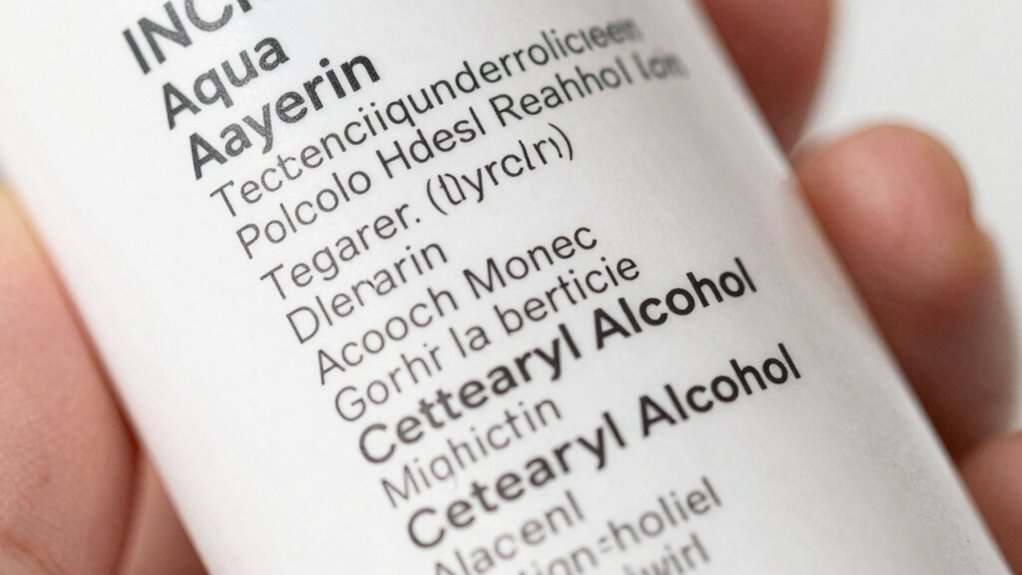
To understand an INCI list without memorizing every ingredient, focus on the order of ingredients—those at the top are the main components, while those at the bottom are present in smaller amounts. Recognize common terms like water, plant sources, and familiar preservatives. Learn to spot ingredients that could cause sensitivities or irritations. By paying attention to these clues, you can make confident choices. Keep exploring, and you’ll discover even more helpful tips for decoding ingredient lists.

Turn your quiet moments into listening time
- Thousands of audiobooks, podcasts and originals
- Listen on your phone, tablet or Echo — also offline
- Cancel anytime
Key Takeaways
- Focus on the top ingredients to identify the main components of the product.
- Learn common ingredient categories like humectants, emollients, and preservatives for quick recognition.
- Recognize familiar terms or Latin names indicating natural sources or specific origins.
- Be aware of potential irritants or allergens, especially in fragrance or preservative ingredients.
- Practice regularly to become more confident in identifying key ingredients without memorization.
Ever wonder how to make sense of the confusing list of ingredients on your skincare or cosmetic products? You’re not alone. The INCI list can seem overwhelming, especially when you’re trying to figure out what’s safe and where the ingredients come from. But you don’t need to memorize every single term to make smarter choices. Instead, focus on understanding the basics of ingredient safety and sourcing, which can help you decipher most labels efficiently.
First, recognize that ingredients are listed in order of concentration, starting with the highest. If you see an ingredient at the top, it’s likely the primary component of the product. Conversely, ingredients at the bottom are present in smaller amounts, which generally means they’re less likely to cause reactions unless they’re known irritants or allergens. Pay attention to common ingredients that have known safety concerns, such as certain preservatives or fragrances, especially if you have sensitive skin. Learning to identify these can save you from potential irritation.
Ingredients are ordered by concentration; top ones are most prominent, while those at the bottom are in smaller amounts.
Ingredient sourcing is also key. When reading the INCI list, look for clues about where ingredients come from. Names like “Aqua” indicate water, which is universally sourced. Sometimes, you’ll see plant-based ingredients labeled with Latin names, such as “Camellia Sinensis” for green tea extract. This helps you understand the origin and purity of the ingredient. If you’re concerned about ethical sourcing or sustainability, do some quick research on ingredients that seem obscure or exotic. Many companies now highlight their sourcing practices, but the INCI list offers clues about whether the ingredients are natural, synthetic, or a blend. Additionally, understanding ingredient sourcing can help you make more ethical and environmentally conscious decisions. Recognizing sustainable ingredients can also guide your choices toward eco-friendly products.
You don’t need to memorize every term. Instead, familiarize yourself with common ingredient categories: humectants (like glycerin), emollients (such as shea butter), preservatives (like parabens), and fragrances. When you see these categories, you can better judge whether a product aligns with your safety standards and sourcing preferences. For example, if you’re avoiding parabens, spotting them in the list is straightforward once you know what to look for. Becoming familiar with ingredient functions can further streamline your shopping process and help you select products that meet your needs.
In essence, reading an INCI list is about understanding the structure and recognizing key terms rather than memorizing every ingredient name. Focus on the order, identify ingredients that are most relevant to your safety concerns, and note clues about sourcing. With a little practice, you’ll become more confident in making informed choices without feeling overwhelmed by the details. This way, you can choose products that are both safe and aligned with your values, all without the need to memorize complex ingredient lists.
INCI ingredient list reader guide
As an affiliate, we earn on qualifying purchases.
As an affiliate, we earn on qualifying purchases.
Frequently Asked Questions
Are All Ingredients Listed in Order of Concentration?
Not all ingredients are listed strictly by concentration, but most follow the ingredient hierarchy outlined by labeling standards. Typically, ingredients appear from highest to lowest concentration, especially in cosmetics and skincare products. However, some exceptions exist, like fragrance or flavor components, which can be listed separately. To understand an INCI list, look for the hierarchy, and remember that ingredients toward the end are often present in smaller amounts.
What Do Abbreviations Like “Peg” or “Eo” Mean?
Think of cosmetic chemistry as a secret language; abbreviations like “PEG” and “EO” are part of it. “PEG” stands for polyethylene glycol, a common thickener or solvent, while “EO” indicates ethylene oxide, used in making surfactants. These ingredient abbreviations help chemists communicate efficiently, but don’t worry—most labels include resources or glossaries. Just remember, understanding these can help you make more informed skincare choices.
How Can I Identify Potential Allergens in the List?
You can identify potential allergens by looking for common allergen indicators like nuts, soy, or fragrances listed explicitly or through ingredient source clarification. Check for ingredients such as essential oils or natural extracts, which may cause sensitivities. Be cautious with ingredients like lanolin or certain preservatives. If unsure, research unfamiliar ingredients or consult allergy resources to understand which components might trigger reactions, ensuring safer product choices.
Do Natural Ingredients Always Appear at the Top?
Natural ingredients don’t always appear at the top because the INCI ingredient hierarchy ranks ingredients by concentration, from highest to lowest. The natural order isn’t a guarantee that prominent ingredients are always natural. Instead, focus on the ingredient list’s order to see what’s most abundant. If natural components are essential to you, look for them early in the list, but remember, the hierarchy reflects concentration, not quality or naturalness.
How Often Do Ingredient Lists Get Updated?
Ingredient lists are updated regularly, often annually or whenever ingredient sourcing changes. About 80% of cosmetic companies revise labels to reflect new formulations and comply with label regulations. This means you should check product labels each time you buy, especially if you’re concerned about ingredient sourcing or allergies. Staying aware of updates helps guarantee you’re informed about what’s in your products and how companies meet current label regulations.
skincare product ingredient analyzer
As an affiliate, we earn on qualifying purchases.
As an affiliate, we earn on qualifying purchases.
Conclusion
Think of reading an INCI list as untangling a web—once you get the hang of it, each ingredient becomes a star in your skincare constellation. You don’t need to memorize every name; instead, learn to navigate the map with confidence. With practice, you’ll spot the good from the bad like a seasoned explorer. So, embrace the journey—your skin will thank you for being a savvy navigator in the vast ocean of ingredients.
natural ingredient skincare products
As an affiliate, we earn on qualifying purchases.
As an affiliate, we earn on qualifying purchases.
sensitive skin preservative-free moisturizer
As an affiliate, we earn on qualifying purchases.
As an affiliate, we earn on qualifying purchases.
Fall Picks
fall essentials
As an affiliate, we earn on qualifying purchases.