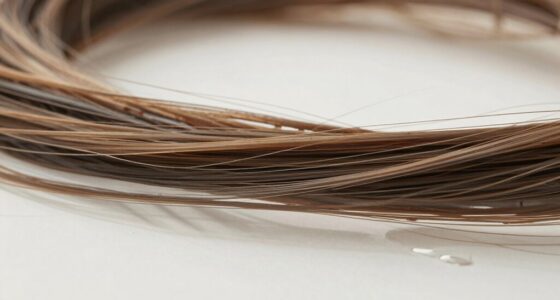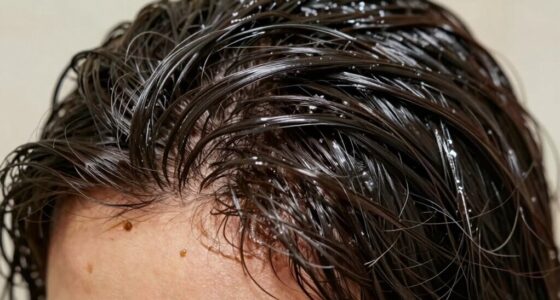

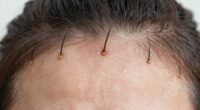
To quickly tell if you’re experiencing hair breakage or shedding, look at your hair strands and scalp. Breakage causes shorter, uneven, fragile strands that snap easily, often after styling or chemical treatments. Shedding, however, usually results in more hair on your brush or pillow and involves hair falling from your scalp naturally during the growth cycle. Spotting these signs helps you choose the right care. To understand more about managing this difference, keep exploring the details below.
Key Takeaways
- Breakage involves hair strands snapping easily, resulting in shorter, uneven hair, while shedding is natural hair loss from the scalp.
- Signs of breakage include brittle, fragile hair, whereas shedding shows increased hair on brushes or pillows.
- Breakage often results from harsh treatments or heat, whereas shedding can be caused by stress, hormonal imbalance, or nutritional deficiencies.
- To diagnose, observe if the hair breaks off easily or if there’s thinning and scalp visibility.
- Persistent or sudden changes in hair quality or quantity warrant consulting a dermatologist for accurate diagnosis.
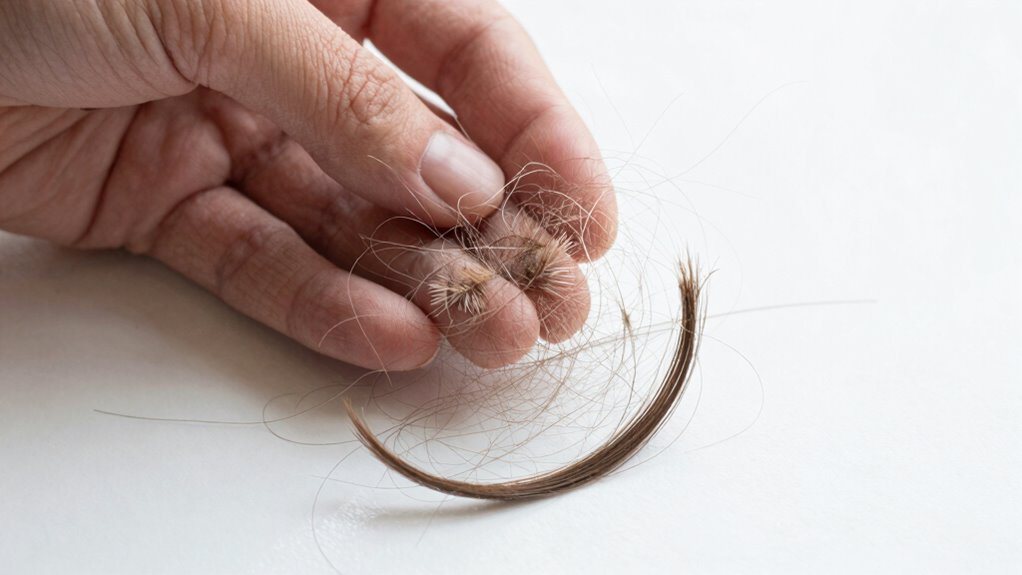
Understanding the difference between hair breakage and shedding is essential because they often get mistaken for each other, but they have distinct causes and implications. When you notice more hair on your brush or pillow, it’s critical to identify whether it’s breakage or shedding so you can address the root cause effectively. Hair breakage typically occurs when the hair shaft becomes weak or damaged, causing strands to snap or split easily. Shedding, on the other hand, involves the natural loss of hair from the scalp as part of your hair’s growth cycle. Recognizing which one you’re experiencing helps you adjust your hair care routines and scalp health strategies accordingly.
Distinguishing hair breakage from shedding helps target the right hair care strategies effectively.
If you’re dealing with hair breakage, you might notice shorter, uneven strands or a sudden increase in hair that feels fragile or brittle. This often results from harsh hair treatments, excessive heat styling, or using products that strip natural oils. When your hair is breaking, it’s a sign that your hair care routines need a gentle touch. Incorporate nourishing products like conditioners with keratin or proteins, and avoid tight hairstyles that pull on your scalp. Focusing on scalp health is crucial because a healthy scalp promotes strong, resilient hair. Regular scalp massages with oils like castor or coconut can boost circulation and deliver nutrients to your hair follicles, reducing breakage over time. Additionally, scalp health plays a vital role in overall hair strength and resilience.
Shedding, however, is a more natural process. It’s normal to lose about 50-100 hairs daily, especially during washing or brushing. But if you notice a sudden increase, or if thinning becomes evident, it might be due to factors like stress, hormonal imbalances, or nutritional deficiencies. Managing shedding involves maintaining a balanced diet rich in vitamins like biotin, iron, and zinc, which support scalp health and hair growth. Also, reducing stress and avoiding harsh chemicals can help stabilize your hair’s natural cycle. If shedding persists or worsens, it’s wise to consult a dermatologist to rule out underlying issues.
Ultimately, understanding whether you’re experiencing breakage or shedding guides you toward more targeted solutions. For breakage, prioritize strengthening your hair through gentle handling and nourishing scalp care routines. For shedding, focus on overall health, proper nutrition, and managing stress. Both require consistent, mindful routines to restore your scalp health and promote resilient, healthy hair. Recognizing the signs early enables you to implement changes that can make a significant difference in the long run, ensuring your hair remains strong, shiny, and healthy.
Frequently Asked Questions
How Can I Prevent Hair Breakage During Styling?
To prevent hair breakage during styling, avoid tight hair accessories that pull on your strands. Limit heat styling tools like straighteners and curling irons, and always use a heat protectant spray. When you do use heat, keep the temperature low. Gently detangle your hair before styling, and opt for protective hairstyles that reduce stress on your hair. These steps help maintain your hair’s strength and minimize breakage.
Are Certain Hair Types More Prone to Breakage?
Some hair types are more prone to breakage, especially if your hair texture is coarse or curly. High porosity hair tends to absorb and lose moisture quickly, making it more fragile and susceptible to damage. Imagine your hair as a delicate fabric—if it’s highly porous or thick, it needs extra care. Understanding your hair texture and porosity helps you choose the right products and techniques to prevent breakage and keep your hair healthy.
What Role Does Diet Play in Hair Shedding?
Your diet plays a vital role in hair shedding. Nutritional deficiencies, like lack of iron, zinc, or biotin, can weaken hair follicles and cause increased shedding. By maintaining healthy eating habits rich in vitamins, minerals, and proteins, you support hair growth and reduce shedding. Ensuring you get enough nutrients helps keep your hair strong and minimizes the chances of excessive hair loss.
Can Hair Breakage Be Reversed Naturally?
Yes, hair breakage can be reversed naturally. You can promote hair repair by using natural remedies like coconut oil, castor oil, or aloe vera to strengthen your strands. Maintain a healthy diet rich in vitamins and minerals, stay hydrated, and avoid excessive heat styling or harsh chemicals. Regularly trimming damaged ends and gentle handling also help prevent further breakage, allowing your hair to recover and grow healthier over time.
When Should I See a Doctor for Hair Loss Concerns?
You should see a doctor if your hair loss worsens, is sudden, or if you notice significant scalp changes, despite trying hair medication or improving scalp health. Seek professional help if you experience persistent shedding, hair breakage, or patchy bald spots. A doctor can diagnose underlying issues, recommend targeted treatments, and help you develop a plan to restore your hair’s health and prevent further loss.
Conclusion
Understanding the difference between hair breakage and shedding is like knowing whether your garden is sprouting new blooms or just losing leaves. When you recognize the signs, you can take action before damage spreads like wildfire. Think of your hair as a delicate dance—keeping it healthy guarantees it moves gracefully, not chaotically. So, pay close attention, nurture your scalp, and let your hair flourish instead of falter. Your crown deserves to shine with confidence.