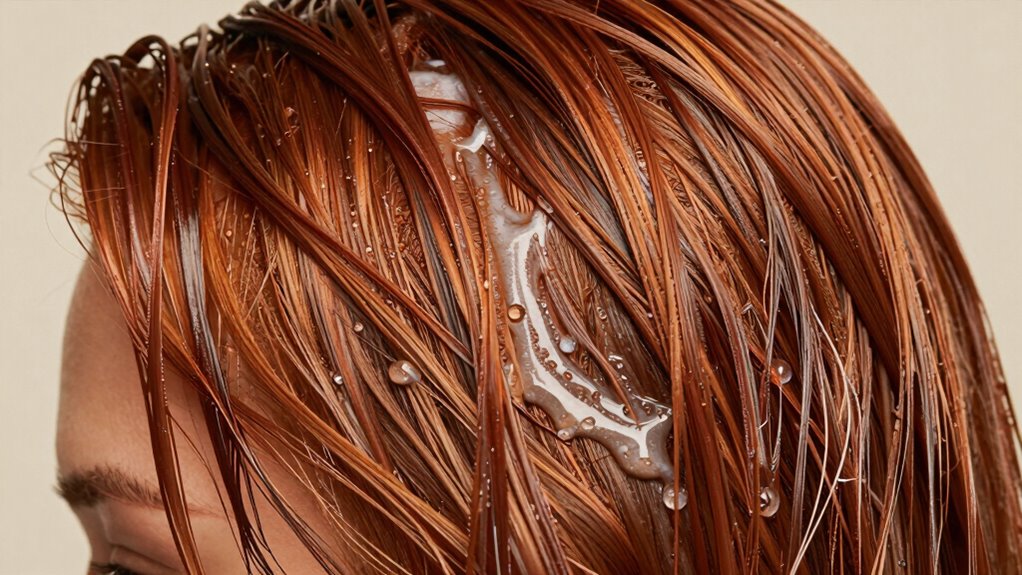

To understand protein versus moisture hair masks, think of proteins as builders that strengthen and repair your hair’s structure, while moisture acts like glue that keeps your hair hydrated and soft. Using too much protein can make your hair stiff or brittle, while too much moisture can leave it greasy or limp. Finding the right balance depends on your hair’s needs; keep exploring to learn how to keep your hair healthy and vibrant.
Key Takeaways
- Protein masks strengthen hair by filling gaps in the cuticle, while moisture masks hydrate and smooth dry, brittle hair.
- Use protein treatments for damaged or chemically processed hair to rebuild strength; moisture masks restore softness and shine.
- Balance is key: overusing protein can cause stiffness, whereas too much moisture may lead to limp or dull hair.
- Alternating between protein and moisture masks helps maintain healthy, resilient, and well-hydrated hair.
- Choose treatments based on your hair’s current condition—protein for damage, moisture for dryness—to achieve optimal hair health.

Are you overwhelmed by the countless hair mask options and unsure which one is right for your hair type? It’s a common dilemma, especially with so many products claiming to restore, hydrate, or strengthen. One of the biggest questions you might face is whether to choose a protein treatment or a moisture-rich mask. Understanding the difference can help you make better choices and avoid damage or disappointment.
Protein treatments focus on strengthening your hair. They work by adding keratin or other proteins that fill in gaps in your hair’s cuticle, reinforcing the structure and preventing breakage. If your hair feels weak, limp, or shows signs of damage from chemical processes or heat styling, a protein mask can help rebuild its strength. But beware—using too many protein treatments or applying them too often can lead to stiffness or brittleness. Your hair’s moisture balance is just as vital as protein, as both need to be in harmony for healthy hair. Think of protein as the bricks of a wall, holding everything together, and moisture as the mortar, keeping everything flexible and hydrated.
On the other hand, moisture masks are designed to hydrate and smooth your hair. If your hair feels dry, brittle, or frizzy, a moisture-rich mask can replenish lost hydration. These masks usually contain ingredients like glycerin, aloe vera, or oils that penetrate the hair shaft to lock in water and restore softness. When your hair’s moisture balance tips too far toward dryness, it becomes prone to breakage and dullness. A moisture mask helps bring it back to a healthy, shiny state, making hair more manageable and less prone to damage. Maintaining the right balance of protein and moisture is essential for overall hair health and resilience.
The key is finding the right balance between protein and moisture. Your hair’s needs depend on its condition and history. For instance, if you color, bleach, or heat style frequently, your hair might need more protein to repair damage. Conversely, if your hair feels limp, lacks shine, or is frizzy, it’s probably craving moisture. Sometimes, your hair benefits from alternating between protein and moisture masks, or even using a product that combines both, to maintain ideal health.
In short, choose your hair masks based on what your hair needs most. Pay attention to how your hair responds after each treatment. If it feels stiff, cut back on protein; if it’s dull or dry, boost with moisture. By understanding the roles of protein treatments and moisture balance, you’ll be able to tailor your hair care routine and keep your hair healthier, stronger, and more vibrant.
protein hair mask for damaged hair
As an affiliate, we earn on qualifying purchases.
As an affiliate, we earn on qualifying purchases.
Frequently Asked Questions
How Often Should I Apply a Protein Hair Mask?
You should apply a protein hair mask once every 2 to 4 weeks, depending on your hair’s needs. Follow a consistent protein treatment schedule to prevent over- or under-arming your hair. If your hair feels weak or brittle, increase the frequency slightly; if it becomes stiff or straw-like, reduce it. Listening to your hair’s response helps you find the perfect hair mask frequency for healthy, balanced strands.
Can I Use a Moisture Mask on Oily Scalp?
Yes, you can definitely use a moisture mask on your oily scalp. But be cautious—choose a lightweight, oil-control formula designed specifically for scalp treatments. Applying too heavy a mask might weigh your hair down or increase oil production. Use it once a week to hydrate without overloading, and watch how your scalp balances out. This simple step could transform your hair care routine and keep your scalp feeling fresh and healthy.
Are There Natural Ingredients That Provide Both Moisture and Protein?
Yes, there are natural ingredients that offer dual benefits of moisture and protein. You can try honey, which deeply hydrates while providing gentle protein support, or avocado, rich in healthy fats and nutrients that nourish and strengthen hair. Eggs are also great, delivering protein and moisture in one. Incorporating these natural ingredients into your hair care routine can help restore balance and improve your hair’s overall health naturally.
How Do I Tell if My Hair Needs More Protein or Moisture?
A stitch in time saves nine, so pay attention to your hair’s needs. If your hair feels brittle, rough, or breaks easily, it likely needs more protein. If it’s limp, oily, or feels heavy, it probably needs moisture. Check your hair’s porosity—high porosity hair absorbs moisture quickly, low porosity needs lightweight hydration. Also, consider your scalp condition; a dry scalp signals moisture deficiency, while a flaky scalp might need protein.
Can Using Too Much Protein Damage My Hair?
Yes, using too much protein can damage your hair through protein overload, leading to brittle, stiff strands. It can also cause a moisture imbalance, making your hair feel dry or limp. To avoid this, balance protein treatments with adequate moisture, and watch for signs like increased breakage or stiffness. Adjust your routine accordingly, and always listen to your hair’s needs to keep it healthy and resilient.
As an affiliate, we earn on qualifying purchases.
Conclusion
Now that you know the difference between protein and moisture, you’re practically a hair care superhero! Remember, using the right mask at the right time can transform your hair from dull to dazzling faster than you can say “amazing.” Don’t let confusion hold you back—embrace the perfect balance, and your hair will thank you with a shine brighter than the sun. Your dream hair is just a mask away, so go ahead and conquer that hair care game!
keratin strengthening hair treatment
As an affiliate, we earn on qualifying purchases.
As an affiliate, we earn on qualifying purchases.
hydrating deep conditioning hair mask
As an affiliate, we earn on qualifying purchases.
As an affiliate, we earn on qualifying purchases.