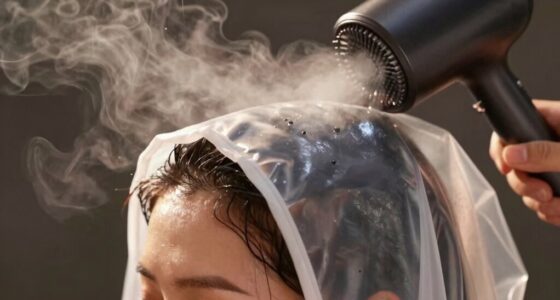
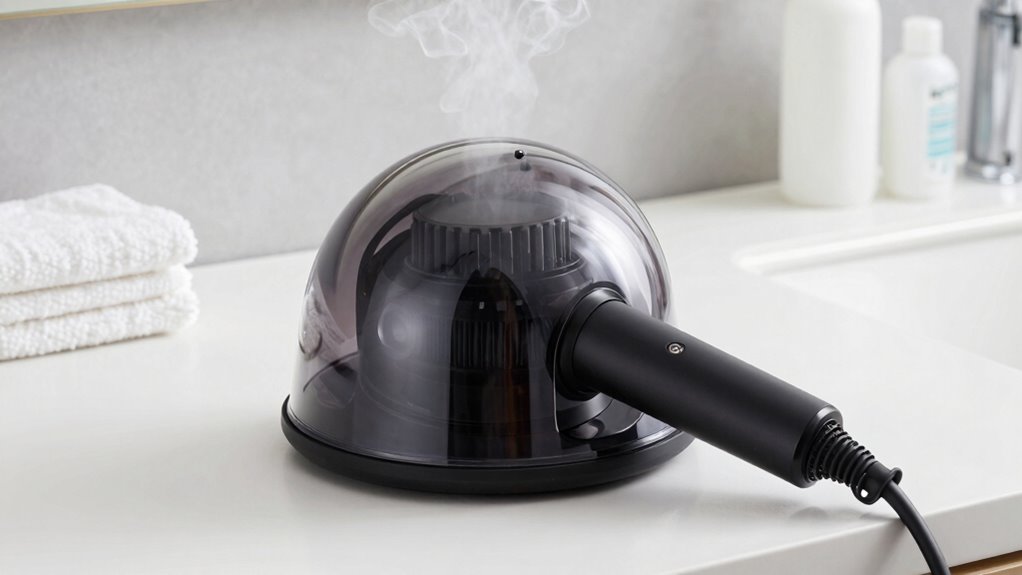

To keep your hooded hair steamer clean and comfortable, regularly check and descale the water reservoir using vinegar or a descaling solution, especially if you notice mineral buildup. Use distilled water to prevent deposits and guarantee even heat distribution. Wipe the interior and exterior after each use, and empty the reservoir to air dry thoroughly. Inspect for damage and maintain hygiene to prevent odors and microbial growth. Keep your device in top shape—there’s more to discover for long-lasting comfort and performance.

Turn your quiet moments into listening time
- Thousands of audiobooks, podcasts and originals
- Listen on your phone, tablet or Echo — also offline
- Cancel anytime
Key Takeaways
- Regularly clean and wipe the interior and exterior surfaces to prevent mold, bacteria, and odors.
- Use distilled water and descaling solutions monthly to reduce mineral buildup and maintain steam quality.
- Inspect and repair the hood for tears or damage to ensure comfort and proper steam retention.
- Perform routine descaling to ensure even heat distribution and prevent device malfunctions.
- Keep the device dry and store it properly to prolong lifespan and ensure a safe, odor-free experience.
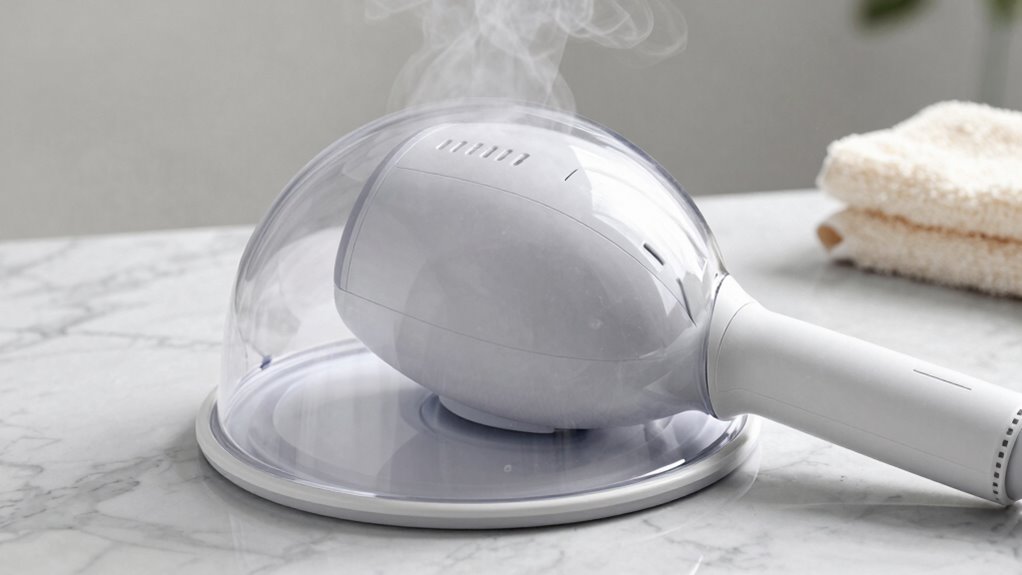
Using a hooded hair steamer can transform your hair care routine, but to enjoy its full benefits, regular cleaning and maintenance are essential. One key aspect is guaranteeing proper steam generator upkeep. Over time, mineral deposits, hair product residues, and dust can build up inside the unit, leading to reduced performance and potential hygiene issues. To keep your steamer functioning at its best, regularly check the water reservoir and descale it as recommended by the manufacturer. Using distilled water can help prevent mineral buildup, guaranteeing a cleaner steam output and prolonging the life of your device.
Regularly descale your hooded hair steamer for optimal performance and longer device lifespan.
Another critical factor is heat distribution enhancement. When the steamer’s heat isn’t evenly distributed, it can result in uneven steaming, which diminishes the efficiency of your hair treatment. To sustain uniform heat, make sure the heating element is functioning properly, and avoid overfilling the water reservoir, as excess water can interfere with heat flow. Periodically inspect the heating plate and internal components for any signs of damage or corrosion. Properly calibrated and well-maintained heat distribution not only enhances your treatment but also reduces the risk of overheating or damaging the device. Regular maintenance practices can help identify issues early and ensure consistent performance. Additionally, understanding how device longevity is impacted by routine care can motivate consistent upkeep. Regular cleaning can also prevent microbial growth, maintaining a healthier environment for your hair care routine and promoting overall device safety.
Cleaning your hooded steamer after each use is crucial to prevent mold, bacteria, and unpleasant odors. Wipe down the interior and exterior with a damp cloth, and empty the water reservoir. Allow the unit to air dry completely before storing it. For more thorough cleaning, run a vinegar or descaling solution through the system monthly, following the manufacturer’s instructions. This process helps remove mineral deposits and buildup, ensuring the steam remains pure and effective. Regularly cleaning and descaling also contribute to the longevity of your steamer, saving you money on repairs or replacements. Proper cleaning practices are essential for maintaining a hygienic and safe device.
Comfort during use depends on consistent steam delivery and a clean, well-maintained device. If your steamer emits uneven steam or has a foul smell, it’s time for a cleaning. A well-maintained steamer produces a steady, gentle flow of steam, which makes your hair treatments more effective and relaxing. Additionally, inspect the hood for any tears or damage, as this can affect comfort and steam retention. Proper maintenance not only enhances heat distribution for better results but also ensures a safer, more comfortable experience every time you use your hooded hair steamer. Keeping the device clean and odor-free can significantly improve your overall experience.
hooded hair steamer descaling solution
As an affiliate, we earn on qualifying purchases.
As an affiliate, we earn on qualifying purchases.
Frequently Asked Questions
How Often Should I Replace the Steamer’s Filters?
You should replace the steamer’s filters every 3 to 6 months, depending on usage and water quality. Regular filter maintenance guarantees peak performance and prevents buildup. Check your device’s replacement schedule, as some models may need more frequent changes. If you notice reduced steam output or strange odors, it’s time to swap out the filters sooner. Keeping up with the replacement schedule keeps your steamer working smoothly and efficiently.
Can I Use Essential Oils in My Hair Steamer?
Think of your hair steamer as a vessel for relaxation—so why not enhance its benefits? You can use essential oils, but only in moderation and with safety in mind. Aromatherapy benefits can make your session more soothing, but always guarantee essential oil safety by diluting them properly and avoiding direct contact with the steamer’s internal parts. This way, you enjoy relaxing, fragrant steam without risking damage or irritation.
Is It Safe to Leave Water in the Steamer Overnight?
Leaving water in your steamer overnight isn’t safe because water residue can cause mold, bacteria, or mineral buildup, which affects steam safety. It’s best to empty and dry the water reservoir after each use to prevent these issues. This simple step helps maintain your steamer’s hygiene and guarantees it operates safely, reducing the risk of malfunctions or health concerns from stagnant water.
What Materials Are Best for Cleaning the Steamer’s Interior?
You should use gentle detergents like mild dish soap or vinegar for cleaning the steamer’s interior. Avoid harsh chemicals that might damage components. It’s best to clean the steamer at least once a month or more often if you notice buildup or odors. Regular cleaning with the right detergent types keeps your steamer hygienic, prevents mold, and guarantees peak performance, making your hair steaming sessions safe and comfortable.
How Do I Prevent Mold Growth in My Hair Steamer?
Think of your hair steamer as a garden needing care to flourish. To prevent mold growth, you must regularly dry the interior after each use—like sunbathing plants to keep mold away. Incorporate proper steamer maintenance by using distilled water and cleaning with vinegar weekly. This routine stops mold from taking root, ensuring your steamer stays fresh and safe. Consistent care is your best defense against unseen mold lurking in your device.
As an affiliate, we earn on qualifying purchases.
Conclusion
By keeping your hooded hair steamer impeccably clean and comfortably maintained, you’re not just ensuring its longevity—you’re elevating your entire haircare routine to a domain of near perfection. Imagine a device so pristine, it glows with an almost celestial aura, transforming every session into a luxurious spa experience. With diligent upkeep, your steamer becomes more than a tool; it becomes your trusted partner in achieving hair so radiant, it could outshine the stars themselves.
distilled water for hair steamer
As an affiliate, we earn on qualifying purchases.
As an affiliate, we earn on qualifying purchases.
As an affiliate, we earn on qualifying purchases.
Halloween Picks
halloween
As an affiliate, we earn on qualifying purchases.