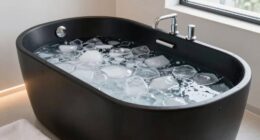
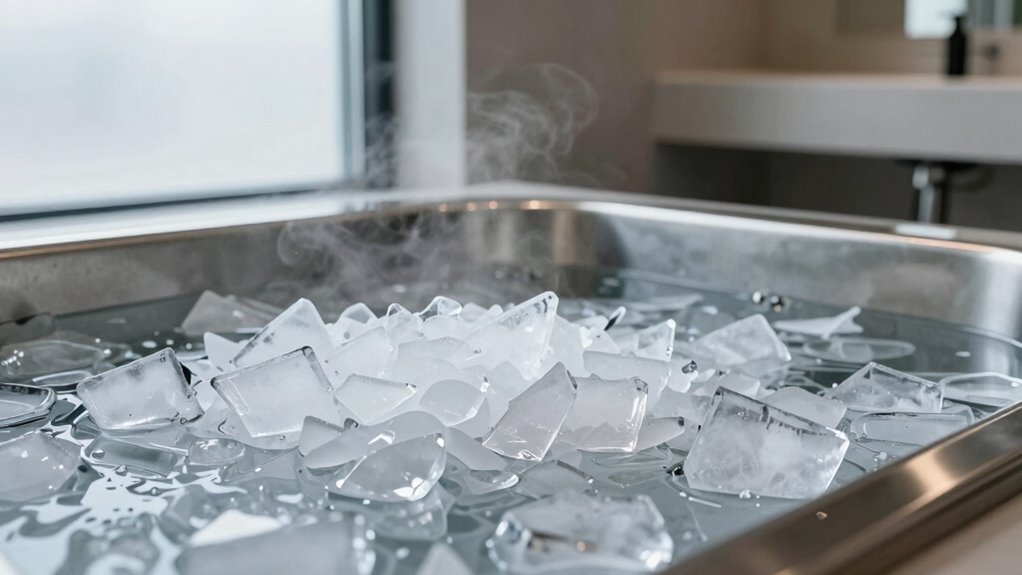

Cold plunge and ice bath differ mainly in temperature control and intensity, affecting your comfort. Cold plunges usually involve naturally cooled water at 50-60°F, offering a milder, more natural experience. Ice baths use added ice to push water below 50°F, making them more intense and less comfortable for some. Choosing the right method depends on your tolerance and goals. If you want to learn more about balancing comfort and benefits, keep exploring the details.
Key Takeaways
- Cold plunges offer naturally cooled water with less precise temperature control, providing a milder, more comfortable experience.
- Ice baths allow exact temperature adjustments below 50°F, creating a more intense sensation that may impact comfort.
- Shorter durations and moderate temperatures (50-59°F) in both methods enhance comfort and reduce risk of discomfort or hypothermia.
- Gradual exposure and mental resilience improve comfort levels regardless of cold therapy type.
- Proper preparation, water quality, and listening to your body’s signals are essential for safe, comfortable cold therapy.
What Are Cold Plunges and Ice Baths: and How Do They Differ?
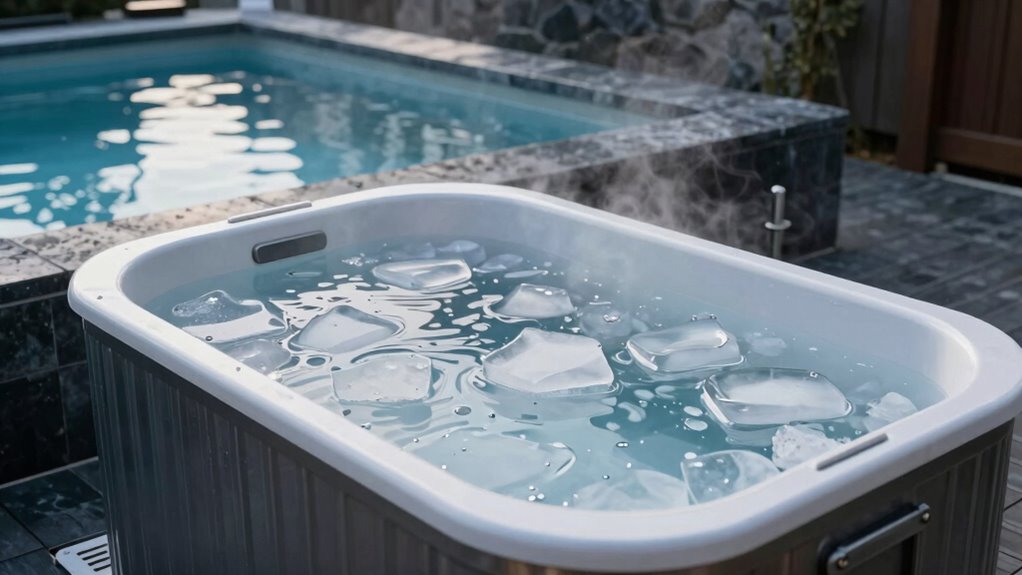
Cold plunges and ice baths are popular methods for rapid cooling therapy, but they have distinct differences. Both techniques help with temperature regulation and boost mental resilience, yet they vary in setup and intensity. A cold plunge involves immersing yourself in a naturally cooled pool or tub, often at ambient temperatures, typically between 50-60°F (10-15°C). An ice bath, on the other hand, uses added ice to lower the water temperature, usually to 50°F (10°C) or below. The key difference lies in control: ice baths allow you to precisely adjust the temperature, making them more intense. Cold plunges offer a more natural, less controlled experience. Both methods challenge your mental resilience, but ice baths tend to push you further, demanding greater focus and mental toughness. Temperature control is a crucial factor in choosing between the two methods, as it impacts both safety and effectiveness. Proper safety considerations and awareness of potential risks are essential to prevent adverse effects and enhance recovery outcomes. Additionally, understanding the preparation and monitoring are vital for ensuring safe and beneficial use of both techniques. Being aware of body response during immersion can help prevent overexposure and ensure comfort.
What Are the Best Temperatures and Durations for Comfort?
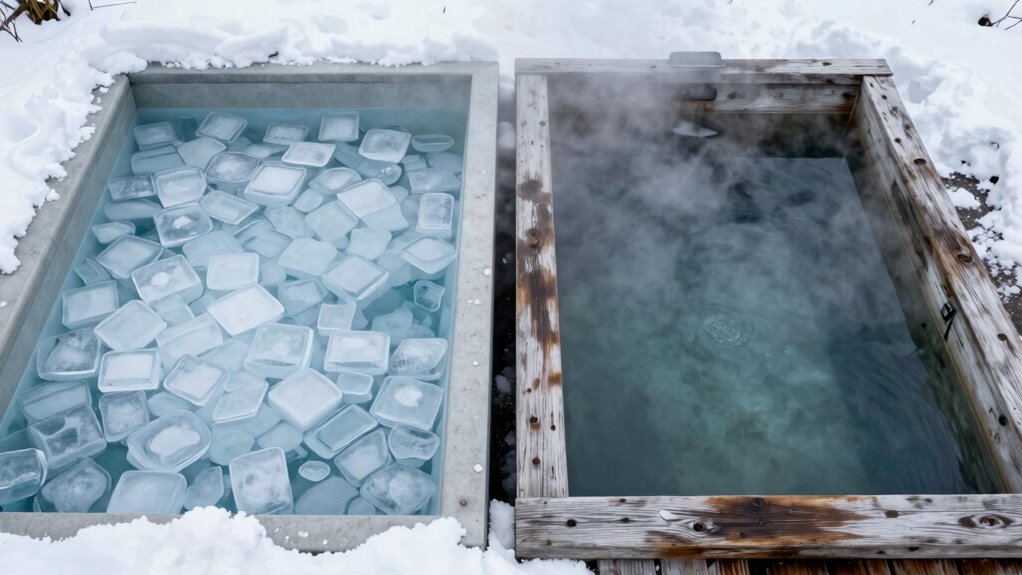
Finding the right temperature and duration is key to comfort during cold immersion. Generally, an ideal range is between 50°F and 60°F, with most people staying in for 5 to 10 minutes. To stay comfortable, listen to your body and consider personal tips like gradual acclimation and proper warming afterward. Additionally, understanding safe temperature ranges can help prevent adverse effects and ensure a beneficial experience. Monitoring water quality can also enhance comfort and safety during cold immersion. Adjusting your immersion time based on individual tolerance is also important to optimize comfort and safety. Being aware of proper hydration during and after cold exposure can further improve your overall experience. Recognizing signs of discomfort can help you prevent overstaying and ensure a more enjoyable cold immersion.
Optimal Temperature Range
Choosing the right temperature and duration for a cold plunge or ice bath is essential for maximizing benefits while ensuring comfort. The ideal temperature range typically falls between 50°F to 59°F (10°C to 15°C), allowing your body to regulate temperature without overwhelming your senses. When you stay within this range, you support effective temperature regulation and promote gentle sensory adaptation, preventing discomfort or shock. The goal is to find a balance that challenges your body without causing undue distress. Proper temperature control helps create a safe and effective experience. Consider these points: – Maintain temperatures that encourage gentle sensory adaptation rather than abrupt shock – Keep immersion time short initially, then gradually extend as comfort improves – Listen to your body’s responses to avoid overexposure – Comfort increases when your body adapts smoothly without feeling overwhelmed, and consistent temperature management enhances overall comfort. Additionally, understanding your individual tolerance levels can help tailor the experience for optimal comfort and safety. Recognizing individual tolerance can also prevent adverse reactions and improve overall recovery outcomes. Being aware of water quality and how it influences your immersion can further enhance your safety and comfort during cold therapy sessions.
Ideal Immersion Time
To maximize comfort and benefits, selecting the right immersion duration is essential. Your temperature perception plays a key role in determining how long you can comfortably stay immersed. Generally, shorter durations—around 10 to 15 minutes—are ideal for maintaining comfort while still gaining benefits. Staying too long can lead to discomfort, as your comfort psychology shifts with prolonged cold exposure, making the experience more stressful than soothing. Listen to your body; if you start feeling numb or excessively cold, it’s time to exit. The goal is to strike a balance where the cold stimulates recovery without overwhelming your senses or causing discomfort. Understanding your personal limits ensures you enjoy the therapeutic effects without sacrificing comfort. Safe practices in cold immersion, including proper duration, are essential for a positive experience. Additionally, awareness of your cold perception can help you tailor each session to your comfort level, ensuring safe and effective immersion. Recognizing your body’s response helps prevent overexposure and enhances your overall experience. Being mindful of individual differences in cold tolerance can further optimize your comfort and safety during immersion sessions. Incorporating sound knowledge of optimal temperatures and durations from reputable sources can further improve your experience and safety.
Personal Comfort Tips
While individual preferences vary, maintaining a water temperature between 50°F and 59°F (10°C to 15°C) often provides a comfortable balance for most people. To enhance your comfort, focus on hydration strategies before and after your session, ensuring your body stays well-hydrated. Mental preparation is key—visualize the experience to reduce anxiety and build resilience. Additionally, understanding cold exposure safety considerations can help you recognize your limits and prevent overexposure. Being aware of thermoregulation can help you better manage your body’s response to cold conditions. Incorporating personal safety practices, such as having a warm towel or blanket nearby, can further improve your experience. Consider these personal tips:
- Gradually acclimate your body with shorter dips initially
- Use deep breathing to stay calm during immersion
- Keep your head and extremities warm with hats or gloves
- Listen to your body—exit if discomfort becomes too intense
Adding cold adaptation techniques can also help you build tolerance over time and improve your overall experience.
How Do Water Temperature and Duration Affect Comfort in Cold Therapy?
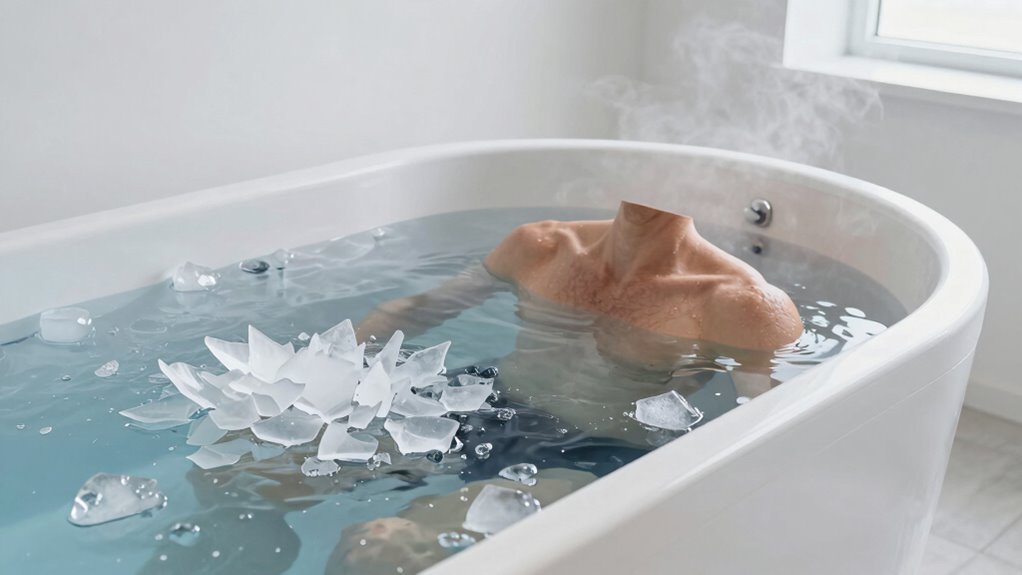
Your comfort during cold therapy depends on finding the right water temperature and duration. Temperatures that are too cold or sessions that last too long can cause discomfort or skin sensitivity. Understanding these thresholds helps you optimize relief without risking irritation.
Temperature Thresholds for Comfort
Understanding the right water temperature and duration is crucial for comfort during cold therapy. Your temperature perception varies, and finding the threshold where cold feels invigorating rather than overwhelming is key. Thermal adaptation occurs as your body adjusts, so gradual exposure helps build tolerance.
Consider these factors:
- Too cold, and discomfort turns into pain or numbness, risking injury.
- Temperatures around 10-15°C (50-59°F) often strike a balance for many, but individual thresholds differ.
- Longer exposure at mildly cold temps can become tolerable, while brief dips into colder water may still feel intense.
- Listening to your body’s signals prevents overexposure, ensuring a comfortable, effective experience.
Knowing your limits helps you enjoy the benefits without unnecessary stress on your body.
Optimal Duration for Relief
The duration you spend in cold water considerably influences your comfort and recovery benefits. To optimize relief, aim for a balance where temperature control is maintained without overstaying your welcome. Typically, 10 to 15 minutes is sufficient for most people, but this depends on water temperature and your individual tolerance. Staying too long in colder water can lead to discomfort or even hypothermia, while too short a session might not provide full benefits. Developing mental resilience helps you withstand initial discomfort and stay calm during the process. Listen to your body, gradually increase duration, and adjust based on your comfort level. Proper timing ensures you gain maximum recovery benefits without sacrificing comfort or safety.
Skin Sensitivity Factors
Water temperature and duration directly influence how comfortable you feel during cold therapy, especially for sensitive skin. If your skin is prone to irritation or has high temperature sensitivity, you might experience discomfort or redness more quickly. Too cold water or prolonged exposure can trigger skin irritation or even pain, making the experience unpleasant. To avoid this, start with milder temperatures and shorter sessions, listening to your body’s signals.
- Feel the sting of sudden cold and dread the chill creeping in
- Notice your skin turning red or feeling tight and raw
- Fear lasting irritation after the session
- Struggle with choosing the right balance between relief and discomfort
What Physical and Mental Factors Influence How Comfortable Cold Therapy Feels?
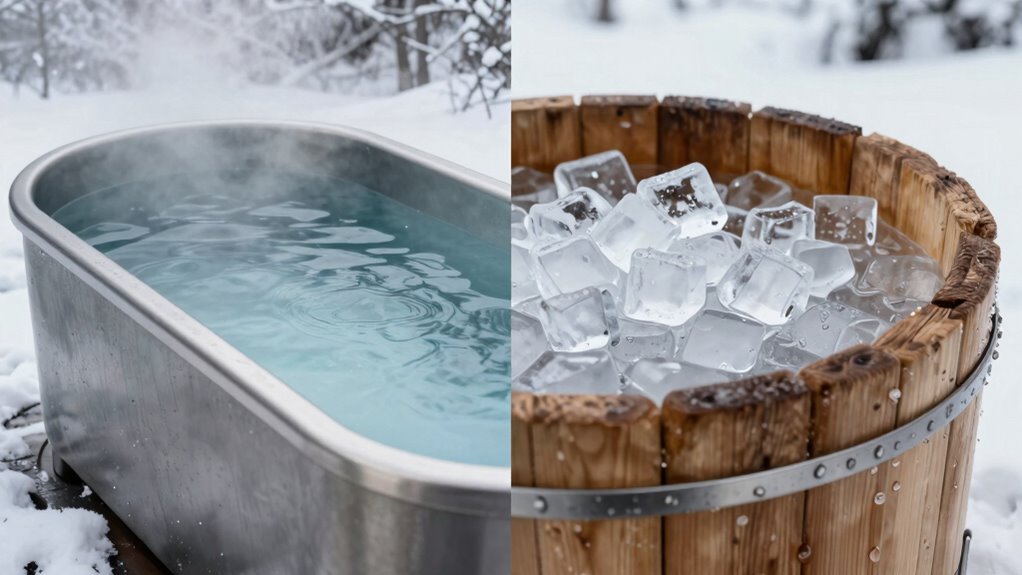
Your experience with cold therapy depends heavily on both physical and mental factors. Psychological resilience plays a key role; if you can stay calm and manage discomfort mentally, you’ll find the cold less overwhelming. Thermal adaptation also influences comfort—your body adjusts over time, making each session easier. Regular exposure to cold helps your blood vessels constrict and dilate more efficiently, reducing initial shock and discomfort. Additionally, your overall physical health, circulation, and skin sensitivity impact how cold feels. A positive mindset and gradual acclimation can markedly improve your comfort level. Recognizing these factors allows you to approach cold therapy more confidently, easing the process and maximizing benefits without unnecessary distress.
How Can You Make Cold Plunges or Ice Baths Easier to Incorporate Into Your Routine?
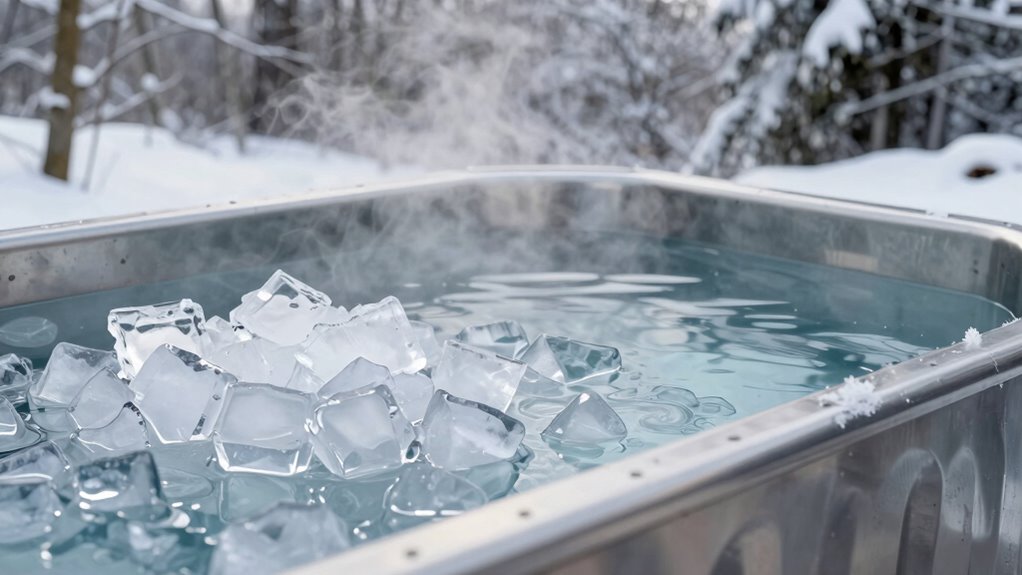
Integrating cold plunges or ice baths into your routine becomes easier when you start gradually. Begin with shorter sessions, allowing your body to adapt without feeling overwhelmed. Focus on breathing techniques—deep, steady breaths can help manage discomfort and promote relaxation. Staying hydrated with water or electrolyte drinks is essential; proper hydration reduces shock and aids recovery. To make the experience more inviting, try warming up with gentle movement beforehand or having a warm cloth nearby. Remember, consistency builds comfort, so stick with it without pushing too hard too fast. Small adjustments now can make these cold therapies feel more manageable, helping you embrace the benefits without the stress. Your body will thank you for the mindful approach.
What Safety Tips Help You Stay Comfortable and Safe During Cold Therapy?
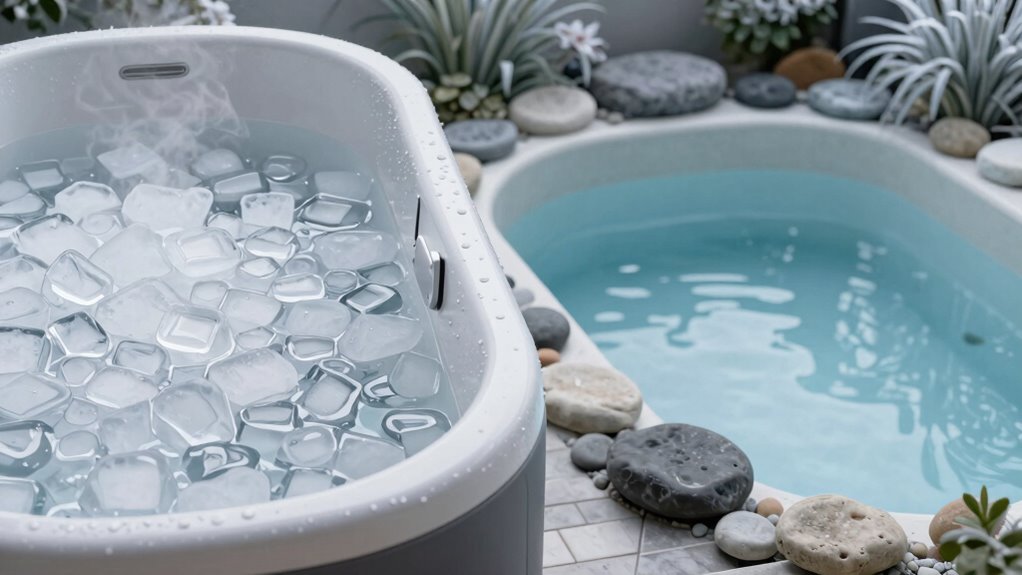
To stay comfortable and safe during cold therapy, it’s important to listen to your body’s signals and proceed gradually. Start with shorter sessions and gradually increase duration as your body adapts. Follow safety precautions like avoiding immersion if you have cardiovascular issues or poor circulation. Keep a timer nearby to prevent overexposure, and don’t immerse your head to reduce the risk of shock. Comfort strategies include wearing insulating gear if needed and warming up slowly afterward. Stay alert for signs of discomfort, numbness, or dizziness, and exit the cold bath immediately if these occur. Hydrate well before and after your session. These safety tips ensure you enjoy cold therapy benefits without risking your well-being.
How Do You Choose the Most Comfortable Cold Therapy Method for You?
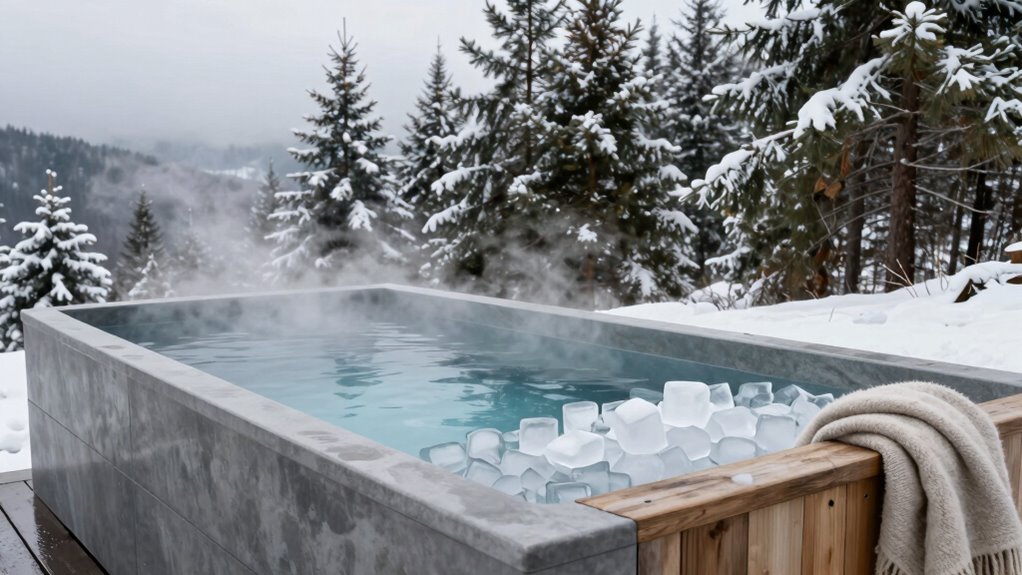
Choosing the most comfortable cold therapy method depends on your personal preferences, body response, and specific goals. To find what works best, consider how your mental resilience impacts your comfort and recovery. Think about water quality—clean, well-maintained water can considerably boost your experience.
Choose a cold therapy method that suits your preferences and water quality for a more comfortable recovery experience.
Reflect on these factors:
- Does submerging in a plunge pool or taking an ice bath feel less intimidating?
- Are you sensitive to water temperature fluctuations?
- Do you prefer a quick, intense cold or a gradual chill?
- How important is the environment’s cleanliness and water quality to your peace of mind?
Your comfort hinges on understanding these elements and choosing a method that aligns with your needs, ultimately making cold therapy a positive, empowering practice.
Frequently Asked Questions
Can Mental Preparation Improve Comfort During Cold Therapy Sessions?
Yes, mental preparation can markedly improve your comfort during cold therapy sessions. Building mental resilience helps you better manage the shock and discomfort, making the experience more tolerable. Visualization techniques allow you to picture yourself staying calm and relaxed, which can reduce anxiety and physical stress. By practicing these mental strategies beforehand, you increase your ability to endure cold exposure with greater ease and comfort.
What Clothing or Accessories Enhance Comfort in Cold Plunges?
Studies show that wearing thermal accessories can increase comfort during cold plunges by up to 30%. To stay warm, you should opt for moisture-wicking clothing that keeps sweat away from your skin. Consider thermal gloves, a neoprene cap, or insulated socks to protect extremities. These accessories help maintain body heat, making your experience more comfortable and allowing you to enjoy cold therapy benefits without discomfort.
How Do Personal Health Conditions Affect Cold Therapy Comfort?
Your personal health conditions considerably impact your comfort with cold therapy. If you have medical considerations like heart issues, circulation problems, or nerve disorders, cold plunges can pose risks or cause discomfort. Always consult your doctor before trying cold therapy, and listen to your body. Adjust exposure time or temperature accordingly, and prioritize safety. Being aware of your health helps you enjoy cold plunges without unnecessary discomfort or health complications.
Are There Specific Breathing Techniques to Increase Cold Therapy Tolerance?
You can increase your cold therapy tolerance by practicing breathing exercises and relaxation techniques. Focus on deep, slow breaths to activate your parasympathetic nervous system, helping you stay calm and focused. Techniques like diaphragmatic breathing or box breathing can reduce panic and improve your comfort during cold exposure. Consistent practice strengthens your ability to remain relaxed, making cold therapy more manageable and effective over time.
Does the Time of Day Influence Comfort During Cold Plunges or Ice Baths?
The timing effects can influence your comfort during cold plunges or ice baths, so consider incorporating them into your daily routine at consistent times. You might find mornings or evenings more tolerable, depending on your body’s response. Experimenting with different times helps your body adapt, making the experience more comfortable over time. Regularly scheduling your cold therapy sessions can enhance your tolerance and overall comfort.
Conclusion
Think of cold therapy like dipping your toes into a chilly pond—at first, it’s startling, but with the right approach, it becomes invigorating rather than uncomfortable. Whether you choose a cold plunge or an ice bath, adjusting the temperature and duration can turn a formidable experience into a soothing ritual. Just like braving the cold water in a lake, taking small, mindful steps helps you find comfort and reap the benefits of cold therapy safely.