
To detangle without breakage, start by ensuring your hair is lightly damp and apply a leave-in conditioner or detangling spray. Section your hair into small, manageable parts and gently loosen knots with your fingers from the ends upward. Use a wide-tooth comb or detangling brush, starting at the tips and working toward the roots with patience. Gentle handling and proper technique are key—continue exploring these steps for a healthier, damage-free detangling routine.
Key Takeaways
- Start with damp hair lightly spritzed with water or leave-in conditioner for better slip.
- Divide hair into small, manageable sections before beginning detangling.
- Begin detangling from the ends, gently working upward toward the roots.
- Use a wide-tooth comb or detangling brush with gentle, slow strokes.
- Finish with a leave-in conditioner or detangling spray to reduce friction and breakage.
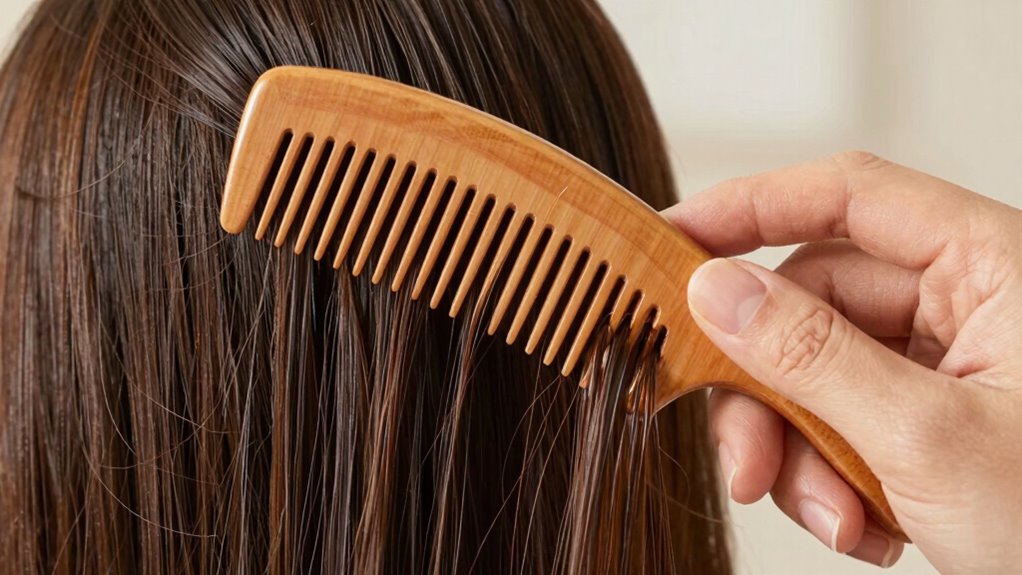
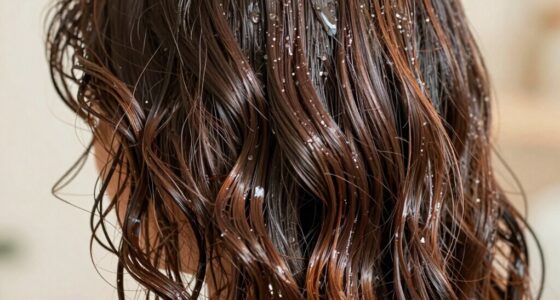
Detangling your hair can be a delicate process, but with the right techniques, you can prevent breakage and maintain healthy strands. The key is to develop effective hair care routines that prioritize gentle handling and to incorporate protective styles into your regimen. When you’re ready to detangle, start by ensuring your hair is damp—not soaked, but sufficiently moist. Wet hair is more elastic and less likely to break, so spritz it lightly with water or apply a leave-in conditioner to soften knots. This initial step sets the foundation for a smooth detangling process.
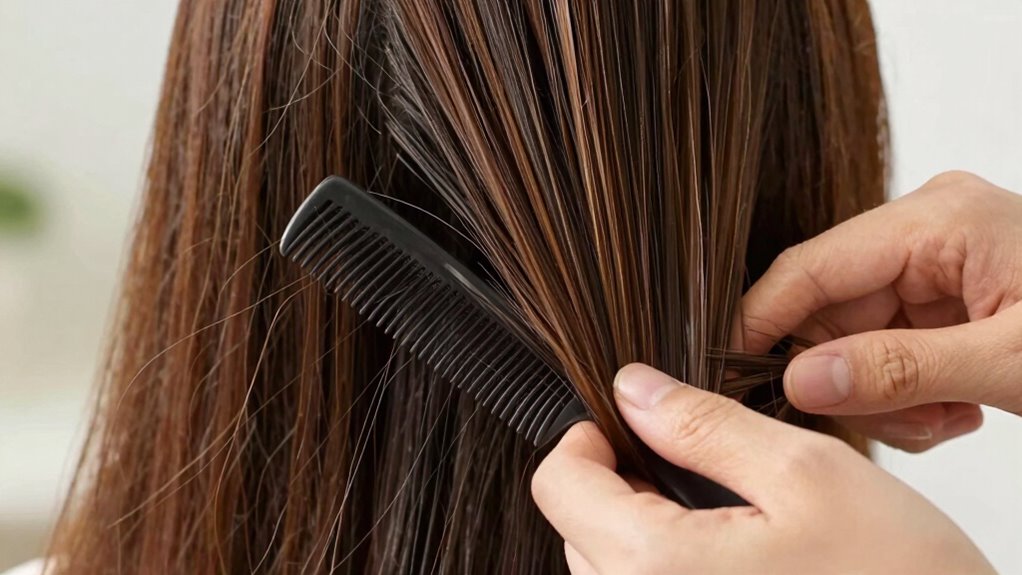
Next, divide your hair into manageable sections. Working on small sections allows you to focus without tugging or pulling, which can cause damage. Use your fingers to gently loosen any tangles first; this reduces the risk of pulling out strands when you start using tools. For those with thicker or more textured hair, detangling with a wide-tooth comb or a detangling brush is most effective. Always start from the ends and work your way up toward the roots, gently guiding the comb through each section. Patience is essential—rushing through can lead to unnecessary breakage.
Divide hair into small sections and gently loosen tangles with fingers before using a wide-tooth comb.
Incorporating protective styles, like braids or twists, into your hair care routines can minimize daily manipulation and tangling. When your hair is styled neatly and securely, it’s less exposed to environmental damage and less prone to knots. These styles also make detangling sessions easier since you can work on smaller sections at a time without disturbing your overall style. Remember, the goal is to handle your hair with care, avoiding rough combing or aggressive brushing that can weaken strands over time.
As you progress with detangling, keep a leave-in conditioner or detangling spray nearby. These products add slip, making it easier to glide through knots without pulling or breaking hair. Always be gentle, especially around tangled areas—if you encounter resistance, don’t force the comb through. Instead, carefully work out the tangle with your fingers or reapply a bit more conditioner to loosen it. After completing each section, gently smooth your hair with your hands or a soft brush to distribute products evenly and reduce frizz.
Regularly incorporating protective styles into your hair care routines, combined with gentle detangling techniques, will help you maintain healthy, resilient hair. The process may take time, but with patience and consistency, you’ll see fewer breakages and healthier strands. Remember, the goal isn’t just to detangle but to do so in a way that nurtures your hair’s strength and integrity at every step. Additionally, understanding the importance of contrast ratio can help you appreciate how proper lighting and environment influence your overall hair care experience and results.
Frequently Asked Questions
Can Detangling Damage All Hair Types Equally?
No, detangling doesn’t damage all hair types equally. Your hair texture plays a big role; curly or coarse hair needs gentler, less frequent detangling to prevent breakage, while straight or fine hair might handle more frequent sessions. Always adjust your detangling frequency and technique to suit your hair, using proper tools. This personalized approach helps minimize damage and keeps your hair healthy regardless of its type.
How Often Should I Detangle to Prevent Breakage?
You should detangle your hair based on your hair type considerations and avoid overdoing it. For curly or textured hair, detangle once or twice a week to prevent breakage, while straighter hair can handle more frequent sessions. Listen to your hair’s needs and adjust your detangling frequency accordingly. Use a gentle approach and a suitable product to minimize damage, ensuring your hair stays healthy and strong.
Is Detangling With Certain Tools Better for Fragile Hair?
Using the right tools is vital for fragile hair. You should choose tools like wide-tooth combs or detangling brushes designed for gentle detangling. Consider your hair porosity; low-porosity hair benefits from tools that minimize pulling, while high-porosity hair may require more careful handling. Avoid fine-tooth combs or harsh brushes, as they can cause breakage. Always detangle slowly and start from the ends, working your way up.
Does Detangling Technique Affect Scalp Health?
Detangling technique impacts scalp health like gentle pruning helps a plant thrive. You should avoid harsh pulling, which can cause scalp irritation and damage. Regular scalp exfoliation removes buildup, promoting healthier hair growth. Be mindful of your detangling frequency—too often can irritate your scalp, while too infrequent might lead to product buildup. Use gentle tools and proper technique to keep your scalp healthy and avoid unnecessary stress.
Can Natural Oils Help Reduce Hair Breakage During Detangling?
Yes, natural oils can help reduce hair breakage during detangling. When your hair has high porosity, oils penetrate better, providing lubrication and reducing friction. Conversely, low porosity hair absorbs less oil, so applying a lighter oil helps prevent breakage. Distributing the right oil evenly makes detangling smoother, minimizes stress on your strands, and protects against damage. Always choose oils suited to your hair porosity for the best results.
Conclusion
By following these steps, you’ll gently glide through knots, minimizing breakage and maintaining your hair’s health. Use patience to loosen stubborn tangles, apply conditioner to soften each strand, and detangle from ends to roots. Feel the smoothness as your hair flows freely, the strands gleaming with vitality. Embrace the process with care, confidence, and consistency. With each gentle stroke, you’ll restore your hair’s strength, beauty, and resilience—leaving you confident, carefree, and ready to shine.