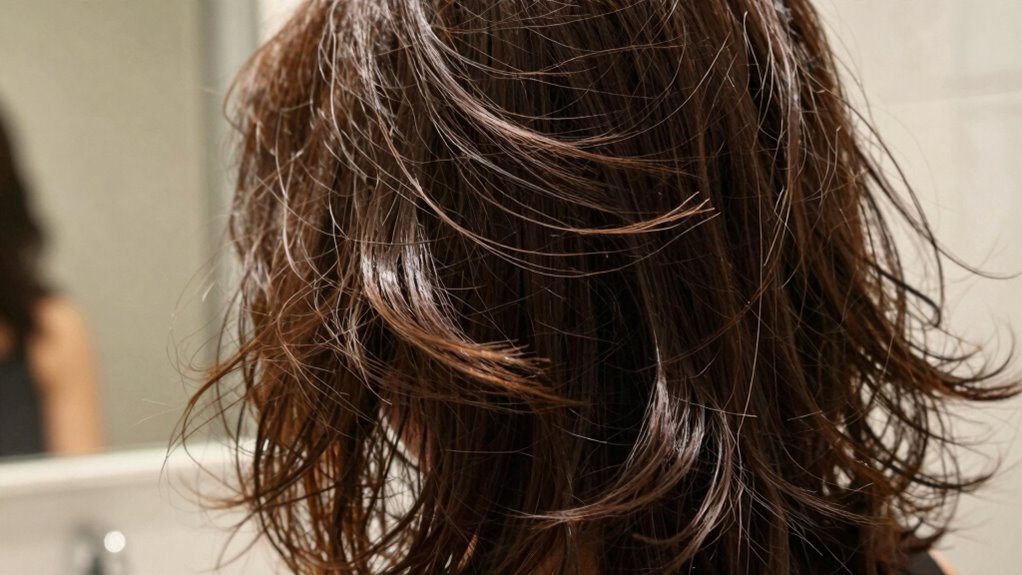

You can control your hair’s frizz by adjusting how you dry and treat it. Avoid rough towel-drying that increases friction and damages the cuticle, and opt for gentle patting or using soft microfiber towels. Use a heat protectant before blow-drying at moderate temps, and finish with a cool blast to seal curls. Proper moisture retention and cuticle care also help reduce frizz. Keep these tips in mind to keep your hair smooth—there’s more to learn on how to master this.
Key Takeaways
- Rushing and rough towel-drying increase friction, damaging the hair cuticle and causing frizz.
- Using high heat without protection strips moisture and roughens cuticles, leading to frizz.
- Not applying heat protectants exposes hair to damage from blow-drying, increasing frizz risk.
- Over-drying or rough drying removes natural oils, causing the cuticle to lift and frizz to form.
- Damaged or unsealed cuticles reflect light poorly, resulting in dull, frizzy hair.
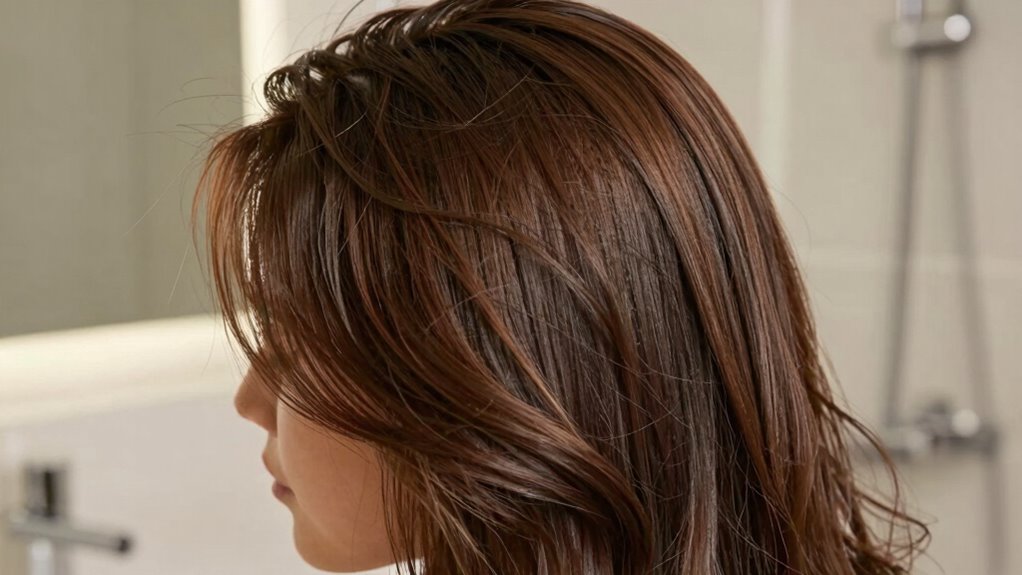
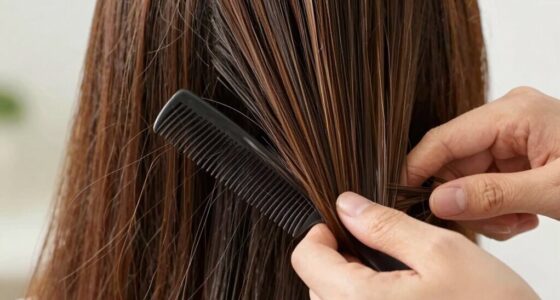
Improper drying is another common cause of frizz that you can easily avoid. Many people rush through towel-drying their hair or use rough towels, which rough up the hair cuticle and cause frizz. Instead, gently pat your hair dry with a soft microfiber towel or an old T-shirt, which minimizes friction and damage. When you use a blow dryer, make sure to keep it at a moderate temperature and hold it at a consistent distance from your hair. Using a heat protectant before blow-drying is also fundamentally important. Avoid rubbing your hair vigorously with a towel or blow-drying it completely dry on high heat, as this can strip moisture and lead to frizz. Instead, leave your hair slightly damp and finish with a cool blast of air to seal the cuticles. Proper drying technique helps your hair maintain its natural oils and smooth cuticle layers, reducing the chances of frizz forming. Understanding hair cuticle health and how to protect it can further help in managing frizz effectively.
Frequently Asked Questions
Can Diet Influence Hair Frizz?
Yes, your diet impact can influence hair frizz. Consuming nutritious sources like omega-3 fatty acids, vitamins A, C, and E, and biotin helps strengthen your hair and reduce frizz. When you include these in your diet, you provide your hair with essential nutrients needed for moisture retention and shine. Avoiding excessive sugar and processed foods also minimizes damage, keeping your hair smoother and more manageable over time.
How Does Humidity Affect Frizz?
Did you know that humidity impact causes up to 80% of frizz? When humidity rises, it increases moisture imbalance in your hair, making strands swell and become frizzy. You can control this by using anti-humidity products or sealing your hair’s cuticle. Understanding how humidity affects your hair helps you prevent frizz, so stay prepared by adjusting your styling routine on humid days.
Are There Natural Remedies to Reduce Frizz?
Yes, you can reduce frizz naturally using herbal oils and DIY masks. Try massaging a few drops of herbal oil like argan or coconut into your damp hair to tame flyaways and add shine. You can also make a DIY mask with ingredients like honey, yogurt, or aloe vera to nourish and hydrate your hair, minimizing frizz. Regular use of these remedies helps keep your hair smooth and manageable.
How Often Should I Wash My Curly Hair?
You should wash your curly hair about once or twice a week for ideal hair washing frequency. Over-washing can strip natural oils, leading to dryness and frizz, while too infrequent washing might cause buildup. Focus on gentle curly hair care, using sulfate-free shampoos and moisturizing conditioners. Adjust based on your hair’s specific needs and activity level. Proper hair washing frequency helps maintain natural texture and reduces frizz.
Can Stress Worsen Hair Frizz?
Yes, stress can worsen hair frizz because it increases scalp tension and disrupts hair health. Studies show that high stress levels can lead to hormonal imbalances affecting hair quality. When you’re stressed, your body produces more cortisol, which can weaken hair follicles, making your hair frizzier. Managing hair stress and reducing scalp tension through proper care and relaxation techniques helps keep your curls smooth and healthy.
Conclusion
By understanding these five controllable causes, you hold the brush to tame your frizz. Think of your hair as a garden—you can’t control the weather, but you can tend to your plants and nurture their health. With a little effort and awareness, you can turn frizz from a wild weed into a well-manicured masterpiece. Remember, you’re the gardener of your own hair—nurture it, and watch your confidence blossom.