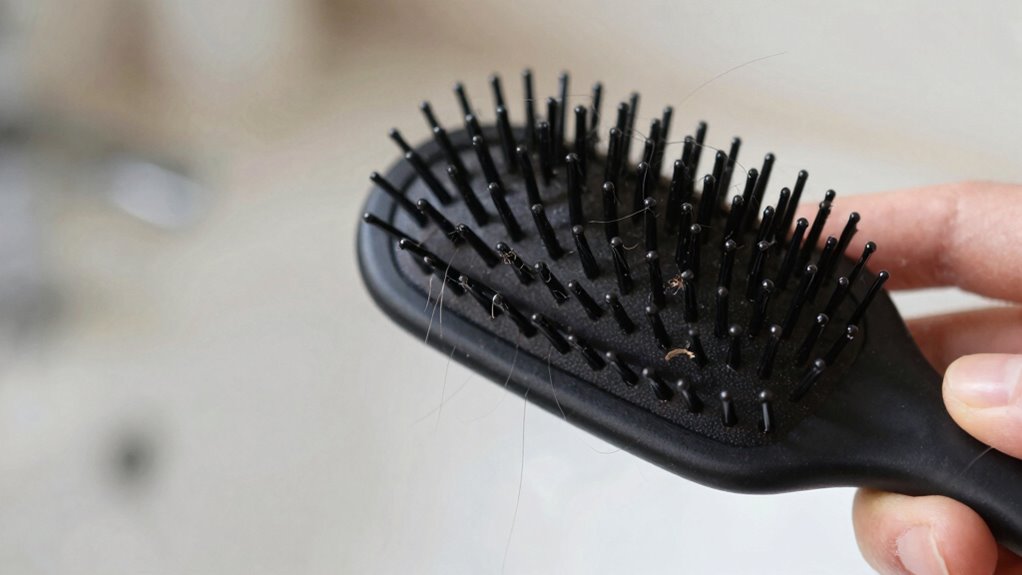
Your brushing habits can quietly cause invisible damage that weakens your hair over time. Brushing aggressively, starting at the roots, or using the wrong brush for your hair type creates microscopic fractures and reduces elasticity, leading to breakage. Over time, this damage may not be visible but can cause brittle, frizzy, and thinning strands. To prevent this, gentle techniques and suitable brushes are essential—learn more to protect your hair effectively.

Turn your quiet moments into listening time
- Thousands of audiobooks, podcasts and originals
- Listen on your phone, tablet or Echo — also offline
- Cancel anytime
Key Takeaways
- Overbrushing or brushing too aggressively creates microscopic fractures in hair fibers, leading to invisible breakage over time.
- Brushing wet hair with stiff or unsuitable brushes increases tension and weakens strands, causing unseen damage.
- Starting to brush from roots applies unnecessary stress, risking microscopic damage that accumulates invisibly.
- Using the wrong brush type or stiffness for your hair can cause subtle damage that weakens hair strength gradually.
- Rushing or neglecting proper detangling techniques accelerates invisible breakage and long-term hair damage.
As an affiliate, we earn on qualifying purchases.
Is Your Brushing Routine Damaging Your Hair?

Your brushing routine can profoundly impact the health of your hair. Many people believe that frequent brushing is always good, but detangling myths can lead you to overdo it or brush too harshly. Brushing frequency varies depending on your hair type, but overbrushing can cause damage by weakening strands and causing unnecessary breakage. Conversely, not brushing enough can lead to tangles and scalp buildup. The key is to find a balance that suits your hair’s needs. Use gentle strokes and avoid aggressive brushing, especially when your hair is wet, to prevent breakage. Remember, the goal isn’t to brush constantly but to detangle carefully and thoughtfully, preserving your hair’s integrity and reducing the risk of invisible damage. Additionally, understanding hair damage factors can help you develop a more effective and gentle hair care routine. Incorporating gentle detangling techniques can further minimize breakage and promote healthier hair over time. Being mindful of your brushing tools can also make a significant difference in maintaining hair health and preventing damage, especially considering the impact of hair technology, such as high-quality brushes designed to reduce stress on strands. Using tools with smooth bristles can help minimize friction and prevent unnecessary stress on your hair.
As an affiliate, we earn on qualifying purchases.
The Science Behind Hair Breakage and Invisible Damage

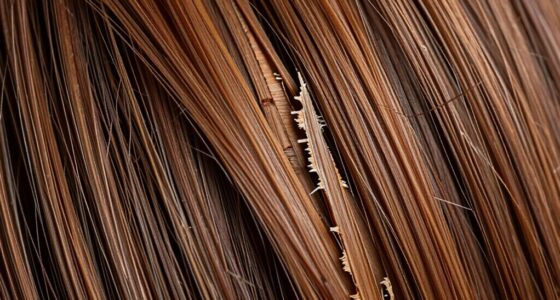
Understanding the science behind hair breakage reveals that damage often occurs at a microscopic level, making it invisible to the naked eye. When you brush your hair improperly, you put stress on the hair shaft, weakening its structure. This impacts your scalp health, as damaged hair can lead to tension and inflammation. Hair elasticity plays a crucial role—when hair loses elasticity, it becomes more prone to snapping under minimal tension. Even subtle damage can accumulate over time, creating invisible fractures that compromise hair strength. Recognizing these microscopic changes helps you understand why gentle handling and maintaining scalp health are vital for preserving hair integrity and preventing invisible damage. Additionally, adopting proper hair care techniques can help prevent further damage and promote healthier, stronger hair over time. Regularly consulting with a professional stylist or dermatologist can provide personalized advice tailored to your hair type and condition, especially as understanding microscopic hair damage becomes more accessible through advanced diagnostic tools. Staying informed about hair health diagnostics can empower you to take proactive steps in protecting your hair and support overall hair strength and resilience.
As an affiliate, we earn on qualifying purchases.
Common Mistakes That Cause Hair Breakage When Brushing
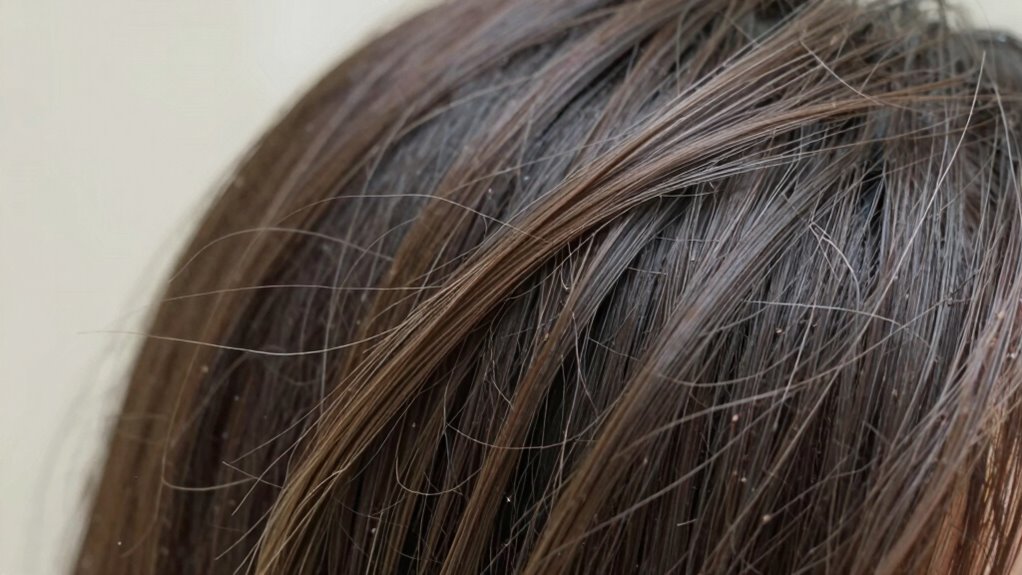
Many common brushing mistakes can considerably contribute to hair breakage. One major detangling pitfall is starting to brush from the roots, which puts unnecessary stress on delicate strands. Instead, work from the ends upward. Another mistake involves falling for hairbrush myths, like believing you should always brush wet hair with a stiff-bristled brush—that can cause breakage. Using the wrong brush for your hair type or applying too much force also worsens damage. Over-brushing or brushing without detangling gently can weaken hair fibers over time. Be mindful of these habits, and avoid rushing through your routine. Proper technique and understanding your hair’s needs can substantially reduce breakage and keep your hair healthier and stronger. Incorporating body jewelry measurements and materials to assess your hair’s needs can further help prevent damage. Additionally, using the right brushing techniques and tools tailored to your hair type can optimize results and minimize breakage. Recognizing the importance of hair health awareness can encourage better grooming habits that protect your hair’s integrity. Being informed about sticking wall decor and how to secure it properly can also help maintain a safe environment while caring for your hair.
As an affiliate, we earn on qualifying purchases.
How to Choose the Best Hairbrush for Healthy Hair
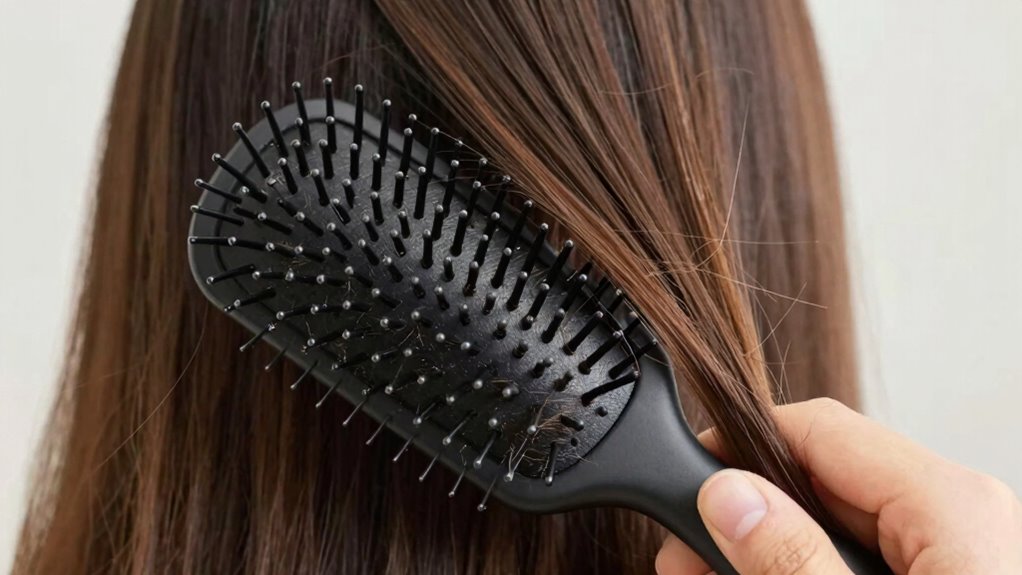
Choosing the right hairbrush is key to preventing breakage and keeping your hair healthy. Pay attention to bristle types and their benefits, like gentle detangling or scalp stimulation. Also, consider handle comfort and whether the brush suits your hair type for the best results. Incorporating tools designed for damage prevention can further support healthy hair maintenance. Additionally, selecting a brush with expert-designed features can help minimize stress on fragile strands and improve overall hair integrity.
Bristle Types and Benefits
Selecting the right hairbrush starts with understanding the different bristle types and their benefits. The key factors include bristle stiffness and whether they are natural or synthetic. Natural bristles, like boar, distribute oils and gently detangle, ideal for smooth, shiny hair. Synthetic bristles are often stiffer, offering more grip for detangling thick or curly hair. Here’s what to think about:
- Bristle stiffness: softer for delicate hair, firmer for stubborn tangles
- Natural vs synthetic: natural for shine, synthetic for grip and durability
- Scalp sensitivity: softer bristles reduce irritation
- Hair type compatibility: choose based on your hair’s texture and thickness
- Bristle stiffness also influences the level of tension applied during brushing, which can impact hair health. Using the appropriate tension reduces the risk of hair breakage, and understanding the elasticity and resilience of your hair can help you select the most suitable brush. This knowledge assists in maintaining the overall health of your hair by minimizing damage caused by improper brushing techniques.
Handle Comfort and Grip
A comfortable handle and secure grip are essential for reducing hair breakage during styling. Look for brushes with ergonomic handles designed to fit naturally in your hand, minimizing strain and fatigue. Soft grip materials, such as rubber or silicone, provide better control and reduce slipping, helping you avoid excessive pulling or tugging. A well-designed handle allows you to brush smoothly and confidently, decreasing the risk of damaging fragile or brittle hair. Avoid brushes with hard or uncomfortable handles that make you grip tightly, as this can increase tension and breakage. Choosing a brush with the right handle features ensures a more comfortable styling experience while protecting your hair’s health. Prioritize comfort and control to maintain strong, healthy hair over time. Proper grip techniques can further minimize tension and prevent damage during brushing. Additionally, selecting a design that promotes even pressure helps distribute force more uniformly, further reducing the risk of hair damage. Incorporating ergonomic design principles into your brush choice can enhance comfort and effectiveness, leading to healthier hair in the long run.
Suitable Hair Types
The best hairbrush for your hair type helps prevent breakage and promotes healthy growth. If you have fine or thin hair, opt for gentle brushes with soft bristles to avoid damaging delicate strands and maintain your hair color vibrancy. For thick or curly hair, a paddle or detangling brush can reduce tugging and protect your scalp health. Those with color-treated hair should choose brushes that won’t strip or fade your hair color. If you have a sensitive scalp, look for brushes with smooth, rounded bristles to minimize irritation. Keep in mind, using the right brush tailored to your hair type helps distribute natural oils and prevents unnecessary breakage, ensuring your hair remains strong and healthy.
Signs Your Hair Is Suffering From Brushing Damage

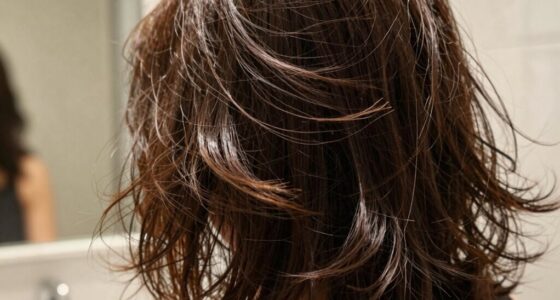
If you notice your hair feels brittle, looks frizzy, or breaks easily, brushing damage could be to blame. One sign is scalp irritation, which may feel itchy or sore after brushing, indicating over-processed or aggressive handling. You might also observe hair thinning, especially around the roots, as excessive brushing weakens hair strands and damages follicles. Another clue is increased hair breakage along the lengths, leading to uneven, frayed ends. If your hair tangles easily despite gentle brushing, it’s a sign your strands are compromised. Pay attention to these signs to catch brushing damage early. Recognizing these indicators helps you adjust your hair care routine before more severe damage occurs, preserving your hair’s strength and health.
Tips to Minimize Breakage During Daily Hair Care

To reduce breakage during your daily hair care, start by using gentle detangling methods that minimize stress on your strands. Choosing the right brush and using it correctly can also make a big difference in preventing damage. Implementing these simple tips helps keep your hair healthier and stronger over time.
Gentle Detangling Techniques
Gentle detangling is essential to prevent hair breakage, especially when your strands are wet or fragile. Using the right techniques reduces stress on your hair and minimizes damage. Start by choosing suitable detangling tools, like wide-tooth combs or specialized brushes designed for sensitive hair. Be gentle around hair extensions to avoid pulling or tearing. Always begin detangling from the ends, working your way up gradually. Avoid yanking or forcing knots out, which weakens strands. Consider detangling in sections for better control. Keep your hair moisturized to reduce knots and friction. When handling wet hair, use a wide-tooth comb or a brush with soft bristles. Proper techniques protect your hair’s integrity and keep it looking healthy and strong.
Proper Brush Selection and Use
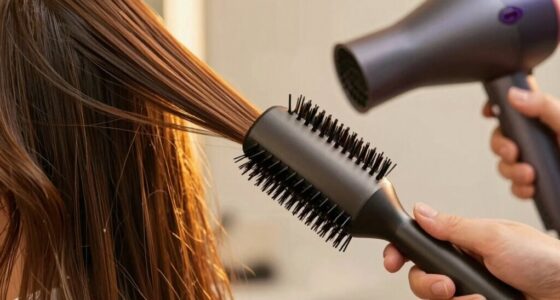
Choosing the right brush is essential for minimizing hair breakage during your daily routine. Select a brush suited to your hair type—natural bristle brushes work well for fine or normal hair, while wide-tooth or detangling brushes are better for thick or curly hair. Avoid using harsh, stiff bristles that can cause damage. Incorporate gentle hair accessories, like soft elastics or clips, to help manage your styling routines without stressing your strands. When brushing, start from the ends and work your way up to prevent unnecessary pulling. Use smooth, controlled motions rather than aggressive tugging. Proper brush selection and mindful use will help preserve your hair’s strength, reduce breakage, and keep your hair looking healthy and shiny.
Simple Changes to Protect Your Hair and Prevent Damage
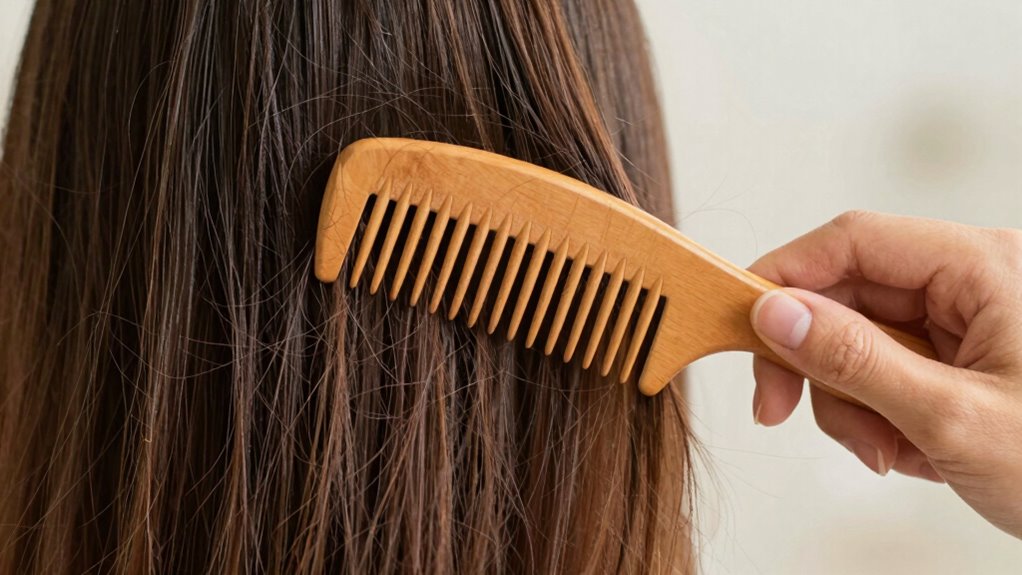
Making small changes to your hair care routine can substantially reduce breakage and keep your hair healthy. First, choose gentle hair treatments that nourish without causing stress. Avoid overusing harsh chemicals or heat styling tools that weaken strands. Instead, opt for air-drying or low-heat settings to minimize damage. Additionally, switch to high-quality styling tools with smooth, wide-tooth combs or brushes that prevent breakage. Regularly replace old tools to avoid rough edges that snag hair. Finally, incorporate deep conditioning treatments once a week to strengthen hair fibers and improve elasticity. These simple adjustments can protect your hair from invisible damage, ensuring it stays smooth, shiny, and resilient over time. Small changes lead to healthier, less breakage-prone hair.
Frequently Asked Questions
Can Certain Hair Types Be More Prone to Damage From Brushing?
Yes, certain hair types are more prone to damage from brushing. If you have curly hair, aggressive brushing can cause breakage and frizz, especially if you’re not using a wide-tooth comb or gentle techniques. Fine hair is also delicate and can easily snap or thin out with harsh brushing. To protect your hair, always opt for gentle tools and avoid over-brushing, regardless of your hair type.
Does Brushing Technique Impact Invisible Hair Damage?
Did you know that improper brushing technique can cause up to 30% more invisible damage? Your brushing pressure and method directly impact hair health by minimizing or increasing breakage. When detangling, use gentle strokes and avoid pulling harshly, which weakens strands over time. Proper hair detangling and gentle brushing help prevent invisible damage, keeping your hair healthier, stronger, and less prone to breakage, even when it looks fine.
Are There Specific Ingredients to Look for in Hair Products to Prevent Breakage?
To prevent breakage, look for hair products with natural oils like argan or coconut oil, which nourish and strengthen your strands. Also, consider keratin treatments that rebuild your hair’s structure and reduce fragility. These ingredients help repair damage and protect against future breakage. Use them regularly, and combine with gentle brushing techniques to keep your hair healthy, shiny, and less prone to invisible damage.
How Does Environmental Exposure Influence Hair Breakage From Brushing?
Environmental pollutants and UV radiation weaken your hair, making it more prone to breakage during brushing. When you’re exposed to pollutants, they strip away natural oils and damage your hair’s cuticle, while UV rays break down keratin proteins, leading to fragility. To protect your hair, you need to shield it with hats or UV protectant sprays and wash away pollutants regularly, preventing invisible damage from turning into visible breakage.
Can Using Heat Styling Tools Exacerbate Brushing-Related Hair Damage?
Yes, using heat styling tools can worsen brushing-related hair damage. Heat damage from styling tools weakens your hair’s cuticle, making it more prone to breakage when you brush. When you combine heat exposure with aggressive brushing, it accelerates breakage and causes more visible and invisible damage. To protect your hair, limit heat styling, use heat protectants, and be gentle when brushing to minimize breakage and keep your hair healthy.
Conclusion
So, next time you’re blaming your hair for being ‘bad,’ maybe it’s just your brushing habit throwing a tantrum behind the scenes. Treat your strands kindly, choose the right brush, and skip the aggressive tug-of-war. After all, your hair’s only crime is trying to grow strong—don’t send it to an early grave with careless brushing. Remember, gentle is the new glamorous. Your hair will thank you… or at least stop crying in silence.
Halloween Picks
halloween
As an affiliate, we earn on qualifying purchases.