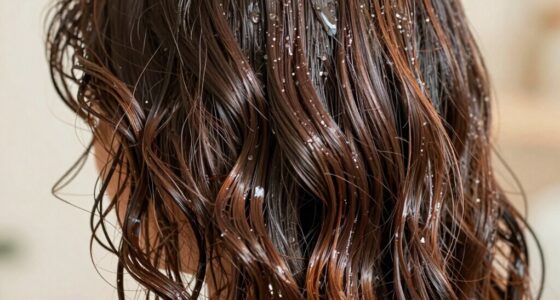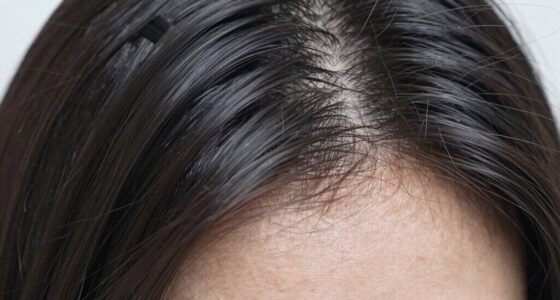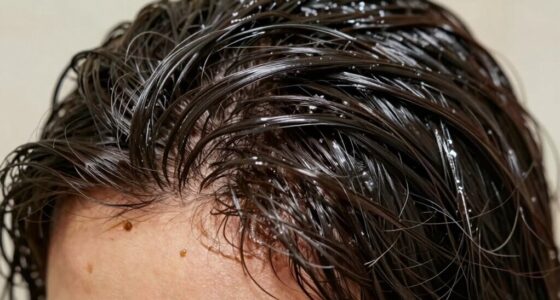
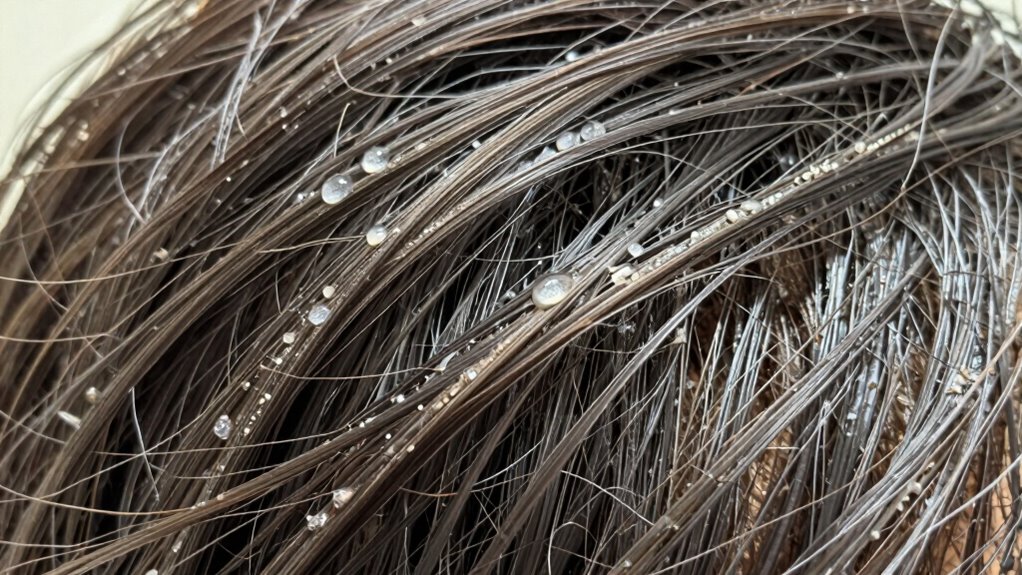

After swimming, your hair feels rough because chlorine and saltwater damage the hair’s cuticle, lifting it and stripping away natural oils. This makes your hair weak, dry, and prone to tangles. Saltwater also draws moisture out, leaving your strands dehydrated and brittle. Over time, this damage can make your hair feel straw-like and unmanageable. To prevent this, you’ll want to learn simple tips that help protect and restore your hair’s health afterward.
Key Takeaways
- Chlorine and saltwater strip natural oils, leading to dryness and roughness.
- Damage to the hair cuticle causes increased porosity and a coarse, straw-like texture.
- Repeated exposure weakens hair structure, resulting in brittle, unmanageable hair.
- Lack of proper rinsing and conditioning allows buildup, worsening roughness.
- Inadequate pre- and post-swim care accelerates damage and loss of hair smoothness.
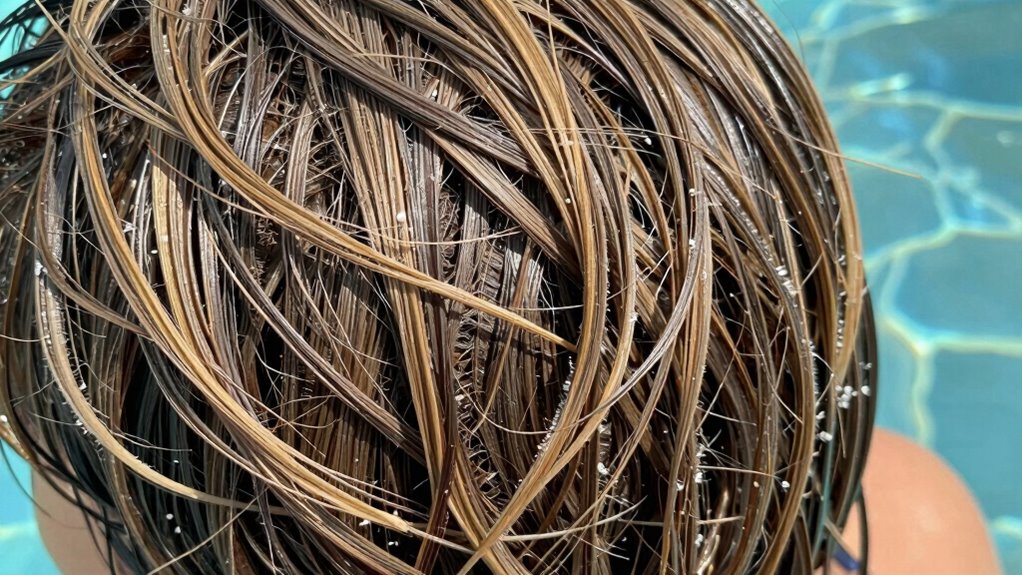
After swimming, your hair can often feel rough and tangled, leaving you frustrated and unsure of how to restore its smoothness. One of the main culprits is chlorine damage, which can strip your hair of its natural oils and weaken its structure. Chlorine is a common component in pool water, and while it’s effective at disinfecting, it can be harsh on your hair. Over time, exposure causes the cuticle—your hair’s outer layer—to become damaged and raised, resulting in that coarse, brittle feeling. Saltwater, on the other hand, has a different but equally harsh effect. Saltwater effects draw moisture out of your hair, leaving it dehydrated and more prone to breakage. Whether you’re swimming in the ocean or a saltwater pool, the high salt content can strip away essential oils, making your hair feel rough and unmanageable.
When your hair encounters chlorine or saltwater, the damage isn’t always immediately visible, but the effects accumulate over time. Chlorine can cause your hair to become dull and fragile, making it more susceptible to split ends and breakage. Saltwater effects, meanwhile, can leave your hair feeling stiff and straw-like, as if it’s lost its softness. Both substances can also cause the cuticle to lift, which increases porosity and makes your hair more vulnerable to environmental damage and further dryness. You might notice increased tangling and a lack of shine, which are telltale signs of damage caused by these elements. Additionally, the presence of these elements can weaken the hair’s structural integrity, making it more difficult to manage and style.
To combat this, it’s essential to protect your hair before swimming. Applying a leave-in conditioner or a protective oil creates a barrier that minimizes chlorine and saltwater effects. Rinsing your hair immediately after swimming helps wash away residual chlorine and salt, reducing their damaging impact. Additionally, using a clarifying shampoo once a week can help remove buildup caused by these substances, restoring your hair’s natural balance. Deep conditioning treatments are also highly effective in replenishing lost moisture and repairing damage, making your hair feel softer and more resilient.
In the end, understanding the effects of chlorine damage and saltwater effects empowers you to take better care of your hair. Proper pre-swim protection and post-swim care can make a noticeable difference in maintaining smooth, healthy hair despite frequent exposure to aquatic environments. Remember, your hair’s health depends on consistent care, especially when it’s regularly exposed to the harsh effects of chlorine and saltwater. Recognizing the importance of hair health and maintenance can help you develop a routine that keeps your hair looking its best after every swim.
Frequently Asked Questions
Can Swimming in Chlorinated Water Cause Permanent Hair Damage?
Swimming in chlorinated water can cause long-term damage to your hair if you’re exposed frequently. Chlorine buildup weakens your hair strands, making them brittle and prone to breakage over time. While occasional swimming isn’t likely to cause permanent damage, consistent exposure without proper care can lead to lasting harm. To protect your hair, rinse thoroughly after swimming, use a moisturizing conditioner, and consider wearing a swim cap.
Does Using Conditioner Before Swimming Help Prevent Roughness?
Using conditioner before swimming can help prevent roughness by creating a protective barrier on your hair. Pre swim conditioning or applying a hair barrier, like a leave-in treatment, coats your strands and minimizes chlorinated water absorption. This extra layer helps keep your hair smooth and moisturized, reducing damage and roughness. Make sure to thoroughly apply your chosen product to maximize its protective benefits during your swim.
How Long Does It Take for Hair to Recover After Swimming?
It generally takes a few washes over one to two weeks for your hair to recover from swimming damage. Hair porosity affects how quickly it absorbs and releases moisture, influencing recovery time. To speed up healing, use gentle shampoos and conditioners that preserve your natural oils, which help restore moisture and protect against roughness. Consistent care and minimizing chlorine exposure can also improve your hair’s health and texture faster.
Are There Specific Hair Types More Prone to Roughness Post-Swimming?
Imagine your hair as a sponge soaking up water and chemicals—that’s high porosity hair, which tends to feel rougher after swimming. If your hair has high density, it’s more prone to damage and roughness because of the weight and volume. Low porosity hair resists moisture, but chlorine and salt can still cause roughness. So, those with high porosity or dense hair are more likely to notice that rough feeling post-swim.
Can Swimming in Saltwater Affect Hair Texture Differently Than Freshwater?
Swimming in saltwater can affect your hair texture differently than freshwater. Saltwater effects tend to dry out your hair more, leaving it rough and brittle because salt draws moisture from the strands. In contrast, freshwater usually doesn’t have this drying effect, so your hair may feel softer. To minimize damage, rinse your hair thoroughly after saltwater swims, use moisturizing conditioners, and consider applying leave-in treatments to protect your hair’s texture.
Conclusion
So, next time your hair feels like straw after swimming, remember it’s just a temporary visitor. Think of your hair as a sponge soaking up minerals and chlorinated water—it’s all part of the journey. With proper rinsing, conditioning, and a little extra care, your hair can bounce back like a well-rehearsed melody. Don’t let the roughness dampen your swim spirit—treat your hair kindly, and it’ll shine brighter than ever.