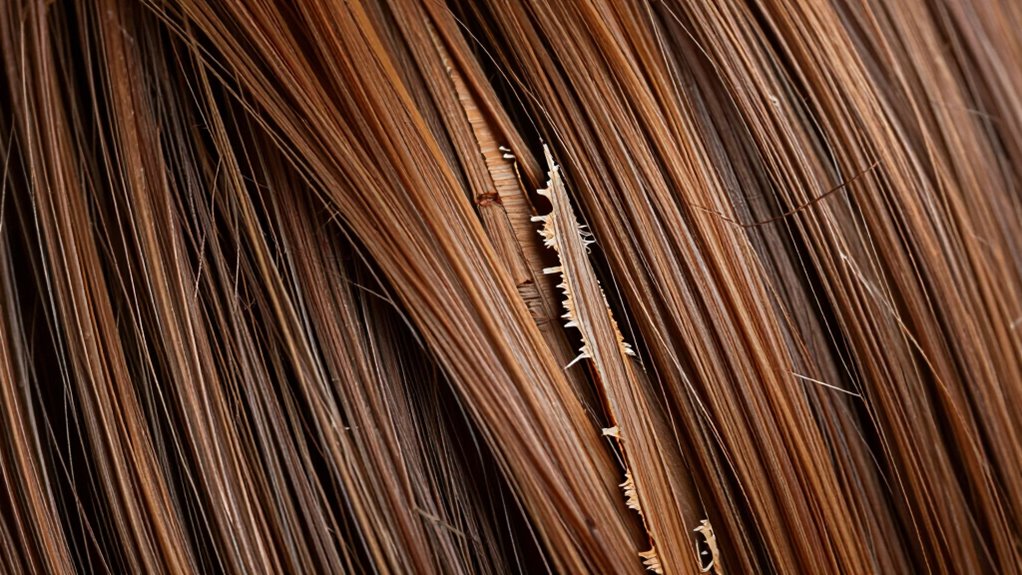

When you apply heat to your hair, it causes the proteins in the hair fiber to break down, leading to weakened bonds and loss of strength. High temperatures and prolonged exposure speed up this damage, making your hair more brittle, frizzy, and prone to breakage. Heat also causes moisture loss and lifts the cuticle, increasing dryness and vulnerability. Want to know how to protect your hair and restore its health? Keep going to discover more.
Key Takeaways
- Heat causes protein denaturation, breaking bonds and weakening the hair’s internal structure.
- Elevated temperatures accelerate keratin breakdown, leading to fiber damage and increased fragility.
- Heat lifts the cuticle, causing moisture loss, dryness, and increased susceptibility to breakage.
- Prolonged heat exposure results in cracks, cuticle damage, and permanent internal fiber changes.
- Signs include split ends, frizz, loss of shine, and weakened strands, indicating heat-related hair fiber damage.
How Heat Damages Hair’s Protein Structure and Weakens the Fiber
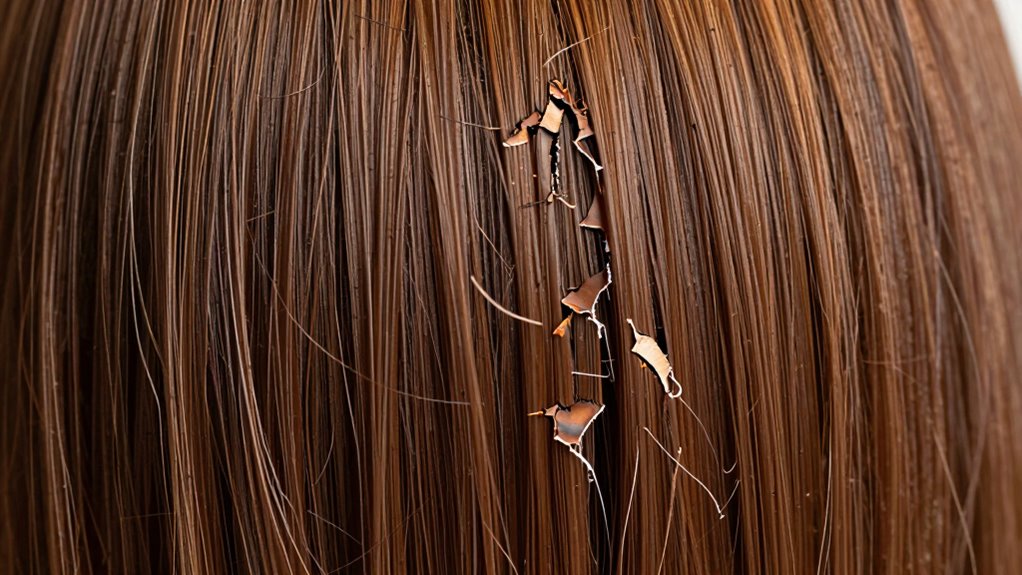
When you apply heat to your hair, it causes the proteins within the hair shaft to lose their natural shape and strength. This process, known as protein denaturation, occurs when the heat breaks down the bonds holding the proteins together. As a result, the hair’s structural integrity weakens, leading to fiber weakening. The once-flexible, resilient fibers become brittle and more prone to damage. Over time, repeated heat exposure exacerbates this process, causing permanent changes to the hair’s internal structure. When the proteins are damaged, your hair loses its natural elasticity and shine. In summary, heat disrupts the delicate balance of proteins that keep your hair strong, making it more vulnerable to breakage and split ends.
How Temperature and Duration Increase Heat Damage to Hair
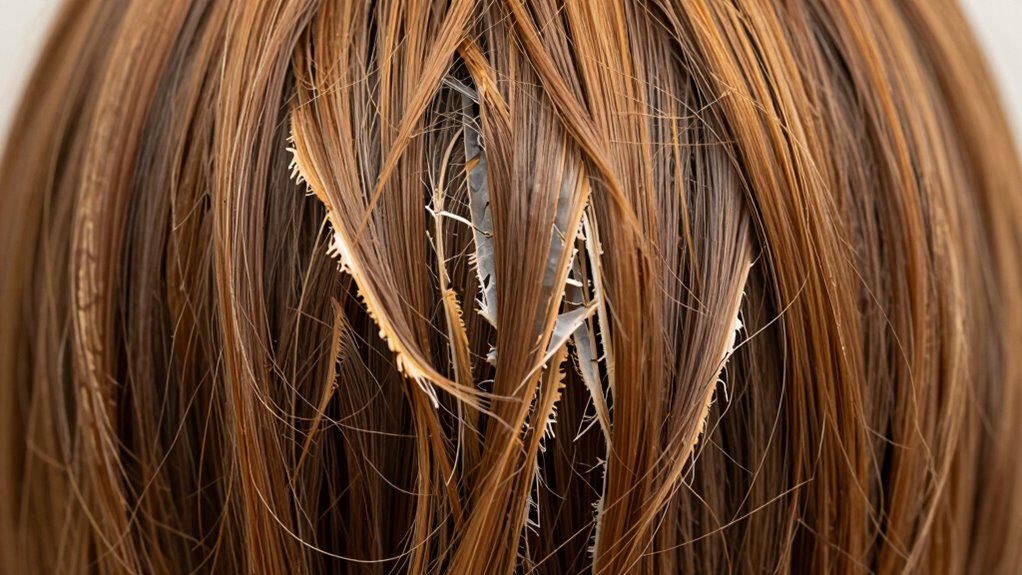
Higher temperatures cause more immediate damage to your hair, breaking down its structure faster. If you hold heat tools on your hair for too long, the damage worsens as the heat weakens the fibers over time. Keeping the heat low and limiting exposure can help protect your hair from unnecessary harm. Additionally, consistent exposure to high heat can cause cumulative damage, making your hair more prone to breakage and split ends over time.
Elevated Temperatures Accelerate Damage
Elevated temperatures cause hair damage to happen faster because the heat breaks down the keratin proteins more quickly. As temperatures rise, the risk of heat induced fractures increases, weakening the hair fiber’s structural integrity. The intense heat accelerates fiber degradation, leading to cracks and splits in the cuticle. When you expose your hair to high heat, the damage isn’t just superficial; it compromises the internal bonds that give hair strength and flexibility. This rapid breakdown means that even short periods of exposure at high temperatures can cause significant harm. The higher the temperature, the more quickly these damaging processes occur, making it vital to manage heat levels during styling to prevent accelerating fiber degradation and maintain healthy hair. Proper heat application and thermal protection are essential to safeguard your hair’s internal structure and reduce damage risk. To protect your hair, it’s important to understand how temperature and duration influence damage and to use appropriate heat protectants and styling techniques. Additionally, consistent heat regulation can help extend the health of your hair while achieving your desired style.
Prolonged Exposure Weakens Hair
While short bursts of high heat can cause immediate damage, prolonged exposure worsens the harm by continually stressing the hair fiber. Over time, this consistent heat weakens the hair’s structure, especially if your hair has high porosity, which absorbs more heat and retains heat residue. High porosity hair is more vulnerable because it cannot effectively seal in moisture, making it prone to further damage. The longer heat is applied, the more the cuticle layers become compromised, leading to increased breakage and split ends. Additionally, heat residue from previous styling sessions can build up, trapping heat and intensifying damage during prolonged styling. Using heat protectants can help create a barrier against heat, reducing the risk of damage during styling. To protect your hair, avoid extended heat exposure and use heat protectants to minimize the cumulative effects.
Signs Your Hair Is Being Damaged by Excessive Heat
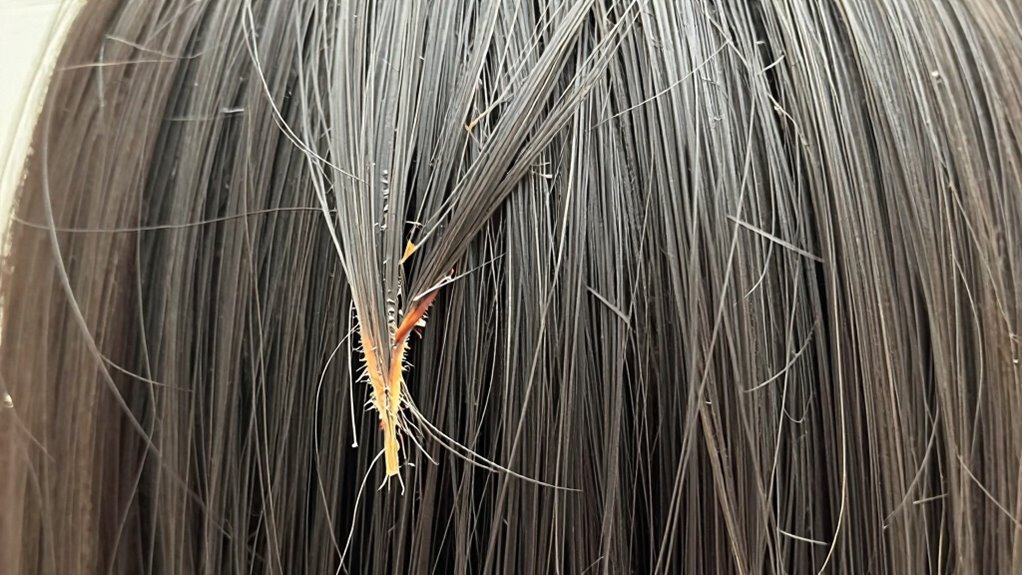
You might notice your hair feels dry, brittle, or looks frizzy after using heat styling tools regularly. These are clear signs your hair is suffering from excessive heat damage. To avoid further harm, consider switching to alternative styling tools that generate less heat or using heat protective products before styling. Watch out for:
Notice dry, brittle, or frizzy hair? These signs point to heat damage from frequent styling.
- Increased split ends along the hair shaft
- Loss of natural shine and smoothness
- Thinning or weakening strands that break easily
- Persistent frizz even after styling
- Proper heat settings and techniques can significantly reduce damage and protect your hair’s health.
If these signs appear, it’s a sign your hair needs a break from high temperatures. Incorporate heat protectants into your routine and explore alternative styling options to help preserve your hair’s health and prevent lasting damage.
Why Heat Causes Moisture Loss and Damages the Hair Cuticle
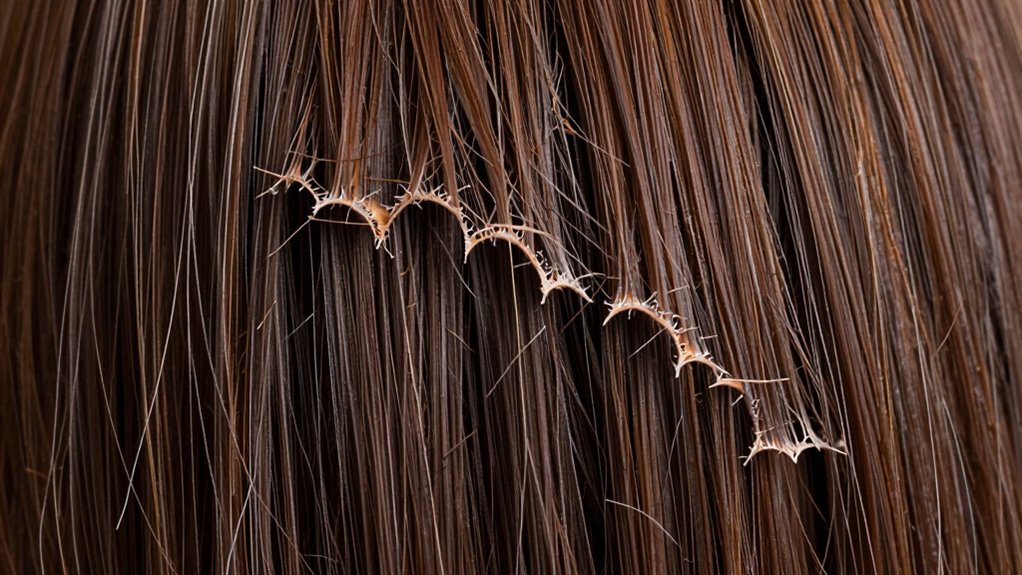
Heat damages the hair cuticle by causing its protective outer layer to lift and weaken. When you apply high heat, the cuticle’s cells become more pliable, which leads to gaps and cracks. This lifting reduces moisture retention because the cuticle no longer forms a tight barrier, allowing water to escape easily. As moisture escapes, your hair becomes dry, brittle, and more prone to breakage. The loss of moisture also compromises cuticle integrity, making your hair more vulnerable to further damage from environmental stressors. Over time, repeated heat exposure strips away essential nutrients and weakens the overall structure of your hair fiber. Proper heat styling techniques can help minimize damage and maintain hair health. Additionally, understanding how heat impacts moisture can guide better styling choices to preserve hair strength and prevent long-term damage. Recognizing the importance of hair fiber health is essential for developing effective hair care routines. Furthermore, proteins and nutrients within the hair are affected by heat, which can lead to a loss of vital components needed for strength and resilience.
Tips to Minimize Heat Damage When Styling Your Hair
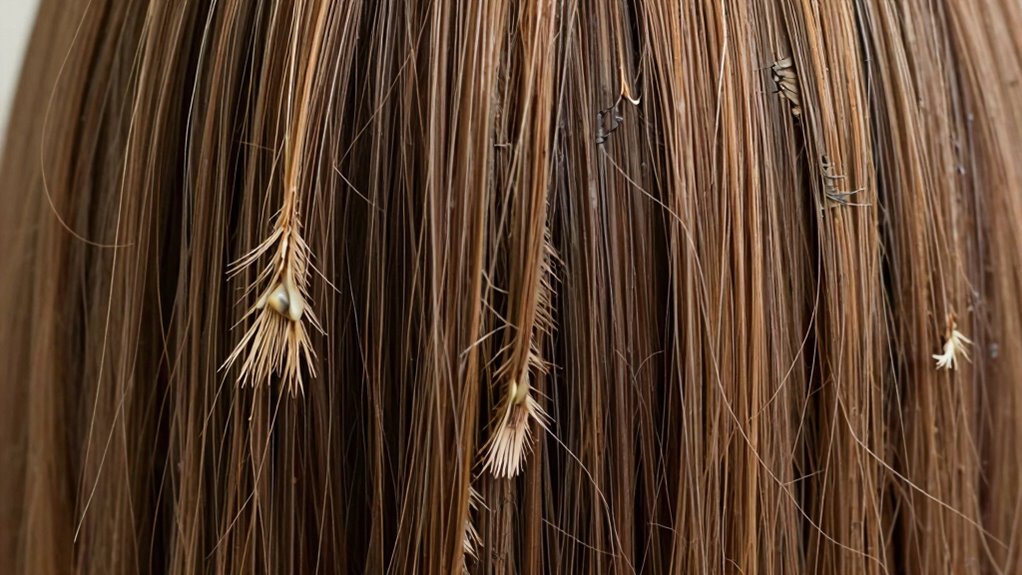
To protect your hair from heat damage, it’s essential to adopt smart styling habits. First, always apply a heat protectant or protective spray before using hot tools. Second, keep your styling tools on the lowest effective temperature to minimize stress on your hair fiber. Third, avoid repeatedly passing the iron or curling wand over the same section; this reduces cumulative damage. Fourth, consider using proper heat settings that are suitable for your hair type to prevent unnecessary harm. Finally, don’t style your hair frequently with heat—give your strands time to recover. Using high-quality heat protectants creates a barrier that limits moisture loss and shields your hair from high temperatures. Additionally, understanding heat styling damage can help you better prevent long-term harm to your hair. Incorporate these tips into your routine to keep your hair healthier, shinier, and less prone to heat-induced damage.
How to Repair and Protect Heat-Damaged Hair Effectively
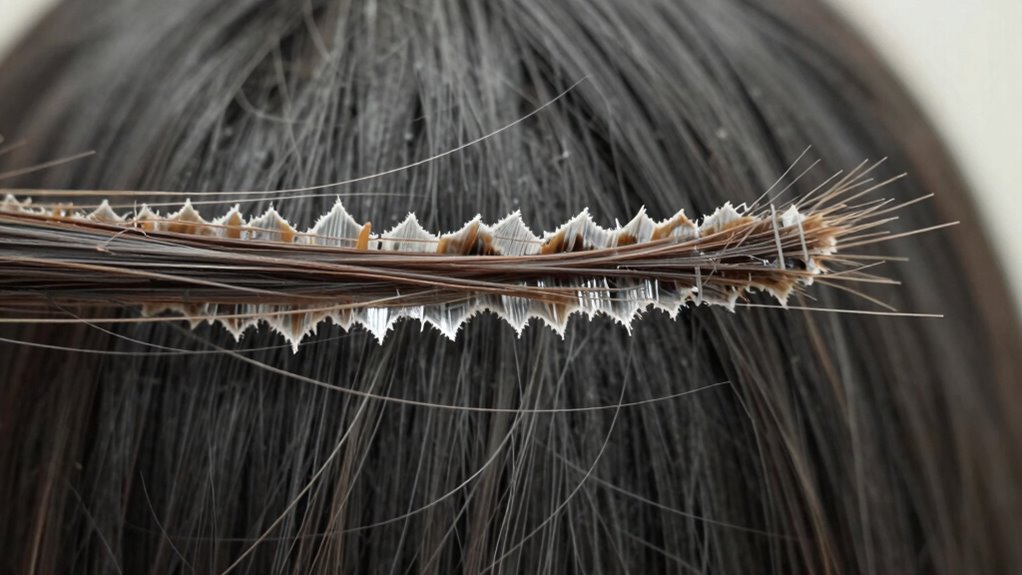
Repairing heat-damaged hair starts with choosing the right treatments that can restore moisture and strengthen weakened strands. Using a hair gloss can instantly boost shine and smoothness while providing a protective barrier against further damage. Look for gloss formulas infused with nourishing oils and keratin to help rebuild the hair’s surface. Additionally, always apply heat protectors before styling; they create a barrier that minimizes direct heat contact, reducing breakage and dryness. Regular deep conditioning treatments also help replenish lost moisture and repair compromised fibers. Avoid excessive heat styling and give your hair time to recover. Combining these methods ensures you protect your strands effectively while gradually restoring their health and vitality.
Frequently Asked Questions
Can Heat Protectants Fully Prevent Heat Damage?
Heat protectants can’t fully prevent heat damage, but they do markedly reduce it. Their effectiveness depends on ingredients like silicone and natural oils, which form a barrier and hydrate your hair. When you use a heat protectant correctly and choose one with beneficial ingredients, you minimize damage from styling tools. However, avoid excessive heat and limit frequent styling to keep your hair healthy and resilient over time.
How Often Should I Give My Hair a Break From Heat Styling?
Think of your hair like a vintage record—too much heat, and it risks warping. You should give your hair frequent heat breaks, ideally every few days, to allow it to recover. Follow styling frequency guidelines, and avoid daily heat styling to preserve your hair’s health. By limiting heat exposure, you prevent damage and keep your hair looking shiny and strong for the long haul.
Are Certain Hair Types More Vulnerable to Heat Damage?
Yes, certain hair types are more vulnerable to heat damage. Porous hair, often caused by damage or chemical treatments, absorbs heat more easily, making it prone to breakage. Curly textures tend to be drier and more fragile, so they can suffer more from high heat. To protect your hair, use heat protectants and avoid excessive styling, especially if your hair is porous or curly, to prevent long-term damage.
Does Air-Drying Cause Less Damage Than Heat Styling?
Air drying is like giving your hair a gentle breeze instead of a fiery blast, causing less damage overall. It’s a smart choice for natural hair preservation, as it avoids the high heat that weakens hair fibers and strips moisture. By embracing air drying benefits, you protect your hair’s integrity, maintain shine, and reduce breakage. So, when possible, let your hair breathe naturally for healthier, happier tresses.
What Ingredients Help Repair Heat-Damaged Hair Effectively?
To repair heat-damaged hair effectively, look for products with natural oils like argan or coconut oil, which deeply hydrate and nourish your strands. Incorporate keratin treatments to strengthen the hair fiber and restore elasticity. These ingredients work together to repair damage, reduce breakage, and improve shine. Regular use of such products helps your hair recover from heat styling, making it healthier, smoother, and more resilient.
Conclusion
Think of your hair as a delicate garden, easily scorched by too much heat. When you style with high temperatures, you’re risking the roots of your hair’s strength, causing damage that’s hard to undo. But with mindful care and protection, you can keep your hair thriving like a well-tended bloom. Respect the heat’s power, nurture your strands, and watch your hair flourish, resilient and radiant, despite the temptations of fiery styling tools.