

Since curly and coily hair tends to be more porous, your hair’s lifted cuticles cause moisture to absorb unevenly when you use steam. This uneven absorption means some areas might hydrate well, while others may not hold moisture as effectively, leading to inconsistent results. Over- or under-application of heat can also cause frizz or damage. If you keep exploring, you’ll discover how understanding your hair’s unique structure helps optimize your steaming routine for better results.
Prime for Young Adults — start your free trial
Fast free delivery, streaming and member deals for eligible 18–24 year olds.
As an affiliate, we earn on qualifying purchases.
Key Takeaways
- Curly and coily hair is more porous, causing uneven cuticle lifting and inconsistent moisture absorption from steam.
- Elevated cuticles in textured hair may not effectively lock in moisture, leading to varied responses.
- Variability in porosity affects how quickly hair absorbs and loses moisture during steaming.
- Overly porous hair can overhydrate or frizz easily if steam is not carefully controlled.
- Proper sealing and product use are essential to retain moisture, which impacts how hair responds to steam treatments.
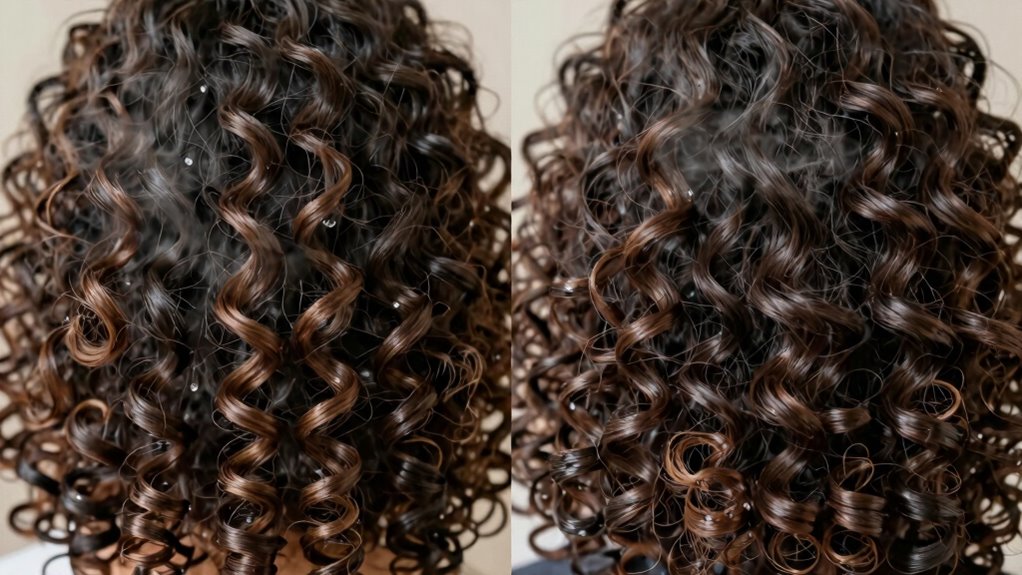
If you have curly or coily hair, you’ve probably noticed that it can sometimes feel dry, tangled, or difficult to manage. One reason for this is how your hair responds to steam treatments. Curly and coily hair tends to be more porous and the cuticles often lift more easily, which influences how heat penetrates your strands and how well moisture is retained. When you use steam, the heat helps open up the cuticles, allowing moisture to get inside the hair shaft. But because your hair cuticles are naturally more raised or uneven, the heat penetration can vary, making the results inconsistent. Sometimes, steam deeply hydrates your hair, giving it softness and shine. Other times, if not used carefully, it can lead to overhydration or frizz because the moisture escapes more easily.
Your hair’s porosity plays a big role here. Coily and curly textures tend to be more porous, meaning they can absorb moisture quickly but also lose it just as fast. When you apply steam, it temporarily opens the cuticle layers, which is great for moisture retention. However, because your cuticles are more raised, they don’t always lock the moisture in as effectively as straight hair might. This can lead to the feeling that your hair is hydrated immediately after steaming, but the moisture might not stay long-term without sealing products. The key is controlling heat exposure—too much heat or too long can cause damage, making your hair even drier over time.
Another factor that influences your hair’s reaction to steam is how well you maintain and seal in moisture after steaming. If you don’t use a good moisturizer or sealing oil, the moisture gained from steam can escape quickly, leaving your hair feeling dry again. Proper moisture retention depends on locking in the benefits of steam with the right products and techniques. If you notice your hair feels overly soft or limp after steaming, it might be a sign that your strands are over-absorbing moisture and not retaining it properly. To improve moisture retention, understanding your porosity level and adjusting your routine accordingly can make a significant difference. Recognizing your hair’s unique porosity can also guide you in choosing the right products that help lock in moisture effectively. Additionally, using appropriate heat settings can help prevent unnecessary damage and optimize hydration.
Furthermore, being aware of your hair’s health and overall condition can influence how well your strands respond to moisture and heat treatments. Ultimately, your curly or coily hair reacts uniquely to steam because of its structure and porosity. With practice, you learn how to balance heat penetration and moisture retention, turning steaming into an effective way to hydrate and improve your hair’s health. The goal is to use steam to open your cuticles enough to hydrate deeply without causing damage or losing moisture too quickly. Proper steam application techniques and product selection are essential to achieving consistent, healthy results.
steam hair treatment for curly hair
As an affiliate, we earn on qualifying purchases.
As an affiliate, we earn on qualifying purchases.
Frequently Asked Questions
How Does Humidity Affect Curly and Coily Hair After Steaming?
Humidity affects your curly and coily hair after steaming by causing fluctuations in moisture levels. Higher humidity can boost scalp moisture balance, making curls more defined and reducing dryness. Conversely, low humidity can lead to moisture loss, leaving your hair feeling brittle. You’ll notice your hair responds differently depending on humidity fluctuations, so it’s essential to adjust your steaming routine and hydration practices to maintain healthy, well-moisturized curls and coils.
Are There Specific Steam Techniques for Different Curl Patterns?
Ever wondered if your curl pattern needs a secret approach? Yes, there are specific steam application techniques tailored to different curl patterns. For looser curls, gentle steam helps define without over-moisturizing. Tight coils thrive with deeper steam, enhancing elasticity. By understanding curl pattern differentiation, you can customize your steaming routine. This targeted approach reveals your hair’s full potential, revealing bouncy, defined curls that truly stand out.
Can Steaming Damage Fragile or Chemically Treated Curly Hair?
Steaming can damage fragile or chemically treated curly hair if you’re not careful. Chemical damage weakens hair strands, making them more susceptible to breakage. High porosity hair absorbs moisture quickly, so excessive steaming can lead to overhydration and breakage. To protect your curls, use moderate steam sessions, avoid overly hot temps, and always condition afterward. This approach helps maintain your hair’s health and prevents further damage.
How Often Should Curly and Coily Hair Be Steamed?
Did you know that over 60% of curly and coily hair types benefit from regular steaming? You should steam your hair once every one to two weeks to maximize deep conditioning and scalp hydration without overdoing it. This frequency helps maintain moisture, reduce breakage, and promote healthy growth. Listening to your hair’s needs is key—if it feels dry or fragile, reduce steaming sessions to prevent damage.
What Are the Best Products to Use With Steamed Curly or Coily Hair?
You should choose products that are highly compatible with steamed hair, like leave-in conditioners, curl creams, or hydrating masks. These products help boost moisture retention and enhance curl definition. Look for ingredients like shea butter, aloe vera, and glycerin, which work well with steam. Avoid heavy oils or silicones that can weigh down your curls. Using the right products guarantees your hair stays moisturized, soft, and bouncy after steaming.
moisturizing sealing oils for coily hair
As an affiliate, we earn on qualifying purchases.
As an affiliate, we earn on qualifying purchases.
Conclusion
Understanding why curly and coily hair respond differently to steam can transform your hair care routine. Did you know that coily hair is 75% more porous than straight hair? This means it absorbs moisture faster but also loses it quickly, making steam treatments even more beneficial. Embrace these differences, and you’ll see improved hydration, reduced breakage, and healthier curls. With the right approach, you can release your hair’s full potential and love your natural texture even more.
porosity testing kit for curly hair
As an affiliate, we earn on qualifying purchases.
As an affiliate, we earn on qualifying purchases.
heat protectant spray for textured hair
As an affiliate, we earn on qualifying purchases.
As an affiliate, we earn on qualifying purchases.
Evergreen bestsellers Picks
bestsellers
As an affiliate, we earn on qualifying purchases.