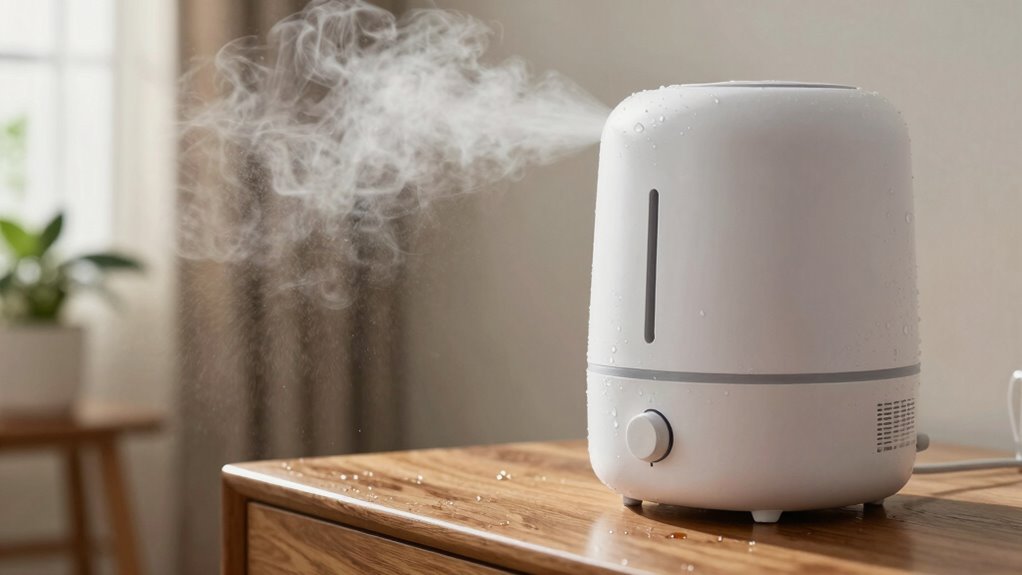
If your home has too much humidity, you might notice condensation, a musty smell, or visible mold, which can harm both your health and property. High moisture levels promote mold growth, dust mites, and airborne bacteria, causing allergies and respiratory issues. To avoid this, keep indoor humidity between 30-50%, use hygrometers for accurate measurement, and adjust your humidifier accordingly. Managing excess moisture is key to a healthier, more comfortable home—discover how to do it effectively.

Turn your quiet moments into listening time
- Thousands of audiobooks, podcasts and originals
- Listen on your phone, tablet or Echo — also offline
- Cancel anytime
Key Takeaways
- Over-humidification from humidifiers can lead to mold growth, structural damage, and poor indoor air quality.
- Maintaining indoor humidity between 30-50% prevents excess moisture and related health risks.
- Regularly calibrate and monitor hygrometers to avoid over-humidifying spaces unknowingly.
- Proper ventilation and natural methods like plants help control humidity levels and prevent problems.
- Adjust humidifier settings based on outdoor conditions and room size to prevent excessive indoor moisture.
digital hygrometer for indoor humidity
As an affiliate, we earn on qualifying purchases.
As an affiliate, we earn on qualifying purchases.
How Do You Know If Your Home Has Too Much Humidity?
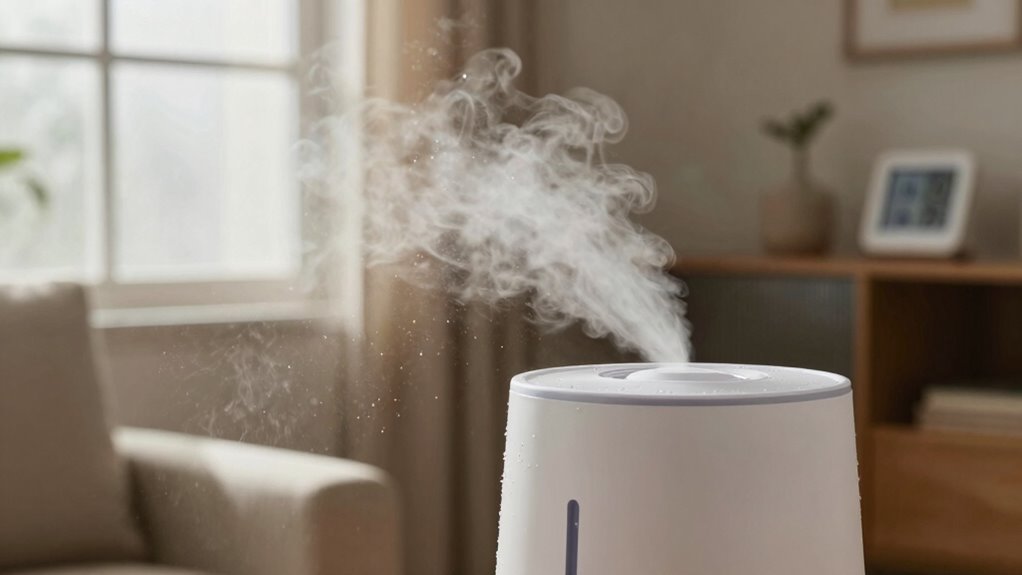
How can you tell if your home has too much humidity? One of the easiest ways is by using humidity sensors, which provide real-time readings of indoor moisture levels. If the sensor indicates consistently high humidity, it’s a sign you might have excess moisture. You can also use moisture meters to check surfaces like walls, ceilings, or furniture for signs of dampness or mold growth. Visible clues include condensation on windows, a musty smell, or peeling paint. These indicators suggest your indoor environment is holding too much moisture. Regularly monitoring with humidity sensors and moisture meters helps you catch high humidity early, preventing problems like mold, mildew, or structural damage before they become serious. Additionally, smart home monitoring systems can support these efforts by automatically alerting you to humidity issues, enhancing your home’s sustainability and security. Incorporating humidity control strategies such as dehumidifiers and proper ventilation can further help maintain optimal moisture levels and protect your home. Properly managing indoor humidity is also crucial for HVAC system efficiency, ensuring your heating and cooling systems operate effectively and save energy.
As an affiliate, we earn on qualifying purchases.
What Are the Ideal Indoor Humidity Levels?
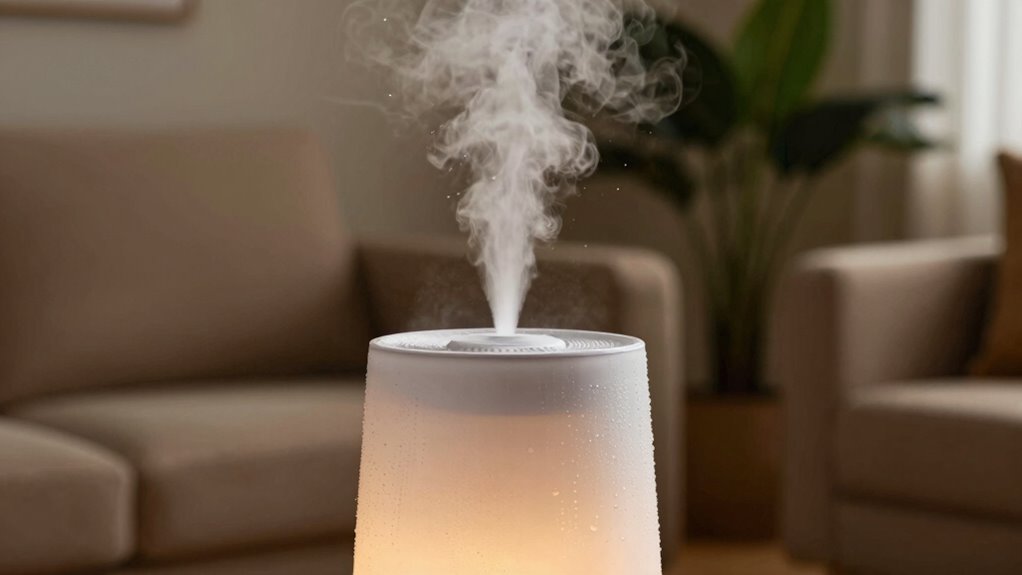
Maintaining the right indoor humidity keeps your home comfortable and safe. Generally, the ideal range is between 30% and 50%, which helps prevent problems caused by excess moisture or dryness. Knowing the signs of too much moisture and how it affects your health can help you keep your environment just right. Proper humidity control is essential for protecting your home’s structure and your well-being. Additionally, monitoring indoor air quality can help you detect early signs of excessive humidity and prevent mold growth. Being aware of ventilation practices also plays a key role in maintaining balanced indoor humidity levels. Understanding how air circulation impacts humidity levels can further enhance your efforts in creating a healthy indoor environment, especially since airflow patterns influence moisture distribution throughout your space.
Optimal Humidity Range
Understanding the ideal indoor humidity levels is essential for creating a comfortable and healthy environment. Generally, maintaining humidity between 40% and 60% helps prevent mold growth and supports good air quality. When humidity rises above this range, mold prevention becomes more difficult, increasing the risk of health issues and property damage. Conversely, keeping humidity too low can cause dry skin, irritated respiratory passages, and static electricity. To achieve perfect levels, use a hygrometer to monitor your indoor air and adjust your humidifier accordingly. Maintaining this balance ensures your home remains comfortable, reduces mold risk, and promotes better air quality. Staying within this range is the key to avoiding the common pitfalls of too much or too little humidity. Additionally, understanding the balanced energy in your environment can further enhance overall well-being and comfort.
Signs of Excess Moisture
When indoor humidity levels climb above the recommended 40% to 60%, signs of excess moisture become noticeable. You might see increased condensation on windows and walls, which can indicate too much humidity. Poor air quality may occur, leading to stuffiness or a musty odor. You could also observe mold growth in damp areas, risking long-term damage and health issues. Excess moisture can also cause peeling paint or wallpaper, revealing hidden issues behind surfaces. Recognizing these signs early helps prevent mold development and maintains a healthy environment. To keep air quality ideal and prevent mold, monitor humidity levels closely. Using a hygrometer can help you stay within the perfect range and avoid the negative effects of too much moisture in your home. Additionally, understanding electric power generation with bike generators can inspire sustainable ways to manage household energy needs. Maintaining proper humidity levels is a key component of indoor air quality control, which directly impacts overall health and comfort.
Impact on Health
Have you ever wondered how indoor humidity affects your health? Maintaining the right humidity level is vital because too much moisture can promote airborne bacteria growth, increasing your risk of respiratory infections. Excess humidity also creates a breeding ground for mold, which worsens allergy triggers and can cause asthma symptoms. When humidity is too high, dust mites thrive, further aggravating allergies. On the other hand, low humidity can dry out your skin, throat, and nasal passages, making you more susceptible to colds. The ideal indoor humidity level is between 40% and 60%, balancing comfort with health. Keeping humidity within this range helps reduce airborne bacteria, limits allergy triggers, and supports overall respiratory health. Proper humidity management is essential for a healthier living environment. Additionally, maintaining optimal humidity levels can also help preserve piercings and prevent irritation or infection. Ensuring the right humidity can also prevent mold growth, which can be difficult to eliminate once it establishes itself. Regularly monitoring humidity with a hygrometer can help you maintain these levels effectively, preventing issues caused by excess moisture. Advances in nanotechnology could someday lead to more sophisticated humidity control devices that efficiently detect and regulate indoor moisture levels. Moreover, understanding the impact on health underscores the importance of proper humidity levels for overall well-being.
As an affiliate, we earn on qualifying purchases.
How to Measure Indoor Humidity Accurately
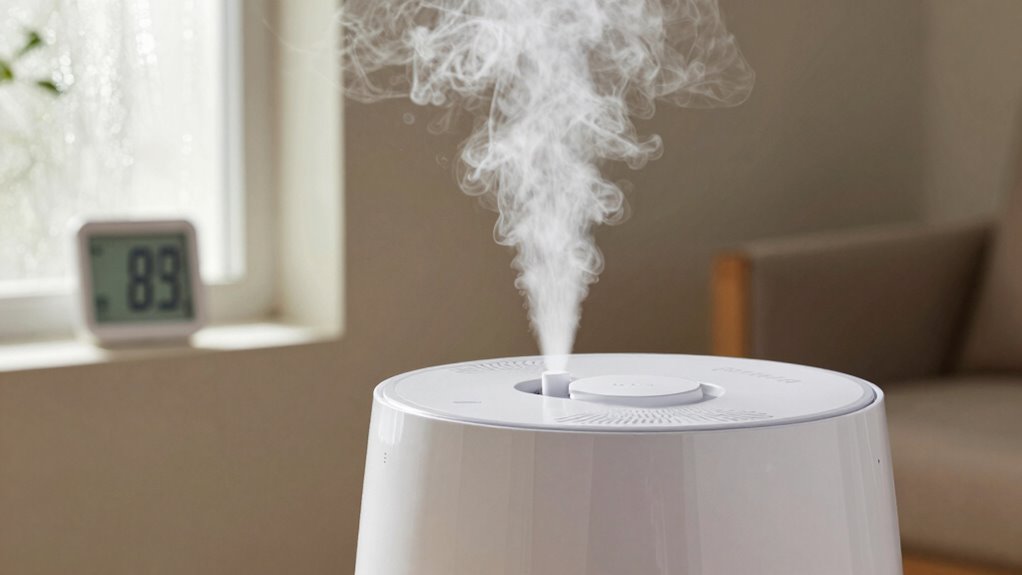
To guarantee your indoor environment remains comfortable and healthy, measuring humidity accurately is essential. Using a reliable hygrometer ensures you get precise readings. To do this effectively, consider these key points:
Accurate humidity measurement is key to maintaining a healthy indoor environment.
- Regularly calibrate your hygrometer to maintain accuracy.
- Use high-quality humidity sensors for consistent measurements.
- Compare digital hygrometers with a trusted analog device for calibration checks.
- Place your hygrometer in central locations away from direct moisture sources or vents.
- Understanding environmental factors that influence humidity levels can help you interpret your readings more effectively. Additionally, being aware of specific Gold IRA markets can inform your investment decisions and help you optimize your portfolio during changing economic conditions. Being mindful of air circulation can also impact the accuracy of your measurements and overall humidity levels. Proper ventilation can further support consistent humidity readings and healthier indoor air quality. Ensuring that your space has adequate airflow can prevent moisture buildup and promote more accurate humidity assessments.
As an affiliate, we earn on qualifying purchases.
What Are the Health Risks of Excess Humidity, Like Mold and Dust Mites?

Accurately measuring indoor humidity helps prevent problems caused by excess moisture, which can lead to serious health risks. When humidity levels stay high, mold growth becomes a real concern. Mold spores thrive in damp environments, releasing allergens and irritants that can trigger allergies, asthma, and respiratory issues. Additionally, excess humidity encourages dust mite proliferation. These tiny creatures flourish in moist conditions, and their allergens can worsen allergy symptoms and asthma attacks. Over time, unchecked mold and dust mites can compromise your indoor air quality, making your home uncomfortable and potentially harmful. Keeping humidity levels in check helps reduce these risks and creates a healthier living environment. Monitoring and controlling moisture levels is essential to avoid these hidden health hazards.
Why Over-Humidifying Your Space Can Be Dangerous
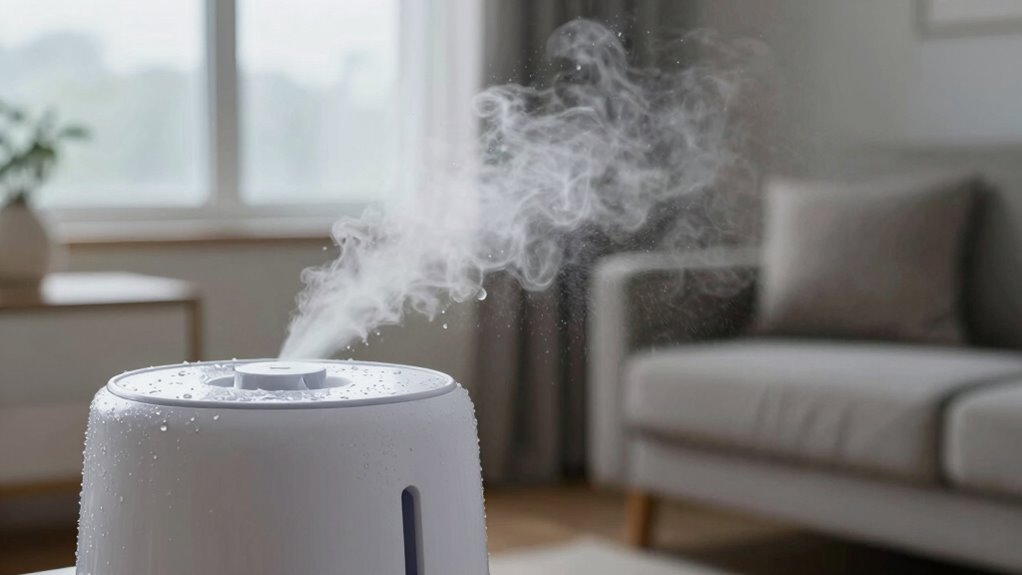
Did you know that over-humidifying your space can be just as harmful as not humidifying enough? Excess humidity can compromise air quality and promote mold growth, which can worsen respiratory issues. When the air becomes too moist, it creates an ideal environment for mold spores to thrive, making mold prevention difficult. High humidity levels also trap dust mites and other allergens, worsening indoor air quality. Over-humidification can lead to musty odors, wood damage, and increased respiratory discomfort. To protect your environment, monitor humidity levels carefully.
- Promotes mold growth and worsens allergies
- Reduces air quality by trapping allergens
- Causes structural damage through excess moisture
- Leads to uncomfortable indoor odors
How to Prevent Over-Humidification With Your Humidifier
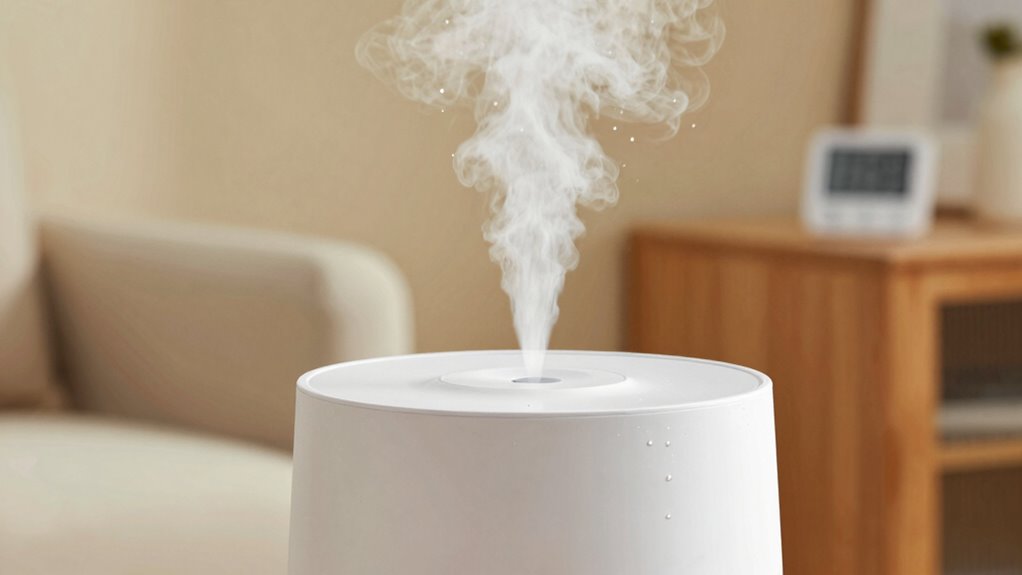
Maintaining proper humidity levels is key to avoiding the problems caused by over-humidification. Regular humidifier maintenance ensures your device functions correctly and prevents excess moisture buildup. Clean your humidifier thoroughly and frequently to prevent mold and bacteria growth, which can worsen humidity issues. Use moisture control techniques like placing the humidifier in a central location and avoiding direct airflow toward walls or windows. Monitor the humidity with a hygrometer to keep levels between 30-50%. Adjust the settings accordingly, and don’t run the humidifier continuously—allow it to cycle on and off as needed. Educating yourself about market trends and news related to humidity control can help you make better adjustments for your environment. Additionally, understanding the impact of indoor air quality can motivate proper humidity management. These steps help you maintain a balanced environment, reducing the risk of over-humidification and its associated problems. Proper care and moisture control techniques make a significant difference.
What Are the Best Settings to Avoid Excess Moisture?
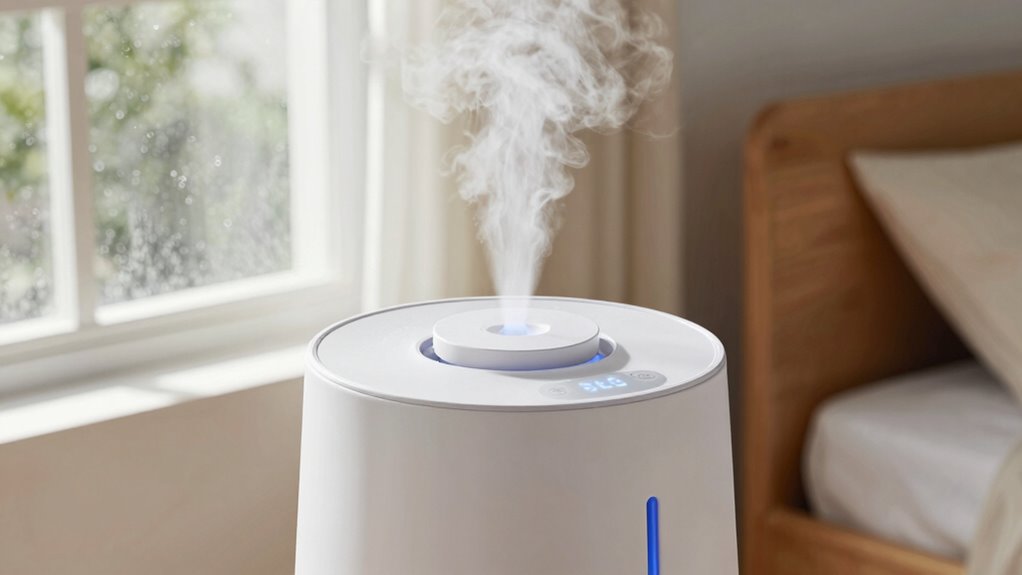
To prevent excess moisture, setting your humidifier to the right level is essential. Proper humidity levels help you avoid over-humidification and maintain ideal moisture control. Most humidifiers have adjustable settings; start with a lower setting and gradually increase if needed. Aim for a humidity level between 30% and 50%. Here are some tips for the best settings:
- Use a hygrometer to monitor indoor humidity.
- Set your humidifier to a medium or low setting initially.
- Adjust based on room size and climate conditions.
- Turn it off if you notice condensation or dampness.
Quick Fixes for High Humidity and Long-Term Solutions
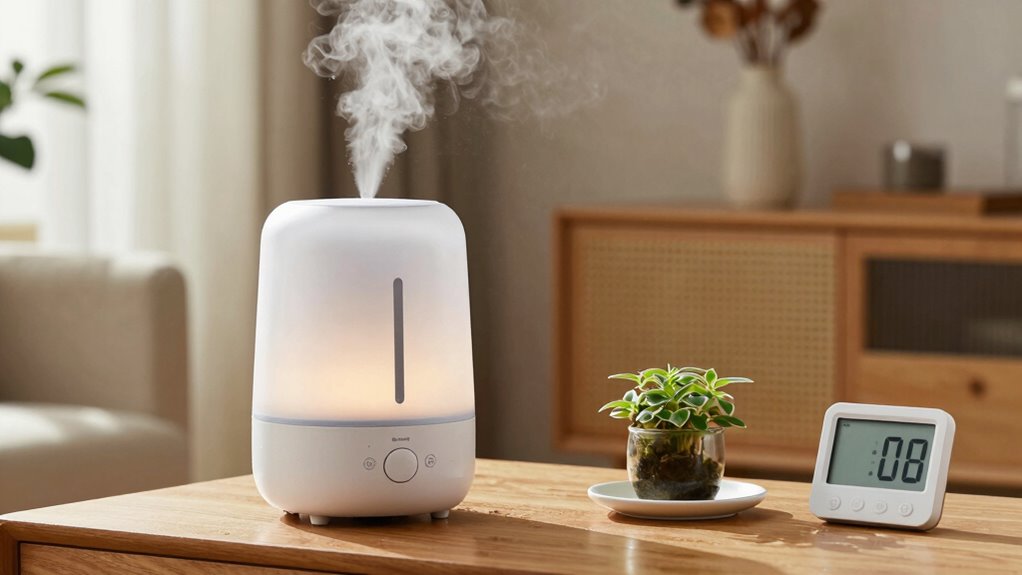
When your home feels too humid, improving ventilation can quickly help decrease moisture levels. Using dehumidifiers offers an effective long-term solution to keep humidity in check. Combining these methods with other humidity controls ensures a comfortable and healthy indoor environment.
Ventilation Improvements
Are you noticing persistent high humidity levels in your space? Improving ventilation can help restore air quality and boost energy efficiency. Proper airflow reduces excess moisture, preventing mold and musty smells. To boost ventilation, consider these quick fixes:
- Increase exhaust fan use in bathrooms and kitchens
- Open windows during dry parts of the day
- Install a whole-house ventilation system
- Use ceiling or oscillating fans to circulate air
These steps help remove humid air efficiently, lowering indoor moisture levels. Better ventilation enhances air quality, making your environment healthier. Plus, it can reduce the load on your HVAC system, improving energy efficiency. Keep in mind, consistent airflow management is key to long-term humidity control and maintaining a comfortable, healthy indoor space.
Use of Dehumidifiers
If ventilation improvements alone haven’t sufficiently lowered humidity levels, adding a dehumidifier can make a noticeable difference. Dehumidifiers help remove excess moisture, making your environment more comfortable and preventing mold growth. When choosing a dehumidifier, prioritize models with moisture sensors, which automatically adjust operation based on current humidity levels. This ensures efficient performance and prevents over-drying, maintaining safe humidity levels. Also, keep humidifier safety in mind by avoiding units that emit excessive heat or noise, which could cause safety issues or discomfort. Regularly empty the water reservoir and clean filters to guarantee ideal performance. By using a dehumidifier with moisture sensors, you gain better control over humidity, creating a healthier indoor environment without the risk of over-drying or associated problems.
Long-Term Humidity Control
Long-term humidity control requires consistent strategies to maintain a comfortable indoor environment. Regular humidifier maintenance ensures your device functions properly and prevents excess moisture. Incorporate indoor plants that naturally regulate humidity levels, helping balance the air without overdoing it. Adjust your ventilation system to improve airflow and reduce trapped moisture. Use a hygrometer to monitor humidity consistently, making informed adjustments. Additionally, consider sealing leaks or drafts that can cause fluctuations. Properly maintaining your humidifier and integrating natural methods like indoor plants creates a sustainable environment. These steps help you avoid the pitfalls of high humidity, promoting a healthier, more comfortable home over the long term.
Maintaining Proper Indoor Humidity: Tips for a Healthy Home
Ever wondered how to keep your indoor air comfortable and healthy? Maintaining proper humidity levels is key to improving air quality and creating a balanced environment. Use a hygrometer to monitor humidity, keeping it between 40-60%. Proper ventilation also helps prevent excess moisture buildup. Incorporate indoor plants, which naturally help regulate humidity and purify the air. Avoid over-humidifying, as too much moisture can lead to mold and dust mites. Regularly clean humidifiers to prevent bacteria growth. Be mindful of activities like cooking and laundry, which add humidity. Keep windows open or use exhaust fans when needed. Staying attentive to your home’s moisture levels ensures a healthier, more comfortable space for you and your family.
Final Tips for Balancing Indoor Moisture Levels
To effectively balance indoor moisture levels, you should regularly monitor humidity using a reliable hygrometer and adjust your humidification or dehumidification accordingly. Proper control helps prevent issues like mold and dry skin. Keep in mind that outdoor humidity impacts indoor conditions, especially during seasonal changes. To fine-tune your environment, consider these tips:
- Use plants that thrive in specific humidity levels to naturally regulate moisture
- Ventilate your home regularly to reduce excess humidity
- Adjust humidifier settings based on outdoor humidity fluctuations
- Maintain a consistent indoor environment for healthy plant care and comfort
Frequently Asked Questions
Can Too Much Humidity Cause Structural Damage to My Home?
Yes, too much humidity can cause structural damage to your home. When you don’t control humidity levels, excess moisture leads to moisture damage, including warped wood, peeling paint, and mold growth. Proper humidity control is essential to prevent these issues. Keep indoor humidity between 30-50%, and use a humidifier with a hygrometer to avoid over-humidifying, protecting your home’s integrity and maintaining a healthy environment.
How Do Different Seasons Affect Indoor Humidity Levels?
Imagine the changing seasons as a gentle breeze shaping your indoor air. In winter, your home might feel drier because colder outdoor air lowers seasonal humidity, prompting you to use a humidifier. During summer, outdoor influence can increase indoor humidity, making it feel moist and damp. Spring and fall often bring moderate levels, but you should still monitor seasonal humidity to keep your environment comfortable and healthy year-round.
Are There Specific Indoor Plants That Help Regulate Humidity?
Yes, you can use air purifying indoor plants like pothos, snake plants, and peace lilies to help regulate humidity. These plants absorb excess moisture through their leaves, naturally balancing indoor air humidity. Remember to water them appropriately, as overwatering can increase humidity levels instead of reducing them. By choosing the right plants and proper plant watering, you create a healthier indoor environment and maintain comfortable humidity levels.
What Are the Signs of Mold Growth Caused by Excess Moisture?
You’ll notice mold growth when you see discoloration on walls, ceilings, or surfaces, often appearing as black, green, or gray patches. You might also detect a persistent musty odor that lingers in the air. These signs indicate excess moisture has fostered mold, so it’s essential to address humidity levels promptly, improve ventilation, and clean affected areas with mold-killing solutions to prevent health issues and further damage.
How Often Should I Clean My Humidifier to Prevent Over-Humidification?
Imagine waking up with a stuffy nose and sneezing—your humidifier may be overdoing it. You should clean your humidifier at least once a week to prevent over-humidification. Regular filter maintenance guarantees proper airflow and humidity control, while using clean water diminishes mold risk. If you notice mineral build-up or musty odors, clean it more often. Consistent upkeep keeps humidity levels safe and your air healthy.
Conclusion
Keeping your home properly humidified isn’t just about comfort; it’s about safeguarding your health and sanity. Think of your indoor air as a delicate dance—too much moisture can lead to mold and dust mites, while too little leaves you dry and uncomfortable. Stay aware, measure accurately, and adjust your settings wisely. Remember, balance isn’t a myth—it’s the secret to a healthier, happier home. Don’t let excess humidity be the silent thief of your well-being.
Halloween Picks
halloween
As an affiliate, we earn on qualifying purchases.