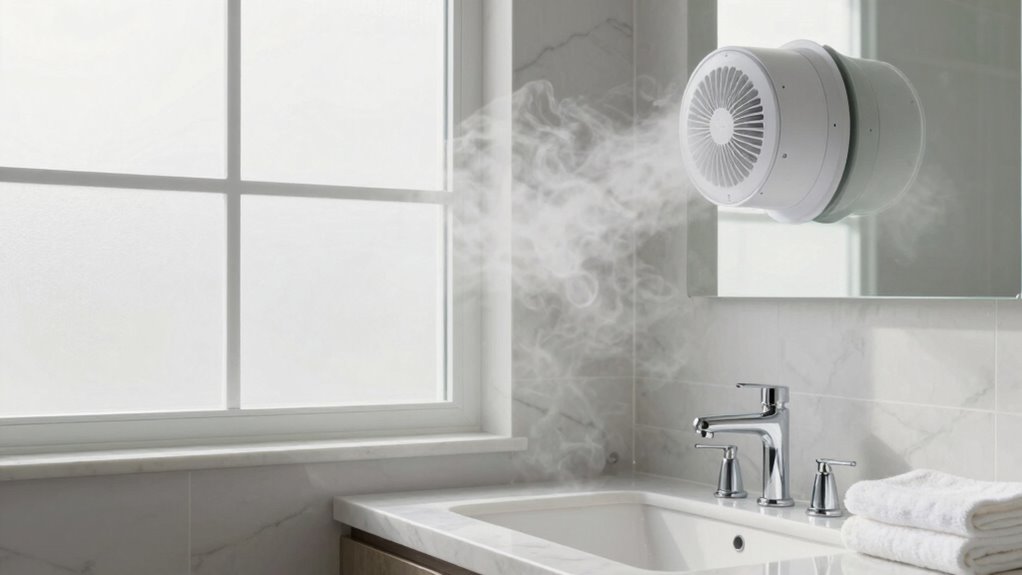
Good bathroom ventilation is key to protecting your skin. By running exhaust fans during and after showers, you help control humidity and remove excess moisture that can cause irritation, breakouts, or fungal issues. Proper airflow also prevents mold, mildew, and bacteria from building up—all of which can harm your skin. Using air purifiers and maintaining your system boosts air quality even further. Keep exploring for simple ways to improve your bathroom environment and support healthier skin.
Key Takeaways
- Use exhaust fans during and after showers to promptly remove humid air and reduce moisture buildup.
- Regularly clean and maintain ventilation systems to ensure effective air circulation and prevent mold growth.
- Incorporate HEPA filters or air purifiers to trap airborne particles and allergens that can affect skin health.
- Consider installing a dehumidifier if bathroom humidity remains high, to maintain optimal moisture levels.
- Ensure proper ventilation design to replace humid indoor air with fresh, dry air, supporting healthier skin and air quality.
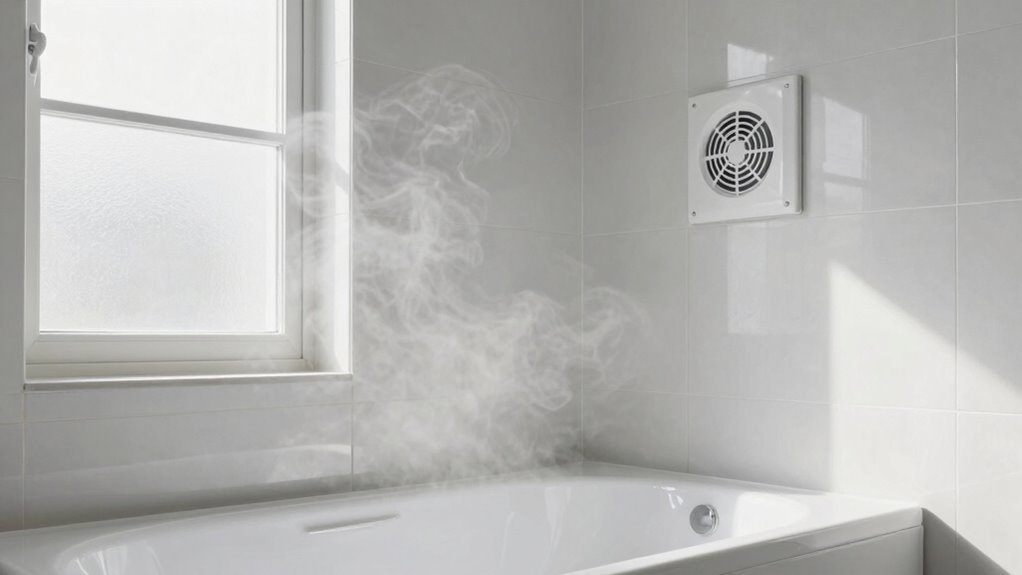
Good bathroom ventilation is crucial for maintaining healthy skin, especially since excess moisture can lead to issues like dryness, irritation, or breakouts. When your bathroom isn’t properly ventilated, humidity levels rise, creating the perfect environment for mold, mildew, and bacteria to thrive. These elements can contribute to skin problems, so controlling humidity and ensuring air purification are critical steps in protecting your skin’s health.
Effective ventilation helps remove excess moisture from the air, reducing humidity levels that can otherwise trap water on your skin and cause irritation. When you ventilate properly, you’re not just preventing mold; you’re also maintaining a balanced environment that minimizes skin problems caused by dampness. This is especially important after hot showers or baths, where the steam increases the moisture content in the air. Instead of letting that moisture linger, a good ventilation system pulls humid air out and replaces it with fresh, drier air, helping your skin stay dry and less prone to irritation.
Proper bathroom ventilation prevents moisture buildup and keeps your skin dry and irritation-free.
Air purification is another vital aspect of maintaining good bathroom air quality. A high-quality exhaust fan or an air purifier with HEPA filters can trap airborne particles, including mold spores, dust, and pollutants. These microscopic contaminants can settle on your skin, clog pores, and trigger breakouts or allergic reactions. By actively filtering the air, you reduce the presence of these irritants and create a cleaner environment that’s gentler on your skin.
Controlling humidity and purifying the air work hand in hand to create an ideal setting for skin health. When humidity is kept in check, your skin can retain its natural moisture balance without becoming overly dry or excessively oily. Proper ventilation also prevents the buildup of stagnant, humid air that encourages bacterial growth, which can lead to skin infections or irritation. You should ensure your bathroom fan runs during and after showers, and consider installing a dehumidifier if moisture problems persist. Additionally, understanding the importance of ventilation systems can help you choose the best solutions for your space.
In addition, good ventilation can improve overall air quality, reducing the presence of mold spores and airborne irritants that can settle on your skin or be inhaled into your respiratory system. This proactive approach not only benefits your skin but also promotes better respiratory health. Regularly cleaning your ventilation system and maintaining it ensures it functions efficiently, providing continuous air purification and humidity control.
Frequently Asked Questions
How Often Should I Ventilate My Bathroom for Optimal Skin Health?
You should ventilate your bathroom at least 15-20 minutes after each shower or bath to maintain ideal skin health. Regular ventilation schedules help reduce humidity, preventing mold buildup and improving air quality. Keep the fan running during and after use, especially in humid months, to promote fresh air circulation. Consistent ventilation not only keeps your bathroom dry but also supports healthier skin by minimizing irritants and allergens.
What Types of Ventilation Systems Are Best for Skin-Friendly Bathrooms?
You should choose an exhaust fan with high air exchange rates to keep your bathroom fresh and prevent excess moisture. While sleek, silent models look better, more powerful systems guarantee better moisture balance, preventing mold and skin irritations. Consider a humidity-sensing fan that automatically activates when needed. Good ventilation not only keeps the air clear but also protects your skin by reducing humidity that can cause irritation and breakouts.
Can Poor Ventilation Cause Skin Irritation or Allergies?
Yes, poor ventilation can cause skin irritation and allergies by trapping excess moisture and promoting mold growth. When you don’t guarantee proper air circulation, mold prevention becomes harder, leading to damp, unhealthy environments. This dampness can trigger skin sensitivities or allergies, especially for those with existing conditions. To protect your skin, make sure your bathroom has good ventilation, like a functioning exhaust fan, to keep air circulating and prevent moisture buildup.
Are There Specific Ventilation Practices Recommended After Skincare Routines?
Think of your bathroom as a sanctuary for your skin; proper airflow is your secret weapon. After your bathroom skincare routines, open the window or turn on the fan to boost skincare ventilation. This quick act helps remove excess moisture and prevent clogged pores, letting your skin breathe freely. Prioritizing good ventilation keeps your skin radiant and healthy, turning your bathroom into a true haven for skincare.
How Does Humidity Control Impact Skin Moisture Levels in the Bathroom?
Humidity regulation in your bathroom directly impacts your skin hydration. When you control humidity levels, you prevent excessive moisture loss or buildup, helping your skin stay balanced. Proper ventilation reduces excess humidity, which can cause dryness or irritation, while maintaining ideal moisture supports healthier skin. By ensuring good airflow and humidity control, you create an environment that promotes skin hydration, keeping your skin soft, smooth, and well-moisturized after your routine.
Conclusion
By making ventilation a daily habit, you’re opening the window to healthier skin—like clearing a foggy mirror to see clearly. When you prioritize fresh air in your bathroom, you’re not just fighting dampness; you’re nurturing your skin from within. It’s a small change that can have a big impact, turning your bathroom into a sanctuary of clarity and glow. So breathe freely and let your skin breathe easier, too.