
Hard water minerals like calcium and magnesium bind with soap, forming insoluble compounds that create soap scum. This reduces how well cleansers lather and makes them feel sticky or slimy on your skin and surfaces. The mineral deposits also resist rinsing, leaving behind a film and causing cleaning products to seem less effective. If you want to understand how to tackle these issues, there’s more to discover about water hardness and cleaning techniques.
Key Takeaways
- Hard water minerals bind with soap, forming insoluble compounds that reduce lather and foam.
- Mineral deposits cause cleansers to feel gritty or sticky on surfaces and skin.
- Reduced lather decreases the perceived effectiveness of the cleanser.
- Mineral residues alter the texture of soaps and detergents, making them feel different during use.
- Hard water residues can leave a film, affecting how cleansers interact with surfaces and skin.

Water hardness can considerably influence how well cleansers work, especially in your daily routines. When you wash your hands, do laundry, or clean surfaces, the minerals in hard water interact with soap and other cleaning agents, often leaving soap residue behind. This residue not only makes it feel like your skin or fabrics aren’t fully clean but also affects the rinse efficiency of your cleansers. You might notice that despite scrubbing, soap scum remains or that your clothes aren’t as soft after washing. That’s because hard water’s minerals—mainly calcium and magnesium—bind with soap, forming insoluble compounds that don’t rinse away easily. Additionally, these mineral interactions can cause build-up in appliances over time, reducing their effectiveness and lifespan.
Hard water minerals bind with soap, leaving residue and reducing rinse effectiveness.
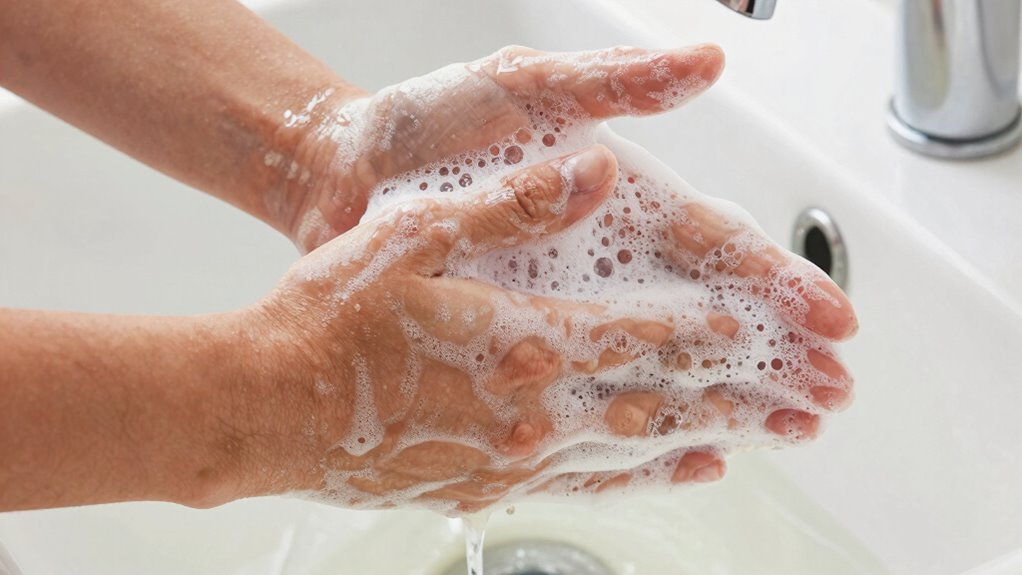
When your water is hard, the soap doesn’t lather as well. Instead of forming a rich, foamy lather, it often produces a thin film that clings to surfaces or your skin. This is because the minerals in hard water react with soap’s fatty acids, creating soap scum. As a result, you need more soap or cleanser to achieve the same cleaning effect, which can feel wasteful and frustrating. Furthermore, the soap residue that’s left behind can cause your skin to feel dry or sticky, and fabrics may seem stiff or dingy after washing. The inadequate lathering and soap residue buildup directly impact how effective your cleansers are at removing dirt, oils, and impurities.
Rinse efficiency also takes a hit with hard water. Minerals in the water tend to resist rinsing off thoroughly, leaving behind a film on your skin, dishes, or surfaces. This film can trap dirt and oils, making it harder for your cleansers to do their job fully. In the case of laundry, this residual soap film can make clothes feel rough or look dull. For your skin, it can cause irritation or a persistent greasy feeling, even after rinsing multiple times. The key issue here is that hard water prevents your rinses from being as effective as they would be with softer water. The minerals essentially act as a barrier, holding onto soap and grime, and making it more difficult for rinsing to wash everything away completely. Using water softening techniques can significantly improve the rinsing process and overall cleanliness.
Understanding how water hardness impacts soap residue and rinse efficiency helps you adapt your routine. Using water softeners or choosing cleansers formulated for hard water can improve lathering and ensure that soap residue doesn’t linger. It also encourages you to spend a little extra time rinsing or using hotter water when possible. Adjusting your approach means you’ll get cleaner results, whether you’re washing your hands, doing laundry, or cleaning your home. Recognizing the role of water hardness allows you to troubleshoot common cleaning frustrations and achieve better, more satisfying cleanliness every day.
Frequently Asked Questions
Does Water Hardness Affect the Longevity of Cleansers?
Yes, water hardness affects the longevity of cleansers. Hard water causes soap residue to build up faster, which can make your cleansers less effective over time. It also impacts lather quality, making it harder to create a rich foam. As a result, your cleansers may seem to run out quicker, and you might need to use more product to get the same cleaning effect.
Can Water Hardness Impact Skin Irritation From Cleansers?
Imagine your skin as a delicate canvas—water hardness can cause it to suffer. Hard water minerals strip away natural oils, leading to skin dryness and making you more prone to cleanser irritation. When you use a cleanser in hard water, it might not rinse off completely, leaving residues that exacerbate irritation. So, yes, water hardness can profoundly impact your skin’s comfort, especially if you already struggle with dryness.
Are There Specific Cleansers Recommended for Hard Water Areas?
Yes, you should choose cleansers formulated for hard water areas. Look for products with a balanced pH to protect your skin’s natural barrier, ensuring they’re skin-compatible. These cleansers typically contain ingredients that help prevent mineral buildup and irritation caused by hard water. By selecting the right cleanser, you’ll improve your skin’s comfort, maintain a healthy pH balance, and reduce the chances of dryness or irritation from mineral deposits.
How Does Water Hardness Influence the Scent of Cleansers?
When water hardness hits, it can throw a wrench in your cleanser’s scent release and scent retention. Hard water minerals can bind with fragrance molecules, dulling the scent and making it fade faster. You might notice your favorite cleanser smells less vibrant over time. To keep fragrances strong, opt for formulas designed for hard water areas, and consider adding water softeners. This way, your cleansers stay fresh and fragrant longer.
Does Softened Water Improve Cleaning Effectiveness With Cleansers?
Softened water definitely improves soap performance and lather quality, making your cleansers more effective. When you use softened water, it reduces mineral buildup that can hinder soap from working properly. As a result, you’ll notice a richer, more luxurious lather and better cleaning results. Plus, softened water prevents soap residue and spots, leaving your skin or surfaces feeling cleaner and fresher with less effort.
Conclusion
As you navigate the dance of water and cleansers, remember that hard water acts like an invisible artist, subtly altering how products feel and work. It’s as if each droplet carries a secret, whispering tales of mineral richness that can either smooth or stubbornly cling. Embrace this hidden symphony, knowing your cleaning routine is a delicate choreography where water’s touch shapes every move. Understanding this dance helps you craft a more effective, harmonious approach to cleanliness.